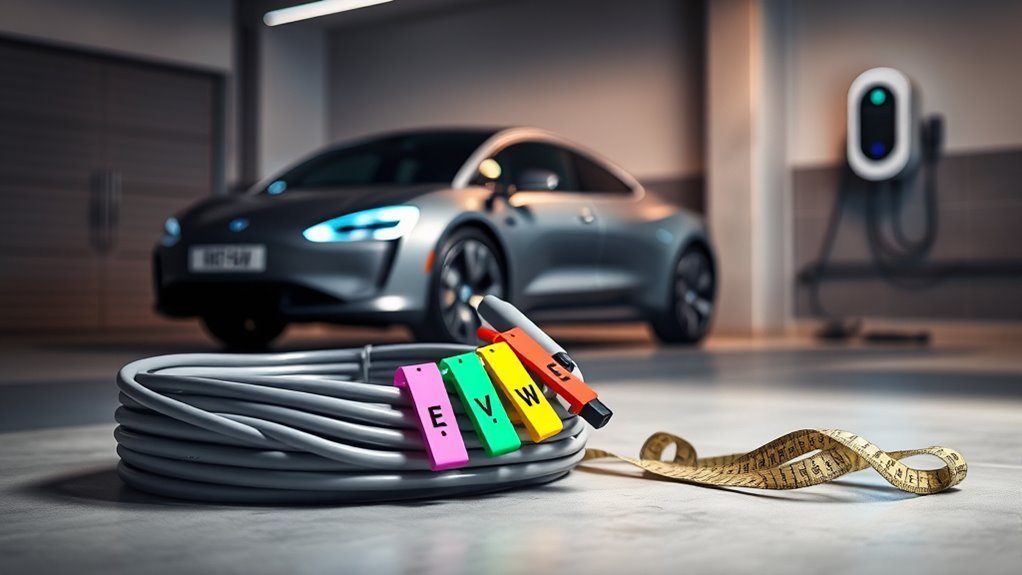
Choosing the right EV charging cable length is essential for convenience and efficiency. A 5-meter cable suits most home setups, but if you need more flexibility, consider a 7-meter cable. For public charging or tricky parking situations, lengths up to 10 meters are ideal. Always measure the distance from the charging station to your vehicle’s port, accounting for obstacles. Proper cable selection enhances accessibility and safety at charging stations, and there’s more to understand about optimizing your setup.
Why Cable Length Is Crucial for Your EV Charging Experience
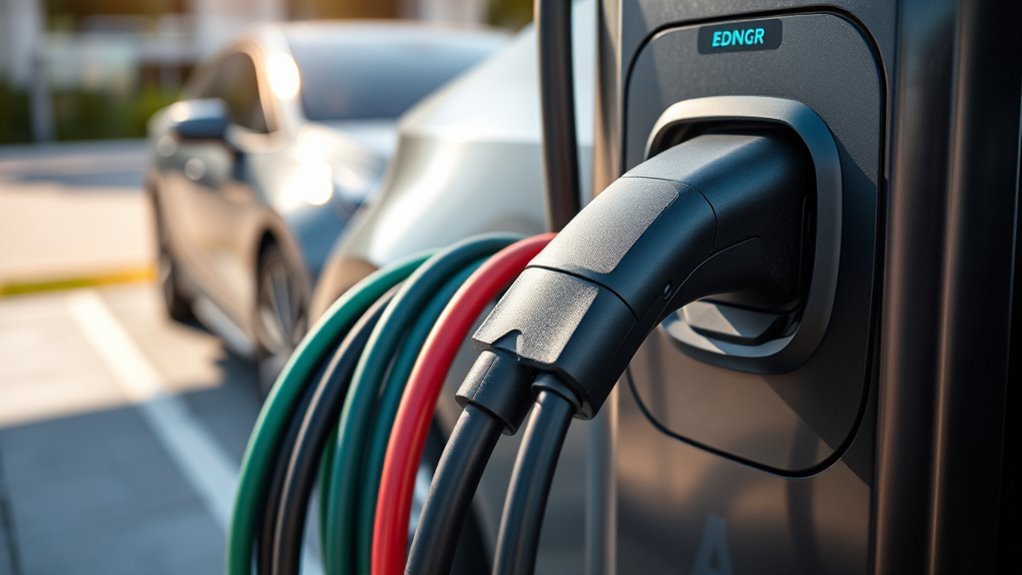
When it comes to EV charging, cable length plays an essential role in your overall experience. Longer cables provide the flexibility you need for various parking arrangements and hard-to-reach charging points, making them crucial for effective charging solutions.
Typically, a 5-meter cable suffices for most home setups, but if you often visit public charging stations or face unconventional parking situations, consider a 10-meter option.
For most home setups, a 5-meter cable is sufficient, but a 10-meter option is ideal for public charging and tricky parking scenarios.
Safety should also be a priority; appropriately sized cables minimize tripping hazards and reduce wear and tear, ensuring a safer environment.
While charging speed isn’t inherently affected by cable length, the quality of the cable and its compatibility with your vehicle’s charging capabilities greatly impact efficiency.
How to Measure the Right Length for Your Charging Needs
Choosing the right cable length starts with accurately measuring the distance from your charging station to your vehicle’s charging port.
Account for any height differences or obstacles in your path. It’s wise to add extra length to your measurement, allowing for potential parking variations, so the cable remains slack and stress-free when plugged in.
Standard recommended lengths range from 5 to 7 meters (16 to 23 feet) for most home and public charging scenarios.
For unique situations, like shared parking or public chargers, consider lengths up to 10 meters (about 33 feet) to guarantee accessibility.
Always prioritize safety by avoiding excessively long cables that could create tripping hazards.
Additionally, verify your chosen charging cable materials are compatible with your charging station for peak performance.
Comparing EV Charging Cable Lengths: 5M vs. 7M and More
When choosing between a 5-meter and a 7-meter EV charging cable, consider your specific parking situation.
A 5-meter cable works well for standard setups, while a 7-meter cable offers greater flexibility for unique configurations.
Understanding these differences helps guarantee you select the right length for your charging needs.
Standard Cable Length Benefits
As you consider the ideal EV charging cable length for your needs, understanding the differences between standard lengths like 5 meters and 7 meters can greatly impact your charging experience.
A 5-meter cable is perfect for most home installations, providing ample length for typical parking setups while keeping installation costs low.
In contrast, a 7-meter cable offers enhanced flexibility, accommodating unique parking layouts and multi-vehicle households.
By using standard cable lengths, you can simplify installation and lower costs, as they allow for closer placement of charging stations to service panels.
Opting for longer cables, like 10 meters, can further enhance accessibility in crowded spaces, preventing future expenses associated with upgrades for evolving vehicle designs or charging needs.
Unique Parking Situations Explained
Maneuvering unique parking situations often requires careful consideration of EV charging cable lengths, particularly when deciding between 5-meter and 7-meter options.
In multi-vehicle households or unconventional layouts, a longer cable can provide essential flexibility. Here’s what to keep in mind:
- 5-Meter Cables: Ideal for standard setups where the charger is close to your vehicle, balancing usability and storage.
- 7-Meter Cables: Perfect for unique situations, allowing easier access to charging without moving vehicles around.
- Longer Cables (10M): Beneficial at public stations, accommodating awkward angles and distances.
Ultimately, weigh your current parking arrangements and potential future needs to guarantee accessibility and efficiency in your charging setup.
Choosing the Right EV Charging Cable Length for Home Use
When choosing the right EV charging cable length for home use, accurately measure the distance from your charger to your vehicle’s charging port.
Consider your parking setup and how flexible you need the cable to be, especially if you have multiple vehicles.
Additionally, keep safety in mind; avoid excess length that could lead to clutter or tripping hazards.
Measuring Distance Accurately
How do you guarantee you choose the right length for your EV charging cable? Start with precise measuring techniques to ascertain distance accuracy. Here’s how to do it:
- Identify Key Points: Determine the charging port on your vehicle and the location of the charging station, considering any elevation changes.
- Measure the Path: Use a tape measure to calculate the horizontal distance, factoring in obstacles or turns in the cable path.
- Add Length for Flexibility: Consider your vehicle’s parking configuration and add an extra 1-2 meters to prevent tension and wear on the cable.
For home use, a cable length of 5 to 7 meters is often ideal to accommodate most driveway setups without creating clutter.
Flexibility and Parking Needs
Accurate measurements are just the beginning; understanding your parking needs is essential for selecting the right EV charging cable length.
For most typical driveway setups, a 5-meter cable offers a good balance of usability and storage. However, if you have unconventional parking configurations or a multi-vehicle household, you might want to take into account a longer 7-meter cable to guarantee flexible charging options.
Measure the distance from your charging port to the charger to confirm you have enough reach without tension.
In shared or on-street charging situations, a cable length of up to 10 meters may be necessary. Choosing the right length enhances convenience and reduces the hassle of repositioning vehicles in tight spaces, making your charging experience smoother.
Safety and Trip Hazards
Choosing the right length for your EV charging cable is essential not just for convenience but also for safety. An appropriately sized cable minimizes trip hazards, ensuring your charging area remains safe and organized.
Here’s what to evaluate:
- Cable Durability: Shorter cables (around 5 meters) reduce wear and tear, enhancing longevity.
- User Convenience: Longer cables (7 or 10 meters) offer flexibility but should be stored neatly to avoid clutter.
- Safety First: Properly sized cables prevent tangling and potential accidents, particularly in shared spaces.
Benefits of a 7M Charging Cable in Shared Spaces
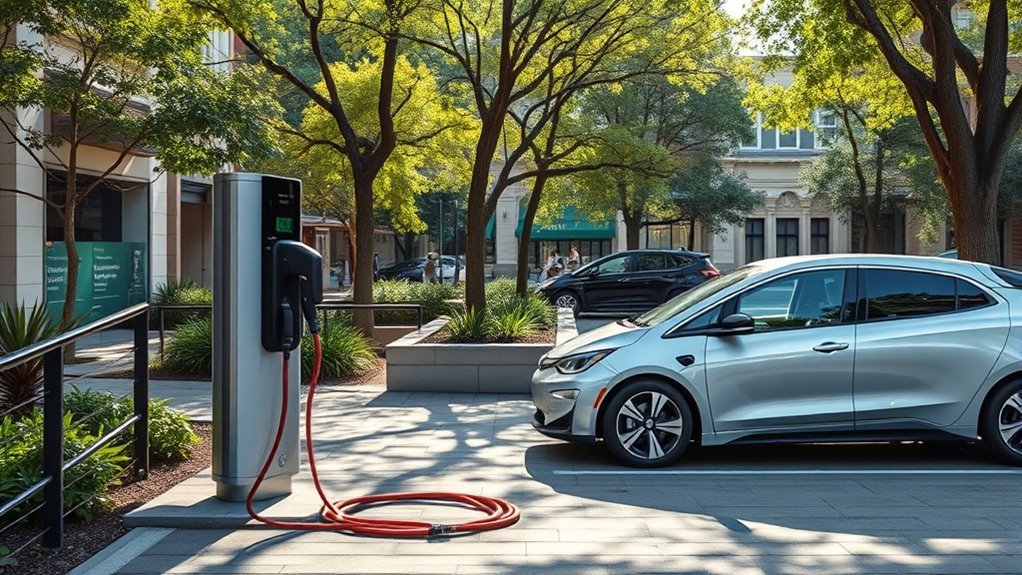
A 7M charging cable offers significant advantages in shared spaces, enhancing the charging experience for electric vehicle (EV) owners.
With increased flexibility, you can easily charge vehicles parked in unconventional or shared parking areas without frequently repositioning them. This added length accommodates varying distances between charging stations and EV parking spots, making it ideal for multi-vehicle households and communal settings.
Moreover, a 7M cable helps you avoid reach issues at public charging stations, where ports might be awkwardly positioned. By using a longer cable, you can skip the hassle of moving your vehicle multiple times to connect to a charging point, streamlining the entire process.
Additionally, longer cables can reduce installation costs by allowing charging stations to be positioned closer to the service panel, simplifying cable management in shared environments.
Key Considerations for Choosing Cable Lengths at Public Charging Stations
When traversing public charging stations, it’s crucial to take into account cable lengths that accommodate the diverse placement of charging ports. Opting for longer cables, typically around 10 meters, enhances convenience and efficiency.
Here are key considerations for your choice:
- Cable Durability: Verify the cable can withstand frequent use and environmental conditions, promoting longer life and reliability.
- Charging Efficiency: A longer cable reduces the need to reposition your vehicle, allowing for uninterrupted charging sessions and minimizing energy loss.
- Accessibility: In crowded areas, a longer cable facilitates access, preventing tripping hazards and enabling easier connections in shared parking situations.
Common Questions About EV Charging Cable Lengths?
Understanding the right cable length for your electric vehicle (EV) charging setup can resolve many common concerns. For most home setups, a 5-meter cable strikes a balance between usability and storage convenience.
However, if your parking arrangement is unique or if you share a space, consider longer cables of 7 to 10 meters for enhanced versatility. Public charging stations typically require longer cables as well, with 10-meter Type 2 cables recommended to guarantee accessibility and flexibility.
While shorter cables are easier to manage and store, they may limit your charging options. Think about the distance from the charging port to the charger and your expected parking layout when selecting your cable length.
This consideration is essential for maintaining cable compatibility and optimizing charging efficiency, making sure you enjoy the freedom and convenience of electric vehicle ownership without unnecessary hassle.
Tips for Effectively Managing and Storing Your EV Charging Cable
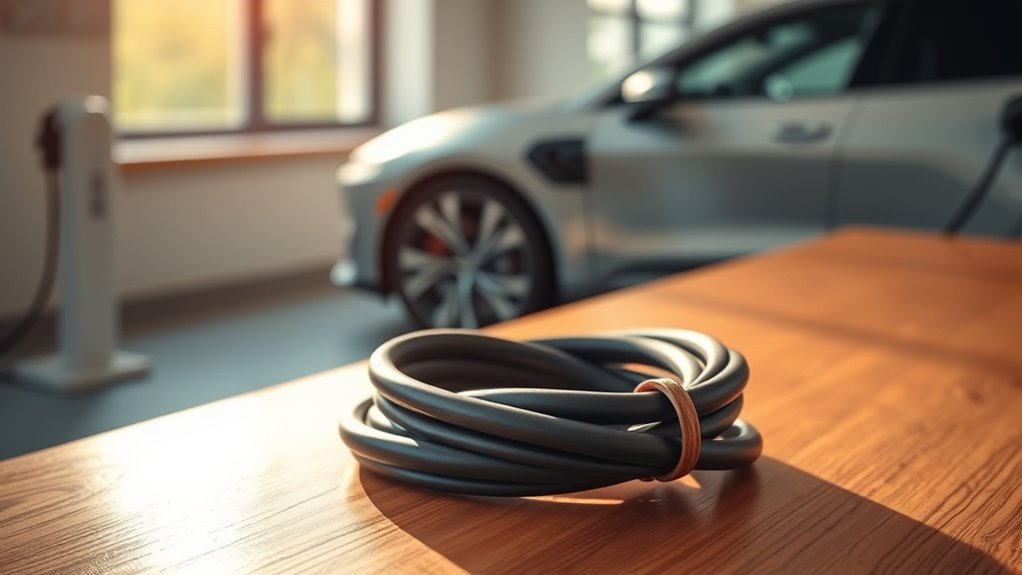
To guarantee your EV charging cable remains in ideal condition, effective management and storage practices are essential. Proper cable management not only preserves your cable’s lifespan but also enhances safety.
Here are three tips to keep in mind:
- Use organizers or reels: Neatly coil your charging cable using organizers to prevent tangling, which can lead to damage over time.
- Choose the right storage solutions: Store your cable in a dry, cool place, away from extreme temperatures and moisture that could harm the insulation.
- Hang or bag it: When not in use, hang the cable on a wall-mounted hook or place it in a dedicated storage bag to minimize wear and tear.
Regularly inspect your cable for any signs of damage, such as fraying or exposed wiring, to ascertain safe and effective charging.
Frequently Asked Questions
How Long Should My EV Charging Cable Be?
For your EV charging cable, consider a length that accommodates your charging station placement and guarantees effective cable management. Typically, 5 to 10 meters works best to avoid hazards while maintaining flexibility for future needs.
What Is the 80 20 Rule EV Charging?
The 80/20 rule in EV charging means you’ll meet most of your needs at home, maximizing charging efficiency. Proper cable management guarantees convenience, reducing reliance on public stations and enhancing your overall EV experience.
Does the Length of a Charging Cable Matter?
Yes, the length of a charging cable matters. Longer cables enhance convenience, while shorter ones improve cable safety and charging efficiency. Choosing the right length can prevent hazards and optimize your electric vehicle charging experience.
Which Is Better 5m or 7m EV Cable?
A 7m EV cable offers better flexibility for varied parking setups, while a 5m cable is easier to handle and store. Consider your specific needs to choose between 5m advantages and 7m benefits effectively.
Conclusion
To summarize, choosing the right length for your EV charging cable can greatly enhance your charging experience. Did you know that about 80% of EV owners charge at home? A longer cable, like 7M, can provide flexibility in tight spaces and shared environments, making it easier to reach your vehicle. By taking the time to measure and select the appropriate length, you’ll guarantee convenience and efficiency while charging your electric vehicle.







Leave a Reply