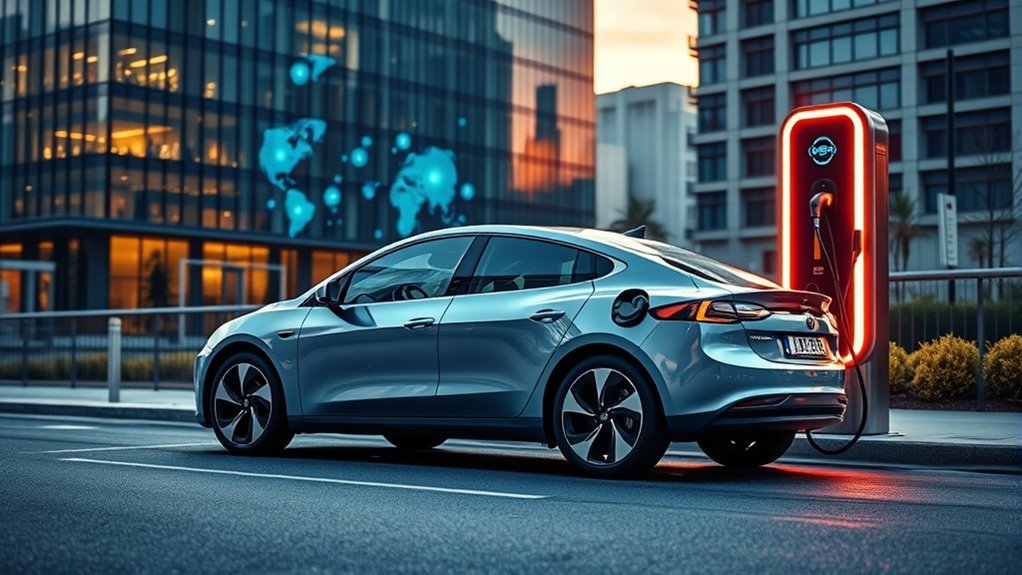
EV charging networks consist of various charging stations where you can recharge your electric vehicle (EV). They include Level 1, Level 2, and Level 3 (DC fast charging), each with different charging speeds and installation requirements. To choose the right network, consider your driving habits, the availability of stations near you, and payment options. Major players like Tesla and Electrify America dominate the market, but new innovations are emerging. Keep exploring to discover more about enhancing your charging experience.
Everything You Need to Know About EV Charging Networks
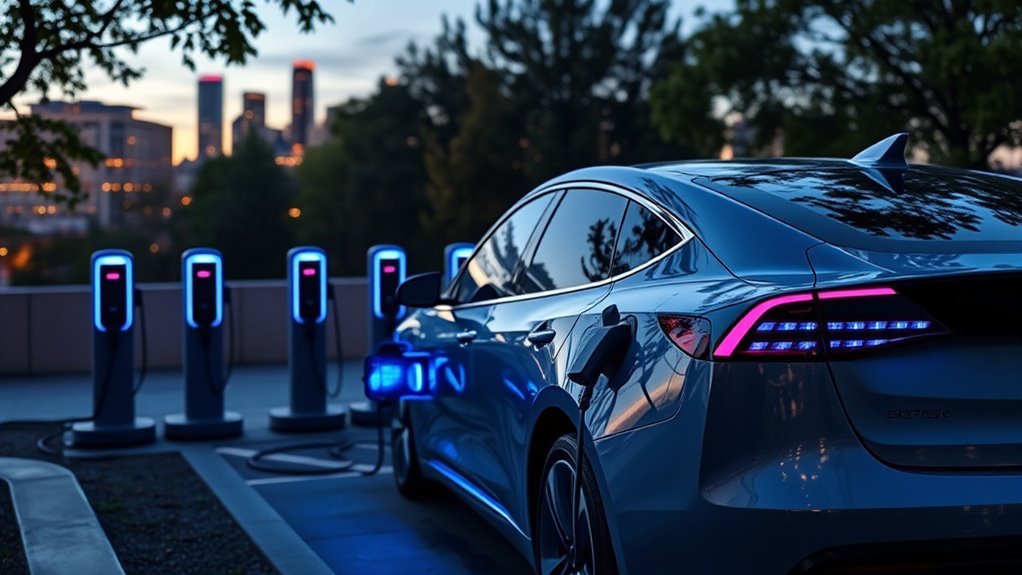
As electric vehicles (EVs) continue to gain popularity, understanding EV charging networks becomes essential for drivers. The U.S. boasts over 228,000 charging ports across approximately 76,000 locations, primarily featuring Level 2 chargers that deliver 20-30 miles of range per hour.
Tesla’s network leads with over 33,400 fast-charging ports, while Electrify America follows with nearly 5,100, illustrating a competitive landscape. Most public networks require free membership, enhancing your user experience through mobile apps for easy account management and payment.
However, charging station utilization varies; urban areas like San Francisco and NYC see over 50% connection rates, while some Midwest cities lag behind. Upcoming charging network regulations aim to focus on user experience enhancements, pushing for faster charging options and improved amenities.
As new players enter the market, staying informed will help you make the most of your EV charging experience.
Different Types of EV Chargers: Level 1, Level 2, and Level 3
When it comes to charging your EV, understanding the differences between Level 1, Level 2, and Level 3 chargers is vital.
Level 1 chargers are great for overnight use but offer limited range, while Level 2 chargers provide a more efficient solution for home or public charging.
On the other hand, Level 3 chargers can rapidly charge your vehicle for long trips, making them indispensable for any serious EV owner.
Charging Speed Comparisons
Understanding the differences in charging speeds among Level 1, Level 2, and Level 3 chargers can help you choose the best option for your electric vehicle needs.
Here’s a quick comparison of each type:
- Level 1: Utilizes a standard 120-volt outlet; offers 3-5 miles of range per hour.
- Level 2: Operates on 208-240 volts; delivers 20-30 miles of range per hour, suitable for overnight charging.
- Level 3 (DC Fast Charging): Provides up to 80% charge in just 20-40 minutes, making it perfect for long trips.
- Charging Speed Advantages and Limitations: Level 1 is great for short commutes but slow; Level 2 balances speed and convenience; Level 3 offers rapid charging but requires specific infrastructure.
Installation Requirements Overview
Installing an EV charger isn’t a one-size-fits-all process, as each type—Level 1, Level 2, and Level 3—comes with its own set of requirements and considerations.
Level 1 uses a standard 120-volt outlet, making it easy but risking circuit overloads if used regularly.
Level 2, needing a dedicated 208- or 240-volt system, offers faster charging but involves installation challenges and costs.
Level 3, or DC Fast Charging, provides rapid power but demands significant investment and compliance considerations, including evaluating electrical capacity and coordinating with utility companies.
Each type’s installation impacts your vehicle’s performance and battery health, so weigh your options carefully to guarantee you’re maximizing efficiency while adhering to local regulations.
Which Charger Is Right for You? Choosing the Best Charging Network?
How do you choose the right EV charging network for your needs? Start by evaluating your driving habits and preferences. A charging network comparison can help you make an informed decision.
Here are key considerations:
- Location Availability: Check if the network has stations near your home or regular routes.
- Charger Types: Determine if you need Level 2 chargers for daily use or DC FAST chargers for quick, long-distance charging.
- Payment Options: Look for networks like Electrify America that allow credit card payments at the plug for convenience.
- Vehicle Compatibility: Verify the network supports your EV model, especially if you own a Tesla, which benefits from the Supercharger network.
Top Companies Driving EV Charging Innovation in the U.S
When it comes to EV charging innovation in the U.S., Tesla stands out with its extensive Supercharger network, offering over 33,400 fast-charging ports.
Meanwhile, emerging players like Electrify America and ChargePoint are reshaping the landscape through strategic partnerships and a diverse range of charging solutions.
As these companies push the boundaries of technology and accessibility, you’ll find a growing array of options to suit your electric vehicle needs.
Tesla’s Supercharger Dominance
Tesla’s Supercharger network stands out as a pivotal force in the U.S. With over 33,400 fast-charging ports, it leads the EV charging market, offering seamless integration for Tesla vehicles.
Here’s why Tesla’s Supercharger dominance is essential:
- Robust Infrastructure: 15.1 ports per location versus 3.8 for competitors.
- User-Friendly Experience: Automatic billing simplifies your charging.
- Diverse Compatibility: Tesla-only, Magic Dock, and NACS options expand access.
- Future-Ready Upgrades: Upcoming V4 technology promises faster charging.
Tesla’s expansion into non-Tesla EV compatibility and ongoing Supercharger upgrades maintain its competitive edge, ensuring that you can charge efficiently and conveniently wherever you roam.
Embracing this innovation liberates your driving experience, making EV ownership a breeze.
Emerging Players and Partnerships
The landscape of EV charging is rapidly evolving, with emerging players and strategic partnerships reshaping the market. Companies like Blink are making waves, having acquired SemaConnect to enhance network integration.
Meanwhile, Ionna, backed by multiple automakers, aims to create “rechargeries” that provide amenities for EV users. Walmart’s ambitious plans to build a substantial EV charging network by the decade’s end further contribute to this growing infrastructure.
Tesla remains a dominant force with over 33,400 fast-charging ports, but Electrify America and EVgo are rising competitors. As the number of charge point operators is set to increase from 50 to 63 by 2025, these strategic collaborations are vital to making EV charging more accessible and affordable for all.
Assessing Charging Station Access and Availability
Access to charging stations is essential for the widespread adoption of electric vehicles (EVs). Understanding the geography of charging stations, especially in urban vs rural settings, can help you make informed decisions.
Access to charging stations is crucial for electric vehicle adoption, highlighting the importance of understanding their distribution in urban and rural areas.
- The U.S. has over 228,000 EV charging ports across approximately 76,000 locations.
- Majority of public ports are Level 2 chargers, ideal for everyday use.
- Coastal cities like San Francisco and NYC boast over 50% connection rates.
- Charging stations are commonly located at gas stations, retail facilities, and restaurants.
This diverse availability guarantees you can find the right charging solution no matter where you are.
However, disparities still exist, particularly between urban and rural areas. Urban centers tend to have better access, while rural regions may require more planning.
What’s Next for EV Charging: Trends You Should Know
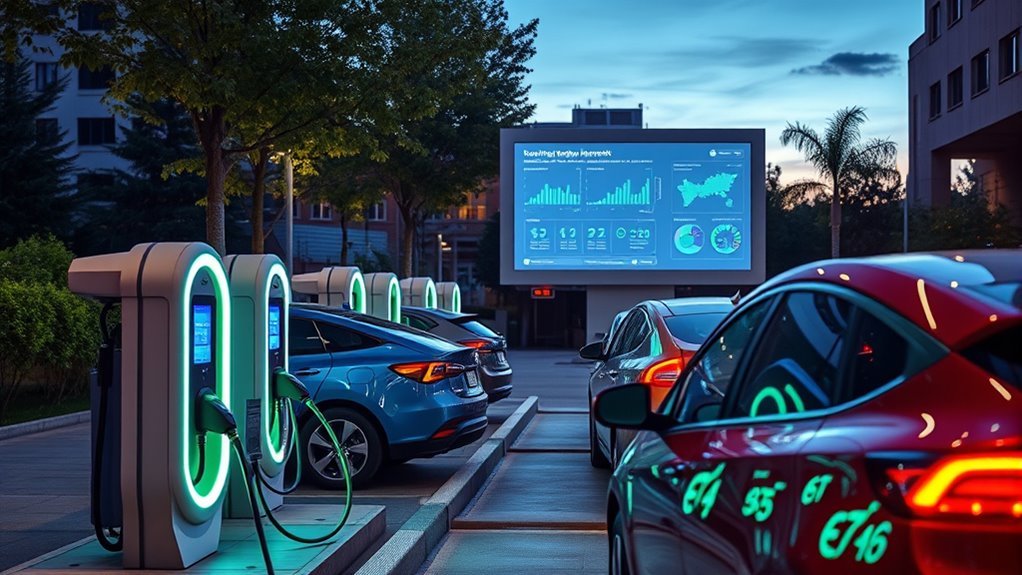
As the landscape of EV charging networks evolves, several trends are shaping the future of how you’ll power your electric vehicle.
The number of charge point operators in the U.S. is set to rise from 50 in 2024 to 63 by 2025, signaling a robust expansion. Major players like Walmart and Mercedes-Benz are investing heavily in extensive charging networks, enhancing user experience at charging locations with high-power chargers and added amenities like lounges and food options.
Tesla’s Supercharger network exemplifies the demand for reliable infrastructure, averaging 15.1 ports per station compared to just 3.8 for non-Tesla networks.
Meanwhile, federal and state funding attracts smaller operators, increasing competition and accessibility. These developments promise a future where charging your EV becomes more seamless and enjoyable, paving the way for a liberated driving experience where you can easily find a charge when you need it.
Tips for Hassle-Free Charging on the Go
Maneuvering the world of EV charging on the go can be straightforward if you arm yourself with the right tools and knowledge. Here are some tips for hassle-free charging:
- Use a charging station finder app to locate public chargers and check their availability.
- Familiarize yourself with various payment options—credit cards, mobile apps, or RFID cards to streamline the process.
- Opt for DC fast charging stations to quickly charge your vehicle, typically reaching 80% in just 20-40 minutes.
- Carry the appropriate charging cables and adapters, as connector types vary across networks.
Also, remember to practice good charging etiquette by not occupying a spot longer than necessary.
Signing up for memberships with networks like Electrify America or ChargePoint can offer reduced rates and smoother access.
With these strategies, you can keep your EV charged and enjoy the freedom of the open road!
Frequently Asked Questions
How Do EV Charging Networks Impact Battery Life?
EV charging networks influence battery life by affecting charging frequency. Frequent fast charging can accelerate battery degradation, while slower, more consistent charging helps maintain ideal health. Balancing convenience and battery care is essential for longevity.
Are There Subscription Fees for Using Charging Networks?
You might think subscription fees are a burden, but many charging networks offer membership benefits that lower costs. These subscription models can provide access to exclusive discounts, making charging more affordable and convenient for you.
Can I Charge My EV at Home With These Networks?
Yes, you can charge your EV at home, but make certain your home charging setup is compatible with your chosen network. This allows seamless integration, maximizing convenience and efficiency while powering your vehicle directly from home.
What Happens if a Charging Station Is Out of Order?
If a charging station’s out of order, you should check for nearby charging alternatives. It’s also wise to stay informed about maintenance schedules, as they help guarantee stations operate smoothly and minimize downtime for users like you.
Are There Mobile Apps for Locating Charging Stations?
You’ll discover mobile apps for locating charging stations that feel like having a personal assistant. These charging station apps boast navigation features, helping you find the nearest charger with ease and efficiency on your journeys.
Conclusion
In the ever-evolving landscape of EV charging networks, choosing the right solution is like finding the perfect travel companion—essential for a smooth journey. By understanding the different types of chargers and evaluating access and availability, you can guarantee hassle-free charging on the go. As technology advances, staying informed about trends will keep you ahead of the curve. So, plug in, charge up, and embrace the future of driving with confidence!






Leave a Reply