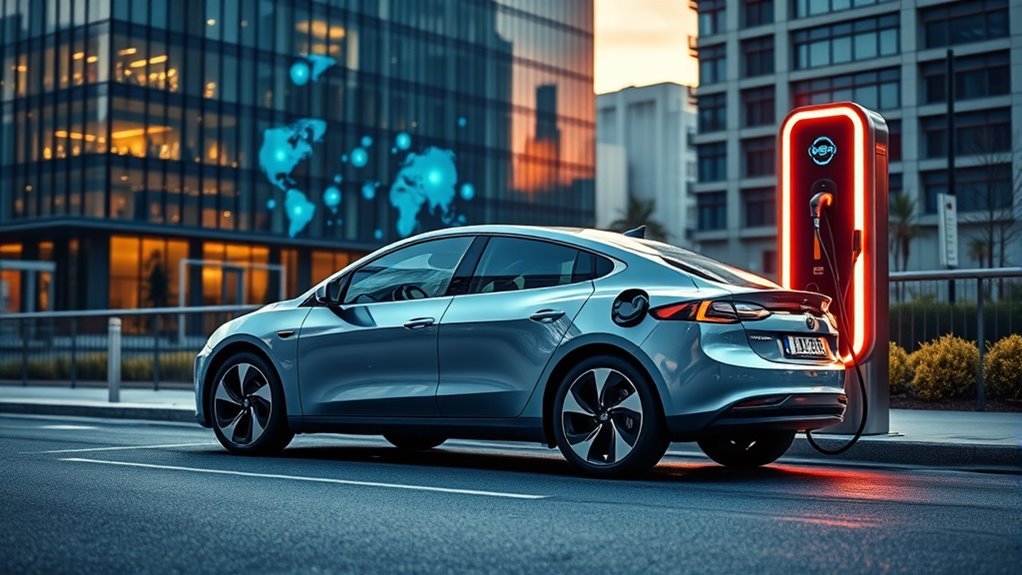
EV charging networks make it easier to recharge your electric vehicle (EV) at home, around town, and on long road trips. But charging stations differ in speed, connector type, availability, and price. Understanding these differences helps you choose compatible chargers, avoid unnecessary fees, and plan reliable charging stops.
Quick Answer
EV charging networks connect charging stations through apps or online platforms that help drivers find chargers, check availability, start sessions, and pay. Level 1 works for slower home charging, Level 2 suits everyday charging, and DC fast charging supports road trips. Choose a network based on your vehicle’s connector, charging speed, location, reliability, and price.
Key Takeaways
- Level 1 and Level 2 charging are useful for daily needs, while DC fast charging is designed for shorter stops.
- Your vehicle’s connector and charging capabilities determine which stations you can use.
- Public charging prices vary by location, network, membership, and time of day.
- Some networks offer guest payment without requiring a paid subscription.
- Check station availability and keep a backup charging location in mind before starting a long trip.
Everything You Need to Know About EV Charging Networks
An EV charging network is a group of charging stations connected through a service platform. Drivers can use the network’s app or website to locate stations, check their status, start a charging session, and manage payments.
A charging network is not the same thing as a charging station. A station location is a physical place that may contain several charging ports. Each port normally charges one vehicle at a time, even if it has multiple connector types.
According to the Joint Office of Energy and Transportation, the United States had approximately 260,500 public EV charging ports on its dashboard when checked on September 23, 2026. This figure changes as charging equipment is added or its reported status changes.
Public charging includes Level 2 stations at workplaces, hotels, parking garages, and shopping centers, along with DC fast chargers at highway stops and other high-traffic locations.
Major providers include Tesla, Electrify America, ChargePoint, EVgo, and Blink. Newer charging networks and partnerships are also expanding access.
How EV Charging Networks Work
A network connects the physical charger with software that manages access, pricing, payments, and station information.
Depending on the location, you may be able to:
- Find a charger through an app or your vehicle’s navigation system.
- Check connector types and available charging power.
- View current prices and possible parking or idle fees.
- Start a session with an app, payment card, RFID card, or supported automatic payment system.
- Monitor charging progress and receive completion notifications.
Some chargers also support Plug & Charge or manufacturer-specific automatic authentication. These systems can identify a compatible vehicle and process payment without requiring a separate action at the charger.
EV Charging Options at a Glance
At a Glance
| Level 1 Charging | 120V AC charging; useful for overnight charging and shorter daily trips. |
| Level 2 Charging | 208–240V AC charging; suitable for home, workplace, and destination charging. |
| DC Fast Charging | High-power public charging; useful for road trips and shorter stops. |
| Network Selection | Compare connector compatibility, nearby locations, charging power, payment methods, and reliability. |
Different Types of EV Chargers: Level 1, Level 2, and Level 3
Understanding charging levels helps you choose suitable equipment for everyday driving and longer trips.
Charging equipment is commonly divided into Level 1, Level 2, and DC fast charging. DC fast charging is sometimes called Level 3, although DC fast charging is the more precise term.
Charging Speed Comparisons
The following estimates reflect typical passenger-EV charging conditions. Actual speeds depend on vehicle efficiency, charger output, battery temperature, and battery charge level.
- Level 1: Uses a standard 120V AC supply and typically adds around 3–5 miles of estimated range per hour. It can work well for short daily commutes and overnight charging.
- Level 2: Uses 208V or 240V AC power and may add roughly 20–30 miles of range per hour, depending on the charger and vehicle.
- DC Fast Charging: Delivers direct current to the vehicle battery. Suitable vehicles may add roughly 100–200 miles or more in 30 minutes under favorable conditions.
These are general estimates from the U.S. Department of Energy’s charging equipment guidance, not guaranteed charging rates.
A charger advertised at 350 kW does not mean every connected vehicle can accept 350 kW. The vehicle’s charging system determines how much power it can use.
Why Charging Slows Near 80%
DC fast charging is usually quicker when the battery is at a lower state of charge. As it fills, the vehicle may reduce charging power to manage battery temperature and protect the battery.
This explains why charging from 80% to 100% can take disproportionately longer than charging through an equivalent range at a lower charge level.
For many road trips, charging enough to reach your next stop is more time-efficient than waiting for a full battery. However, charge higher when your route requires the additional range.
Installation Requirements Overview
Each charging level has different electrical requirements.
Level 1 Installation
Level 1 charging uses a suitable 120V outlet and compatible portable charging equipment.
It generally requires less installation work than Level 2, but the outlet and circuit must safely support a continuous charging load.
Level 2 Installation
Level 2 charging generally requires a dedicated 208V or 240V electrical circuit.
A qualified electrician should assess the home’s electrical capacity, determine the correct circuit requirements, and install equipment according to applicable electrical codes.
Installation costs vary with the electrical panel, wiring distance, equipment selection, and permitting requirements.
DC Fast Charging Installation
DC fast chargers require substantially more electrical infrastructure than ordinary residential equipment.
Commercial installations may involve utility coordination, electrical capacity upgrades, permits, networking equipment, and ongoing maintenance.
DC fast charging is therefore generally associated with public charging sites, highway corridors, and commercial facilities rather than ordinary home installations.
Warning: Do not use damaged charging equipment or an unsuitable household outlet. Avoid extension cords and improvised adapters. Use safety-certified equipment approved for your vehicle, and have electrical installation work performed by a qualified electrician.
EV Charging Connectors: J1772, CCS1, CHAdeMO, and NACS
Charging speed is only one part of compatibility. The physical connector and communication system must also work with your vehicle.
J1772
J1772 is a common North American connector for Level 1 and Level 2 AC charging.
Vehicles equipped with a NACS charging port may use compatible J1772 AC charging equipment through an appropriate adapter.
CCS1
The Combined Charging System, commonly called CCS1 in North America, supports DC fast charging through a connector that adds two large DC contacts below the J1772 connection.
Many EVs use CCS1 for public DC fast charging.
CHAdeMO
CHAdeMO is a DC fast-charging connector found on certain vehicles, including older Nissan Leaf models.
Its availability varies by charging network and location, so drivers should check station listings before traveling.
NACS / SAE J3400
The North American Charging System, or NACS, is based on Tesla’s connector design and is standardized as SAE J3400.
It supports both AC charging and compatible DC fast charging.
Many automakers have introduced NACS-equipped vehicles or provided access through manufacturer-approved adapters.
However, a compatible physical plug does not automatically guarantee that a vehicle can use every Tesla Supercharger.
Note: AC charging adapters and DC fast-charging adapters are not interchangeable. Follow your vehicle manufacturer’s guidance and use only approved equipment for the intended charging type.
Which Charger Is Right for You? Choosing the Best Charging Network
The right EV charging network depends on your daily routine, driving routes, vehicle compatibility, and charging preferences.
Start with the charging locations you expect to use most often rather than selecting a provider based only on its national size.
1. Check Location Availability
Look for stations near your home, workplace, shopping destinations, and common driving routes.
For long trips, check for compatible DC fast chargers along the highway and near planned breaks.
2. Match the Charger to Your Driving Needs
Level 1 may be sufficient for short daily trips when you can charge overnight.
Level 2 is often more convenient for longer commutes, home charging, and destination charging.
DC fast charging becomes useful when you need to replenish range during a journey.
3. Confirm Vehicle Compatibility
Check your vehicle’s charging port, maximum AC charging rate, and DC fast-charging capability.
Some plug-in hybrids support Level 1 and Level 2 charging but cannot use DC fast chargers.
Also confirm whether any required adapter is approved for your vehicle and the charging network.
4. Compare Payment Options and Fees
Networks may support guest payment, free accounts, paid memberships, RFID cards, or automatic vehicle-based payment.
Check the actual station price rather than assuming that one network has a fixed national rate.
5. Consider Station Reliability
Look for locations with several charging ports, recent station status information, and a practical backup nearby.
A nearby charger is less useful if it is frequently unavailable, incompatible with your vehicle, or difficult to access.
Pro Tip: Before relying on an unfamiliar charging network for a road trip, create any required account, add a payment method, confirm your vehicle profile, and check adapter requirements. This can prevent delays when you arrive with a low battery.
How Much Do EV Charging Networks Cost?
Public charging prices depend on the location, provider, charger type, and pricing plan.
Common pricing structures include:
- Per-kWh pricing: You pay for the amount of electricity delivered.
- Time-based pricing: You pay according to charging duration.
- Session fees: A fixed fee may apply when you start charging.
- Membership pricing: Some networks offer discounted rates through optional paid plans.
- Idle fees: Additional charges may apply if you leave your vehicle connected after charging finishes.
Some locations also charge separately for parking.
Example Charging Cost
Suppose a charging station charges $0.45 per kWh and your vehicle receives 40 kWh of electricity.
40 kWh × $0.45 = $18.00
Your energy cost would be $18 before applicable taxes, session charges, or other fees.
This is an illustrative calculation, not a national average or a quoted price from a specific provider.
Are Paid Memberships Worth It?
A paid membership may reduce your charging rate, but the savings should exceed the subscription cost.
For example, if a plan costs $7 per month and saves $0.10 per kWh, you would need to purchase 70 kWh at the discounted rate to offset that monthly fee.
Check the provider’s current terms because discounts and eligible locations vary.
Electrify America offers guest card payment as well as app-based membership options. Its published pricing information also explains how location, plan, and time-of-use pricing affect charging costs.
Top Companies Driving EV Charging Innovation in the U.S.
Several companies operate or support EV charging infrastructure in the United States. Their services differ in station locations, charging speeds, payment methods, and equipment compatibility.
Tesla’s Supercharger Network
Tesla operates an extensive DC fast-charging network with integrated navigation and payment for Tesla vehicles.
Its Supercharger locations include different access categories:
- Tesla-only Superchargers: Restricted to Tesla vehicles.
- All-EV Superchargers: Equipped with Magic Dock adapters for compatible non-Tesla vehicles.
- NACS-access Superchargers: Available to eligible non-Tesla vehicles according to manufacturer access and equipment requirements.
Some eligible non-Tesla drivers can use a manufacturer-approved DC adapter, while vehicles equipped with NACS may not need an adapter.
Access still depends on the vehicle and Supercharger location. Tesla’s app can help identify supported sites.
Tesla also offers an optional paid membership for eligible non-Tesla drivers seeking member pricing. A paid membership is not required simply to access an eligible Supercharger.
For current eligibility and adapter guidance, see Tesla’s official Supercharging Other EVs guide.
Electrify America
Electrify America operates public DC fast-charging stations and supports several payment methods, including guest credit and debit card payments.
Its app provides station details, pricing, charging information, and account management.
Drivers can use the standard Pass option or consider Pass+ membership for discounted charging at eligible locations.
ChargePoint
ChargePoint provides network services for a broad range of charging locations, including Level 2 and DC fast charging.
Drivers can use the ChargePoint app to locate stations, check connector information, start supported sessions, and manage payments.
Charging prices can differ by station because site owners may determine their own fees.
EVgo
EVgo operates public DC fast-charging locations, including charging sites in urban areas and other frequently visited destinations.
Drivers should check the EVgo app or station information for current availability, supported connectors, and payment options.
Emerging Players and Partnerships
The U.S. charging landscape also includes Blink, IONNA, Walmart, and Mercedes-Benz charging initiatives.
Blink expanded its charging business through the acquisition of SemaConnect in June 2022, adding charging equipment and network capabilities.
IONNA, a joint venture backed by major automakers, operates high-power charging locations called Rechargeries. Its network supports CCS and NACS charging options, with amenities varying by location.
Drivers can check IONNA’s official location finder for operating sites and upcoming locations.
Walmart announced plans in April 2023 to develop its own fast-charging network at thousands of Walmart and Sam’s Club locations by 2030.
Mercedes-Benz has also developed public high-power charging locations in North America, with compatible charging access for vehicles from different manufacturers.
These developments give drivers more options beyond established charging networks, although coverage and availability still vary by area.
Assessing Charging Station Access and Availability
Access to charging stations is an important part of EV ownership, particularly for drivers who cannot charge at home.
A charging network’s practical value depends on whether its compatible stations are available where and when you need them.
Charging locations are commonly found at:
- Shopping centers and retail stores.
- Highway service areas and travel stops.
- Hotels and restaurants.
- Workplaces and public parking facilities.
- Dedicated urban charging hubs.
Urban areas often provide more charging choices, while some rural routes require additional planning.
However, the number of stations alone does not tell you whether a particular charger will be available when you arrive.
How to Find a Compatible Charging Station
Start with the U.S. Department of Energy’s Alternative Fueling Station Locator.
You can also use your vehicle’s navigation system or charging-network apps.
Before driving to a station, check:
- The station’s exact location and operating hours.
- Whether it is open to the public.
- The correct connector type.
- Maximum advertised charging power.
- Current availability, where reported.
- Payment options and estimated cost.
- Any parking restrictions or additional fees.
For road trips, identify a second compatible charging location in case your preferred station is occupied or unavailable.
What’s Next for EV Charging: Trends You Should Know
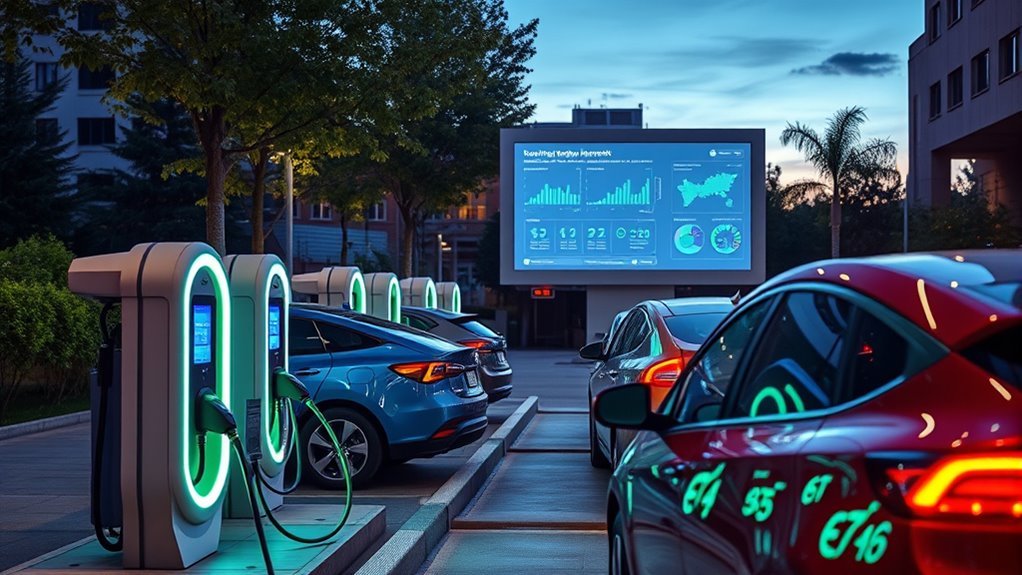
EV charging networks continue to evolve as automakers, charging companies, retailers, and infrastructure providers develop new locations and improve charging technology.
Broader NACS Compatibility
More vehicles and charging providers are adopting NACS/J3400 compatibility.
This can expand charging choices for eligible vehicles, although drivers must still confirm the appropriate adapter and network permissions.
Higher-Power Charging
New charging equipment can offer greater power output, but actual charging performance depends on the vehicle’s capabilities.
A higher advertised charger rating does not automatically produce a faster session for every EV.
Charging Hubs With More Amenities
Networks such as IONNA are developing charging locations that combine high-power equipment with amenities such as restrooms, food, beverages, and waiting areas.
Retail-based charging can also give drivers convenient ways to spend time while their vehicles recharge.
Improved Payment and Network Integration
Vehicle-based authentication, app integration, and charging-network partnerships can reduce the need for separate payment steps.
Supported vehicles may be able to find stations, start charging, and pay through an integrated service.
Network expansion is also supported by different combinations of private investment and public infrastructure programs. The availability of individual sites depends on construction, utility connections, permitting, and ongoing operation.
Better Reliability and Station Information
Reliable status reporting and equipment maintenance are essential as more drivers depend on public charging.
Network operators can improve the experience by providing accurate availability information, clear pricing, functioning payment systems, and timely repairs.
Tips for Hassle-Free Charging on the Go
Charging away from home becomes easier when you understand your vehicle, prepare your payment options, and allow for unexpected delays.
Before You Leave
- Check your vehicle’s current battery level and estimated driving range.
- Identify compatible charging stations along your route.
- Confirm that required charging apps and payment methods work.
- Carry only the cables and adapters recommended for your vehicle.
- Check whether your vehicle supports battery preconditioning before DC fast charging.
- Choose a backup location for longer trips.
When You Arrive
- Confirm that the station and connector match your vehicle.
- Check the displayed charging price and possible idle fees.
- Park so the charging cable reaches your vehicle without excessive tension.
- Start the session using the supported payment or authentication method.
- Check the vehicle or charger display to confirm that charging has started.
When Charging Is Complete
- Stop the charging session using the proper method.
- Disconnect the cable according to the vehicle’s instructions.
- Return the connector to its holder.
- Move your vehicle so another driver can use the charging space.
- Check the final charge amount and any additional fees.
What to Do if a Charging Station Is Not Working
If a charger fails to start or stops unexpectedly, use this troubleshooting sequence:
- Check whether the charger is marked unavailable in the network app.
- Confirm that your vehicle supports the connector and charging method.
- Make sure the connector is correctly inserted and secured.
- Check the vehicle display for charging restrictions or error messages.
- Verify that your payment method is accepted.
- Follow the charger’s displayed instructions for safely ending or restarting a session.
- If the problem continues, contact the network’s support service using its official app or the contact information displayed on the equipment.
- Move to another compatible port or your backup charging station if needed.
Report faulty charging equipment so the operator can investigate it.
Warning: Never attempt to repair public charging equipment yourself. If you notice exposed wiring, damaged connectors, unusual heat, smoke, or other signs of electrical danger, stop using the charger and contact the operator. Never force a locked connector out of your vehicle.
Frequently Asked Questions
How Do EV Charging Networks Impact Battery Life?
Battery health depends on charging habits, temperature, battery chemistry, and the vehicle’s battery management system. Frequent high-power charging under unfavorable conditions may contribute to battery wear, but DC fast charging is a supported feature of compatible vehicles. Follow your manufacturer’s recommended charging limits and battery-care guidance.
Are There Subscription Fees for Using Charging Networks?
Some charging networks offer optional paid memberships with discounted charging rates. Others provide free accounts or guest payment options. Tesla and Electrify America both offer eligible charging access without requiring a paid membership. Check the station’s current pricing and terms before charging.
Can I Charge My EV at Home With These Networks?
Yes, you can charge an EV at home with compatible Level 1 or Level 2 equipment. Home charging normally does not require membership in a public charging network. Some connected home chargers offer app-based scheduling and monitoring. A qualified electrician should assess the electrical installation when required.
What Happens if a Charging Station Is Out of Order?
Check the network app for another available port or nearby station. Report the problem through the operator’s official support channel. If the charging connector is stuck, follow your vehicle’s instructions and contact support rather than forcing it free.
Are There Mobile Apps for Locating Charging Stations?
Yes. The DOE Alternative Fueling Station Locator, charging-network apps, and many vehicle navigation systems can help drivers find stations. Available features may include connector filters, charging speed, pricing, directions, and current station status.
Can Every EV Use a Tesla Supercharger?
No. Some Superchargers are restricted to Tesla vehicles, while others support eligible non-Tesla vehicles. Access depends on the vehicle manufacturer, charging port, adapter requirements, and location. Check Tesla’s official compatibility information before traveling.
Is DC Fast Charging Always Faster Than Level 2?
DC fast charging generally delivers energy more quickly to compatible vehicles. However, actual charging power depends on the vehicle, battery temperature, charger output, and state of charge. Charging may slow significantly as the battery approaches full.
Do I Need an Adapter to Use Public EV Charging Stations?
That depends on your vehicle’s charging port and the station connector. Some vehicles need an approved adapter for certain AC or DC chargers. These adapters serve different purposes and are not interchangeable. Always follow your vehicle manufacturer’s compatibility guidance.
Conclusion
Choosing the right EV charging network comes down to understanding your vehicle and matching your charging needs with the available infrastructure.
Level 1 and Level 2 charging can support everyday driving, while DC fast charging makes longer journeys more practical. Before using a public station, verify its connector, charging power, availability, payment options, and fees.
With compatible equipment, reliable station information, and a backup charging location, you can reduce charging delays and enjoy a more convenient EV ownership experience.
Sources
- U.S. Department of Energy — Electric Vehicle Charging Stations — Charging levels, connector standards, equipment requirements, and charging-speed estimates.
- Joint Office of Energy and Transportation — U.S. public charging infrastructure information and national charging-port statistics.
- DOE Alternative Fueling Station Locator — Public charging locations and station information.
- U.S. Department of Energy — Charging Electric Vehicles at Home — Residential charging, electrical installation, and safety guidance.
- Tesla — Supercharging Other EVs — Supercharger access, NACS compatibility, adapters, and membership information.
- Electrify America — Pricing and Plans — Guest payment, memberships, charging prices, and additional fees.





Leave a Reply