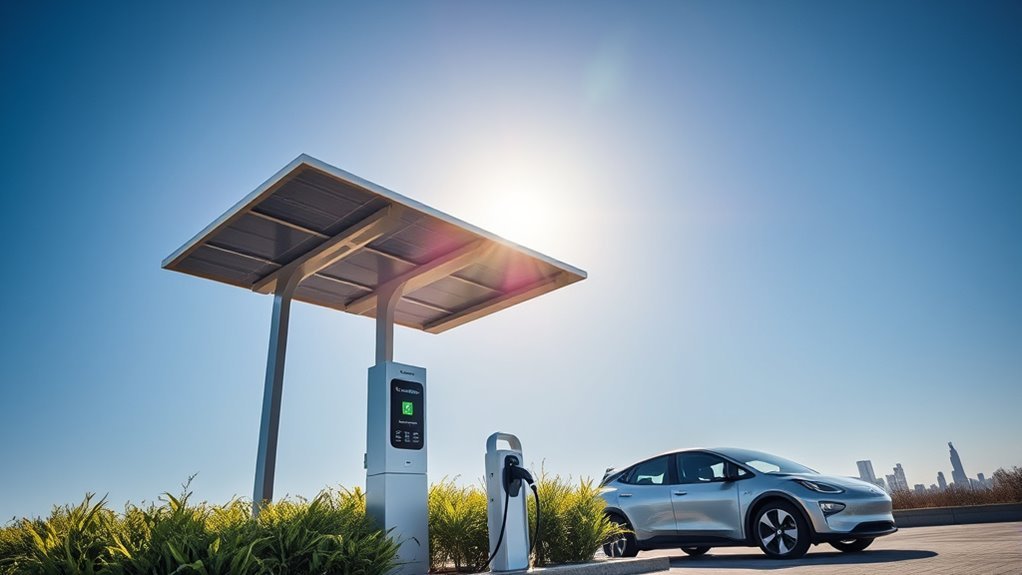
Solar-powered EV charging stations convert sunlight into electricity using photovoltaic (PV) arrays, which generate direct current (DC) that’s then transformed into alternating current (AC) for charging your vehicle. With energy storage systems in place, you can charge your EV even during cloudy days or at night. Their smart controllers optimize energy flow and vehicle queues, ensuring efficiency. Discover the innovations and benefits further enhancing the potential of solar charging stations in today’s evolving energy landscape.
How Solar-Powered EV Charging Stations Work
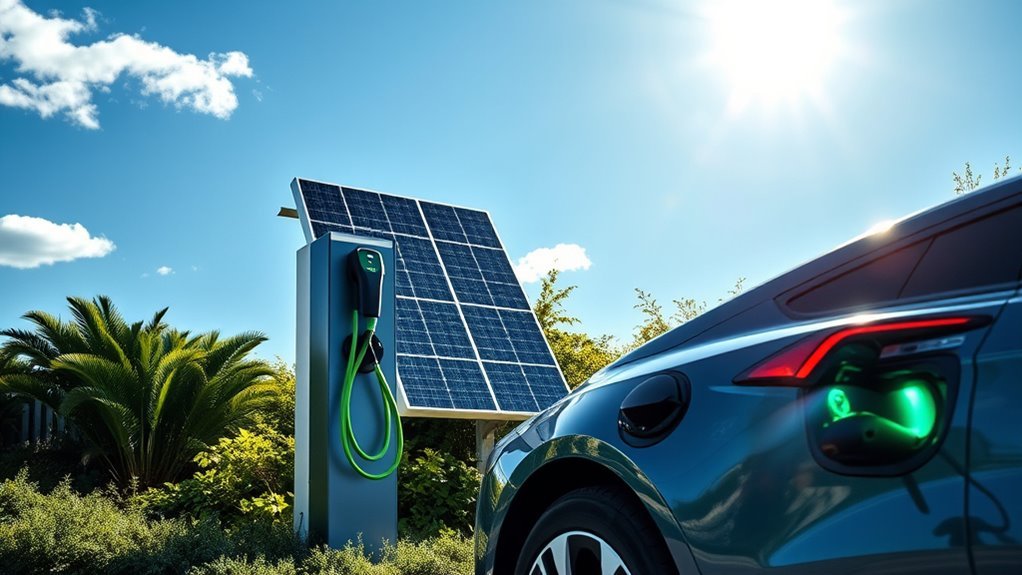
When you consider how solar-powered EV charging stations function, it’s impressive to see how sunlight is transformed into usable electricity. These systems harness solar energy through photovoltaic (PV) arrays, capturing sunlight and converting it into direct current (DC) electricity.
Solar-powered EV charging stations expertly convert sunlight into usable electricity through advanced photovoltaic technology.
An inverter then steps in, converting this DC into alternating current (AC), which is vital for charging electric vehicles. To maximize charging efficiency, energy storage systems, like batteries, are integrated, enabling charging even during nighttime or cloudy conditions.
Smart controllers play an important role, monitoring energy flow, vehicle queues, and battery levels. This optimization guarantees that solar energy is utilized effectively, supporting grid stability when necessary.
In a typical setup, you’ll find solar panels, a smart inverter, and a Level 2 EV charger, all designed to meet the electricity consumption needs of electric vehicles while liberating you from reliance on traditional energy sources.
Key Components of Solar EV Charging Stations
When you explore solar EV charging stations, you’ll find that solar panel arrays are fundamental, harnessing sunlight to generate the necessary electricity.
Coupled with energy storage systems, these components guarantee that you can charge your vehicle efficiently, even when sunlight is scarce.
Solar Panel Arrays
Solar panel arrays serve as the backbone of solar-powered EV charging stations, efficiently converting sunlight into the electricity needed to charge electric vehicles. Comprising photovoltaic (PV) cells, these arrays generate direct current (DC) electricity, essential for powering EVs.
To meet an average EV’s annual consumption of about 4,666 kWh, you’ll typically need 20 to 30 solar panels. Optimizing solar panel efficiency is vital, so consider solar array configurations that maximize sunlight capture, particularly during peak hours.
Integrating microinverters or smart inverters transforms DC electricity into alternating current (AC), making it suitable for charging EV batteries. By strategically installing these arrays on rooftops or carports, you not only harness renewable energy but also protect your vehicles from the elements.
Energy Storage Systems
Energy storage systems are pivotal in enhancing the functionality of solar-powered EV charging stations. They capture excess solar energy generated during the day, ensuring you can charge your vehicle even at night or during cloudy spells.
By stabilizing the energy supply, these systems maximize operational efficiency, providing consistent charging regardless of solar availability. Utilizing advanced lithium iron phosphate (LiFePO4/LFP) batteries, you benefit from exceptional battery longevity and energy efficiency, with lifespans exceeding 10 years when managed properly.
Smart controllers integrate seamlessly, optimizing energy flow based on battery levels and grid conditions. Additionally, they offer backup power during outages, empowering you with greater energy independence and resilience, ultimately liberating your charging experience from traditional grid constraints.
Benefits of Solar Power for EV Charging
By harnessing solar power for EV charging, you greatly cut down on long-term costs, as the initial investment in solar panels pays off quickly with free electricity.
This approach not only saves you money but also plays an essential role in reducing your carbon footprint, directly impacting air quality.
As you shift to solar, you’re not just charging your vehicle; you’re contributing to a more sustainable future.
Cost Savings Over Time
While many EV owners grapple with rising utility costs, tapping into solar power for charging can lead to significant long-term savings. By harnessing solar energy, you could save an average of $247 annually compared to traditional grid electricity.
Once your solar system pays for itself, you’ll benefit from free electricity, drastically improving cost efficiency over time. Public charging stations can hit around $1,058 a year, making home solar charging a financially savvy choice.
Additionally, utilizing solar power allows you to gain energy independence and shield yourself from escalating utility rates. With a 30% federal solar tax credit, now’s the perfect time to invest in solar EV charging and secure those long-term savings.
Environmental Impact Reduction
Harnessing solar power for EV charging not only leads to substantial cost savings but also plays a pivotal role in reducing environmental impact.
By utilizing renewable energy, you can considerably minimize your carbon footprint and contribute to emissions reduction. Here are three key benefits:
- Greenhouse Gas Reduction: Solar-powered charging replaces fossil fuels, which account for over 50% of U.S. emissions from transportation and electricity generation combined.
- Energy Independence: You’ll avoid fluctuating utility rates and potential grid failures, promoting sustainable mobility solutions.
- Enhanced Property Value: Homes with solar EV charging systems attract eco-conscious buyers, reflecting a commitment to environmental sustainability.
What Makes Solar EV Charging Stations Challenging?
Although the promise of solar-powered EV charging stations is compelling, several challenges hinder their widespread implementation. Weather conditions and daylight hours heavily influence the efficiency of these systems, limiting energy capture and reducing charging capabilities.
Site selection plays a critical role; inadequate space or poor orientation of solar panels can drastically affect energy production. Additionally, regulatory hurdles often introduce delays due to complex compliance with local zoning laws and the lengthy permit acquisition process.
Despite decreasing prices for solar technology, the initial capital costs for equipment and installation remain high, deterring potential investors. Furthermore, ongoing maintenance requirements, including routine checks and cleaning of solar panels, add operational challenges that can strain resources.
These factors create a landscape where the promise of solar EV charging stations, while revolutionary, faces significant obstacles that need addressing for broader adoption.
Emerging Innovations Shaping the Future of Solar EV Charging
As innovations continue to emerge, the future of solar EV charging is being reshaped by technologies that enhance efficiency and accessibility.
You’ll find that several key advancements are transforming this landscape:
- Smart Inverters: These optimize energy flow, maximizing solar power usage for EV charging.
- Hybrid Systems: By combining battery storage and grid connections, these systems guarantee reliable charging even in low sunlight conditions.
- Advanced Monitoring: Systems track vehicle queues, battery levels, and grid conditions, allowing for better energy distribution at charging stations.
Moreover, the rise of modular infrastructure enables scalable investments tailored to demand.
Innovative designs like solar carports not only protect vehicles from weather but also harness renewable energy, making charging more sustainable.
Together, these developments usher in a new era for solar EV charging, providing a more efficient, reliable, and environmentally friendly solution for your transportation needs.
How Does Solar Charging Compare to Traditional Methods?
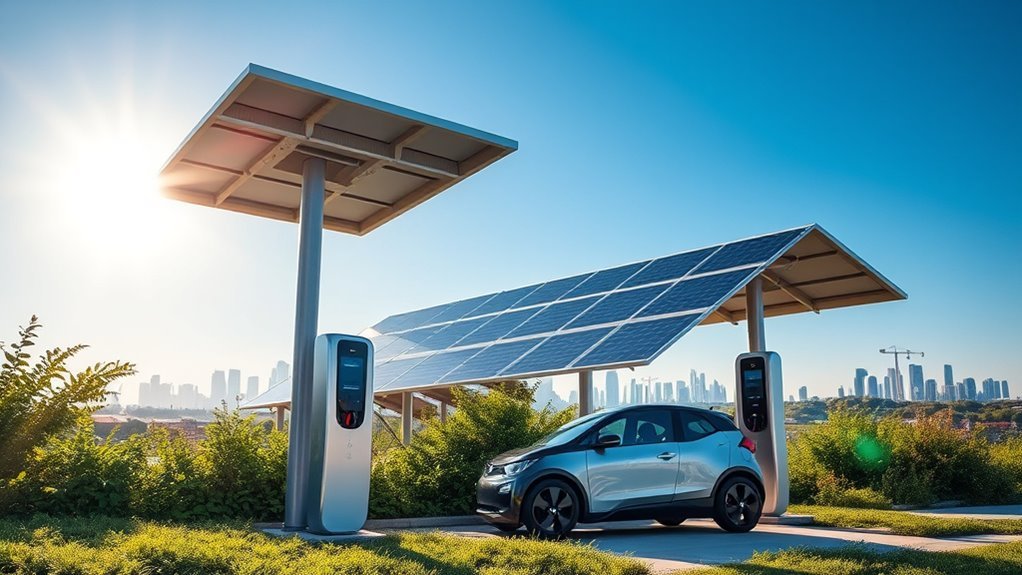
The advancements in solar EV charging technologies present a compelling alternative to traditional charging methods. By harnessing solar energy efficiency, you can considerably cut your annual charging costs to around $415, compared to $662 using grid power. Public charging stations elevate this expense even further, averaging $1,058 annually. This stark contrast highlights how solar solutions empower EV owners to achieve financial freedom while capitalizing on renewable energy.
Moreover, solar-powered charging mitigates reliance on fluctuating electricity prices, offering stability that conventional methods lack. Integrating battery storage into your solar system enhances this independence, providing backup power during outages.
As charging infrastructure improvements continue to evolve, the benefits of solar EV charging become even more pronounced, paving the way for a sustainable future. Ultimately, choosing solar not only liberates you from high energy costs but also aligns your transportation with a cleaner, more resilient energy landscape.
Frequently Asked Questions
Do Solar Powered EV Chargers Work?
Yes, solar-powered EV chargers work effectively by harnessing solar efficiency to convert sunlight into electricity. Their charging speed can be optimized, providing a sustainable and cost-effective solution for powering your electric vehicle with renewable energy.
What Is the 80 20 Rule for EV Charging?
The 80/20 rule for EV charging emphasizes that you can optimize charging efficiency by charging to 80% quickly. This method enhances energy savings and prolongs battery life, reducing time spent at charging stations and improving overall performance.
What Are the Disadvantages of Solar Chargers?
You face disadvantages with solar chargers, including limited solar efficiency during poor weather, high upfront costs, potential space issues, ongoing maintenance demands, and regulatory delays, all complicating your investment and operational decisions in solar technology.
How Does a Solar Charging Station Work?
Imagine sunlight dancing on solar panel technology, transforming into electricity. You harness this energy, charging your vehicle while energy storage systems guarantee power’s available even when the sun sets, liberating you from traditional charging constraints.
Conclusion
As you stand beneath the shimmering solar panels, envisioning the sun’s rays transforming into clean energy, it becomes clear that solar-powered EV charging stations are more than just a trend—they’re a revolution. With each charge, you’re not just fueling your vehicle; you’re harnessing the essence of sustainability. Embracing these innovations not only powers your journey but also paints a brighter, greener future. The road ahead is illuminated by the synergy of technology and nature, inviting you to drive towards change.







Leave a Reply