Quick Answer
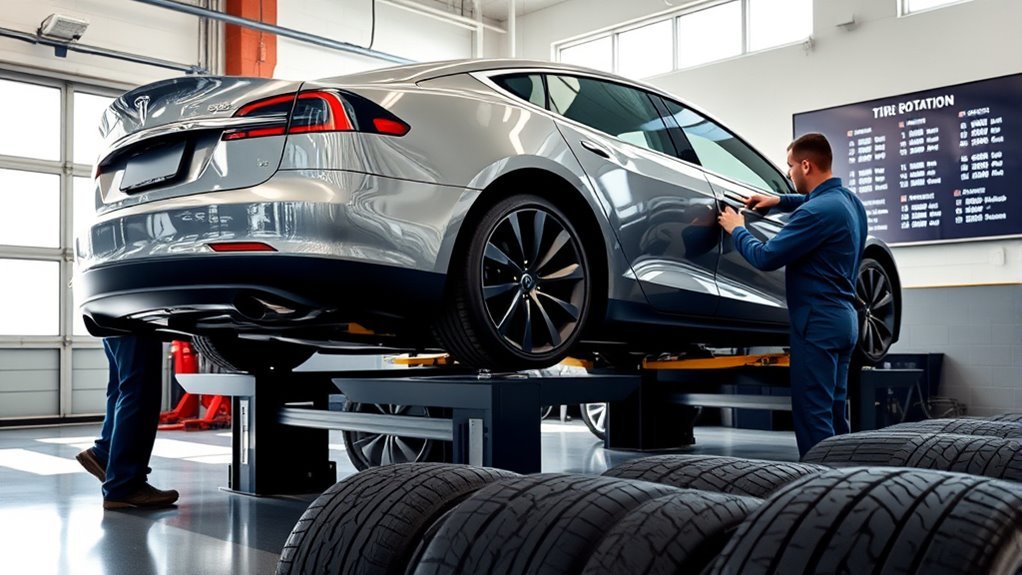
Rotate your Tesla tires every 6,250 miles to ensure even tread wear and maintain vehicle handling. You should also check your tires sooner if you notice a tread depth difference of 2/32 inches or more between any two tires.
Do you want your Tesla to maintain its smooth handling and efficiency for years to come? Neglecting your tires causes uneven wear that forces you to buy expensive replacements far too soon. This guide shows you exactly how to manage your tire maintenance and extend the life of your set.
Key Takeaways
- Rotate tires every 6,250 miles as Tesla suggests to maintain even tread wear.
- Perform a rotation sooner if you measure a tread depth difference of 2/32 inches or more.
- Inspect tires regularly for scuffing or uneven patches to catch issues early.
- Use professional service centers to ensure technicians follow correct lifting and torque procedures.
Understanding Tesla Tire Rotation Guidelines

Proper tire maintenance remains vital for your Tesla’s performance. Tesla requires tire rotations every 6,250 miles to ensure even tread wear and ideal handling.
This practice helps your tires last longer and improves your efficiency. If your tread depth varies by 2/32 inches or more, rotate the tires early to avoid alignment problems.
Seasonal changes also impact your tires. Switching to winter or summer tires changes wear patterns, so adjust your schedule based on these transitions.
Signs That Your Tires Need Rotation
You can identify when your tires require attention by watching for specific physical cues. Monitor your vehicle once you reach the 6,250-mile mark or if you feel changes in steering.
Visual inspections often reveal scuffing or worn indicators before they cause a safety hazard. Always check your tires during your monthly vehicle wash.
Uneven Tread Wear
Uneven wear affects your safety and your car’s range. Watch for these specific signs that indicate you need a rotation:
- Tread depth differences of 2/32 inches or more between tires.
- One side of a tire shows more wear than the other.
- Tread depth gauges indicate any tire has less than 4/32 inches of tread remaining.
- Wear bars appear flush with the tread surface.
Mileage Milestone Reached
Track your mileage carefully to guarantee you stay within the 6,250-mile window. Significant wear differences occur quickly in high-torque electric vehicles.
Driving styles and road conditions influence your specific wear patterns. Some owners choose to rotate more frequently if they drive in hilly areas or stop-and-go traffic.
Visual Inspection Indicators
Tracking mileage gives you a baseline, but physical checks tell the real story. Look for these four visual cues:
- Check for depth variance using a standard gauge.
- Examine tread bars to see if they match the surface level.
- Search for feathering or cupping on the inner tire edges.
- Inspect wheel wells for abnormal dust or debris buildup.
Why Tire Rotation Frequency Matters for Performance
Electric vehicles provide instant torque, which puts more strain on tires than gas-powered cars. Rotating your tires every 6,250 miles ensures that the drive and non-drive tires share the burden of that power.
This distribution of wear extends the overall life of your set. If you drive an All-Wheel Drive model, your wear pattern may differ from a Rear-Wheel Drive version, but the 6,250-mile rule remains the safest standard to follow.
Best Practices for Tesla Tire Rotation
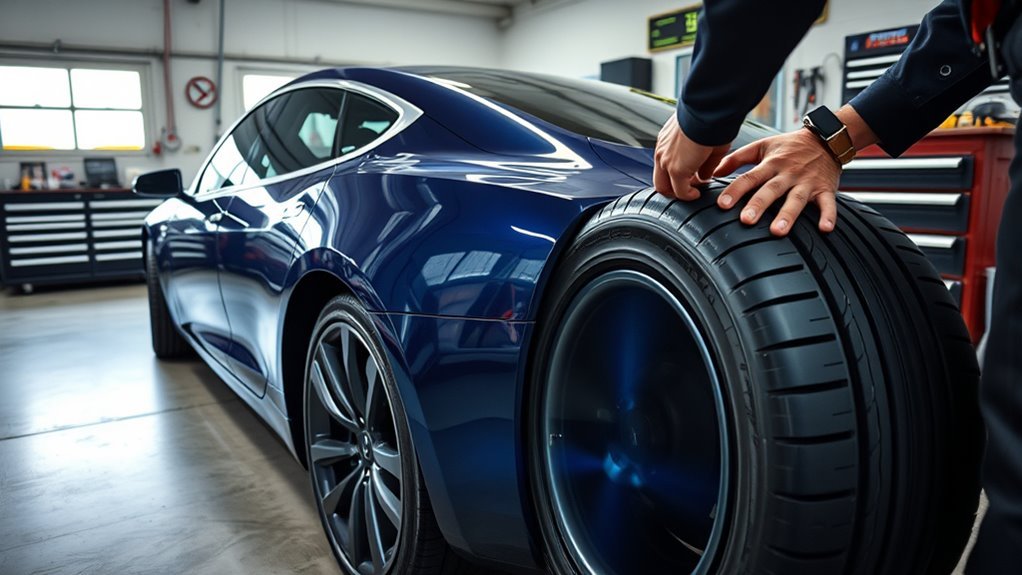
Following industry standards protects your investment and ensures your Tesla stops and turns as expected. Use these professional tips for your next service:
- Rotate at the 6,250-mile interval without exception.
- Measure tread depth to identify uneven wear before it becomes a problem.
- Place new tires on the rear axle to prevent oversteer.
- Consult your owner’s manual for specific tire pressure settings.
DIY Tire Rotation: Steps and Safety
If you prefer to perform your own rotation, ensure you have the correct equipment. Working with a vehicle of this weight requires strict adherence to safety protocols.
Essential Tools for DIY Rotation
Gather these tools before you start your project:
- A high-quality hydraulic jack and jack stands.
- A torque wrench capable of meeting Tesla specifications.
- A lug wrench or impact driver with the correct socket size.
- A reliable tread depth gauge for measuring wear.
Steps for a Successful Rotation
Follow these steps to complete the task safely:
- Lift the vehicle properly using specified jack points.
- Remove the wheels and inspect each for damage.
- Move the tires to their new positions while respecting directional tread patterns.
- Tighten lug nuts in a star pattern using your torque wrench to avoid uneven stress.
- Update your tire rotation status in the car’s Service menu.
Safety Requirements
Always work on a level concrete surface to prevent rolling. Never rely solely on a floor jack while removing or installing wheels. Use jack stands for support and wear protective eyewear to prevent eye injuries from road debris.
Always consult your owner’s manual or a certified technician before performing mechanical work on your vehicle.
Professional vs. DIY Tire Maintenance
Many owners choose authorized service centers because technicians there understand Tesla-specific lifting requirements. Using a shop that lacks this knowledge can damage your battery casing or frame.
If you use an independent tire shop, verify they know how to lift a Tesla. Some shops offer free rotation with tire purchases, which saves you money over the life of the vehicle.
How Driving Habits Influence Tire Health
Your driving style directly correlates to how fast your tread wears down. Consider how these factors change your needs:
- Aggressive starts force the motors to work harder, accelerating rear tire wear.
- High-speed cornering adds friction that leads to edge wear.
- Driving on rough roads leads to premature degradation compared to smooth highways.
- Frequent short trips may prevent tires from reaching stable temperatures, affecting rubber flexibility.
Common Mistakes to Avoid
Do not wait for your car to alert you to rotate your tires, as no such warning exists. Relying on visual guesses often fails because you cannot see inner-tread wear while the wheels remain on the car.
Never rotate only two tires, as this causes significant handling imbalances between the front and rear axles. Always treat your tires as a set to ensure consistent traction.
Frequently Asked Questions
How Often Should I Rotate My Tesla Tires?
Tesla suggests rotating tires every 6,250 miles. This frequency accounts for the unique power delivery of electric motors.
Does Tesla Send Rotation Alerts?
No, your Tesla will not notify you when to rotate your tires. You must track your mileage through the odometer or the Tesla app.
What Rotation Pattern Is Correct?
For most Teslas, rotate front to rear on the same side. If you have directional tires, you must follow the arrows on the sidewall to ensure they continue to rotate in the correct direction.
Conclusion
Rotating your tires every 6,250 miles remains the most effective way to protect your Tesla’s handling and tire investment. Check your tread depth regularly to catch uneven wear before it causes major performance issues. Book your next appointment or set a reminder today to keep your Tesla driving at its best.







Leave a Reply