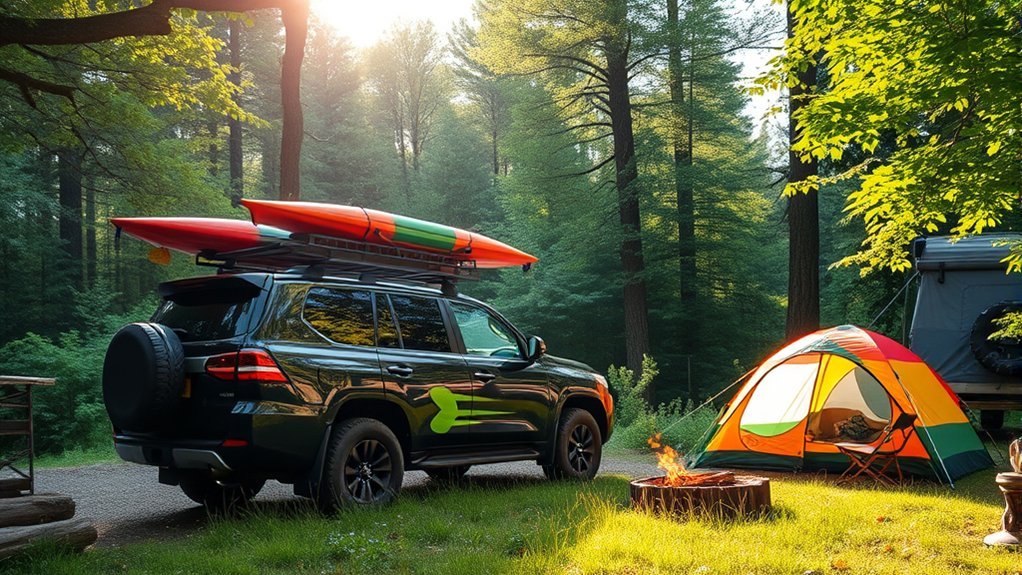
Choosing the right car for camping in the UK is about more than finding a large boot. For your 2026 camping adventures, you need enough room for passengers, sleeping arrangements, and gear without making everyday driving difficult. An SUV, estate car, compact MPV, or camper-equipped van can work well, depending on your budget and travel plans. Before deciding, compare usable cargo space, fuel efficiency, comfort, weather protection, and access to your chosen campsite.
Quick Answer
The best cars for camping in the UK include the Dacia Jogger, Volkswagen Caddy California, Škoda Kodiaq, Ford Tourneo Connect, and Dacia Duster 4×4. Choose a spacious MPV or camper for sleeping inside, an SUV for carrying family equipment, or a suitable 4×4 for challenging campsite access. Always check actual sleeping dimensions, payload, and accessory compatibility.
Key Takeaways
- Choose your vehicle according to whether you plan to sleep inside, pitch a separate tent, or tow a caravan.
- The Dacia Jogger offers a dedicated sleeping accessory, while the Caddy California has an integrated camper-style arrangement.
- A large boot is useful, but sleeping length, floor shape, passenger space, and payload matter just as much.
- Four-wheel drive is useful for some rough or muddy routes, but it is not essential for ordinary campsites.
- Check roof-load ratings, towing limits, insurance, and campsite rules before travelling.
- Never use a portable fuel-burning stove or heater inside an ordinary car or enclosed tailgate tent.
Top Camping Car Picks for the UK
These five vehicles offer different ways to enjoy camping. Some provide space for sleeping inside, while others suit families carrying tents, cooking equipment, bicycles, and other outdoor gear.
The right choice depends on your budget, passenger count, usual campsite access, and whether the vehicle must also serve as your everyday car.
| Vehicle | Camping Strength | What to Check |
|---|---|---|
| Dacia Jogger | Versatile family vehicle with an available Sleep Pack. | Sleeping accessory cost, seat configuration, and luggage storage. |
| Volkswagen Caddy California | Dedicated folding bed and camper-style equipment. | Used availability, condition, kitchen equipment, and service history. |
| Škoda Kodiaq | Large family SUV with generous luggage capacity. | Five- versus seven-seat layout and powertrain-specific boot volume. |
| Ford Tourneo Connect | Tall cabin, practical loading access, and flexible passenger space. | Standard versus Grand body length and seat-folding arrangements. |
| Dacia Duster 4×4 | Suitable for buyers who regularly encounter challenging access routes. | Actual 4×4 specification, tyre suitability, and interior sleeping space. |
Dacia Jogger: A Practical Family Camping Car
The Dacia Jogger combines everyday passenger-car use with a flexible interior. It is worth considering if you want to transport family members during the week and use the same vehicle for camping trips.
Dacia offers an InNature Sleep Pack that turns the rear cabin into a sleeping area. The manufacturer describes a fold-out double bed approximately 190 cm long, with a storage box and mattress.
The arrangement is designed for two sleepers. Installation involves configuring the rear seats, including removing the third-row seats where applicable.
Why consider it: You can add a dedicated sleeping solution without buying a full-size campervan.
What to check: The Sleep Pack uses part of the vehicle’s carrying capacity and luggage area. Confirm its compatibility with your model and leave enough room for bedding, clothing, and camping supplies.
Volkswagen Caddy California: A Compact Camper Alternative
If sleeping inside the vehicle is your main priority, the Volkswagen Caddy California offers a more dedicated arrangement than a conventional SUV.
Volkswagen specifies a folding bed measuring 1,980 mm by 1,070 mm. Its camper equipment also includes a pull-out mini kitchen designed for outdoor use.
The Volkswagen UK Caddy California page currently states that this version is closed for new orders. Buyers should therefore check availability through authorised dealers or the used market rather than assume a new vehicle can be ordered.
Why consider it: It provides a purpose-designed sleeping area while retaining the dimensions of a compact van-based vehicle.
What to check: Inspect the bed mechanism, mattress, cooking equipment, seals, ventilation, and evidence of dampness when buying used.
Note: The standard Volkswagen Caddy and the Caddy California are different configurations. Do not assume an ordinary Caddy includes the California’s bed or camping equipment.
Škoda Kodiaq: A Spacious SUV for Family Camping
The Škoda Kodiaq is worth considering if your camping trips involve several passengers, a large tent, sleeping bags, cooking equipment, and other luggage.
According to Škoda UK’s official boot-space information, the five-seat Kodiaq configuration offers up to 910 litres with the seats upright and 2,105 litres with the rear seats folded. The plug-in hybrid version has different figures.
The large load area makes it useful for carrying bulky equipment, but a generous litre figure does not automatically guarantee a flat or comfortable sleeping platform.
Why consider it: It combines passenger comfort with significant luggage space.
What to check: Confirm the seating configuration, engine type, usable load length, towing approval, and whether the rear seats fold to a suitable angle.
Ford Tourneo Connect: Flexible Space for Camping Gear
The Ford Tourneo Connect offers a tall, practical cabin that can be useful when loading bulky camping equipment.
The longer Grand Tourneo Connect provides additional interior length. Ford’s official dimensions and specifications distinguish the standard and Grand versions, including their load lengths and luggage volumes.
Why consider it: Its shape can make carrying equipment and planning a removable sleeping platform easier than in some lower-roof cars.
What to check: Measure the exact vehicle with the seats configured for camping. Check whether your intended mattress, storage boxes, and equipment fit without blocking essential access.
Dacia Duster 4×4: For More Challenging Campsite Access
The Dacia Duster is an option when your trips regularly involve uneven tracks, muddy approaches, or exposed rural locations where permitted vehicle access is difficult.
Dacia documents available four-wheel-drive configurations and driving modes on its official Duster page.
However, not every Duster version has the same drivetrain. Check the exact model rather than assuming that the SUV badge means four-wheel drive.
Why consider it: A suitable 4×4 configuration can provide additional traction on difficult surfaces.
What to check: Tyres, ground clearance, drivetrain, payload, and whether the sleeping area is large enough for your needs.
The Duster may suit someone who carries a separate tent better than someone who expects a spacious bedroom inside the vehicle.
Camping Accessory Pick: KAMPKEEPER SUV Car Tent
A suitable car can become more useful with an attached tailgate shelter. The KAMPKEEPER SUV Car Tent is an accessory rather than a vehicle recommendation. It may provide extra covered space for camping furniture, equipment, and outdoor activities.
Affiliate disclosure: This article contains Amazon affiliate links. We may earn a commission from qualifying purchases at no additional cost to you.
| KAMPKEEPER SUV Car Tent for Camping and Travel |  |
Versatile Tailgate Camping Tent | Listed Dimensions: 71.12 x 27.94 x 20.83 cm | Listed Weight: 9.16 kg; verify selected variant | Material: Polyester | VIEW LATEST PRICE | Read Our Analysis |
More Details on Our Camping Accessory Pick
-
KAMPKEEPER SUV Car Tent for Camping and Travel
If you’re looking for a versatile camping solution that adapts to your vehicle, the KAMPKEEPER SUV Car Tent is worth considering as an additional shelter.
The product is advertised as a polyester tailgate tent with a single-pole setup, zippered closure, and mesh windows for ventilation and visibility. Its listing claims more than 110 square feet of shade and an approximate 10-minute setup time.
The tent is also advertised with seam treatment and a UV-protective coating. These are product claims rather than independently tested weather-performance guarantees.
Its design may help create a more comfortable area for equipment, chairs, and outdoor activities during camping trips or festivals.
Before purchasing, confirm that the chosen version fits your vehicle’s tailgate height, width, and shape. Check the actual packed weight and assembled dimensions, because product listings and variants can differ.
Do not assume that a product advertised for four-season use is suitable for severe wind, snow, or exposed mountain conditions.
- Listed Dimensions:71.12 x 27.94 x 20.83 cm; confirm whether these are packed dimensions
- Listed Weight:9.16 kg; verify the selected version
- Material:Polyester
- Seasons:Advertised as 4 Season
- Shade Area:Advertised as 110+ square ft
- Setup Time:Approximately 10 minutes according to the product description
- Additional Feature:Zipper closure for privacy
- Additional Feature:Mesh windows for ventilation
- Additional Feature:Advertised UV-protective silver coating
Pro Tip: Measure your vehicle’s rear opening with the tailgate fully raised before buying an attached tent. Also check that the campsite allows tailgate shelters and that you have enough space to secure the tent without obstructing neighbouring pitches.
Factors to Consider When Choosing Cars for Camping UK
When you’re choosing a car for camping in the UK, think about how you will actually use it. Vehicle size, fuel efficiency, off-road capability, cargo space, and passenger comfort can all affect your experience.
It is also important to check whether you need a roof rack, whether you will tow a caravan, and how the vehicle will handle changing British weather.
Vehicle Size Considerations
Choosing the right vehicle size helps make camping more comfortable without creating unnecessary problems when driving or parking.
A larger vehicle, such as an SUV, compact MPV, or passenger van, may provide more room for sleeping arrangements and storage. However, a smaller estate car may be perfectly suitable when you plan to sleep in a separate tent.
Consider the following measurements:
- Interior length: Measure the usable space with the rear seats folded or removed.
- Interior width: Check the narrowest point between the wheel arches.
- Interior height: Consider the space above your mattress or sleeping platform.
- Passenger space: Ensure everyone has a proper seat and seat belt while travelling.
- Vehicle height: Include roof bars, roof boxes, or rooftop tents when checking car park and height-barrier clearance.
Look for flat cargo areas or folding seats that make it easier to carry tents, coolers, sleeping bags, and larger equipment.
If you intend to sleep inside, test the actual arrangement before buying. A vehicle with a large boot may still have a short, uneven, or narrow sleeping area.
Fuel Efficiency Importance
Fuel efficiency affects your travel costs, especially when your camping trips involve long motorway journeys.
Compare official combined fuel-consumption figures for the exact engine and transmission you are considering. Do not assume that every model with the same name delivers identical economy.
A car that achieves good fuel economy on a short journey may use more fuel when carrying several passengers, heavy equipment, roof-mounted accessories, or a trailer.
For a realistic comparison:
- Check official combined mpg or energy-consumption figures.
- Estimate the distance of your usual camping journey.
- Consider the impact of a fully loaded vehicle.
- Include servicing, tyres, insurance, and depreciation when comparing ownership costs.
Smaller engines do not automatically mean lower maintenance costs, and fuel economy does not increase the amount of weight your car is legally allowed to carry.
Off-Road Capability Needs
Not every camping trip requires four-wheel drive. Many established UK campsites have surfaced or maintained access roads that can be reached in an ordinary two-wheel-drive car.
However, if you regularly encounter muddy fields, uneven tracks, or steep approaches, ground clearance and additional traction may become more important.
Look at:
- Ground clearance: Helps reduce the risk of scraping the underside on uneven surfaces.
- Drivetrain: Check whether the exact version has two-wheel drive, all-wheel drive, or four-wheel drive.
- Tyres: Suitable tyres can make a substantial difference to traction.
- Suspension: Check its condition and suitability for the intended load.
- Approach and departure angles: Relevant when entering steep tracks or crossing obstacles.
A larger or heavier vehicle is not automatically more capable on soft ground. Traction, tyres, weight, and driver judgement all matter.
Warning: Four-wheel drive does not give you permission to drive across fields, public footpaths, or protected countryside. Stay on authorised vehicle routes and follow campsite instructions.
Cargo Space Requirements
When you’re preparing for a camping trip, usable cargo space determines how easily you can carry everything you need.
Rather than relying on a universal boot-volume target, make a list of your actual equipment and compare it with the vehicle’s measurements.
Typical items include:
- Tent, poles, pegs, and groundsheet.
- Sleeping bags, pillows, and sleeping mats.
- Cooking equipment and food storage.
- Camping chairs and a folding table.
- Clothing, waterproofs, and footwear.
- Water containers and essential safety equipment.
Flat-folding rear seats can improve usability, while roof boxes and hitch-mounted carriers may create additional storage options.
Remember that the published boot capacity may be measured with seats upright, folded, or removed. Compare figures using the same method whenever possible.
Always check the vehicle’s permitted weight limits. Passengers, accessories, luggage, and other equipment all contribute to the total load.
Comfort for Passengers
After confirming you have enough space for your camping gear, consider passenger comfort during long journeys.
Look for adequate legroom and headroom, supportive seats, effective heating and air conditioning, and enough storage for personal items.
Reclining seats may make rest stops more comfortable, while good sound insulation can reduce fatigue on long motorway trips.
Check rear-seat comfort if several adults or children will travel together.
Also think about how the cabin will function once you reach the campsite. If your luggage blocks the rear seats or sleeping space, you may need to unload much of the vehicle before setting up for the night.
Towing Capacity Options
If you plan to take a caravan or trailer, understanding towing capacity is essential.
Manufacturer-approved towing limits vary by model, engine, transmission, and drivetrain. Do not assume that every SUV or 4×4 can tow the same weight.
Before towing, check:
- The vehicle’s maximum permitted braked and unbraked trailer weights.
- The maximum authorised mass of the vehicle and trailer.
- The permitted combined or train weight.
- The manufacturer’s maximum tow-ball or nose-weight limit.
- The towing equipment’s approval and compatibility.
- Your driving-licence entitlement.
In Great Britain, the driving-licence rules changed in December 2021. For current requirements, consult the official GOV.UK towing guidance.
Check the fully loaded weight of your caravan or trailer, not simply its empty weight.
A suitable tow bar must also be correctly fitted. Carry out the required checks on the coupling, tyres, lights, brakes, and load before travelling.
Roof Rack Availability
A suitable roof rack can expand your storage options for tents, bicycles, kayaks, and roof boxes.
However, the presence of roof rails does not mean that every accessory is compatible with the vehicle.
Check the manufacturer’s maximum permitted roof load and the limits of the roof bars, rack, and mounting system.
For rooftop tents, distinguish between:
- Dynamic load: The permitted load while the vehicle is moving.
- Static load: The load supported while the vehicle is stationary, where the manufacturer provides an approved rating.
The tent’s own weight, mounting equipment, and occupants must be considered according to the relevant installation instructions.
Do not exceed the lowest applicable component rating. A roof rack does not automatically make a vehicle suitable for a rooftop tent.
Follow the vehicle manufacturer’s guidance and the DVSA advice on securing roof loads.
Weather Resistance Features
British weather can change quickly, so choosing a vehicle with suitable weather resistance features can make camping more comfortable.
Heated seats, effective climate control, and good cabin insulation are useful during colder journeys.
Check door seals, window seals, and tailgate seals, especially when buying a used vehicle.
Keep waterproof clothing and wet footwear separate from bedding where possible. Removable boot liners and washable storage containers can help protect the cabin.
If you use an attached tent, check the fabric’s water-resistance specification, seam construction, guy lines, and anchoring requirements.
A vehicle’s sealed cabin and a camping tent have different weather-protection requirements. Neither should be treated as suitable for every weather condition.
Sleeping Space and Seat Configuration
If you intend to sleep inside your car, the interior layout deserves as much attention as the boot capacity.
Start by measuring from the back of the front seats to the closed tailgate. Then measure the available width at shoulder and hip height.
Check whether the rear seats fold flat or leave an uncomfortable slope. Some layouts need a removable platform to provide a level sleeping surface.
Consider where you will store luggage overnight. A bed that occupies the entire load area may leave little room for clothing, cooking equipment, and other supplies.
Use a suitable sleeping mat or mattress, and ensure you can open a door from inside without climbing over unsecured equipment.
Roof Tent and Tailgate Compatibility
A rooftop tent and a tailgate tent serve different purposes.
A rooftop tent creates an elevated sleeping area and needs an approved mounting system. A tailgate tent extends the usable space behind the vehicle and may provide shade, privacy, or sheltered storage.
For a rooftop tent, verify the vehicle roof rating, rack specifications, mounting-point approval, and tent installation instructions.
For a tailgate tent, measure the rear opening and check the shape of the bodywork, raised tailgate height, and available anchoring points.
Remember that an attached tent may need additional pitch space and may prevent you from moving the car without first dismantling the shelter.
Electric and Hybrid Cars for Camping
Electric and hybrid vehicles can also suit camping trips in the UK.
An electric car offers quiet driving and no tailpipe emissions, but you should plan charging stops before travelling to remote destinations.
Cold weather, heavy loads, motorway speeds, and external accessories can affect energy consumption and available range.
When planning an electric-car camping trip:
- Check charging availability along your route and near the campsite.
- Allow a sensible battery reserve rather than planning around the maximum advertised range.
- Check whether the campsite provides suitable charging facilities.
- Confirm the vehicle’s approved towing capacity if you intend to take a trailer.
- Follow the manufacturer’s instructions for using climate control while parked.
Never assume that a standard campsite electrical hook-up is suitable for charging an electric vehicle. Use only approved equipment and facilities where charging is permitted.
Safety and Campsite Rules
Before sleeping in your vehicle, confirm that the location permits overnight stays and accepts your type of camping setup.
Not every campsite allows sleeping inside ordinary cars, rooftop tents, or attached tailgate shelters.
When planning an overnight stop, check booking conditions, parking restrictions, local rules, and landowner permission.
The Countryside Code explains why permission may be required for camping and other outdoor activities.
Keep the cabin ventilated while sleeping and avoid covering every ventilation opening.
Warning: Never run a portable gas stove, barbecue, charcoal heater, or fuel-burning generator inside an ordinary car, tent, or enclosed awning. Carbon monoxide can build up in enclosed spaces and may be fatal. Do not leave a combustion engine running to heat a sleeping vehicle. Use cooking equipment outdoors and follow its manufacturer instructions.
Keep your keys, phone, torch, suitable clothing, and footwear within reach. Make sure everyone knows how to exit the vehicle if an emergency occurs.
Pre-Trip Camping Car Checklist
Before heading out, give your vehicle a basic inspection and test your camping arrangement at home.
- Check the tyres: Inspect their condition and set the pressures recommended for the intended vehicle load.
- Check essential fluids: Follow the manufacturer’s guidance for engine oil, coolant, and other service items.
- Check the brakes and lights: Address faults before travelling.
- Measure the load area: Test-fit your tent, mattress, chairs, and other bulky equipment.
- Weigh or assess the load: Make sure passengers and equipment remain within the vehicle’s permitted limits.
- Secure the luggage: Keep heavy objects low and prevent loose items from entering the passenger area during sudden braking.
- Inspect camping accessories: Check roof-bar fixings, tent poles, pegs, straps, and other mounting equipment.
- Plan the route: Review access roads, height restrictions, fuel stops, or charging locations.
- Confirm the campsite booking: Check that your planned car-camping arrangement is accepted.
- Prepare for emergencies: Carry a charged phone, torch, first-aid kit, and weather-appropriate clothing.
Pro Tip: Try a full camping setup at home before your first overnight trip. Fold the seats, position the mattress, load your equipment, and practise getting out of the vehicle. This quickly reveals problems that boot-capacity figures cannot show.
Frequently Asked Questions
What Is the Best Budget Car for Camping in the UK?
The Dacia Jogger is worth comparing if you want a practical family vehicle with an available sleeping accessory. A used Volkswagen Caddy may also suit a camping conversion. Compare purchase price, insurance, maintenance, condition, and the cost of any camping equipment rather than choosing by vehicle price alone.
How Do I Choose the Right Roof Tent for My Vehicle?
Check your vehicle’s approved roof load, roof-bar compatibility, tent weight, and mounting instructions. Confirm that the manufacturer permits the intended installation and that the static-load requirements are satisfied. Consider packed height, overall dimensions, weather resistance, and ease of setup before buying.
Are Electric Cars Suitable for Long Camping Trips?
Yes. Electric cars can work well for camping when you plan charging stops and allow enough battery range for the route. Check the availability of suitable chargers near remote campsites, account for weather and luggage, and confirm any towing or accessory restrictions.
What Camping Gear Fits Best in Smaller Cars?
Choose compact tents, lightweight sleeping bags, folding chairs, inflatable sleeping mats, and stackable storage containers. Pack heavier items low in the boot and keep essential equipment accessible. Measure bulky items before purchasing them.
How Do I Maintain My Car for Camping Trips?
Follow the manufacturer’s maintenance schedule. Before travelling, inspect tyres, fluid levels, lights, brakes, and the condition of your roof rack or towing equipment. Check tyre pressures for the loaded vehicle and clean the cabin after trips to prevent moisture and dirt from building up.
Can You Sleep in a Normal Car While Camping?
Yes, provided the vehicle has a suitable sleeping arrangement and the location permits overnight stays. Use a comfortable mattress, maintain ventilation, and ensure doors and exits remain accessible. Never run a combustion engine or portable fuel-burning heater to warm the sleeping area.
Is It Legal to Sleep in Your Car Anywhere in the UK?
No. Parking and camping permissions vary by location. Public parking does not automatically grant permission to camp or remain overnight. Check local restrictions, landowner permission, and campsite rules before choosing a place to sleep.
Do You Need Four-Wheel Drive for Camping in the UK?
Usually not for established campsites with maintained access roads. A suitable four-wheel-drive vehicle may help on permitted muddy or uneven routes, but tyre condition, ground clearance, and weather remain important. Check access conditions before travelling.
Can I Use a Camping Stove Inside My Car or Tailgate Tent?
Do not use portable fuel-burning cooking equipment inside an ordinary car or enclosed tailgate tent. Carbon monoxide and fire are serious hazards. Cook outdoors in a suitable location, follow the equipment instructions, and comply with campsite fire rules.
Conclusion
When planning your 2026 camping adventures in the UK, choosing the right vehicle can make a real difference to comfort, storage, and travel costs.
An SUV or versatile passenger vehicle can accommodate your camping equipment, while a camper-equipped model may provide a more practical sleeping arrangement. A compact car can also do the job if you pack efficiently and use a separate tent.
Focus on the space you actually need, the number of passengers, your usual driving conditions, and the cost of running the vehicle.
Before purchasing, measure the load area, check the manufacturer’s specifications, and make sure your chosen camping accessories are compatible. A little preparation can help make every journey more comfortable, safe, and enjoyable.
Sources
- Dacia UK — Jogger Accessories — Sleep Pack design, sleeping arrangement, and camping accessories.
- Volkswagen Commercial Vehicles UK — Caddy California — folding bed, camper equipment, and current ordering information.
- Škoda UK — Boot Space and Dimensions — vehicle luggage capacity and seating-configuration differences.
- Dacia UK — Duster — drivetrain options and off-road features.
- GOV.UK — Towing With a Car — current driving-licence and trailer-weight requirements.
- Northern Ireland Government — Carbon Monoxide Dangers When Camping — official advice published 2 April 2026 on fuel-burning equipment and enclosed camping spaces.






Leave a Reply