
Finding the right car as a disabled driver in the UK is about more than choosing a comfortable vehicle. You need a car that suits your mobility, supports any driving adaptations, and makes everyday journeys easier. In 2026, options range from compact automatic cars to spacious family vehicles and specialist wheelchair-accessible vehicles. This guide explains what to look for, which vehicles to consider, and how to choose suitable adaptations and accessories.
Quick Answer
The right car for a disabled driver in the UK depends on individual mobility and access needs. Compact automatic cars may suit some drivers, while larger vehicles provide more space for wheelchairs and equipment. Drivers needing specialist controls or wheelchair access should arrange an independent assessment and confirm adaptation compatibility before choosing a vehicle.
Key Takeaways
- Choose a vehicle around your access, driving, seating, and mobility-equipment requirements.
- Automatic transmission can make driving easier and is compatible with many specialist adaptations.
- A wheelchair-accessible vehicle may be necessary if you need to remain seated in your wheelchair during travel.
- Have driving adaptations assessed and fitted by appropriately qualified specialists.
- The Motability Scheme offers eligible customers access to vehicles, adaptations, and an inclusive lease package.
- Disability-awareness signs and stickers are optional communication aids. They do not replace a Blue Badge or safety equipment.
Cars for Disabled Drivers in the UK: 2026 Vehicle Options
There is no single car that suits every disabled driver. A vehicle that works well for someone with limited leg movement may not suit a wheelchair user who needs a ramp or a specialist seating arrangement.
The following models appear in the Motability Scheme’s July–September 2026 vehicle information. They are examples worth exploring, rather than a ranking of disability suitability. Actual suitability depends on the version, access measurements, and adaptations required.
For current vehicle availability, use the official Motability vehicle finder.
Compact Automatic Cars
Compact automatic cars can be practical for drivers who want manageable exterior dimensions and easier operation in busy areas.
Examples from the July–September 2026 Motability information include the Toyota Aygo X hybrid, Kia Stonic automatic, and Hyundai Inster electric.
Before choosing a compact model, check:
- Whether the driver’s seat provides a comfortable transfer height.
- How far the front doors open.
- Whether the steering wheel and seat offer enough adjustment.
- Whether a wheelchair or walking aid fits in the boot.
- Whether the chosen version is compatible with your required driving adaptations.
A small car may be easier to park, but limited boot space and narrower openings can make it unsuitable for some mobility aids.
Family Cars and SUVs
Family cars and SUVs may provide additional passenger room, more flexible seating, and larger luggage areas.
The Citroën C3 Aircross electric and Nissan Qashqai are among the vehicles identified in Motability’s July–September 2026 information.
These models can be useful starting points if you need space for passengers and mobility equipment. However, a larger exterior does not automatically mean easier access.
Some SUVs have a higher seating position that may suit certain drivers but make transfers harder for others.
Check the actual seat height, door opening, boot loading height, and available space before deciding.
Wheelchair-Accessible Vehicles
A wheelchair-accessible vehicle, usually called a WAV, is designed or converted to allow someone to enter and travel while remaining seated in a wheelchair.
Depending on the conversion, a WAV may include:
- A rear or side-entry ramp.
- A lowered floor or suitable lift.
- Wheelchair restraint equipment.
- An appropriate occupant seat belt.
- Modified seating arrangements.
- Additional headroom and internal space.
Some WAVs are intended mainly for wheelchair passengers. Others can be configured for independent driving.
Motability distinguishes between vehicles that allow you to drive directly from your wheelchair and internal-transfer vehicles that allow you to transfer into a driver’s seat.
Learn more through the official Drive From Wheelchair guidance.
Warning: Never assume that a wheelchair and its restraints are compatible with a particular WAV. Have the wheelchair, seating position, occupant restraint, and vehicle conversion checked by a specialist supplier before travelling.
Electric and Hybrid Vehicles
Electric and hybrid cars can also be suitable for disabled drivers. An electric vehicle normally uses an automatic-style drive selector, while many hybrid models have automatic transmissions.
However, accessibility should come before powertrain preference.
For an electric vehicle, check whether you can comfortably reach and operate the charging connector. Consider the parking position, cable weight, charging-port location, and availability of accessible charging facilities.
Discuss charging arrangements with the dealer before ordering, especially if you cannot easily use public charging equipment.
Disabled Driver Accessories and Hand Controls
Alongside selecting a suitable vehicle, some drivers choose accessories that communicate their access needs or make their vehicle easier to use.
The original product selection below includes five disability-awareness signs or stickers and three portable hand-control listings. These are accessories, not complete vehicles.
Product specifications are based on the original listing information and have not been independently tested for this article.
Affiliate disclosure: This section contains Amazon affiliate links. We may earn a commission from qualifying purchases at no additional cost to you.
Important safety information: Portable brake and accelerator controls affect essential vehicle functions. Do not purchase or fit them solely on the basis of a product listing. Obtain an appropriate driving assessment, confirm compatibility with the specific vehicle, and use a suitably qualified adaptations installer. Follow any licence and insurance requirements.
| Product | Image | Main Use | Type | Dimensions | Material | Product Link | Details |
|---|---|---|---|---|---|---|---|
| Disabled Driver Car Sign Disabled Driver Sticker |  |
Disability Awareness | Type: Disabled Driver Car Sign | Dimensions: 14 x 14 cm | Material: Plastic with gloss finish | VIEW LATEST PRICE | Read Our Analysis |
| Wheelchair Accessible Car Sign |  |
Wheelchair Access Reminder | Type: Disabled Driver Car Sign | Dimensions: 14 x 14 cm | Material: Plastic | VIEW LATEST PRICE | Read Our Analysis |
| Disabled Driver Car Sign – Please Be Patient |  |
Patience Reminder | Type: Disability Advisory Vehicle Sign | Dimensions: 14 x 14 cm | Material: Not specified | VIEW LATEST PRICE | Read Our Analysis |
| Not All Disabilities are Visible Car Window Sticker |  |
Non-Visible Disability Awareness | Type: Car Window Sticker | Dimensions: 20 x 4 cm | Material: Vinyl | VIEW LATEST PRICE | Read Our Analysis |
| Disabled Driver Hand Controls Car Sign |  |
Driving Adaptation Awareness | Type: Disability Advisory Vehicle Sign | Dimensions: 14 x 14 cm | Material: Not specified | VIEW LATEST PRICE | Read Our Analysis |
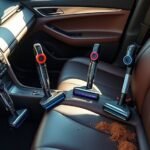
| Portable Hand Controls for Disabled Drivers |  |
Specialist Assessment Required | Type: Portable Hand Controls | Dimensions: Not specified | Material: Aluminium | VIEW LATEST PRICE | Read Our Analysis |
| Car Hand Controls for Disabled Drivers |  |
Adjustable Hand Controls | Type: Mobility Aid Device | Dimensions: Adjustable, 53–87 cm | Material: Aluminium alloy and stainless steel | VIEW LATEST PRICE | Read Our Analysis |
| Portable Hand Controls for Disabled Drivers (Blue Handle) |  |
Portable Control Listing | Type: Portable Hand Controls | Dimensions: Not specified | Material: Aluminium | VIEW LATEST PRICE | Read Our Analysis |
More Details on Our Top Picks
-
Disabled Driver Car Sign Disabled Driver Sticker
The Disabled Driver Car Sign is intended to make other road users aware that a disabled person may be driving the vehicle. The original listing describes a 14 x 14 cm plastic sign with a glossy laminated finish and bright printing.
It uses a reusable suction cup for attachment to a suitable interior window. The removable design may be convenient if you use more than one vehicle.
Choose a position that does not block your view of the road, mirrors, or surrounding traffic. The sign communicates information but does not guarantee that other drivers will notice or respond to it.
- Type:Disabled Driver Car Sign
- Dimensions:14 x 14 cm
- Material:Plastic with gloss finish
- Mounting:Suction cup
- Visibility:High-contrast printed message
- Reusable:Yes, according to listing
- Additional Feature:Gloss laminate finish
- Additional Feature:20mm reusable suction cup
- Additional Feature:Manufactured in the UK, according to listing
-
Wheelchair Accessible Car Sign
The “Please Leave Room For Me And My Wheelchair” sign communicates the need for additional space beside a parked vehicle.
The original listing describes a blue plastic sign measuring 14 x 14 cm and weighing approximately 10 g. It attaches to an interior window using a suction cup.
This type of message may help explain why you need space to open a door, transfer from a wheelchair, or use mobility equipment.
However, it does not reserve a parking space, create legal parking rights, or replace a valid Blue Badge.
- Type:Disabled Driver Car Sign
- Dimensions:14 x 14 cm
- Material:Plastic
- Mounting:Suction cup
- Visibility:High-contrast design
- Reusable:Yes, according to listing
- Additional Feature:Laminated design
- Additional Feature:Removable attachment
- Additional Feature:Designed in the UK, according to listing
-
Disabled Driver Car Sign – Please Be Patient
The “I Am Disabled Please Be Patient” car sign is intended to communicate a request for patience from other road users.
Its original description identifies bright blue and silver colours, large text, and a suction-cup attachment. The stated dimensions are 14 x 14 cm.
The removable design can be useful for drivers who want to display a message without permanently attaching a sticker to their vehicle.
Although a clear message may encourage awareness, the sign cannot prevent tailgating or replace safe driving practices.
- Type:Disability Advisory Vehicle Sign
- Dimensions:14 x 14 cm
- Material:Not specified
- Mounting:Suction cup
- Visibility:Bright printed colours
- Reusable:Yes, according to listing
- Additional Feature:UV-resistant inks, according to listing
- Additional Feature:Interior window attachment
- Additional Feature:Communicates a request for patience
-
Not All Disabilities are Visible Car Window Sticker
Not all disabilities are visible. This window sticker provides an optional way to communicate that message.
The original listing describes a blue vinyl sticker measuring approximately 20 x 4 cm, with a peel-and-stick application and waterproof material.
It may appeal to drivers and passengers who want to raise awareness of non-visible disabilities.
Display is a personal choice. You do not need a disability-awareness sticker to establish your eligibility for a Blue Badge or other disability-related support.
Check the sticker’s application instructions and position it where it will not interfere with driving visibility.
- Type:Car Window Sticker
- Dimensions:20 x 4 cm
- Material:Vinyl
- Mounting:Peel and stick
- Visibility:Printed awareness message
- Reusable:Not established
- Additional Feature:Waterproof material, according to listing
- Additional Feature:Adhesive application
- Additional Feature:Non-visible disability awareness
-
Disabled Driver Hand Controls Car Sign
This sign is designed for drivers who use adapted hand controls and want to communicate that information to other motorists.
The original listing describes bright colours, bold text, a 14 x 14 cm format, and a movable suction-cup attachment.
It may be useful as an awareness accessory in a car, van, or other suitable vehicle.
The sign itself is not a driving adaptation and does not change the operation of the vehicle. It should not be relied upon to deter tailgating or prevent unsafe behaviour by other drivers.
- Type:Disability Advisory Vehicle Sign
- Dimensions:14 x 14 cm
- Material:Not specified
- Mounting:Suction cup
- Visibility:Bright printed colours
- Reusable:Yes, according to listing
- Additional Feature:Large printed text
- Additional Feature:Movable attachment
- Additional Feature:Suitable as an optional awareness accessory
-
Portable Hand Controls for Disabled Drivers
Portable hand controls are intended to let a driver operate the accelerator and brake through hand-operated mechanisms.
The original product description identifies aluminium construction, adjustable clamps, push-and-thumb operation, quick-connect hardware, and a carrying case.
These details describe the advertised product rather than verified compatibility with a particular vehicle.
Brake and accelerator adaptations require careful assessment because pedal layout, mounting points, control movement, and safe operation vary between vehicles.
Consult a Driving Mobility assessment centre and a qualified adaptations installer before selecting equipment.
Do not treat an advertised tool-free installation feature as proof that a device is suitable or safe for road use in your vehicle.
- Type:Portable Hand Controls
- Dimensions:Not specified
- Material:Aluminium, according to listing
- Mounting:Advertised adjustable clamps
- Visibility:Not applicable
- Reusable:Subject to professional compatibility assessment
- Additional Feature:Push-and-thumb-operated design
- Additional Feature:Quick-connect hardware, according to listing
- Additional Feature:Carrying case included
-
Car Hand Controls for Disabled Drivers
This listing describes an adjustable hand-control device intended for drivers who need an alternative to operating the pedals with their feet.
The advertised adjustment range is 53–87 cm, with aluminium alloy and stainless-steel construction, padded handgrips, and a shock-resistant design.
The original listing also describes tool-free installation and compatibility with left- and right-hand-drive vehicles.
These claims do not establish compatibility with every vehicle, automatic transmission, or driver’s needs.
Before considering a device of this type, obtain an assessment covering the required control arrangement, vehicle compatibility, safe mounting, and driver training.
Do not use an unassessed device on public roads simply because it appears adjustable or easy to fit.
- Type:Mobility Aid Device
- Dimensions:Advertised adjustment range of 53–87 cm
- Material:Aluminium alloy and stainless steel
- Mounting:Advertised tool-free system; specialist approval required
- Visibility:Not applicable
- Reusable:Subject to vehicle compatibility
- Additional Feature:Hands-only driving concept
- Additional Feature:Shock-resistant construction, according to listing
- Additional Feature:Padded handgrip
-
Portable Hand Controls for Disabled Drivers (Blue Handle)
The blue-handle portable hand-control listing describes equipment intended for use with automatic vehicles.
Its advertised features include aluminium construction, adjustable clamps, operation using either hand, and a carrying bag.
The portable design may appeal to drivers who need flexibility, but portability does not establish safe compatibility between different vehicles.
Before changing vehicles or moving a control system, confirm that the installation remains appropriate and that the relevant insurance and licence conditions are satisfied.
Professional assessment and familiarisation are especially important when changing to a different control arrangement.
- Type:Portable Hand Controls
- Dimensions:Not specified
- Material:Aluminium, according to listing
- Mounting:Advertised clamp system
- Visibility:Not applicable
- Reusable:Subject to professional compatibility assessment
- Additional Feature:Lightweight aluminium construction
- Additional Feature:Intended for adapted driving
- Additional Feature:Carrying bag and components included
Factors to Consider When Choosing Cars for Disabled Drivers UK
When choosing a car as a disabled driver in the UK, start with your individual access and driving requirements rather than the appearance or popularity of a model.
Consider seating, vehicle dimensions, mobility-aid storage, automatic transmission, hand-control compatibility, and the support available for any required adaptations.
Accessibility Features Included
Look for adjustable seating and steering-wheel positions that allow you to reach the controls comfortably.
Wide door openings and suitable entry heights can make getting into and out of a vehicle easier. Some drivers benefit from swivel seats, transfer plates, or specialist lifting equipment.
Parking sensors, reversing cameras, and other driver-assistance systems can also be helpful, depending on your needs.
However, electronic assistance does not replace the need to maintain control of the vehicle or meet the applicable driving standards.
Vehicle Size Considerations
The right vehicle size depends on how you travel and what equipment you need to carry.
A compact car may be practical for urban driving, but its boot or door openings may not accommodate a large wheelchair.
A larger car or WAV can provide more room for mobility equipment and passengers, although it may also require more space for parking and manoeuvring.
Measure your mobility aids rather than relying only on published boot capacity.
Check the actual loading opening, available height, floor shape, and space remaining when the rear seats are in use.
Hand Controls Compatibility
Compatibility with hand controls is essential if you cannot comfortably operate standard accelerator and brake pedals.
Hand-control systems vary in their operating method, mounting arrangement, and vehicle requirements.
Some drivers may also need a steering aid, left-foot accelerator, pedal modification, or adapted secondary controls.
The official Motability driving-adaptations guide explains the main categories.
Have your requirements assessed before selecting the vehicle. A specialist installer can then confirm whether the proposed adaptations fit the specific model and version.
Automatic Transmission Preference
Automatic transmission is often useful for disabled drivers because it removes the need to operate a conventional clutch pedal.
It can also be compatible with specialist accelerator and brake adaptations.
However, an automatic car does not automatically provide hands-only driving.
Drivers who cannot operate the standard pedals may need approved hand controls or another suitable adaptation.
During a test drive or assessment, check that you can reach and operate the gear selector, parking brake, and other important controls comfortably.
Space for Mobility Aids
Make sure the vehicle has enough space for your wheelchair, walker, scooter, or other equipment.
A flat load floor and wide tailgate opening can make loading easier, while a suitable hoist may reduce physical effort.
Consider whether your mobility equipment needs to remain assembled during travel.
Removable or adjustable seating can increase flexibility, but any equipment must be stored or secured correctly.
If you need to remain seated in your wheelchair, investigate a properly converted WAV rather than assuming a standard car will provide suitable restraint and travel arrangements.
Maneuverability and Turning Radius
Maneuverability matters when driving through narrow streets, using busy car parks, or positioning a vehicle for accessible entry and exit.
A smaller turning circle can make low-speed manoeuvres easier.
However, turning circle is only one consideration. Vehicle width, visibility, parking assistance, and the space needed to deploy a wheelchair ramp are also important.
Try the vehicle in conditions similar to those you encounter on everyday journeys.
Visibility and Safety Standards
Good visibility helps you monitor traffic, pedestrians, cyclists, and obstacles.
Look for clear sightlines, suitable mirror adjustment, and a seating position that allows you to see the road comfortably.
Disability-awareness signs may communicate information to other motorists, but they are not substitutes for vehicle safety features.
When using a sign or sticker, make sure it does not obstruct your view.
Official guidance explains that items attached to vehicle windows must not interfere with the driver’s required view of the road. See the GOV.UK windscreen guidance.
Personal Comfort and Preference
Comfort is a major part of choosing an accessible car.
Consider seat support, driving position, reach to important controls, and the effort needed to enter and leave the vehicle.
A higher seating position may help one driver but make transferring harder for another.
Ride quality also matters, particularly if rough roads cause discomfort.
Where possible, arrange a longer demonstration that includes your normal journey requirements rather than relying on a brief showroom visit.
How to Choose an Accessible Car
Choosing an accessible vehicle works best when you follow a structured process.
Step 1: Identify Your Driving and Access Needs
List the tasks you find difficult in your current vehicle.
These might include getting into the driver’s seat, operating pedals, reaching the steering wheel, loading a wheelchair, or getting out in a narrow parking space.
Also consider whether your mobility needs may change during the period you expect to use the vehicle.
Step 2: Arrange an Independent Driving Assessment
If you need specialist controls, arrange an assessment before choosing your car.
A Driving Mobility centre can help identify suitable adaptations and recommend further familiarisation where appropriate.
Motability also recommends an adaptations review before selecting equipment.
An assessment can help establish which control arrangements are appropriate for your needs and what should be checked during vehicle selection.
Step 3: Check Vehicle Compatibility
Speak to an adaptations installer about the make, model, and version you are considering.
Check whether the required adaptations can be fitted without interfering with other controls or essential safety systems.
For mobility equipment, verify the available space using the actual wheelchair or device whenever possible.
Step 4: Test Drive and Check Access
Arrange a test drive or suitable demonstration.
Check whether you can:
- Enter and exit without excessive difficulty.
- Reach all essential controls.
- Maintain a comfortable driving position.
- See clearly through the windows and mirrors.
- Load and secure your mobility equipment.
- Park and manoeuvre in the places you normally visit.
For a WAV, ask the supplier to demonstrate the ramp or lift and wheelchair restraint system with your own equipment.
Step 5: Confirm Costs and Support
Before ordering, confirm the complete cost of the vehicle and any adaptations.
Check whether specialist equipment, maintenance, insurance, and breakdown assistance are included.
If you are applying for a grant, complete the relevant application before placing a vehicle order.
Pro Tip: Take your wheelchair or mobility aid to the vehicle demonstration. Checking the actual equipment against the vehicle is more useful than relying on boot-capacity figures alone.
Motability Scheme and Financial Help
The Motability Scheme allows eligible people to use a qualifying mobility allowance towards leasing a suitable vehicle.
The Scheme provides access to cars, wheelchair-accessible vehicles, scooters, powered wheelchairs, and a range of adaptations.
Who Can Join the Motability Scheme?
Qualifying awards include:
- Enhanced rate mobility component of Personal Independence Payment (PIP).
- Higher rate mobility component of Disability Living Allowance (DLA).
- Enhanced rate mobility component of Adult Disability Payment in Scotland.
- Higher rate mobility component of Child Disability Payment in Scotland.
- War Pensioners’ Mobility Supplement.
- Armed Forces Independence Payment.
Motability requires at least 12 months remaining on the qualifying allowance when a person applies to join.
Receiving a disability-related benefit does not automatically establish Scheme eligibility. The type and rate of the award matter.
Check the official Motability eligibility guidance before applying.
Advance Payments and Lease Costs
Some vehicles are available without an Advance Payment, while others require an additional upfront payment.
Motability’s July–September 2026 price list includes automatic, hybrid, petrol, and electric options.
Vehicle availability and Advance Payments are updated quarterly.
The Scheme’s lease package includes insurance, servicing, maintenance, and breakdown cover, subject to the applicable agreement.
Confirm all costs before ordering, particularly when adaptations or specialist wheelchair access are required.
Grants for Cars and Adaptations
The Motability Foundation provides means-tested grants for eligible people who need financial help with a suitable Scheme vehicle or essential adaptations.
Depending on eligibility and assessed need, support may contribute towards an Advance Payment, hand controls, hoists, or swivel seats.
Grant assistance is not guaranteed and is generally focused on the most suitable affordable solution.
Applications must be made before ordering the vehicle.
See the Motability Foundation’s cars and adaptations grant guidance.
Buying a Car Outside Motability
You do not have to use the Motability Scheme to purchase an accessible vehicle.
You can buy a suitable new or used car and arrange adaptations privately.
Before purchasing, obtain a written compatibility assessment and quotation from an adaptations specialist.
Check the condition of any existing adaptations on a used vehicle and establish whether they meet your individual requirements.
Eligible disabled drivers may also qualify for vehicle tax exemption or relevant VAT relief. These concessions have specific conditions and are not automatic for every vehicle or adaptation.
Legal and Safety Requirements for Disabled Drivers
DVLA and Medical Conditions
In Great Britain, drivers must tell DVLA about a medical condition or disability when reporting is required, including when a relevant condition develops or worsens.
DVLA may decide that a driver needs a particular licence restriction, an adapted vehicle, further assessment, or another licensing arrangement.
Drivers in Northern Ireland should follow the Driver and Vehicle Agency’s requirements.
Do not assume that a suitable car or adaptation automatically establishes that you are medically or legally eligible to drive.
Insurance and Vehicle Adaptations
Tell your insurer about relevant adaptations and confirm that they are covered by the policy.
Ask whether specialist controls, wheelchair hoists, and other modifications are included in repair or replacement cover.
If you use a Motability vehicle, follow the Scheme’s insurance and adaptation procedures.
For privately owned vehicles, compare policies based on your actual vehicle and adaptation requirements.
Blue Badge Parking
The Blue Badge scheme helps eligible disabled people park closer to their destinations.
A disability sign or sticker does not provide Blue Badge parking concessions.
Applications in England, Scotland, and Wales can be started through GOV.UK. Northern Ireland has a separate application process.
Eligibility can include certain non-visible disabilities, depending on the applicable criteria and supporting evidence.
Always follow the parking rules for the location and display your valid badge correctly when using its concessions.
Use the official Blue Badge application service for current information.
Frequently Asked Questions
What Financial Assistance Is Available for Disabled Drivers in the UK?
Eligible drivers may be able to use a qualifying mobility allowance through the Motability Scheme. The Motability Foundation also offers means-tested grants towards suitable vehicles and essential adaptations. Depending on the circumstances, vehicle tax exemption and relevant VAT relief may be available. Check the eligibility rules before ordering a vehicle.
Are There Specific Car Models Recommended for Non-Visible Disabilities?
There is no single car suitable for every non-visible disability. Comfort, seating, control layout, visibility, and fatigue-related requirements vary between drivers. Models such as the Volkswagen Golf or suitable automatic compact cars may be worth exploring, but individual suitability should be established through a demonstration or assessment.
How Do I Obtain a Disabled Parking Permit in the UK?
Apply for a Blue Badge through the appropriate official service. In England, Scotland, and Wales, applications can be started on GOV.UK. Northern Ireland has a separate process. You may need identity, address, benefit, and other eligibility evidence. A disability-awareness car sticker is not a substitute for a Blue Badge.
Can Disabled Drivers Access Car Insurance Discounts?
Insurance costs depend on the driver, vehicle, insurer, and policy terms. Do not assume that disability automatically provides a discount. Compare suitable policies and disclose relevant vehicle adaptations. If you lease through Motability, insurance is included in the Scheme package under its applicable terms.
What Features Improve Safety for Disabled Drivers in Vehicles?
Useful features may include a suitable driving position, adjustable controls, parking sensors, reversing cameras, automatic emergency braking, and properly assessed driving adaptations. The most important requirement is that the driver can operate the vehicle safely. Disability signs can communicate information but cannot replace vehicle safety systems.
Can I Drive Directly From My Wheelchair?
Some specialist wheelchair-accessible vehicles allow a person to drive directly from a suitable wheelchair. Others provide an internal transfer arrangement into a driver’s seat. The vehicle, wheelchair, restraint system, and driving controls must be assessed together by an appropriate specialist.
Do I Need a Driving Assessment Before Installing Hand Controls?
An independent driving assessment is strongly recommended when specialist controls are needed. It can help identify an appropriate control arrangement and any training requirements. A qualified adaptations installer should confirm compatibility with the specific vehicle before fitting equipment.
Conclusion
Choosing a car for a disabled driver in the UK starts with understanding your individual mobility and driving requirements.
An automatic compact car may suit some drivers, while a larger family vehicle or wheelchair-accessible vehicle may provide the space and access others need.
Prioritise comfortable entry and exit, suitable driving controls, mobility-equipment storage, and professional adaptation compatibility.
Optional signs and stickers can communicate your needs, but the right vehicle, appropriate adaptations, and safe driving arrangements matter far more.
Use current Motability information, arrange a suitable assessment where needed, and test the vehicle with your own mobility equipment before making a final decision.
Sources
- Motability Scheme — Latest Price List 2026 — July–September 2026 vehicle examples, pricing period, and lease information.
- Motability Scheme — Adaptations Installer — professional fitting, vehicle compatibility, and adaptation selection.
- Motability Scheme — Drive From Wheelchair Vehicles — specialist wheelchair driving and transfer arrangements.
- GOV.UK — Medical Conditions, Disabilities and Driving — DVLA medical reporting requirements.
- GOV.UK — Apply for or Renew a Blue Badge — official parking-badge application guidance.
- GOV.UK — Financial Help for Disabled People: Vehicles and Transport — Motability, vehicle tax exemption, and relevant financial assistance.






Leave a Reply