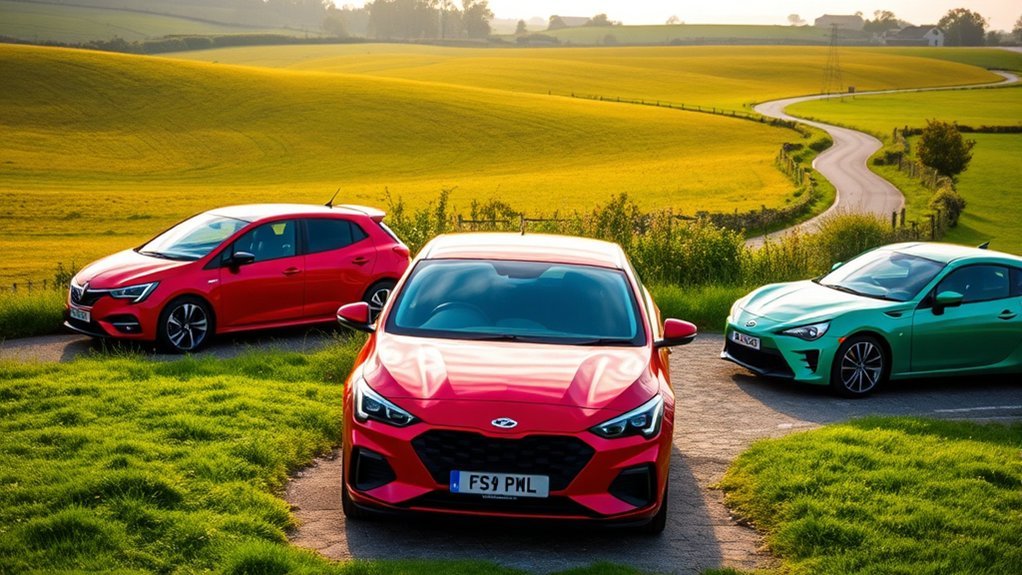
Choosing the best car for a UK learner driver in 2026 means finding something safe, easy to control, affordable to insure, and practical for everyday driving. A compact car with good visibility, predictable handling, and sensible running costs can make lessons and private practice easier. You also need to consider whether to learn in a manual or automatic car, how much insurance will cost, and whether the vehicle meets the rules for private practice and the practical driving test.
Quick Answer
Good cars for UK learner drivers in 2026 include the Kia Picanto, Hyundai i10, Dacia Sandero, and Toyota Yaris Hybrid. The right choice depends on your budget, insurance quotes, preferred transmission, and driving needs. Prioritise good visibility, manageable dimensions, essential safety equipment, and affordable maintenance rather than choosing a car based on its purchase price alone.
Affiliate disclosure: This article contains Amazon affiliate links. We may earn a commission from qualifying purchases at no additional cost to you. Product recommendations are informational and do not represent independent laboratory testing or official regulatory approval.
Key Takeaways
- Small hatchbacks are worth considering because their dimensions can make parking and low-speed manoeuvres easier.
- Get insurance quotes for the exact car and driver before buying. A small engine does not guarantee cheap insurance.
- Learning in an automatic can reduce the need to manage gears and the clutch, but passing an automatic test restricts the type of car you can drive.
- Learners must display correctly sized L plates at the front and rear of the vehicle. Wales also permits D plates.
- Green P plates are optional in Great Britain. Northern Ireland has different restricted-driver requirements.
- A used car should be checked for MOT history, outstanding safety recalls, mechanical problems, and insurance costs before purchase.
Best Cars for Learner Drivers UK 2026
The following cars provide a useful starting point for comparing learner-friendly vehicles. They offer different combinations of size, transmission, practicality, and running costs.
This is a buying shortlist rather than a crash-test ranking. Equipment, safety ratings, insurance groups, and prices can vary by model year, specification, and individual vehicle.
| Car | Why Consider It? | Transmission | Main Consideration |
|---|---|---|---|
| Kia Picanto | Compact city-car dimensions and useful parking equipment. | Manual or automated manual, depending on specification. | Check cabin space, insurance, and the exact trim’s safety equipment. |
| Hyundai i10 | Small exterior dimensions and a practical city-car layout. | Manual or automated manual on relevant versions. | Compare equipment and insurance for the exact vehicle. |
| Dacia Sandero | A larger hatchback layout with room for everyday use. | Check the engine and gearbox offered on the selected version. | Compare standard equipment across trims. |
| Toyota Yaris Hybrid | Compact automatic hybrid with useful urban-driving efficiency. | Automatic. | Compare the purchase price, insurance, and automatic-licence implications. |
| Used Small Hatchback | Models such as the Ford Fiesta, Volkswagen Polo, or an earlier-generation Yaris can widen your second-hand options. | Depends on the individual car. | Condition, service history, MOT records, and repair costs matter more than the badge alone. |
Kia Picanto
The Kia Picanto is worth considering if you want a compact car for town driving and parking practice. Its small footprint makes it easier to judge the space around the vehicle than in many larger cars.
The UK range includes a 1.0-litre petrol engine and manual or automated manual transmission options. Equipment varies by trim, so check the exact vehicle rather than assuming that every Picanto has the same assistance systems.
Kia lists rear parking sensors and a reversing camera among the equipment on its current UK Picanto range. These can help during low-speed manoeuvres, although you must still use your mirrors and make direct observations.
Consider it if: You want a compact car and are comparing manual and automatic-style driving options.
Hyundai i10
The Hyundai i10 is another small hatchback to compare. Its dimensions make it relevant for learners who expect to drive mainly in towns, residential streets, and busy parking areas.
Depending on the version, the i10 is available with manual or automated manual transmission. The automated manual changes gears for the driver, but its driving feel can differ from a conventional automatic.
Before buying, check the selected model’s seating position, visibility, controls, safety equipment, and insurance quote.
Consider it if: You want a compact car that can also handle everyday journeys after passing your test.
Dacia Sandero
The Dacia Sandero offers a larger hatchback layout than the smallest city cars. That extra practicality may appeal if you expect to carry passengers, shopping, or luggage regularly.
The current UK Sandero range includes the TCe 100 petrol engine. Equipment varies by specification, with features such as rear parking sensors and camera systems available on relevant versions.
Compare purchase cost and insurance alongside comfort and visibility. Do not assume that a larger car will be harder to learn in; the seating position, steering feel, and your own confidence also matter.
Consider it if: You want a practical learner car that can remain useful after passing.
Toyota Yaris Hybrid
The Toyota Yaris Hybrid provides an automatic driving experience without the need to plug in the car. It can be useful for learners who prefer to focus on steering, speed, observation, and road positioning without operating a clutch.
The current UK Yaris range uses a petrol-electric hybrid system. Toyota publishes official fuel-consumption figures, but real-world results vary with traffic, weather, driving style, and vehicle load.
Compare insurance and purchase costs before choosing it. Also remember that passing your practical test in an automatic restricts your licence to automatic vehicles until you pass the relevant manual test.
Consider it if: You want an automatic car with hybrid fuel efficiency for everyday driving.
Used Cars for Learner Drivers
A used hatchback can lower the initial purchase cost, but its condition is more important than its age or reputation.
Consider comparing used examples of the Hyundai i10, Toyota Yaris, Ford Fiesta, Volkswagen Polo, and similar small cars. Check the exact engine, gearbox, safety specification, service history, and insurance cost.
A cheaper vehicle that immediately needs tyres, brakes, suspension work, or major repairs may cost more overall than a better-maintained example.
Pro Tip: Before viewing a used car, request insurance quotes using its registration number. This can prevent you from buying an affordable car that is expensive for you to insure.
Manual vs Automatic: Which Should You Learn In?
Your choice of gearbox affects both your lessons and the vehicles you can drive after passing.
Learning in a Manual Car
A manual car requires you to operate the clutch and select gears. Learning these skills can take extra practice, particularly when moving away, changing speed, and driving in heavy traffic.
However, passing the appropriate manual car test allows you to drive both manual and automatic cars within your licence entitlement.
Learning in an Automatic Car
An automatic removes the need to operate a clutch pedal and select gears manually during normal driving.
This may make the early learning process simpler, but it does not remove the need to develop observation, hazard awareness, speed control, and safe decision-making.
If you pass in an automatic, your licence does not automatically permit you to drive a manual car. GOV.UK explains the separate process for upgrading an automatic licence to a manual licence.
Learner Driver Plates and Useful Accessories
Once you have selected a suitable car, you will need the correct learner plates for lessons and private practice.
The following products are accessories, not vehicles. The original product selection is retained here to help you compare plate types and attachment methods.
Warning: In Great Britain, learner drivers must display correctly sized red L plates on a white background at the front and rear of the vehicle. Wales also permits D plates. Do not assume that a plate is legally compliant merely because an online listing uses terms such as “approved” or “road legal.” Check the official DVSA plate-size guidance.
| Sakura SS3338 Car P Plates Universal Set of 2 | 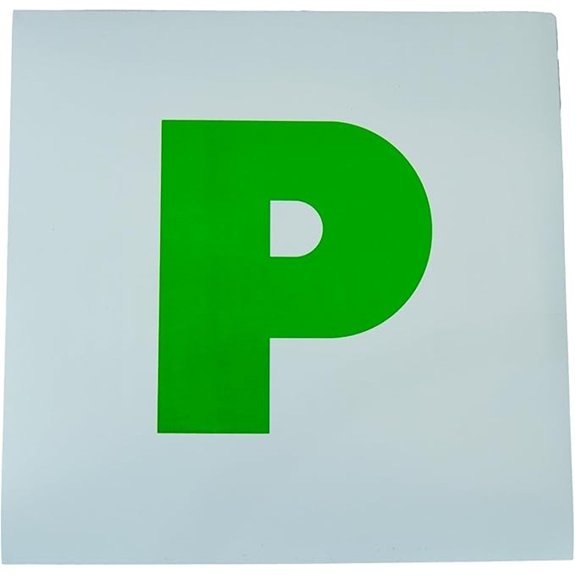 |
Reusable P Plates | Type: Car P Plates | Magnetic: Yes | Reusable: Yes | VIEW LATEST PRICE | Read Our Analysis |
| Magnetic L Plates & P Plates – Pack of 4 |  |
Combined L & P Set | Type: Magnetic L & P Plates | Magnetic: Yes | Reusable: Yes | VIEW LATEST PRICE | Read Our Analysis |
| Streetwize Magnetic Red L Plates for Learner Drivers | 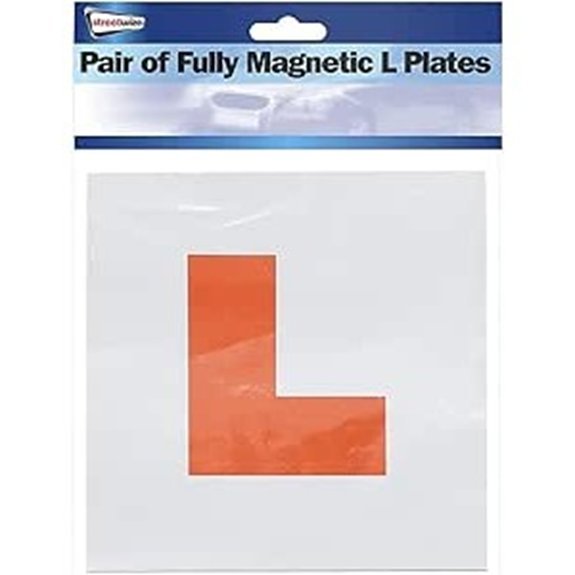 |
Magnetic L Plates | Type: Magnetic L Plates | Magnetic: Yes | Reusable: Yes | VIEW LATEST PRICE | Read Our Analysis |
| Double Dragon Magnetic Red L Plates for Learners | 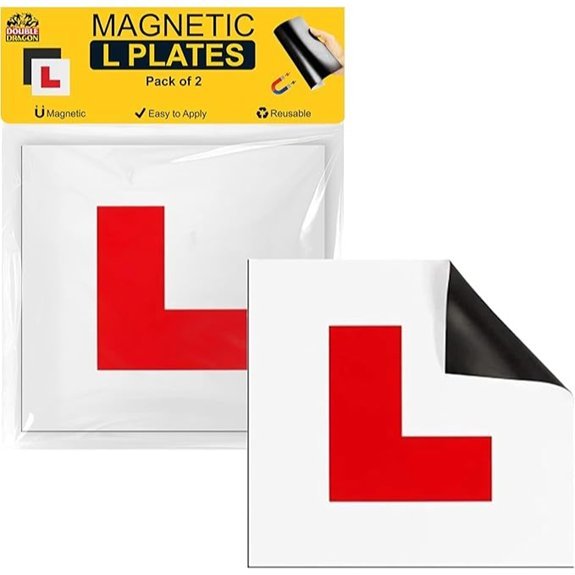 |
Weather-Resistant Design | Type: Magnetic Red L Plates | Magnetic: Yes | Reusable: Yes | VIEW LATEST PRICE | Read Our Analysis |
| Double Dragon 4-Pack Magnetic L & P Plates | 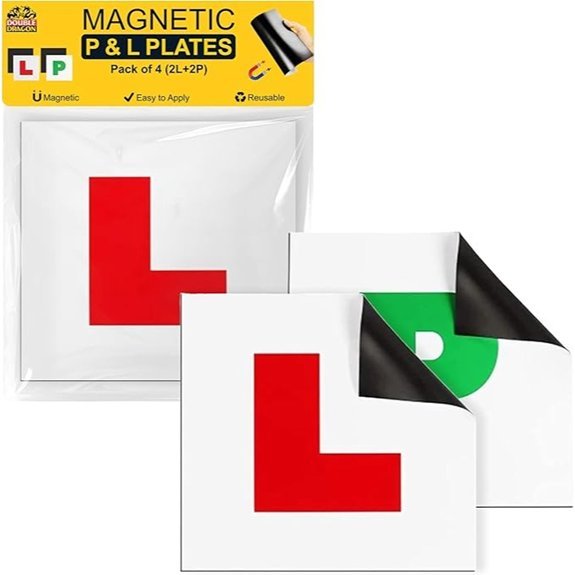 |
Learner and New-Driver Set | Type: Magnetic L & P Plates | Magnetic: Yes | Reusable: Yes | VIEW LATEST PRICE | Read Our Analysis |
| Learner Driver L Plate Sign with Suction Cup | 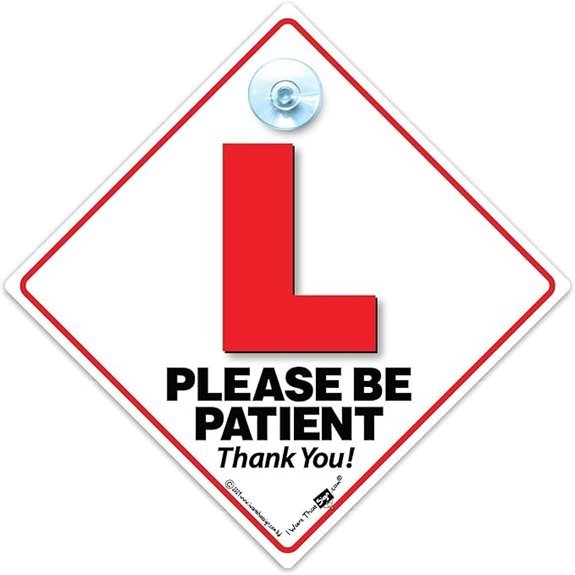 |
Supplementary Interior Sign | Type: Suction Cup Sign | Magnetic: No | Reusable: Yes | VIEW LATEST PRICE | Read Our Analysis |
More Details on Our Top Picks
-
Sakura SS3338 Car P Plates Universal Set of 2
The Sakura SS3338 P Plates are intended for drivers who have recently passed their test. The supplied pair uses magnetic strips for attachment to suitable metal panels. The plates are described as wipe-clean and weather-resistant, making them a reusable alternative to disposable stickers.
Important: Green P plates are optional in Great Britain. They indicate that you are newly qualified, but they do not replace compulsory L plates during learning or Northern Ireland’s restricted-driver plates.
Clean and dry the bodywork before fitting magnetic plates, and remove them when washing the car.
- Type:Car P Plates
- Magnetic:Yes
- Reusable:Yes
- Weather Resistant:Advertised for outdoor use
- Compliance:P plates are optional in Great Britain
- Size:Listed as 24.1 x 18.5 cm
- Additional Feature:Wipe-clean surface
- Additional Feature:Lightweight design
- Additional Feature:Designed for suitable metal body panels
-
Magnetic L Plates & P Plates – Pack of 4
This four-piece magnetic set combines two red L plates and two green P plates. The L plates are intended for use during lessons and private practice, while the P plates can be used after passing your test.
The rubber and vinyl construction is designed for repeated fitting and removal. Magnetic attachment avoids permanent adhesive, although the panel and plate must remain clean to reduce the risk of trapped grit scratching the finish.
The listed dimensions are 17.8 x 17.8 cm. For the L plates, the red letter, white background, and overall design must match the applicable official requirements. A seller’s approval claim is not a substitute for checking those requirements.
- Type:Magnetic L & P Plates
- Magnetic:Yes
- Reusable:Yes
- Weather Resistant:Advertised for outdoor use
- Compliance:L plates must meet legal specifications
- Size:Listed as 17.8 x 17.8 cm
- Additional Feature:Red and green lettering
- Additional Feature:Requires suitable metal bodywork
- Additional Feature:Includes plates for learning and after passing
-
Streetwize Magnetic Red L Plates for Learner Drivers
The Streetwize Magnetic Red L Plates are designed to identify a learner driver to other road users. Their red lettering and white background provide the familiar learner-plate appearance.
Streetwize offers magnetic L plates for attachment to exterior metal bodywork. Magnetic plates can be convenient when a family car is shared between a learner and a qualified driver.
The original listing describes anti-scratch and weather-resistant features. These should not be treated as guarantees against damage or loss. Fit the plates securely, avoid covering lights or registration plates, and check that both remain visible before driving.
- Type:Magnetic L Plates
- Magnetic:Yes
- Reusable:Yes
- Weather Resistant:Advertised for outdoor use
- Compliance:Use only if the plate design meets official requirements
- Size:Listed as 24 x 18.5 cm
- Additional Feature:Magnetic attachment
- Additional Feature:Designed for repeated removal
- Additional Feature:White background with red lettering
-
Double Dragon Magnetic Red L Plates for Learners
The Double Dragon Magnetic Red L Plates are advertised as a reusable pair for learners. The listed square format measures 178 x 178 mm and uses a flexible magnetic backing.
The product description mentions a UV-treated PVC finish and a 1.25 mm rubber magnet. These are seller-provided specifications rather than independently verified performance measurements.
For reliable attachment, apply each plate to a clean, dry, suitable metal surface. Avoid sharp body-panel curves, damaged paint, and areas where the plate may obstruct required vehicle equipment.
Check the official plate diagram to establish that the lettering and layout meet the legal requirements.
- Type:Magnetic Red L Plates
- Magnetic:Yes
- Reusable:Yes
- Weather Resistant:Advertised for outdoor use
- Compliance:Correct plate design and visibility are required
- Size:Listed as 17.8 x 17.8 cm
- Additional Feature:Advertised UV-treated PVC finish
- Additional Feature:Advertised rubber magnet backing
- Additional Feature:Removable design
-
Double Dragon 4-Pack Magnetic L & P Plates
This Double Dragon set contains two red L plates and two green P plates. It provides separate signs for learning and for the period after passing your test.
The plates are advertised as reusable, weather-resistant, and easy to reposition on suitable metal body panels. The listed size is 178 x 178 mm.
The L plates must meet the official design requirements. The green P plates are optional in Great Britain and should only be displayed after passing.
Remove the plates when appropriate, clean the mounting surfaces, and avoid leaving magnetic accessories on dirty or damaged paintwork for extended periods.
- Type:Magnetic L & P Plates
- Magnetic:Yes
- Reusable:Yes
- Weather Resistant:Advertised for outdoor use
- Compliance:L plates must meet official specifications
- Size:Listed as 17.8 x 17.8 cm
- Additional Feature:Removable magnetic design
- Additional Feature:Flexible rubber construction
- Additional Feature:Two L plates and two P plates
-
Learner Driver L Plate Sign with Suction Cup
The Learner Driver L Plate Sign with Suction Cup is intended as a supplementary interior sign. The original product information describes a 14 x 14 cm sign with a reusable suction cup.
Its red and white design may provide an additional visual indication that a learner is driving, but it must not obstruct the driver’s view.
Important: This small interior accessory does not replace correctly sized external L plates. Use legal front and rear plates whenever the vehicle is driven by a learner.
Keep the suction cup and other small detachable components away from young children because they may present a choking hazard.
- Type:Supplementary L Plate Sign
- Magnetic:No
- Reusable:Yes
- Weather Resistant:Not intended for exterior exposure
- Compliance:Not a substitute for required L plates
- Size:Listed as 14 x 14 cm
- Additional Feature:Interior-use design
- Additional Feature:Reusable suction cup
- Additional Feature:Supplementary novelty sign
Factors to Consider When Choosing Cars for Learner Drivers UK
When choosing a car for a learner driver in the UK, consider more than the purchase price. Safety, visibility, vehicle size, fuel efficiency, insurance, and ease of control all affect how suitable the car will be.
Safety Features Importance
Look for a car with essential safety equipment, including anti-lock braking systems (ABS), electronic stability control (ESC), suitable airbags, and properly functioning seatbelts.
ABS helps reduce wheel lock during heavy braking. ESC can help the driver maintain control in certain situations where the vehicle begins to lose stability. Neither system can overcome the limits of tyre grip or compensate for unsafe driving.
When comparing cars, check the safety equipment fitted to the actual model year and trim. A feature advertised for a newer version may not be present on an older used example.
Independent crash-test information can also help, but compare the test date and assessment criteria rather than relying only on a headline star rating.
Parking sensors and reversing cameras can make low-speed manoeuvres easier. They should support, not replace, careful observations.
Vehicle Size Considerations
Smaller cars are often easier to manoeuvre through narrow streets and into parking spaces. A compact car can also make it simpler to judge the distance between the vehicle and nearby obstacles.
However, size alone does not determine how easy a car is to learn in.
Before choosing a vehicle, sit in the driver’s seat and check:
- Whether you can reach the pedals comfortably.
- Whether the steering wheel and seat adjust to a suitable position.
- Whether you can clearly see the road ahead.
- How much visibility the door pillars and rear window provide.
- Whether the mirrors are easy to adjust.
- How comfortably the supervising driver can sit beside you.
A slightly larger car with good visibility and comfortable controls may suit you better than a smaller car with an awkward driving position.
Fuel Efficiency Ratings
Fuel efficiency affects the cost of lessons, private practice, commuting, and everyday driving after you pass.
Petrol and hybrid cars are commonly compared using miles per gallon (MPG). In the UK, official MPG figures use imperial gallons.
A higher MPG figure generally means that a petrol or hybrid vehicle uses less fuel over the same distance under comparable test conditions.
However, official figures are not guaranteed real-world results. Short journeys, traffic, cold weather, driving style, and vehicle condition can all affect consumption.
For electric cars, compare electricity consumption and expected driving range instead of petrol MPG. Also consider charging access and insurance.
For a fair comparison, use figures produced under the same test procedure and consider the complete ownership cost.
Visibility and Maneuverability
Good visibility helps learners judge road position, monitor other road users, and complete low-speed manoeuvres.
Look for large windows, useful mirrors, manageable blind spots, and a comfortable seating position.
Cars with a reversing camera or parking sensors can provide additional information when parking. However, the driver must still check around the vehicle directly and through the mirrors.
Properly displayed learner plates also help other road users identify the vehicle as being driven by someone who is learning.
Choose plate positions that remain visible without covering lights, registration plates, or other required equipment.
Insurance Costs Impact
Insurance can be one of the largest expenses associated with learning to drive and owning your first car.
Premiums depend on several factors, including your age, address, driving experience, the vehicle, its security, annual mileage, and the cover selected.
A smaller engine or lower insurance group may help in some cases, but neither guarantees the cheapest quote.
Compare insurance for the exact vehicle before buying it.
If you are using a family member’s car, you may be able to become a named driver on the existing policy or purchase separate learner-driver cover.
Check whether any separate policy covers the vehicle during private practice, whether the supervisor meets the insurer’s conditions, and what happens to the policy after you pass.
Technology and Assistance Systems
Modern vehicles may include automatic emergency braking, lane-keeping assistance, adaptive cruise control, parking sensors, and reversing cameras.
These systems can support driving, but learners must understand their limitations.
Automatic emergency braking may not detect every hazard or prevent every collision. Lane-keeping assistance does not replace steering control or correct road positioning.
Adaptive cruise control does not remove the driver’s responsibility to monitor traffic and maintain a safe following distance.
Infotainment systems should also be used carefully. Set your destination and other controls before moving away, and avoid unnecessary interaction while driving.
Budget-Friendly Options Available
A budget-friendly learner car should be affordable to own, not simply cheap to purchase.
Include these expenses when comparing vehicles:
- Purchase price or finance payments.
- Learner-driver insurance and insurance after passing.
- Vehicle tax.
- Fuel or electricity.
- Servicing and MOT costs.
- Tyres, brakes, and unexpected repairs.
- Parking and other everyday expenses.
Smaller used cars can offer lower initial costs, but a neglected vehicle may require expensive repairs.
Set aside a maintenance reserve rather than spending your entire budget on the car itself.
Legal Requirements for Private Practice in Great Britain
If you intend to practise in a family car or another privately owned vehicle, make sure you meet the legal requirements before driving.
Provisional Licence and Supervision
You need a valid provisional driving licence and suitable supervision.
For private practice in England, Scotland, and Wales, the supervising driver must:
- Be at least 21 years old.
- Have held a full qualifying driving licence for at least three years.
- Be qualified to drive the type of vehicle being used.
- Meet any additional conditions imposed by the insurance provider.
A person supervising practice in a manual car must be qualified to drive a manual car.
Some insurers impose a higher minimum age for supervisors, so the legal minimum does not necessarily establish that a particular insurance policy will cover the arrangement.
Insurance for Private Practice
The learner must have insurance that covers them driving the vehicle.
If the learner owns the car, they need appropriate insurance for learner use.
If the car belongs to a parent, friend, or another person, the learner can be covered under an appropriate policy or a separate learner-driver insurance policy.
Check the policy documents rather than assuming that the owner’s ordinary insurance automatically covers a learner.
Vehicle Roadworthiness and Documents
The car must be roadworthy, correctly registered, taxed, insured, and have a valid MOT where required.
Before each practice session, check the tyres, lights, mirrors, windows, brakes, and any warning lights.
For additional guidance, see the official GOV.UK private-practice requirements.
Motorway Rules for Learners
In England, Scotland, and Wales, learners cannot practise on motorways with family members or friends.
Motorway lessons are permitted only under the relevant rules, including supervision by an approved driving instructor and use of a dual-control car.
Do not enter a motorway during ordinary private practice.
Understanding L, P, D and R Plates
Different driver plates have different purposes, and the rules are not identical throughout the UK.
L Plates for Learner Drivers
In Great Britain, a learner car must display a red L on a white background at the front and rear.
The plates must be correctly sized and clearly visible.
They should be removed or covered when the vehicle is not being driven by a learner, except where the applicable rules provide otherwise, such as driving school vehicles.
D Plates in Wales
In Wales, a learner may use D plates instead of L plates. The same need for correct design and visibility applies.
P Plates After Passing
Green P plates can be used in Great Britain after passing the practical driving test.
They are optional, and there is no compulsory period for displaying them.
They may help identify you as a newly qualified driver, but they do not provide any special exemption from ordinary road rules.
Northern Ireland Learner and Restricted-Driver Rules
Northern Ireland has separate learner and newly qualified driver requirements.
As of 23 September 2026, the existing system includes a 45 mph restriction for learner drivers and amber R plates for newly qualified drivers during the applicable restricted period.
Northern Ireland is introducing Graduated Driver Licensing from 1 October 2026. The new system includes changes to learning, training records, and post-test requirements, with transitional arrangements for existing learners.
Under the new arrangements, eligible newly qualified drivers will use revised blue R plates and have a longer post-test period.
The rules that apply depend on when the learner’s provisional entitlement began and when they complete the practical test.
For the official timetable and transitional requirements, consult Northern Ireland’s Graduated Driver Licensing guidance.
How to Choose the Right Learner Car
Follow this checklist before committing to a vehicle.
- Choose your transmission. Decide whether you want to learn in a manual or automatic car.
- Set a complete budget. Include insurance, fuel, tax, servicing, and a maintenance reserve.
- Compare suitable vehicles. Look at dimensions, visibility, seating position, safety equipment, and practicality.
- Request insurance quotes. Use accurate driver and vehicle information.
- Inspect the actual car. Check its condition rather than relying on the model’s general reputation.
- Confirm legal suitability. Ensure the car and insurance meet private-practice requirements.
- Consider your future needs. Choose something practical for the months or years after passing your test.
Used-Car Buying Checklist for Learners
Buying a second-hand car can reduce your initial spending, but it is important to check the vehicle carefully.
Check MOT History and Vehicle Details
Use the official MOT history service to review recorded results, mileage, failures, and advisories.
Look for recurring problems, significant corrosion, and unexplained mileage differences.
An MOT pass shows that the vehicle met the applicable inspection requirements at the time of the test. It does not guarantee that the car is free from faults.
Inspect Service History and Mechanical Condition
Review maintenance records and check whether servicing has followed the manufacturer’s requirements.
Inspect the tyres for uneven wear, examine the brakes, check for fluid leaks, and look for warning lights.
Pay particular attention to clutch operation on manual cars and the behaviour of the transmission on automatic models.
Where possible, arrange an independent inspection before purchasing.
Check Recalls and Ownership Information
Check outstanding safety recalls and compare the vehicle identification number with the documentation.
Make sure the seller’s information matches the vehicle and its V5C registration document.
The government’s used-vehicle buying checklist explains the official checks to complete.
Can You Use Your Own Car for the Practical Driving Test?
Yes. You can use your own car for the practical driving test in Great Britain if it meets the DVSA requirements.
The car must be roadworthy, correctly taxed and insured for the test, and have a valid MOT where required.
It must also meet the relevant vehicle and equipment rules.
These include:
- Correctly displayed learner plates.
- An additional interior rear-view mirror for the examiner.
- A suitable passenger seatbelt and head restraint.
- Tyres that meet legal requirements.
- No warning lights indicating relevant safety problems.
- An officially fitted mph speedometer.
- Compliance with the vehicle eligibility requirements.
A car that fails to meet the test requirements can cause the test to be cancelled.
Review the complete DVSA rules for using your own car before your appointment, including any restrictions affecting particular models.
Note: A car that is suitable for private practice is not automatically suitable for the practical test. The test has additional equipment and eligibility requirements.
Frequently Asked Questions
What Features Should I Look for in a Learner Driver Car?
Look for good visibility, comfortable controls, manageable dimensions, essential safety equipment, and reasonable running costs. ABS, ESC, airbags, and properly functioning seatbelts are important. Parking sensors and reversing cameras can be useful additional features, but they do not replace careful observation.
Are Automatic Cars Better for Learner Drivers?
Automatic cars can make learning simpler by removing the need to operate a clutch and change gears manually. However, passing an automatic practical test restricts your licence to automatic vehicles until you pass the appropriate manual test. Choose according to your driving needs and future plans.
How Much Should I Budget for a Learner Driver Car?
Your budget depends on whether you are buying new or used, the vehicle’s condition, and your insurance costs. Include the purchase price, insurance, tax, fuel, servicing, tyres, and repairs. Obtain real insurance quotes before setting your final purchase budget, and keep money available for unexpected maintenance.
Can I Use My Parent’s Car for Learning?
Yes, provided you have a valid provisional licence, suitable supervision, and appropriate learner-driver insurance. The car must also be roadworthy, correctly taxed, and have an MOT where required. Display the correct learner plates whenever you practise.
What Insurance Options Are Available for Learner Drivers?
You may be able to take out a dedicated learner-driver policy, obtain temporary learner cover, or become a named driver on the vehicle owner’s policy. Check the supervisor requirements, exclusions, excess, and whether the cover continues after passing your test.
Do I Need P Plates After Passing My Driving Test?
Green P plates are optional in Great Britain. Northern Ireland uses separate restricted-driver plates, and its requirements are changing under Graduated Driver Licensing from 1 October 2026.
Can I Take My Driving Test in My Own Car?
Yes, if the vehicle meets the applicable DVSA requirements. It needs suitable insurance for the test, correctly displayed learner plates, an additional interior mirror for the examiner, and all required safety equipment. Some vehicles may not be eligible.
Can I Use Magnetic L Plates on Any Car?
No. Magnetic plates need a suitable ferromagnetic metal surface. They will not attach magnetically to plastic, aluminium, glass, or other unsuitable materials. Use an appropriate alternative that meets the legal plate requirements, remains secure, and does not obstruct visibility or vehicle equipment.
Conclusion
Choosing the right car for a UK learner driver comes down to safety, comfort, affordability, and suitability for your everyday needs.
Compact options such as the Kia Picanto and Hyundai i10 are worth comparing for urban driving, while the Dacia Sandero offers a larger hatchback layout. The Toyota Yaris Hybrid provides an automatic option for drivers who prefer not to manage a clutch and manual gears.
Before buying, compare insurance quotes, check the vehicle’s history, and make sure it meets the rules for private practice. If you use your own car for the practical test, confirm that it meets the additional DVSA requirements.
Finally, use correctly sized learner plates and make sure they remain securely attached and clearly visible. The right car and suitable equipment can help you gain experience while developing safe, independent driving skills.
Sources
- GOV.UK — Using L and P plates — Official learner-plate requirements and optional P plate guidance.
- GOV.UK — Practising with family or friends — Supervision, insurance, and private-practice rules.
- DVSA — Using your own car for the driving test — Vehicle eligibility and test equipment requirements.
- Northern Ireland — Graduated Driver Licensing — Official information about the October 2026 changes.
- Kia UK — Picanto — Current vehicle range, transmission options, and available equipment.
- Toyota UK — Yaris Hybrid — Current hybrid powertrain, transmission, and official efficiency information.





Leave a Reply