
Choosing your first car as a learner driver in the UK is about more than finding something small and affordable. You need a vehicle that feels comfortable to drive, offers good visibility, has suitable safety features, and does not cost too much to insure or maintain. You also need to understand the rules for learning in your own car, including supervision, insurance, and displaying the correct learner plates.
Quick Answer
The Hyundai i10, Kia Picanto, Toyota Yaris, and Škoda Fabia are practical cars to consider when learning to drive in the UK. Compare insurance quotes, visibility, safety ratings, fuel economy, and driving position before choosing. If you practise privately, you also need appropriate insurance, qualified supervision, and legally compliant L plates.
Key Takeaways
- A compact hatchback can make parking, turning, and judging distances easier while you develop your driving skills.
- Compare insurance quotes for the exact vehicle before buying. A small engine does not automatically guarantee cheap insurance.
- Check the Euro NCAP rating for the relevant model generation and test year rather than assuming every version has the same safety performance.
- Learners must display the correct L plates at the front and rear of the vehicle. Wales also permits D plates.
- Decorative learner signs and N stickers do not replace the legally required learner plates.
- A suitable first car should balance purchase price, reliability, insurance, fuel costs, and everyday practicality.
Cars to Consider for UK Learner Drivers
There is no single vehicle that suits every learner. Your height, budget, preferred gearbox, driving environment, and insurance quotes all affect which car makes sense.
The following models provide a useful starting point for comparing compact cars available in the UK. They are examples to investigate rather than a ranking based on unverified ownership or reliability data.
| Car | Main characteristics | What to check |
|---|---|---|
| Hyundai i10 | Compact city-car dimensions, accessible controls, and available driver-assistance features. | Gearbox type, driving position, insurance quote, and equipment on the exact trim. |
| Kia Picanto | Small exterior dimensions with manual and automated transmission options. | Gearbox behaviour, available visibility aids, rear-seat space, and insurance. |
| Toyota Yaris Hybrid | Automatic hybrid powertrain with official UK fuel-economy figures that can be compared against other cars. | Purchase price, insurance, model-year safety rating, and automatic licence implications. |
| Škoda Fabia | Compact hatchback with practical passenger and luggage space. | Engine and gearbox combination, parking visibility, service history, and insurance. |
Manufacturer information is available from Hyundai, Kia, Toyota, and Škoda. Specifications and equipment can differ by year, trim, and powertrain.
Pro Tip: Before buying a car, sit in the driver’s seat and adjust the seat, steering wheel, and mirrors. Make sure you can see clearly, reach the pedals comfortably, and operate every control without stretching.
Manual vs Automatic: Which Should You Learn In?
Choosing between a manual and an automatic car affects both the learning experience and the type of licence you receive.
A manual car lets you practise clutch control and gear changes. Passing your practical test in a manual car normally gives you the entitlement to drive both manual and automatic cars.
An automatic removes the need to operate a clutch pedal and change gears manually. That may allow you to concentrate more on steering, observation, road positioning, and traffic.
However, passing your test in an automatic normally restricts you to automatic vehicles. You would need to pass a further practical test in a manual car to remove that restriction.
See the official GOV.UK guidance on upgrading an automatic licence.
Learner Driver Plates and Signs: What You Actually Need
Before reviewing the accessories below, it is important to understand the difference between legally required learner plates and optional signs.
In England, Scotland, and Wales, a learner car must display compliant L plates at both the front and rear. Wales also allows D plates. The required design uses a red letter on a white background.
The plates must meet the official dimensions and remain clearly visible to other road users. You can check the exact requirements in the DVSA L-plate specification.
Warning: Do not assume that a product is legally compliant simply because it is advertised for learner drivers or measures approximately 17.8 cm across. Check its letter design, colour, dimensions, placement, and visibility against the official requirements. Decorative N stickers and reflective student-driver signs do not replace required L or D plates.
Affiliate disclosure: This article contains Amazon affiliate links. If you buy through these links, we may earn a commission at no additional cost to you. Product dimensions and material descriptions below are based on the supplied listing information; they are not independent laboratory-test results.
Learner Driver Accessory Comparison
| 2pcs Magnetic L Plates for Student Driver Signs |  |
Magnetic L Plates | Type: Magnetic L Plates | Size: 17.80 x 17.80 cm | Material: Rubber magnets, PVC | VIEW LATEST PRICE | Read Our Analysis |
| 10pcs Removable N Letter Stickers for Learner Drivers |  |
Optional Identification | Type: Removable N Letter Stickers | Size: 17.50 x 17.50 cm | Material: Waterproof materials | VIEW LATEST PRICE | Read Our Analysis |
| 4pcs Magnetic Waterproof Learner Driver Car Magnets | 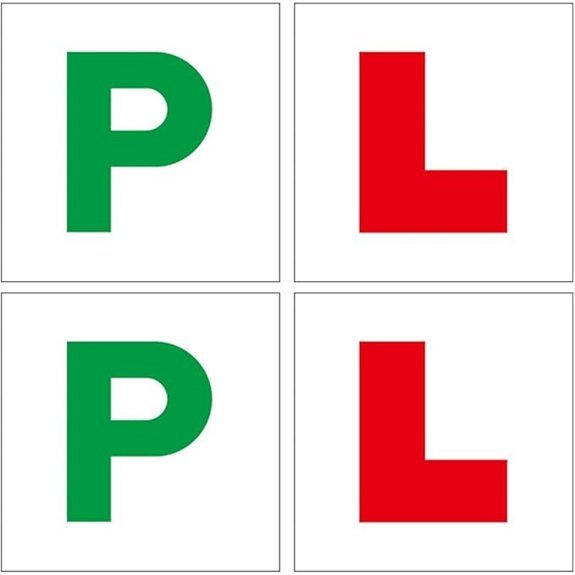 |
Four-Piece Pack | Type: Magnetic Waterproof Magnets | Size: 17.8 x 17.8 cm | Material: PVC and rubber magnets | VIEW LATEST PRICE | Read Our Analysis |
| Double Dragon Magnetic Red L Plates for Learner Drivers | 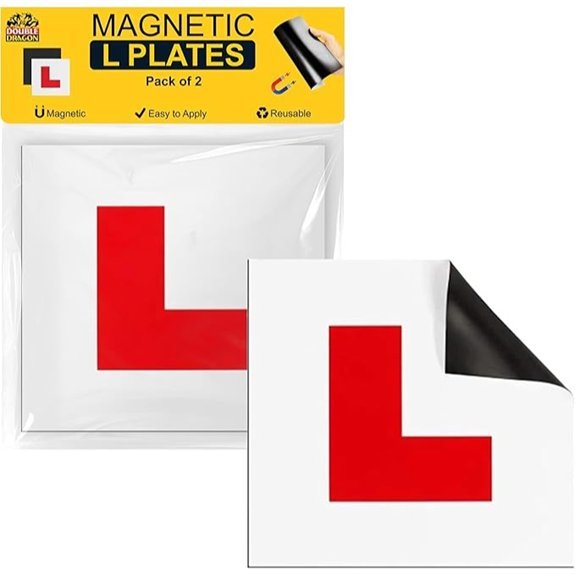 |
Full Magnetic Backing | Type: Magnetic Red L Plates | Size: 178mm x 178mm | Material: PVC, Rubber | VIEW LATEST PRICE | Read Our Analysis |
| Healeved Magnetic L Plates for Car Learner Drivers |  |
Removable Pair | Type: Magnetic L Plates | Size: 17.80 x 17.80 cm | Material: Rubber magnets, PVC | VIEW LATEST PRICE | Read Our Analysis |
| Cabilock Student Driver Reflective Magnet Sticker |  |
Reflective Supplement | Type: Reflective Magnet Sticker | Size: 24.00 x 8.00 cm | Material: Weatherproof materials | VIEW LATEST PRICE | Read Our Analysis |
| Ciieeo Reflective Student Driver Car Magnet | 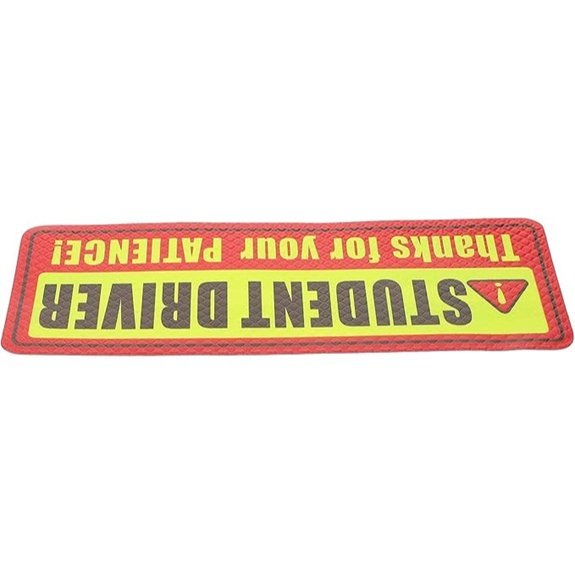 |
Optional Reflective Sign | Type: Reflective Car Magnet | Size: 24.00 x 8.00 cm | Material: Durable materials | VIEW LATEST PRICE | Read Our Analysis |
More Details on Our Top Picks
-
2pcs Magnetic L Plates for Student Driver Signs
This two-piece set offers a removable way to display learner-driver plates on suitable metal body panels. The supplied listing describes rubber magnetic backing and PVC construction, with each plate measuring approximately 17.8 cm square.
Magnetic plates can be useful if you share a car with a fully licensed driver. You can remove them when they are no longer needed without applying permanent adhesive.
Before buying, confirm that the plates use the prescribed red L on a white background and meet the official size requirements. Clean and dry both the plate backing and the vehicle surface before fitting.
Check that each plate sits flat and remains visible from the front or rear. Do not place it over a registration plate, light, sensor, or damaged body panel.
- Type:Magnetic L Plates
- Size:17.80 x 17.80 cm
- Material:Rubber magnets, PVC
- Visibility:Check against official L-plate requirements
- Installation:Clean, flat magnetic body panels
- Reusability:Removable and reusable
- Additional Feature:Two-piece set
- Additional Feature:No adhesive needed on suitable surfaces
- Additional Feature:Check adhesion before every journey
-
10pcs Removable N Letter Stickers for Learner Drivers
This pack contains ten removable N-letter stickers. The supplied specifications describe waterproof material, self-adhesive application, and a size of approximately 17.5 cm square.
These stickers are not a substitute for legally required UK learner plates. A learner in Great Britain must use the prescribed L plates, or permitted D plates in Wales.
Northern Ireland also has separate rules for restricted and newly qualified drivers. Do not rely on an N sticker to meet those requirements.
If you want an optional identification sticker, check local rules and avoid placing it where it could obstruct your view, conceal a required plate, or interfere with vehicle equipment.
- Type:Removable N Letter Stickers
- Size:17.50 x 17.50 cm
- Material:Waterproof materials
- Visibility:Optional identification only
- Installation:Self-adhesive application
- Reusability:Removable; check the product instructions
- Additional Feature:Ten-piece pack
- Additional Feature:Not a replacement for L or D plates
- Additional Feature:Check surface compatibility before applying
-
4pcs Magnetic Waterproof Learner Driver Car Magnets
This four-piece magnetic sign set is described as having PVC and rubber magnetic construction, with individual signs measuring approximately 17.8 cm square.
The larger pack may be convenient if you want spare signs or regularly use more than one suitable vehicle.
However, the supplied listing mentions red and green designs. Check the actual artwork carefully because decorative colours do not automatically meet UK learner-plate requirements.
The required learner plate must use the prescribed red letter on a white background. Any additional sign should remain separate from the required plates and must not obstruct lights, registration plates, or your view.
Water resistance is useful, but it does not guarantee that a magnet will remain attached at every speed or in every weather condition. Inspect the backing and adhesion before driving.
- Type:Magnetic Waterproof Magnets
- Size:17.8 x 17.8 cm
- Material:PVC and rubber magnets
- Visibility:Check the individual sign design
- Installation:Removable magnetic attachment
- Reusability:Reusable on suitable surfaces
- Additional Feature:Four-piece pack
- Additional Feature:Weather-resistant construction described
- Additional Feature:Decorative signs are not a substitute for compliant plates
-
Double Dragon Magnetic Red L Plates for Learner Drivers
Double Dragon Magnetic Red L Plates are described as measuring 178 mm square and using a full magnetic backing.
The supplied product information also mentions a 1.25 mm rubber magnet and a UV-treated PVC finish intended to resist weathering.
These construction details are useful to compare, but they do not independently establish legal compliance or guarantee that the plates will remain attached in every driving condition.
Confirm the required letter dimensions and design against the official DVSA specification before use.
Apply the plates to clean, flat, suitable metal surfaces. They must remain clearly visible at both the front and rear of the vehicle throughout learner practice.
- Type:Magnetic Red L Plates
- Size:178mm x 178mm
- Material:PVC, Rubber
- Visibility:Red L design; verify legal dimensions
- Installation:Full-surface magnetic backing
- Reusability:Removable and reusable
- Additional Feature:1.25 mm magnetic backing described
- Additional Feature:UV-treated PVC finish described
- Additional Feature:Check fit and condition before driving
-
Healeved Magnetic L Plates for Car Learner Drivers
Healeved offers a pair of magnetic learner-driver plates measuring approximately 17.8 x 17.8 cm.
The supplied information describes PVC construction with rubber magnetic backing. The pair is intended for removable placement on compatible vehicle body panels.
This format can be practical when learning in a family car because the signs can be removed when the vehicle is not being used by a learner.
Check that both plates meet the prescribed design and size requirements. Install one at the front and one at the rear, making sure they are clearly visible.
Do not assume the magnetic backing will attach to aluminium, plastic, composite, or heavily curved body panels. Test the actual mounting surface before relying on it.
- Type:Magnetic L Plates
- Size:17.80 x 17.80 cm
- Material:Rubber magnets, PVC
- Visibility:Check front and rear placement
- Installation:No tools required on suitable panels
- Reusability:Removable and reusable
- Additional Feature:Two-piece pack
- Additional Feature:Check magnetic compatibility
- Additional Feature:Remove when no learner is driving
-
Cabilock Student Driver Reflective Magnet Sticker
The Cabilock Student Driver Reflective Magnet Sticker is an optional identification accessory.
Its supplied dimensions are approximately 24 x 8 cm, and the listing describes reflective and weather-resistant construction.
A reflective sign may be easier to notice when illuminated by another vehicle’s headlights, but the amount of reflection and its real-world visibility have not been independently established here.
This product is not a replacement for the prescribed L or D plates. Use it only as an additional sign where appropriate.
Position it on a suitable panel without covering required plates, vehicle lights, cameras, or sensors.
- Type:Reflective Magnet Sticker
- Size:24.00 x 8.00 cm
- Material:Weatherproof materials
- Visibility:Reflective design described
- Installation:Magnetic attachment
- Reusability:Removable and reusable
- Additional Feature:Optional supplementary sign
- Additional Feature:Low-light visibility design
- Additional Feature:Does not replace legally required learner plates
-
Ciieeo Reflective Student Driver Car Magnet
The Ciieeo Reflective Student Driver Car Magnet is another optional sign for identifying a vehicle driven by someone who is learning.
The supplied listing describes a 24 x 8 cm design made from durable, weather-resistant materials.
Its removable magnetic attachment may be convenient when switching between vehicles, provided each vehicle has a suitable mounting surface.
The reflective design can provide an additional visual cue, but it should not be treated as a proven accident-prevention device.
Always use the required learner plates separately and keep the sign clear of lights, registration plates, and safety equipment.
- Type:Reflective Car Magnet
- Size:24.00 x 8.00 cm
- Material:Durable materials
- Visibility:Reflective design described
- Installation:Magnetic attachment
- Reusability:Removable and reusable
- Additional Feature:Suitable for use as an optional sign
- Additional Feature:Check panel compatibility
- Additional Feature:Not a substitute for legal L plates
Factors to Consider When Choosing Cars for Learners UK
When choosing a car for UK learners, consider vehicle size, safety, fuel efficiency, insurance, and handling. These factors affect how comfortable the car feels while learning and how much it costs to own after passing your test.
Vehicle Size Considerations
Compact cars are often easier to position on narrow roads and in parking spaces. Their smaller exterior dimensions can make it simpler to judge the distance between your vehicle and nearby obstacles.
However, size alone does not determine how easy a car is to drive.
Check the following:
- Can you see the front corners of the car?
- Is the rear window large enough for comfortable observation?
- Can you adjust the seat and steering wheel correctly?
- Are the mirrors easy to position?
- Can you reach all pedals and controls comfortably?
- Does the turning circle suit your usual roads and parking spaces?
A slightly larger car with good visibility and comfortable controls may suit you better than a smaller model with restricted sightlines.
Safety Features Importance
Safety should be a major consideration when selecting a learner car.
Look for appropriate occupant protection and driver-assistance equipment, including:
- Anti-lock braking system (ABS).
- Electronic stability control (ESC).
- Front and side airbags.
- Suitable head restraints and seatbelts.
- Automatic emergency braking where available.
- Parking sensors or a reversing camera.
- Blind-spot monitoring where fitted.
These systems can assist a driver, but they cannot replace observation, safe following distances, or correct vehicle control.
Check the Euro NCAP safety information for the relevant vehicle generation.
Euro NCAP assessment standards change over time, so ratings from different testing years should not be treated as directly equivalent.
For example, the fourth-generation Toyota Yaris received five stars in Euro NCAP’s 2020 assessment. The Škoda Fabia also received five stars in its 2021 assessment.
When buying used, check that the rating applies to the actual generation and safety equipment fitted to your chosen vehicle.
Fuel Efficiency Ratings
Fuel efficiency affects how much you spend on lessons, private practice, and everyday driving after passing your test.
UK fuel-economy figures are usually presented in miles per imperial gallon. Compare vehicles using official WLTP combined figures where available.
These are standardized test results, not guaranteed figures for every journey.
Actual consumption changes with driving style, traffic, temperature, speed, and vehicle condition.
For illustration, Toyota advertises WLTP combined figures of approximately 61.4–70.6 mpg for its Yaris Hybrid range, depending on configuration.
Škoda advertises WLTP combined figures of approximately 51.4–56.5 mpg for the Fabia range listed on its UK website.
Compare the exact engine and trim rather than relying on a general statement that all compact cars achieve the same economy.
Also remember that an economical car may have a higher purchase price. Consider total ownership costs rather than fuel savings alone.
Insurance Costs Evaluation
Insurance can represent a substantial part of a learner driver’s budget.
Premiums depend on factors such as your age, location, vehicle, driving experience, annual mileage, and intended use.
A smaller or less powerful car may cost less to insure than some alternatives, but this is not guaranteed.
Before buying:
- Get quotes using the exact car registration or correct model specification.
- Confirm that the policy covers you while holding a provisional licence.
- Check whether a supervising driver is covered.
- Compare the excess and any restrictions.
- Ask what happens to the policy after you pass your test.
- Compare several insurers rather than relying on one quote.
If you practise in a car owned by a friend or family member, you must be covered by suitable insurance. This may involve being added to their policy or taking out separate learner-driver cover.
Check the policy carefully because some insurers impose additional requirements on the supervising driver.
Maneuverability and Handling
Responsive steering, predictable braking, and a comfortable driving position can help you build good habits.
During a supervised drive, pay attention to:
- Steering response at low speeds.
- How easily you can judge the vehicle’s width.
- Brake-pedal feel.
- Clutch response if the car is manual.
- Visibility when reversing.
- How easily the car fits into ordinary parking spaces.
Do not choose a vehicle based on weight or size alone. Tyres, suspension condition, visibility, and the driving position also influence how manageable it feels.
Technology and Assistance Systems
Modern driver-assistance technology can make some driving tasks easier, particularly parking and low-speed manoeuvres.
Automatic emergency braking, lane assistance, parking sensors, and rear-view cameras may be useful features.
However, availability differs between model years and trims.
Learn what each system does, when it operates, and where its limitations are explained in the owner’s manual.
Do not rely on a camera instead of checking mirrors, blind spots, and the surrounding area.
Likewise, cruise control and lane assistance do not remove your responsibility to remain attentive and in control.
Budget-Friendly Options Availability
A used hatchback can reduce the initial purchase cost, but its condition matters more than a low advertised price.
Budget for:
- Purchase price or finance payments.
- Insurance.
- Vehicle tax.
- Fuel or charging.
- Servicing and repairs.
- Tyres and other consumables.
- MOT costs where applicable.
- Unexpected maintenance.
Buying the cheapest car available can become expensive if it needs significant repairs.
For a used vehicle, follow the official GOV.UK used-car buying checks.
Check the registration details, MOT history, service records, and outstanding safety recalls. An independent mechanical inspection can provide further information about the vehicle’s condition.
Choosing Between New and Used Cars
A new car may offer current safety equipment and manufacturer warranty coverage, but the purchase price can be considerably higher.
A used car may be more affordable initially, especially if you are learning in a family vehicle that is already available.
When buying used, check the vehicle’s condition rather than relying entirely on mileage or age.
Look at tyres, brakes, warning lights, service records, and any recurring MOT advisories.
A valid MOT does not guarantee that a car is safe in every respect or that it will not need repairs soon.
Check safety recalls using the official vehicle recall service.
Legal Requirements for Learner Drivers in the UK
Choosing a suitable car is only part of preparing for private practice. You must also meet the applicable licensing, insurance, supervision, and vehicle requirements.
Provisional Licence and Driving Age
You can apply for a provisional driving licence from the age of 15 years and 9 months.
Most people can start learning to drive a car on public roads at 17.
Some eligible people can begin earlier under specific mobility-related provisions.
You must have the correct provisional entitlement before driving on public roads.
Supervision Requirements
If you practise with a friend or family member, the supervisor must meet the relevant legal requirements.
In Great Britain, they must:
- Be at least 21 years old.
- Be qualified to drive the type of vehicle being used.
- Have held a full qualifying driving licence for at least three years.
- Comply with the rules governing supervision.
For example, someone supervising a learner in a manual car must have the appropriate manual driving entitlement.
The supervising driver must not use a handheld mobile phone while supervising.
Some insurance policies impose a higher minimum supervisor age, so check the policy before practising.
Vehicle Requirements for Private Practice
The car must be registered, taxed where required, insured for the intended learner-driver use, and roadworthy.
It must also have a valid MOT if one is required.
The vehicle needs compliant learner plates at the front and rear.
For private practice, an additional interior rear-view mirror for the supervisor is recommended by DVSA.
Read the full DVSA guidance on supervising a learner driver.
Can Learner Drivers Use Motorways?
In England, Scotland, and Wales, learner drivers may receive motorway lessons only when accompanied by an approved driving instructor in a car fitted with dual controls.
You cannot practise on a motorway with a friend or family member acting as your supervisor.
Northern Ireland has separate learner-driver arrangements. Check the current official guidance before planning motorway practice.
Northern Ireland Learner Rules and the October 2026 Changes
Northern Ireland has its own licensing and learner-driver rules.
As of 23 September 2026, its existing system includes a 45 mph limit for learner car drivers and a requirement for qualifying newly licensed drivers to display amber R plates for one year.
However, Northern Ireland is scheduled to introduce Graduated Driver Licensing on 1 October 2026.
The new scheme introduces a revised training and testing framework, including a six-month minimum learning period and a training logbook for new learners, subject to applicable exemptions and transitional arrangements.
The new practical-test arrangements are scheduled for 1 April 2027.
The system also introduces revised post-test requirements, including new R-plate arrangements.
Existing learners may be covered by transitional rules depending on when their provisional entitlement began and when they pass the practical test.
Check the official Northern Ireland Graduated Driver Licensing guidance for the rules that apply to your circumstances.
Note: England, Scotland, Wales, and Northern Ireland do not have identical learner-driver and post-test requirements. Check the rules for the jurisdiction in which you are learning.
How to Check Your Car Before Learner Practice
Make a short vehicle check part of your learning routine. It helps you become familiar with the car and identify obvious problems before setting off.
At a Glance
| Time Required | Allow approximately 5–10 minutes for a routine pre-drive check. |
| Difficulty | Beginner |
| Tools Needed | Vehicle handbook and a tyre-pressure gauge where needed. |
| Cost | Usually no additional cost for the visual check; maintenance or repairs are separate. |
Pre-Practice Vehicle Checklist
- Check the tyres. Look for visible damage and confirm pressures against the vehicle manufacturer’s guidance.
- Check the lights. Make sure headlights, brake lights, indicators, and other required lights work.
- Check the windows and mirrors. Clean them and make sure they provide a clear view.
- Adjust the driving position. Set the seat, steering wheel, head restraint, and mirrors.
- Check the dashboard. Investigate safety-related warning lights before driving.
- Check the learner plates. Confirm that the correct signs are secure and clearly visible at the front and rear.
- Confirm supervision and insurance. Make sure the supervising driver and learner are covered for the intended journey.
- Plan the route. Choose roads appropriate to your current skill level and the conditions.
Stop and address any issue that could make the vehicle unsafe. A valid MOT certificate does not remove your responsibility to keep the car roadworthy.
Pro Tip: Practise these checks with your instructor or supervisor until you understand what each one involves. This also helps prepare you for the vehicle-safety questions in the practical driving test.
Using Your Own Car for the Driving Test
You can take your practical driving test in your own car if it meets the applicable DVSA requirements.
These include roadworthiness, suitable tyres, required learner plates, a working speedometer, and an additional interior rear-view mirror for the examiner.
The car must also have an appropriate passenger seatbelt and head restraint.
Some vehicle models and configurations are not accepted because of visibility or safety-related restrictions.
Check the official rules for using your own car in a driving test before booking or arranging transport.
Driving Test Booking Rules in 2026
In England, Scotland, and Wales, the rules for booking and managing car driving tests changed during 2026.
Under the revised rules:
- Only the learner can book and manage their own car driving test.
- A learner can normally make a maximum of two changes to an existing booking.
- Moving a test is restricted to the permitted nearby test centres.
- Unofficial services are not allowed to scan the official booking system for appointments.
These changes were introduced in stages between March and June 2026.
See the official DVSA explanation of the 2026 booking rules.
Frequently Asked Questions
What Is the Best Age to Start Learning to Drive in the UK?
Most people can start learning to drive a car on public roads at 17. You can apply for a provisional licence at 15 years and 9 months. Certain mobility-related exceptions allow eligible drivers to start earlier. Make sure you have the correct provisional entitlement before driving.
How Many Driving Lessons Do I Need Before My Test?
There is no minimum number of lessons or practice hours required in Great Britain. The amount of practice you need depends on your progress. Your instructor can help you judge when you can drive safely and independently across the skills assessed in the test. Northern Ireland’s new Graduated Driver Licensing arrangements introduce a minimum learning period for applicable learners from October 2026, subject to transitional rules and exemptions.
Can I Practice Driving With a Friend or Family Member?
Yes, provided they meet the applicable supervision requirements. In Great Britain, your supervisor must be at least 21, hold the appropriate full driving entitlement, and have held a qualifying full licence for at least three years. You must also have suitable learner-driver insurance, and the vehicle must be legal and roadworthy. Some insurers apply additional supervisor-age requirements.
What Documents Do I Need While Driving as a Learner?
You must have a valid provisional driving licence and appropriate insurance. The vehicle must also have a valid MOT if required. In Great Britain, you must be able to produce relevant documents when requested by police. If you cannot produce them immediately, you may be required to present them at a police station within seven days. Northern Ireland has its own documentation rules.
Are There Specific Insurance Requirements for Learner Drivers in the UK?
Yes. You must be insured for learner-driver use. If you own the vehicle, you need suitable insurance covering you as a learner. If you use someone else’s vehicle, you can be added to their policy or obtain separate learner-driver cover that permits you to drive that vehicle. Check any restrictions and make sure your supervisor meets the insurer’s requirements.
Do I Need L Plates on Both the Front and Rear of the Car?
Yes. The prescribed learner plates must be clearly visible from both the front and rear. They must meet the legal design and size requirements. In Wales, D plates are also permitted.
Can I Use N Stickers Instead of L Plates?
No. N stickers do not replace the legally prescribed L plates for UK learners. Wales also permits D plates. Northern Ireland has separate post-test R-plate requirements, including changes under its Graduated Driver Licensing scheme.
Can I Learn to Drive in an Automatic Car?
Yes. You can take lessons and your practical test in an automatic car. If you pass in an automatic, your licence will normally be restricted to automatic vehicles. To gain manual entitlement later, you will need to pass the relevant practical test in a manual car.
Can a Learner Driver Practise on a Motorway?
In England, Scotland, and Wales, motorway lessons are permitted only with an approved driving instructor in a car fitted with dual controls. Private practice with a friend or family member is not permitted on motorways. Northern Ireland has separate rules and is introducing Graduated Driver Licensing from 1 October 2026.
Sources
- GOV.UK — Using L and P Plates — official requirements for learner plates and post-test signs.
- Driver and Vehicle Standards Agency — Supervise a Learner Driver — supervision, vehicle requirements, insurance, and private practice.
- Euro NCAP — Best in Class Cars — independent vehicle safety assessment information and the importance of testing year.
- GOV.UK — Check a Used Vehicle You’re Buying — vehicle records, MOT history, registration checks, and recalls.
- DVSA — Changes to Driving Test Booking Rules in 2026 — current booking and appointment-management requirements in Great Britain.
- nidirect — Graduated Driver Licensing — Northern Ireland’s new learning and post-test framework.
Conclusion
Choosing the right car for learning to drive in the UK means finding a balance between safety, comfort, visibility, affordability, and ease of handling.
Compact models such as the Hyundai i10, Kia Picanto, Toyota Yaris, and Škoda Fabia are useful starting points, but the right choice depends on your circumstances and the exact vehicle you are considering.
Before buying, compare insurance quotes, check the vehicle’s safety information and running costs, and make sure the driving position suits you.
If you practise privately, arrange suitable insurance, confirm that your supervisor meets the requirements, and display the correct learner plates.
With a suitable vehicle and consistent practice, you can develop the skills and experience needed to become a safe, confident, and independent driver.






Leave a Reply