
Choosing a car for a teenage driver in 2026 means balancing safety, reliability, running costs, and everyday practicality. A first car should offer strong crash protection, manageable power, and features that help a new driver recognize hazards without adding unnecessary distractions.
You do not need to buy the newest or most expensive vehicle. A carefully selected used car can provide good protection at a more affordable price. This guide covers recommended vehicles for the U.S. market, explains what parents should check before buying, and reviews optional student-driver signs that can help identify a learner vehicle.
Quick Answer
Good cars for teenage drivers in 2026 include suitable model years of the Mazda3, Honda Civic, Toyota Camry, Nissan Sentra, and Mazda CX-5. New-car options on the 2026 IIHS teen-vehicle list include the Mazda3, Toyota Prius, and Toyota Camry. Check the exact model year, safety ratings, insurance costs, and vehicle condition before buying.
Key Takeaways
- Prioritize crash protection, electronic stability control, appropriate vehicle weight, and manageable engine power.
- Use the latest IIHS and Consumer Reports teen-vehicle recommendations to identify suitable models and years.
- Compare insurance quotes before buying. The cheapest vehicle is not always the cheapest to own.
- Check used-car maintenance records, tires, brakes, accident history, and outstanding recalls.
- Driver-assistance technology supports safe driving but does not replace attention or good judgment.
- Student-driver magnets are optional identification accessories, not substitutes for required learner plates or responsible driving.
Top Car Picks for Teen Drivers in 2026
The Insurance Institute for Highway Safety (IIHS) and Consumer Reports updated their recommended vehicles for teen drivers on May 27, 2026.
Their recommendations consider crash protection, vehicle weight, handling, braking, and other safety-related factors. The used-car recommendations are divided into two categories: Good Choices and Best Choices.
The following table highlights examples from those recommendations. These are suitable vehicles to investigate, not a guarantee that every individual used car or trim will meet your family’s needs.
Recommended Used Cars for Teenage Drivers
| Vehicle | Recommended Model Years | IIHS Category | What to Consider |
|---|---|---|---|
| Nissan Sentra | 2015–2025 | Good Choices | An affordable sedan to investigate. Check its maintenance history and transmission condition. |
| Honda Civic coupe or sedan | 2014–2025 | Good Choices | Compare safety equipment and insurance costs across model years and trims. |
| Mazda3 | Hatchback: 2019–2025; sedan: 2020–2025 | Best Choices | A compact option with the crash-prevention and headlight criteria required for this category. |
| Toyota Camry, including hybrid | 2019–2025 | Best Choices | A midsize sedan worth considering for families wanting more interior space. |
| Mazda CX-5 | 2018–2025, built after March 2018 | Best Choices | A small SUV option. Verify the production date when considering a 2018 vehicle. |
Price context: The May 2026 IIHS list reported approximate starting reference prices of $4,700 for the Nissan Sentra, $8,100 for the Honda Civic, $13,200 for the Mazda3, $17,300 for the Toyota Camry, and $13,100 for the Mazda CX-5.
These figures were based on Black Book median retail prices from April 2026 for the earliest applicable model year. They are not current dealer quotes or prices for every vehicle in the recommended year range. Mileage, trim, location, condition, and accident history can substantially change the purchase price.
Note: Some IIHS recommendations include production-date restrictions. Check the manufacturing date on the driver’s door label before assuming a vehicle qualifies.
Recommended New Cars for Teenage Drivers
The 2026 IIHS and Consumer Reports new-vehicle recommendations include several cars and small SUVs suitable for families considering a new purchase.
- Mazda3 sedan or hatchback: A compact car included in the 2026 recommended new-vehicle list.
- Toyota Prius: A hybrid option for families placing particular importance on fuel economy.
- Toyota Camry: A midsize sedan offering additional passenger space.
- Mazda CX-30: A small SUV alternative for drivers who prefer a higher seating position.
- Hyundai Kona: Another small SUV included in the 2026 recommendations.
These vehicles meet the criteria used for the updated new-vehicle list, including applicable 2026 IIHS safety awards, Consumer Reports safety criteria, and seat-belt reminder performance.
Before choosing one, compare the exact trim, available safety equipment, insurance quote, and total purchase cost.
Optional Student-Driver Signs and Accessories
Student-driver signs can identify a vehicle being used by someone who is learning to drive. They may encourage other motorists to recognize that a driver is inexperienced, but they cannot guarantee that surrounding traffic will behave differently.
The following five accessories are retained from the original product selection. They are not vehicle recommendations, and no independent product-specific safety or durability testing is claimed here.
Affiliate disclosure: The following product links are affiliate links. We may earn a commission from qualifying purchases at no additional cost to you.
Warning: Decorative student-driver signs do not replace legally required learner identification. In Great Britain, learner vehicles must display compliant L plates at the front and rear, or permitted D plates in Wales. Requirements in other locations may differ.
| Student Driver Reflective Magnet Stickers for Car | 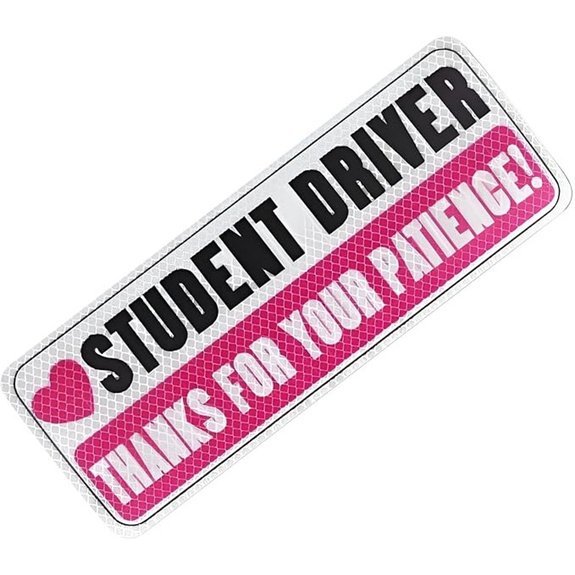 |
Visibility-Focused Design | Visibility: Reflective design | Material: Advertised waterproof construction | Attachment Method: Magnet or adhesive sticker | VIEW LATEST PRICE | Read Our Analysis |
| Reflective Student Driver Magnet Sign for Car |  |
Decorative Design | Visibility: Reflective lettering | Material: Advertised weather-resistant construction | Attachment Method: Magnet or sticker, depending on variant | VIEW LATEST PRICE | Read Our Analysis |
| PSLER Student Driver Car Magnet (3 Pcs) | 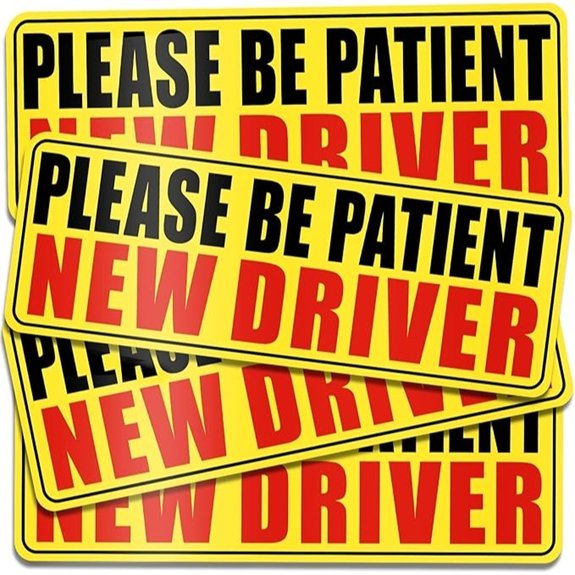 |
Three-Piece Set | Visibility: Advertised reflective material | Material: Magnetic construction | Attachment Method: Magnetic backing | VIEW LATEST PRICE | Read Our Analysis |
| Rio Salto Student Driver Magnetic Safety Sign | 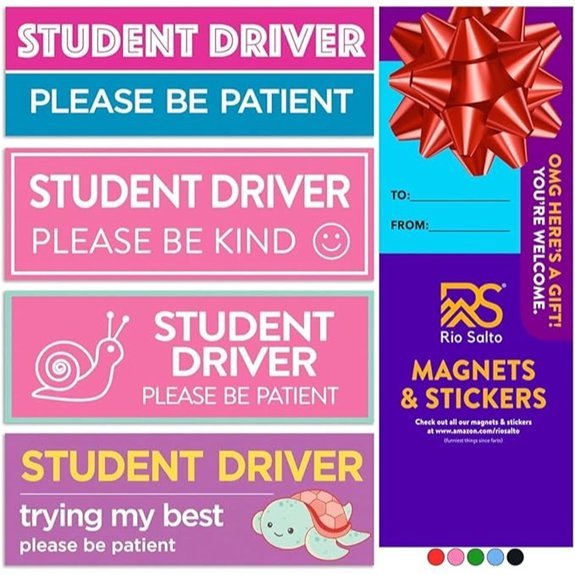 |
Patient-Driver Message | Visibility: Reflective “Please Be Patient” message | Material: Magnetic sign | Attachment Method: Magnetic backing | VIEW LATEST PRICE | Read Our Analysis |
| Please Be Patient Student Driver Magnet Sign | 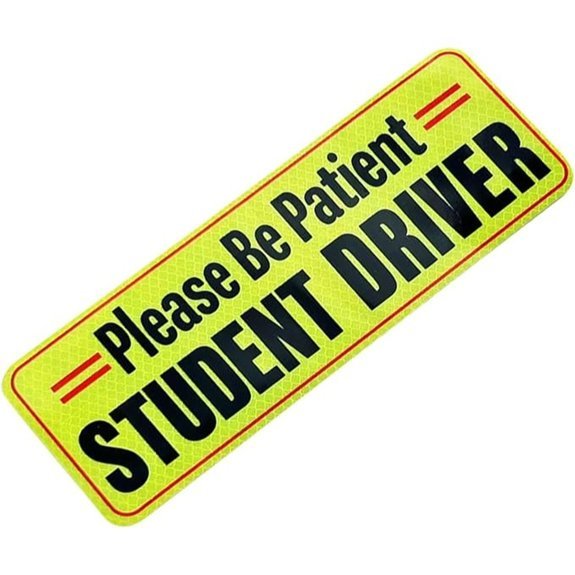 |
Fun and Functional | Visibility: Advertised reflective coating | Material: Reusable magnet | Attachment Method: Removable magnetic backing | VIEW LATEST PRICE | Read Our Analysis |
More Details on Our Top Picks
-
Student Driver Reflective Magnet Stickers for Car
The Student Driver Reflective Magnet Stickers offer a visible way to identify a learner vehicle. Their contrasting lettering and advertised reflective design are intended to make the message easier to notice in suitable lighting conditions.
Choose the magnetic or adhesive version according to the vehicle’s body material and your preference for removal. A magnet requires a suitable ferrous-metal panel. Clean and dry both the vehicle and the magnetic backing before fitting it. Do not assume that any accessory is guaranteed to prevent paint damage or remain attached under all driving conditions.
- Visibility: Reflective design
- Material: Advertised waterproof construction
- Attachment Method: Magnet or adhesive sticker
- Removability: Depends on the selected attachment type and surface condition
- Target Audience: New drivers
- Gift Potential: Practical optional accessory for a learner driver
- Additional Feature: Eye-catching pink lettering
- Additional Feature: Advertised weather-resistant construction
- Additional Feature: Check vehicle-panel compatibility before application
-
Reflective Student Driver Magnet Sign for Car
This reflective student-driver sign combines a learner-driver message with a decorative design and contrasting lettering. It may appeal to teenagers who want a more personal-looking accessory for their vehicle.
Check whether the selected version uses a magnet or adhesive backing. If you choose a magnetic version, confirm that the intended panel is compatible. Reflective appearance and weather resistance should be assessed from the actual product specifications rather than assumed from its name.
- Visibility: Reflective lettering
- Material: Advertised weather-resistant material
- Attachment Method: Magnet or sticker, depending on variant
- Removability: Depends on attachment type and surface preparation
- Target Audience: New drivers
- Gift Potential: Decorative learner-driver accessory
- Additional Feature: Distinctive shape
- Additional Feature: Personalizes the vehicle’s appearance
- Additional Feature: Optional learner identification
-
PSLER Student Driver Car Magnet (3 Pcs)
The PSLER Student Driver Car Magnet is presented as a three-piece set for identifying a vehicle used by a new driver. Multiple signs provide flexibility when choosing visible mounting positions on suitable body panels.
The advertised magnetic construction makes the signs removable, but their actual holding strength depends on the product, contact area, surface condition, and vehicle body material. No independently verified high-speed attachment rating is established here. Inspect the signs before driving and remove them if they are damaged or insecure.
- Visibility: Advertised reflective material
- Material: Magnetic construction
- Attachment Method: Magnetic backing
- Removability: Removable from compatible surfaces
- Target Audience: New drivers
- Gift Potential: Optional learner-driver accessory
- Additional Feature: Three-piece package
- Additional Feature: Check attachment security before driving
- Additional Feature: May be transferred between compatible vehicles
-
Rio Salto Student Driver Magnetic Safety Sign
The Rio Salto Student Driver Magnetic Safety Sign uses a “Please Be Patient” message to identify an inexperienced driver. It is intended for placement on a suitable exterior metal panel where other motorists can see it.
The original product description gives an approximate size of 9 × 3.25 inches, but dimensions should be confirmed against the selected product listing. Place the sign on a clean, flat, compatible surface. Do not position it over a registration plate, light, camera, sensor, or legally required learner plate.
- Visibility: Reflective “Please Be Patient” message
- Material: Magnetic sign
- Attachment Method: Magnetic backing
- Removability: Removable and reusable on compatible surfaces
- Target Audience: Novice drivers
- Gift Potential: Optional accessory for family members learning to drive
- Additional Feature: Prominent written message
- Additional Feature: Identifies an inexperienced driver
- Additional Feature: Suitable placement depends on vehicle design
-
Please Be Patient Student Driver Magnet Sign
The Please Be Patient Student Driver Magnet Sign combines learner identification with a lighthearted message. Its advertised reflective coating is intended to improve the visibility of the sign under suitable lighting conditions.
The original description lists an approximate size of 9 × 25.5 cm. Confirm the current product dimensions before purchasing. Use a suitable mounting surface and check the attachment regularly. The sign is an optional communication accessory, not a guarantee that other drivers will maintain a safe following distance.
- Visibility: Advertised reflective coating
- Material: Reusable magnet
- Attachment Method: Magnetic backing
- Removability: Removable from compatible surfaces
- Target Audience: Student drivers
- Gift Potential: Optional accessory for beginners and instructors
- Additional Feature: Reflective-style appearance
- Additional Feature: Lighthearted learner-driver message
- Additional Feature: Check rear-panel compatibility and visibility
Factors to Consider When Choosing Cars for Teenage Drivers
When choosing a first car, safety features should be a major part of the decision. However, the vehicle’s size, weight, running costs, reliability, and ease of use also matter.
Start by choosing vehicles with documented safety performance, then narrow the shortlist using your budget and driving needs.
Safety Features Importance
Crash protection and crash-avoidance technology are especially important for inexperienced drivers.
According to the IIHS young-driver safety guidance, parents should choose vehicles with appropriate weight, strong crashworthiness ratings, and electronic stability control.
Useful features include:
- Electronic stability control (ESC): Helps reduce loss of control by applying braking intervention when the vehicle begins to skid.
- Anti-lock braking system (ABS): Helps maintain steering control during hard braking.
- Automatic emergency braking (AEB): Can warn the driver and apply braking when the system detects certain collision risks.
- Forward collision warning: Alerts the driver to certain hazards ahead.
- Lane departure warning and lane-keeping assistance: Can help identify or respond to unintended lane departure.
- Side-impact protection and curtain airbags: Provide additional protection in certain crashes.
- Effective seat-belt reminders: Encourage occupants to buckle up before driving.
Check the exact model year and trim because safety equipment can vary.
Use the NHTSA vehicle safety ratings and IIHS ratings together when evaluating a vehicle. The organizations use different testing methods, so their results provide complementary information.
Warning: Automatic emergency braking, lane assistance, and adaptive cruise control have limitations. Poor weather, blocked sensors, road conditions, and other factors can affect performance. A teenage driver must remain attentive and responsible for operating the vehicle.
Vehicle Size Considerations
Vehicle size involves more than ease of parking.
Small cars may be convenient to maneuver, but very small and lightweight vehicles can provide less protection in collisions with larger vehicles.
IIHS recommends a vehicle with a curb weight of at least 2,750 pounds for a teenage driver. It also advises avoiding sports cars and vehicles marketed primarily for high performance.
A manageable vehicle with strong crash protection and moderate power is a more useful starting point than choosing a car solely because it is small, powerful, or inexpensive.
A compact sedan, midsize sedan, or appropriately sized SUV may suit a new driver, depending on visibility, handling, parking requirements, and family needs.
During a test drive, check whether the teenager can comfortably reach the pedals, adjust the seat and mirrors, see surrounding traffic, and operate the controls.
Fuel Efficiency Ratings
Fuel efficiency affects the ongoing cost of owning a first car.
For gasoline vehicles, miles per gallon (MPG) indicates how far a vehicle can travel using one gallon of fuel. A higher MPG figure generally means less fuel is required for the same distance under comparable conditions.
Compact sedans and hybrids can offer attractive fuel-economy options, but actual efficiency depends on the specific model and driving conditions.
Check official figures using FuelEconomy.gov rather than assuming every compact car will use less fuel than every SUV.
To estimate annual fuel spending, divide expected annual mileage by combined MPG and multiply the result by your expected fuel price per gallon.
For electric vehicles, compare electricity consumption, charging access, range, and estimated charging expenses instead of using gasoline MPG alone.
Insurance Costs Impact
Insurance can represent a substantial part of the total cost of a teenage driver’s car.
Premiums vary according to location, age, driving experience, vehicle, coverage, deductibles, driving record, and insurer.
Before buying, obtain quotes for each shortlisted vehicle using the correct year and trim.
Ask insurers about:
- Adding the teenager to an existing family policy.
- Good-student discounts, where available.
- Approved driver-education discounts.
- Available vehicle-safety discounts.
- Deductible options and appropriate coverage limits.
- Any driver-monitoring or telematics programs, including their privacy terms.
Do not assume that a smaller car automatically has lower insurance costs. Repair expenses, claims history, theft risk, and the exact vehicle can affect the premium.
Reliability and Maintenance
A dependable vehicle reduces the chance of unexpected breakdowns and expensive repairs.
However, reliability depends on the individual vehicle’s condition and maintenance history, not simply its brand reputation.
Before purchasing a used car, review:
- Routine service records.
- Engine oil and fluid maintenance.
- Brake condition.
- Tire age, tread depth, and wear patterns.
- Battery condition.
- Suspension and steering components.
- Transmission operation.
- Evidence of collision or flood damage.
- Outstanding safety recalls.
A professional pre-purchase inspection is particularly useful when the family has limited experience evaluating used vehicles.
Budget for routine servicing, tires, brakes, registration, and an emergency repair reserve. No single annual maintenance figure accurately describes every vehicle.
Technology and Connectivity
Modern technology can help teenage drivers, but it should not encourage unnecessary interaction with screens while driving.
Apple CarPlay and Android Auto can provide navigation and communication features, depending on the vehicle and phone. Set up the destination, audio, and phone preferences before starting the journey.
Even hands-free interactions can distract a driver. Enable a suitable driving-focus or do-not-disturb setting to limit notifications.
Some vehicles also offer parental monitoring features such as speed alerts, vehicle-location information, driving reports, or configurable restrictions.
These features vary by manufacturer, model year, trim, subscription, and region. Families should discuss how monitoring will be used and review the associated privacy settings.
Driver-assistance systems should support safe habits rather than replace observation, steering, braking, or judgment.
How to Check a Used Car Before Buying
Finding a recommended model is only the first step. A poorly maintained example can be a bad purchase even when the model appears on a recognized safety list.
1. Verify the Year, Trim, and Production Date
Confirm the vehicle’s exact model year, engine, trim, and safety equipment.
Check the manufacturing label near the driver’s door. Some IIHS recommendations apply only to vehicles produced after a particular date.
2. Check Safety Ratings
Review the vehicle’s specific results from NHTSA and IIHS.
Do not assume a rating from a different generation, body style, or model year applies to the car you are buying.
3. Check Recalls and Vehicle History
Locate the vehicle identification number (VIN) and use the NHTSA recall lookup to check for outstanding safety recalls.
Review the vehicle’s title, service documentation, and available history reports. A vehicle-history report can reveal useful information, but it does not replace a physical inspection.
Outstanding safety recalls should be addressed through the manufacturer’s authorized repair process.
4. Arrange a Professional Inspection
Ask an independent qualified mechanic to examine the vehicle before purchase.
The inspection should cover the brakes, tires, suspension, steering, fluid leaks, structural condition, warning lights, and other relevant systems.
A mechanic can also identify problems that may not be obvious during a short test drive.
5. Test-Drive the Vehicle
Test the car under suitable road conditions and listen for unusual noises.
Confirm that the steering feels predictable, the brakes operate properly, and the transmission shifts as expected.
Check the seating position, visibility, parking ease, and control layout with the teenage driver present.
The test drive must comply with applicable licensing, insurance, and supervision requirements.
Pro Tip: Get insurance quotes and schedule the inspection before committing to a purchase. A car that looks affordable in an advertisement may become much more expensive once insurance and necessary repairs are included.
Setting a Realistic First-Car Budget
A first-car budget should include more than the purchase price.
Consider the following expenses:
- Vehicle purchase price.
- Applicable taxes, registration, and title fees.
- Insurance premiums.
- Fuel or electricity.
- Routine maintenance.
- Tires and other wear items.
- Potential repairs.
- Parking, tolls, and other regular driving expenses.
Used vehicles can reduce the initial purchase expense, but an older car may require more maintenance.
New vehicles may provide current safety equipment and warranty coverage, although purchase and insurance expenses can be higher.
Compare both options using an annual ownership budget rather than the advertised vehicle price alone.
Are Electric and Hybrid Cars Good for Teenage Drivers?
Electric and hybrid vehicles can be suitable choices when they meet the same safety, size, and practicality standards as conventional cars.
The Toyota Prius and Hyundai Ioniq 5, for example, appear on the 2026 IIHS recommended new-vehicle list.
For an electric vehicle, consider:
- Access to reliable home or public charging.
- Typical daily driving distance.
- Cold-weather range changes where relevant.
- Insurance and repair costs.
- Battery warranty and condition when buying used.
- Vehicle weight, size, and acceleration characteristics.
Electric motors can deliver strong acceleration, so choosing an appropriately powered model remains important.
A conventional hybrid may be more practical for a household without convenient charging access.
The best powertrain depends on how the vehicle will actually be used.
How Parents Can Support New Teenage Drivers
Choosing a safe vehicle is only one part of helping a teenager develop responsible driving habits.
The CDC identifies driving inexperience as an important contributor to teen crash risk. Parent involvement, supervised practice, and appropriate driving restrictions can help address that risk.
Create a Parent-Teen Driving Agreement
Discuss and agree on clear expectations before the teenager begins driving independently.
Include rules covering:
- Seat-belt use on every journey.
- No texting or phone handling while driving.
- No alcohol, drugs, or impaired driving.
- Obeying speed limits.
- Passenger restrictions.
- Nighttime driving restrictions.
- Driving only when adequately rested.
- What to do after a breakdown, collision, or vehicle warning.
Follow all applicable graduated driver licensing requirements. These rules vary between jurisdictions and may restrict nighttime driving or the number of young passengers.
Build Experience Gradually
Supervised practice can help new drivers become familiar with parking, intersections, highways, changing weather, and unfamiliar routes.
Introduce more demanding conditions gradually and only when the driver is appropriately prepared.
A vehicle with good safety equipment is valuable, but it cannot compensate for speeding, distraction, or inadequate driving experience.
Frequently Asked Questions
What Are the Safest Cars for New Teenage Drivers?
There is no universally safest car for every teenager. Suitable choices include specific model years of the Mazda3, Toyota Camry, Honda Civic, and Mazda CX-5 identified by IIHS and Consumer Reports. The Toyota Prius and Mazda3 also appear on the 2026 recommended new-vehicle list. Check the exact vehicle’s safety ratings, equipment, and condition before buying.
How Much Should I Budget for a Teenage Driver’s Car?
The original $5,000–$15,000 budget can be a starting point for some used-car searches, but availability and condition vary. The May 2026 IIHS list includes recommended used models with reference prices beginning below $5,000 and others approaching $20,000. Set a budget that also covers insurance, registration, maintenance, fuel, and unexpected repairs.
Are Electric Cars Suitable for Teenage Drivers?
Yes, an appropriately selected electric vehicle can suit a teenage driver. Evaluate its crash protection, weight, acceleration, insurance, charging access, and running costs. The Hyundai Ioniq 5 appears on the 2026 IIHS recommended new-vehicle list. A conventional hybrid may be easier to own when regular charging is unavailable.
What Features Enhance Safety for Teenage Drivers?
Strong crash protection, electronic stability control, effective seat belts, airbags, and suitable vehicle weight are important. Automatic emergency braking, collision warnings, and lane-assistance features can provide additional support. Their availability and performance vary by vehicle, and none replaces attentive driving.
How Can Parents Help Their Teens Choose a Car?
Parents can help by setting a realistic budget, checking independent safety ratings, obtaining insurance quotes, reviewing maintenance records, arranging a professional inspection, and involving the teenager in an appropriate test drive. They should also establish clear rules for seat belts, phone use, passengers, speeding, and nighttime driving.
Should a Teenage Driver Choose a Small Car or an SUV?
Either can be appropriate if the specific vehicle meets recognized safety criteria. Avoid choosing solely by body style. Consider crash ratings, curb weight, visibility, handling, engine power, parking requirements, and insurance costs. IIHS recommends a minimum curb weight of 2,750 pounds for a teenage driver’s vehicle.
Do Student-Driver Magnets Replace Learner Plates?
No. Decorative signs are optional accessories. In Great Britain, learner drivers must display compliant L plates at the front and rear, with permitted D-plate alternatives in Wales. Check local rules wherever the vehicle is driven, and do not cover required plates, lights, registration plates, or cameras with an accessory.
Conclusion
The right first car should help a teenager develop confidence while providing strong crash protection and manageable ownership costs.
Start with independently recommended vehicles such as suitable model years of the Mazda3, Honda Civic, Toyota Camry, Nissan Sentra, and Mazda CX-5. Then check the exact vehicle’s ratings, maintenance history, insurance costs, and condition.
For families buying new, the 2026 IIHS recommendations provide additional options, including the Mazda3, Toyota Prius, and Toyota Camry.
Optional student-driver signs can identify an inexperienced driver, but the most important investments remain a suitable vehicle, proper instruction, supervised practice, and consistent safe-driving habits.
Sources
- IIHS and Consumer Reports — Safe Vehicles for Teens — Updated May 27, 2026; recommended new and used vehicles, applicable model years, and reference prices.
- IIHS — Young Driver Safety: A Guide for Parents — Vehicle weight, crash protection, moderate power, and electronic stability control.
- NHTSA — Vehicle Safety Ratings — Official crash-test information and vehicle safety comparisons.
- NHTSA — Vehicle Recall Lookup — Checking outstanding safety recalls by vehicle identification number.
- CDC — Teen Drivers — Teen-driving risks and prevention resources; page dated January 29, 2026.
- GOV.UK — Using L and P Plates — Official learner-plate requirements relevant to the UK-linked accessories.





Leave a Reply