Choosing your first car is an exciting step, but finding the right small car for a new driver takes more than picking a model that looks good. The best choice for you should feel easy to control, offer useful safety features, and fit your budget for insurance, fuel, and maintenance. In this 2026 UK guide, we’ll compare practical small cars, explain what to check before buying, and look at accessories that can help other road users recognise a newly qualified driver.
Quick Answer
The Kia Picanto, Toyota Aygo X Hybrid, Volkswagen Polo, and Renault Clio are small cars worth comparing as a new UK driver in 2026. Prioritise a comfortable driving position, current safety equipment, affordable insurance, and manageable running costs. Get an insurance quote for the exact version before buying, and check its safety rating and service history.
Affiliate disclosure: This article contains affiliate links to driving accessories. If you buy through these links, we may earn a commission at no extra cost to you. Our vehicle-buying advice is separate from these accessory recommendations.
Key Takeaways
- Compare the exact model and trim, not just the car’s name. Safety equipment and insurance groups can differ between versions.
- Small city cars are convenient for parking, while larger superminis may offer more room for passengers and luggage.
- Use UK WLTP fuel-economy figures when comparing petrol and hybrid cars.
- Get insurance quotes before purchasing. A cheap car is not necessarily cheap to insure.
- Check MOT history, outstanding safety recalls, and maintenance records when buying used.
- P plates are optional in Great Britain. Northern Ireland has separate mandatory R-plate rules.
Small Cars Worth Considering for New Drivers in 2026
There is no single small car that suits every new driver. Your budget, driving licence, parking arrangements, and typical journeys all matter. These four models provide useful starting points for comparing different types of small cars available in the UK.
| Model | Type | Main Consideration | Transmission |
|---|---|---|---|
| Kia Picanto | Petrol city car | Compact dimensions and straightforward urban driving | Manual or automated manual, depending on version |
| Toyota Aygo X Hybrid | Full-hybrid city car | Fuel efficiency and automatic driving | Automatic |
| Volkswagen Polo | Petrol supermini | Passenger space and everyday practicality | Manual or DSG automatic, depending on version |
| Renault Clio | Petrol or full-hybrid supermini | A balance of efficiency and passenger space | Depends on engine and version |
Important: Specifications, insurance groups, prices, and standard equipment can change between model years and trim levels. Always compare the precise version you intend to buy.
Kia Picanto
The Kia Picanto is a compact petrol city car worth considering if most of your driving involves commuting, shopping, and navigating busy streets.
Kia’s UK specifications list a 9.4-metre minimum turning circle, a 255-litre luggage compartment, and combined WLTP fuel consumption of approximately 48.7–49.6 mpg for the versions shown.
Available equipment includes a reversing camera, rear parking sensors, electronic stability control, and lane-keeping assistance. Some advanced assistance features are trim-dependent, so compare the standard equipment carefully.
Its compact size makes parking easier, although you should check rear-seat comfort and boot space if you frequently carry passengers.
Manufacturer information: Kia Picanto specifications.
Toyota Aygo X Hybrid
The Toyota Aygo X Hybrid is a small automatic car with a full-hybrid petrol powertrain. Toyota introduced this updated model for 2026, making it particularly relevant for buyers who want a current city car.
Toyota quotes approximately 70.6–76.3 mpg on the WLTP combined cycle, depending on specification. These are official comparison figures rather than a promise of what every driver will achieve.
The hybrid system can use electric power during suitable driving conditions without requiring you to plug the car in. This makes it convenient if you want automatic driving without organising home charging.
Its higher initial purchase cost should be weighed against fuel savings, insurance, servicing, and the number of miles you expect to drive.
Manufacturer information: Toyota Aygo X Hybrid.
Volkswagen Polo
The Volkswagen Polo is a larger small hatchback. It may be more practical than a city car if you regularly travel with friends, carry luggage, or use motorways.
Volkswagen lists a 351-litre boot for the regular Polo and offers petrol engines with manual or DSG automatic transmissions, depending on specification.
Its larger dimensions can improve everyday practicality, but you should check whether it feels comfortable when parking in tight spaces.
Compare the exact engine, trim, safety features, and insurance quote rather than assuming every Polo has the same running costs.
Manufacturer information: Volkswagen Polo.
Renault Clio
The Renault Clio offers a useful middle ground between a compact city car and a larger family vehicle.
Depending on the version, buyers can compare conventional petrol engines with Renault’s E-Tech full-hybrid system. The hybrid uses an automatic transmission and recovers energy during deceleration and braking.
Renault quotes combined WLTP fuel economy of approximately 65.7 mpg for the E-Tech hybrid specification shown in its technical information. Figures vary by version.
Check the actual car’s engine, equipment, boot space, and insurance costs before deciding which version suits your needs.
Manufacturer information: Renault Clio.
Factors to Consider When Choosing a Small Car for a New Driver
When you’re choosing a small car for a new driver, focus on the features that make everyday journeys easier and ownership more affordable. Safety, fuel efficiency, size, insurance, technology, and reliability all deserve attention.
Safety Features Available
Safety should be a priority when choosing your first car. Look for useful protection systems rather than assuming a newer or more expensive car is automatically safer.
Important features include:
- Anti-lock braking system (ABS): Helps prevent wheel lock during hard braking.
- Electronic stability control (ESC): Helps maintain vehicle stability when the car begins to lose control.
- Traction control: Helps limit excessive wheelspin.
- Airbags: Front, side, and curtain airbags provide protection in different types of collisions.
- Automatic emergency braking: Can warn the driver and apply braking when certain collision risks are detected.
- Lane assistance: Can warn you or provide steering assistance if the vehicle begins to leave its lane unintentionally.
- Parking assistance: Reversing cameras and parking sensors can make manoeuvring easier.
Check the vehicle’s Euro NCAP safety assessment. Pay attention to the test year, vehicle version, and whether the published result applies to standard equipment or an optional safety package.
Euro NCAP testing standards evolve over time, so an older rating should not automatically be treated as directly comparable with a newer result.
Warning: Driver-assistance systems are not substitutes for observation, safe following distances, or proper vehicle control. Cameras and sensors can have limitations in poor weather, darkness, and other challenging conditions.
Fuel Efficiency Importance
Fuel efficiency affects how much you’ll spend running your first car. Comparing official fuel-consumption figures is a useful starting point, especially if you expect to drive regularly.
In the UK, fuel economy is normally expressed in imperial miles per gallon. This differs from the US gallon, so figures from American websites should not be compared directly with UK specifications.
Use official WLTP combined figures when comparing cars tested under the same procedure.
The Vehicle Certification Agency explains that real-world consumption can differ because of driving style, temperature, vehicle load, and other factors.
To estimate your annual fuel cost, use this calculation:
Annual fuel cost = annual miles ÷ expected mpg × 4.546 × fuel price per litre.
For example, if you drive 6,000 miles annually and achieve 50 UK mpg, you would use approximately 546 litres of fuel.
Multiply that quantity by the price per litre you actually pay to estimate your annual fuel expense.
A fuel-efficient car can help reduce your running costs, but fuel economy should be considered alongside the vehicle’s purchase price and insurance premium.
Size and Maneuverability
As you begin driving independently, a car with manageable dimensions can make parking and navigating narrow roads less stressful.
Smaller cars often have shorter turning circles and require less parking space. However, size alone does not guarantee good visibility or easy handling.
During a test drive, check:
- How clearly you can see through the front, side, and rear windows.
- Whether the mirrors provide a useful view of surrounding traffic.
- How easily you can judge the front and rear corners.
- Whether the steering feels predictable during slow manoeuvres.
- How comfortable the car feels on faster roads.
- Whether passengers and luggage fit without compromising comfort.
Many small cars have light steering and compact dimensions, but individual models can feel very different from behind the wheel.
Insurance Costs Consideration
Car insurance can be one of the largest expenses for a newly qualified driver.
Insurers consider several factors, including your age, address, driving history, annual mileage, vehicle specification, and where the car is kept.
UK vehicles are commonly assigned insurance groups from 1 to 50. A lower group can be helpful, but it does not guarantee a lower individual premium.
Before buying a car:
- Choose two or three realistic models and trims.
- Obtain insurance quotes using accurate driver and vehicle details.
- Compare comprehensive cover with other suitable policy options.
- Check the compulsory and voluntary excess.
- Consider a telematics or black-box policy if its terms suit your driving habits.
- Check whether an approved additional driver affects the quote.
Some insurers may offer discounts for advanced driving courses, but these are not guaranteed. Ask the insurer before paying for a course solely to reduce your premium.
You can learn more from MoneyHelper’s car insurance guidance for young drivers.
Warning: Never list another person as the main driver if you are actually the main user of the vehicle. This is known as fronting and can invalidate insurance. Always give accurate information about mileage, modifications, and how the car will be used.
Technology and Connectivity
Modern technology can make driving more convenient, but simple controls are particularly useful while you’re building experience.
Features worth considering include:
- Bluetooth connectivity for hands-free communication.
- Apple CarPlay or Android Auto for compatible smartphone functions.
- A reversing camera and parking sensors.
- Clear vehicle information displays.
- Automatic headlights.
- Speed-limit information and driver-assistance alerts.
Some cars offer smartphone applications, vehicle tracking, remote functions, or connected navigation. Availability and subscription costs can vary.
Look for a system that is easy to understand without taking your attention away from the road.
Set your destination, music, and other preferences before moving off. Do not handle your phone while driving.
Maintenance and Reliability
Maintenance and reliability affect both your budget and your confidence in the car.
Look for models with accessible servicing, available replacement parts, and a clear maintenance schedule. A car with a documented service history is usually easier to assess than one with missing records.
Check:
- Manufacturer-recommended service intervals.
- Oil, coolant, brake fluid, and other maintenance requirements.
- Tyre condition and replacement costs.
- Brake condition and previous repair records.
- Warranty coverage and exclusions.
- Availability of qualified local repairers.
Simple mechanical designs may be easier to maintain in some circumstances, but complexity alone does not determine reliability. A well-maintained car with modern technology may be a better purchase than a neglected basic model.
For a used vehicle, pay particular attention to maintenance records and evidence of previous repairs.
Manual vs Automatic: Which Should You Choose?
Transmission choice matters for both convenience and your driving licence.
A manual car requires you to operate the clutch and select gears yourself. An automatic car handles gear selection without a conventional clutch pedal.
Automatic driving may feel easier in stop-start traffic, while a manual car offers a different driving experience and may provide additional choices in the used market.
Consider the following:
- Your licence: Check whether you hold a full manual or automatic-only entitlement.
- Your typical journeys: Frequent urban traffic may make automatic driving more convenient.
- Insurance: Compare quotes for both versions.
- Maintenance: Check the service requirements for the actual transmission fitted.
- Purchase cost: Compare the full vehicle price rather than assuming one gearbox is always cheaper.
Not every automatic transmission works in the same way. Conventional automatics, automated manuals, dual-clutch gearboxes, and hybrid transmissions can feel different during acceleration and low-speed manoeuvres.
Test the actual version before buying.
Should a New Driver Buy a New or Used Small Car?
A new car can offer current safety equipment, manufacturer warranty coverage, and a known maintenance history. However, the purchase price may be higher.
A used car can reduce the initial expense and give you access to more models within a limited budget.
The main challenge is assessing its condition and previous use.
Used-Car Buying Checklist
Before committing to a used vehicle:
- Check the registration details against the seller’s information.
- Review the vehicle’s MOT history and recorded mileage.
- Look for recurring advisories or serious previous defects.
- Check whether any safety recalls remain outstanding.
- Examine the service records and repair invoices.
- Inspect the tyres, brakes, bodywork, and interior.
- Check for warning lights and unusual noises during a test drive.
- Consider an independent inspection, especially when buying privately.
- Check for outstanding finance and other relevant vehicle-history issues.
The official GOV.UK used-car checklist explains how to check a vehicle before purchase.
You can also use the official MOT history service and vehicle recall checker.
Pro Tip: When comparing two used cars, keep some of your budget available for insurance, servicing, tyres, and unexpected repairs. Spending every pound on the purchase price can leave you short when ownership expenses begin.
Petrol, Hybrid, or Electric: What Works for a New Driver?
Small cars are available with different powertrains, and each has advantages depending on how you drive.
Petrol Small Cars
Petrol cars are widely available in the new and used markets. They can be straightforward to refuel and may offer a lower initial purchase price than some hybrid or electric alternatives.
Running costs depend on fuel economy, mileage, servicing, insurance, and vehicle condition.
Hybrid Small Cars
A conventional full hybrid combines a petrol engine with an electric motor and battery. It can recover energy while slowing down and may operate on electric power during suitable conditions.
Unlike a plug-in hybrid, a conventional full hybrid does not require external charging.
Compare the additional purchase cost with the fuel savings you expect from your actual mileage.
Electric Small Cars
Electric cars can be easy to drive because they generally use a single-speed transmission and deliver smooth acceleration.
They also produce no exhaust emissions while driving.
However, suitability depends on more than vehicle size. Consider:
- Whether you can charge at home or work.
- Local public-charging availability.
- Charging costs and payment methods.
- Realistic driving range in different weather conditions.
- Insurance and tyre replacement costs.
- Battery warranty and condition when buying used.
If you cannot charge conveniently, calculate the cost and time involved in relying on public chargers before choosing an electric car.
Work Out the Total Cost of Your First Car
The purchase price is only one part of your first-car budget.
Use this checklist when comparing vehicles:
| Expense | What to Check |
|---|---|
| Purchase | Vehicle price and any finance charges |
| Insurance | Actual quotes, cover level, and excess |
| Fuel or electricity | Expected mileage and consumption |
| Vehicle tax | Rate applicable to the exact vehicle |
| Servicing | Manufacturer schedule and local labour costs |
| Tyres and brakes | Condition, sizes, and replacement costs |
| MOT and repairs | Inspection requirements and repair reserve |
| Parking and other costs | Permits, tolls, and local charges where applicable |
Calculate your likely annual ownership cost before deciding how much you can afford to spend on the car itself.
What to Check During a Test Drive
A short test drive can reveal whether a car actually suits your needs.
Use these practical checks:
- Adjust the driver’s seat, steering wheel, and mirrors.
- Check that you can reach the pedals comfortably.
- Make sure you can see clearly through all windows.
- Try the controls for lights, wipers, heating, and ventilation.
- Check the clutch and gearbox operation if the car is manual.
- Test low-speed steering and parking manoeuvres.
- Check acceleration, braking, and stability during normal driving.
- Listen for unusual mechanical noises.
- Try the rear seats and luggage compartment.
- Check that warning lights behave normally.
Make sure the vehicle is insured for the test drive and that you hold the correct licence entitlement.
If you are unsure about a used vehicle’s condition, arrange a professional inspection rather than relying on a short drive alone.
New-Driver Plates and Useful Accessories
After choosing a car, you may want accessories that identify you as a newly qualified driver.
The original products below are driving accessories, not vehicle recommendations. Their purpose is to display a learner or new-driver message.
Understanding L, P, and R Plates
In Great Britain, learner drivers must display the correct L plates at the front and rear of the vehicle. Wales also permits D plates.
After passing your driving test, you can choose to display green P plates. They are optional and can be used for as long as you wish.
Northern Ireland has different requirements. Newly qualified drivers must display the prescribed amber R plates for one year after passing their test. A 45 mph restriction applies to restricted car drivers.
For the complete rules, consult the official GOV.UK plate guidance and Northern Ireland driver requirements.
Warning: A novelty sticker or caution sign does not replace a legally required L or R plate. Do not place any accessory where it obstructs your view, hides vehicle lights or number plates, or interferes with cameras and sensors.
Optional New-Driver Accessory Comparison
| AA Magnetic P Plates for Recently Qualified Drivers | 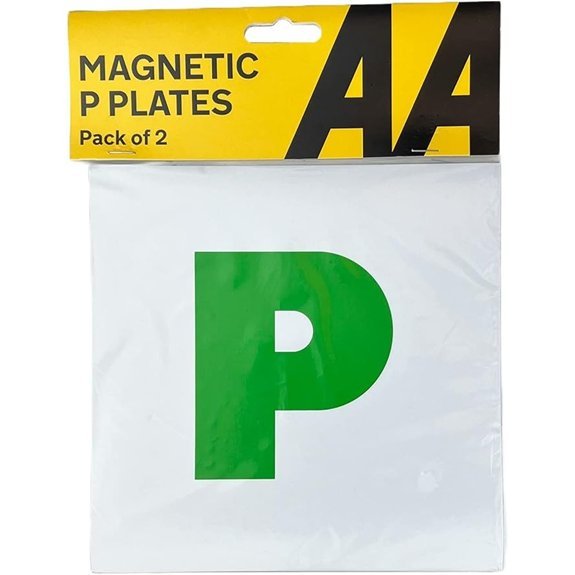 |
Magnetic P Plates | Type: Magnetic P Plates | Colour: Green | Attachment Method: Magnetic | VIEW LATEST PRICE | Read Our Analysis |
| Learner L Plate New Driver Car Stickers | 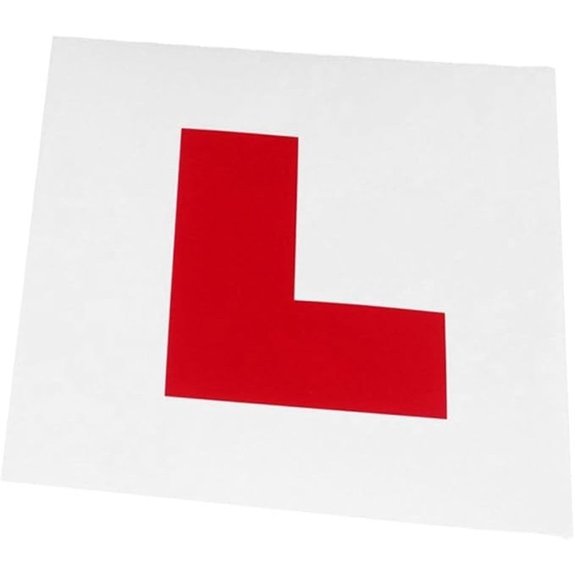 |
Decorative Stickers | Type: Car Stickers | Colour: Various | Attachment Method: Adhesive | VIEW LATEST PRICE | Read Our Analysis |
| Self Cling P Plates 2 New Driver Plates | 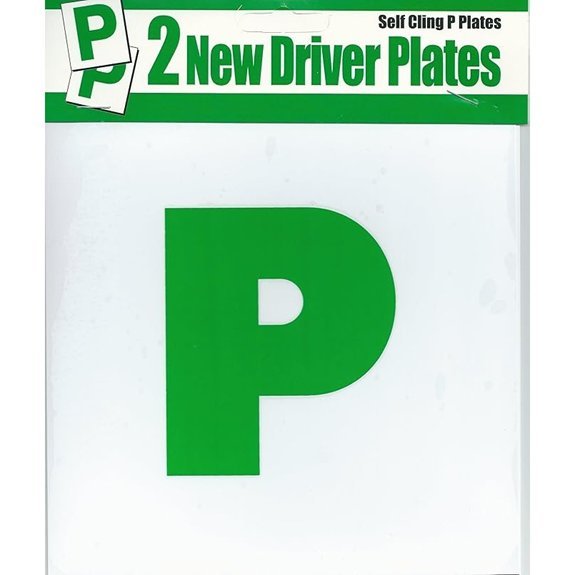 |
Window-Mounted Option | Type: Self-Cling P Plates | Colour: White Background | Attachment Method: Self-Clinging | VIEW LATEST PRICE | Read Our Analysis |
| Caution I’ve Just Passed My Test Car Sign New Driver Suction Cup Car Sign |  |
Novelty Caution Sign | Type: Suction Cup Car Sign | Colour: Bright Colours | Attachment Method: Suction Cup | VIEW LATEST PRICE | Read Our Analysis |
More Details on Our Top Picks
-
AA Magnetic P Plates for Recently Qualified Drivers
If you’ve recently qualified and want other drivers to recognise your new-driver status, AA Magnetic P Plates offer a removable option for suitable metal body panels. Their fully magnetic design makes them convenient to fit and remove without relying on adhesive.
The original product description lists dimensions of approximately 25 x 19 cm and describes weather-resistant construction. Clean and dry the vehicle surface before attaching magnetic plates, and avoid placing them over damaged paint or unsuitable bodywork.
Remember that P plates are optional in Great Britain and do not change your legal responsibilities as a driver.
- Type:Magnetic P Plates
- Colour:Green P on white background
- Attachment Method:Magnetic
- Listed Dimensions:25 x 19 x 1 cm
- Material:Weather-resistant construction
- Purpose:Indicate newly qualified driver status
- Additional Feature:Fully magnetised design
- Additional Feature:Removable attachment
- Additional Feature:Suitable for compatible metal body panels
-
Learner L Plate New Driver Car Stickers
These Learner L Plate New Driver Car Stickers are intended for decorative use on suitable vehicle surfaces. Their adhesive design provides a different attachment method from magnetic or self-cling plates.
The supplied product description identifies PVC construction and dimensions of approximately 17.8 x 17.8 cm. Apply adhesive decals only to clean, smooth, compatible surfaces and follow the product’s removal instructions.
An important distinction applies here: decorative learner-themed stickers are not automatically compliant learner plates. If the vehicle is being used by a learner, it must display the prescribed L or D plates in the required positions.
After passing your test, remove learner plates when the vehicle is no longer being used by a learner.
- Type:Car Stickers
- Colour:Various
- Attachment Method:Adhesive
- Listed Dimensions:Approximately 17.8 x 17.8 cm
- Material:PVC
- Purpose:Decorative learner or new-driver message
- Additional Feature:Eye-catching design
- Additional Feature:Removable decal format
- Additional Feature:Suitable for compatible smooth surfaces
-
Self Cling P Plates 2 New Driver Plates
Self Cling P Plates provide an alternative to magnetic plates. They are designed to attach to suitable glass surfaces without a conventional permanent adhesive.
The supplied product information describes lightweight plastic plates measuring approximately 18.59 x 18.39 cm. Their removable format may appeal to drivers who share a vehicle and only want to display P plates while they are driving.
Position the plates where they remain visible to other road users without blocking your view. Avoid placing them over heated window elements or other areas where the product’s instructions advise against installation.
As with magnetic plates, these accessories indicate new-driver status but do not guarantee that other road users will behave differently.
- Type:Self-Cling P Plates
- Colour:White background
- Attachment Method:Self-clinging
- Listed Dimensions:18.59 x 18.39 x 0.61 cm
- Material:Plastic
- Purpose:Indicate newly qualified driver status
- Additional Feature:Removable window attachment
- Additional Feature:Lightweight construction
- Additional Feature:No conventional permanent adhesive required
-
Caution I’ve Just Passed My Test Car Sign New Driver Suction Cup Car Sign
The “Caution I’ve Just Passed My Test” car sign offers a light-hearted way to display a new-driver message.
The supplied description lists a 14 x 14 cm sign with bright colours and a reusable suction cup. It is designed to attach to a suitable interior glass surface.
Its main appeal is its humorous design and removable attachment method. It should not be treated as a safety device or a replacement for official driving plates.
Fit it securely, keep it away from the driver’s main field of vision, and make sure it does not interfere with vehicle controls or visibility.
- Type:Suction Cup Car Sign
- Colour:Bright colours
- Attachment Method:Suction cup
- Listed Dimensions:14 x 14 cm
- Material:Product-specific construction
- Purpose:Humorous caution message for new drivers
- Additional Feature:High-visibility design
- Additional Feature:Novelty message
- Additional Feature:Reusable suction cup
Frequently Asked Questions
What Safety Features Should New Drivers Prioritise in Small Cars?
Prioritise a strong, relevant crash-test assessment, electronic stability control, effective airbags, and properly functioning seatbelts. Automatic emergency braking, lane assistance, reversing cameras, and parking sensors can also be useful. Check the exact trim because some equipment may be optional. Driver-assistance systems support safe driving but cannot replace driver attention.
How Fuel-Efficient Are the Best Small Cars for New Drivers?
Fuel economy varies considerably. For example, Kia lists approximately 49 mpg combined for the Picanto versions shown in its UK specifications, while Toyota lists approximately 71–76 mpg for the Aygo X Hybrid. These are WLTP test figures. Your actual consumption will depend on driving conditions, temperature, speed, load, and driving style.
What Is the Average Insurance Cost for Small Cars?
There is no reliable single premium for every small car or newly qualified driver. Your age, postcode, driving history, annual mileage, and the exact vehicle all affect the quote. Compare several insurers before buying. Look at the total annual price, excess, policy restrictions, and whether a telematics policy would suit you.
Are Electric Small Cars Suitable for New Drivers?
Yes, an electric small car can suit a new driver, particularly when charging is convenient and its range meets your needs. Electric vehicles generally offer smooth acceleration and straightforward automatic operation. Compare insurance, purchase price, charging costs, real-world range, and battery warranty before deciding.
How Does Maintenance Differ for Small Cars Versus Larger Vehicles?
Some small cars use less expensive tyres and smaller quantities of consumables, but maintenance costs depend on the individual model, age, mechanical design, and condition. Larger vehicles may have more expensive components, although this is not universal. Compare service schedules, replacement-part prices, and warranty coverage rather than relying on vehicle size alone.
Do I Have to Display P Plates After Passing My Driving Test?
No. P plates are optional in Great Britain, and you can display them for as long as you wish. Northern Ireland has separate rules requiring prescribed R plates for one year after passing the test, together with a 45 mph restriction for restricted car drivers.
Is a Small Car Always Cheaper to Insure?
No. Insurance depends on the precise vehicle and driver profile. Some small cars have relatively low insurance groups, while more powerful or expensive versions can cost more. Always obtain a quote using accurate details before purchasing.
Should My First Car Be New or Used?
Both can be suitable. A new car offers a known history and manufacturer warranty, while a used car may provide a lower purchase price. If buying used, check the MOT history, maintenance records, recall status, and overall condition. Budget for potential repairs and consider an independent inspection.
Conclusion
Finding the right small car for a new driver is about balancing safety, comfort, practicality, and cost rather than choosing the smallest or cheapest model available.
The Kia Picanto, Toyota Aygo X Hybrid, Volkswagen Polo, and Renault Clio provide different options for UK buyers in 2026. Compare their actual specifications, test-drive the versions you’re considering, and obtain insurance quotes before making a commitment.
If you also want to display your new-driver status, optional P plates can be useful in Great Britain. Remember that accessories do not replace safe driving habits or legal requirements.
Your next step: Shortlist two or three cars, compare their total ownership costs, and test-drive them before deciding which one suits your driving needs.
Sources
- GOV.UK — Using L and P Plates — official learner and probationary plate requirements.
- nidirect — Learner and Restricted Driver Requirements — Northern Ireland R-plate rules.
- Euro NCAP — Latest Safety Ratings — vehicle safety assessments.
- MoneyHelper — Car Insurance for Young Drivers — insurance costs and practical considerations.
- Vehicle Certification Agency — WLTP — official fuel-consumption testing and comparison guidance.
- GOV.UK — Check a Used Vehicle You’re Buying — vehicle history, documentation, and safety checks.






Leave a Reply