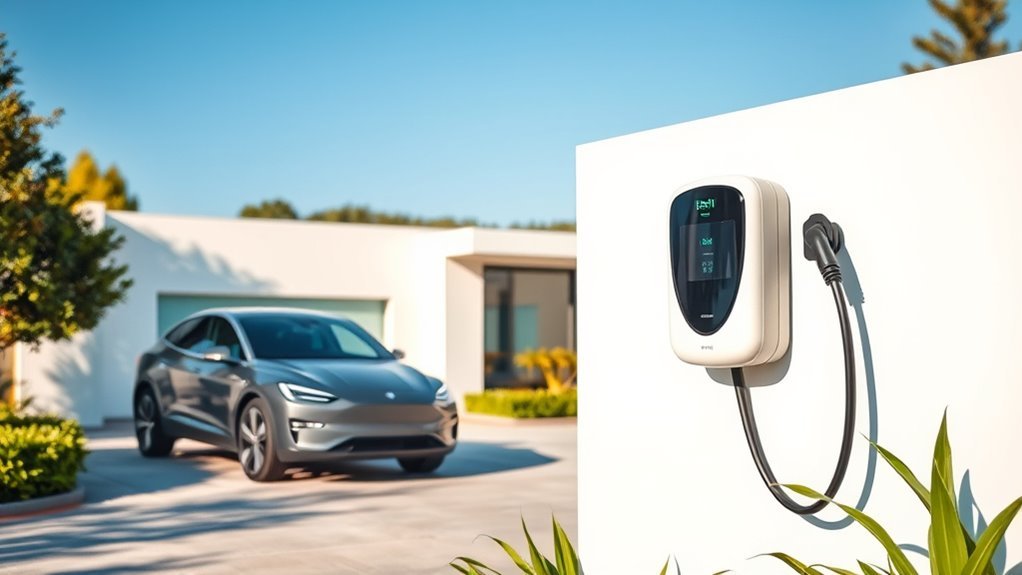
In the UK, you generally don’t need planning permission for an EV charger at your home, provided you follow specific criteria set in 2025. Installations are permitted for most private driveways, but you’ll face restrictions if your property is a listed building or in a conservation area. Compliance with UK Building Regulations is mandatory, and using an OZEV-approved installer can guarantee you meet all requirements. There’s more to explore about the regulations and potential grants available.
Do I Need Planning Permission for an EV Charger?
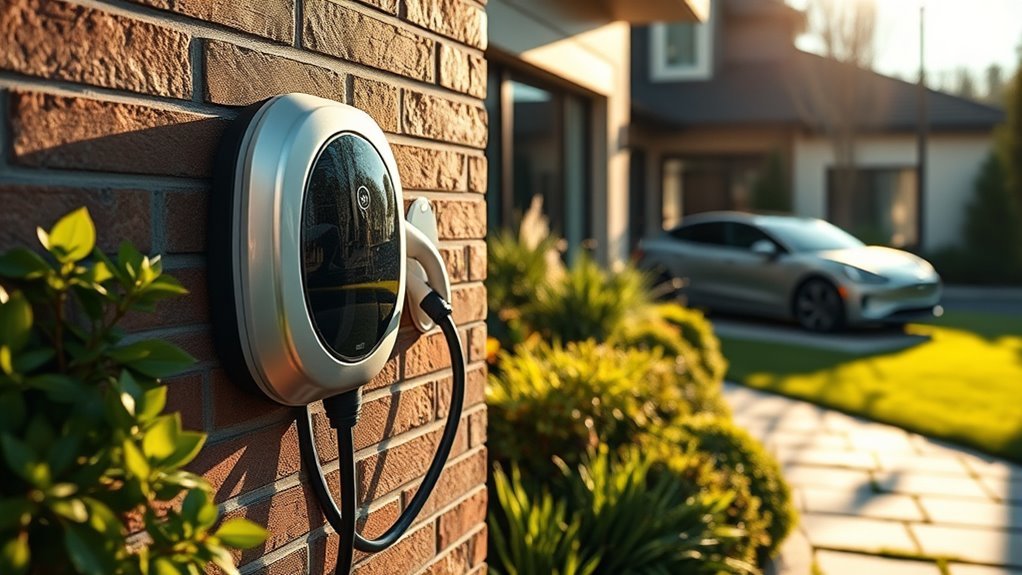
When considering whether you need planning permission for an EV charger, it’s vital to understand recent changes in regulations. As of May 2025, most UK homeowners can install standard EV chargers on detached, semi-detached, and many terraced homes without needing formal planning permission.
However, you must adhere to specific installation guidelines regarding size and placement. Homeowner responsibilities are paramount, especially if your property is a listed building, in a conservation area, or involves on-street parking, where planning consent may still be required.
Even without the need for planning permission, all installations must comply with UK Building Regulations to guarantee electrical safety and reliability. Consequently, it’s your responsibility to familiarize yourself with these regulations to avoid potential legal complications.
Prioritizing compliance not only safeguards your investment but also contributes to a sustainable future.
What Changed in 2025 Regarding EV Charger Installations?
As of May 2025, significant regulatory changes have streamlined the process for installing electric vehicle (EV) chargers in the UK, eliminating the need for planning permission in most cases.
This pivotal shift primarily affects private driveways, off-street parking, and commercial premises, making installations more accessible. By removing planning applications, you can expect installation costs to decrease by an average of £1,100 while also speeding up project timelines.
This initiative is part of the government’s broader effort to enhance UK EV infrastructure, with over £2.3 billion already invested in the sector. With nearly 80,000 chargepoints operational as of April 2025, this regulatory change aims to encourage more individuals and businesses to adopt EV technology.
The ultimate goal is to reach 300,000 chargepoints by 2030, fostering a sustainable future while providing significant installation benefits for you and your community.
How to Navigate Building Regulations for EV Chargers
Maneuvering building regulations for EV chargers can seem intimidating, but understanding the key requirements is vital for a successful installation.
Here’s how to guarantee building compliance and adhere to installation standards:
- Understand Part P: Confirm your installation meets electrical safety and wiring standards.
- Notify the DNO: Contact your Distribution Network Operator to confirm your property can handle the additional load.
- Follow Approved Document S (2022): If you’re building a new home or renovating, include provisions for EV charging infrastructure.
- Adhere to Smart Charge Point Regulations: Installers must verify chargers support off-peak scheduling and meet cybersecurity standards.
Using an OZEV-approved installer not only guarantees compliance but also keeps you eligible for financial assistance through the EV Chargepoint Grant.
Maneuvering these regulations is essential for a safe and efficient charging solution.
Grants and Financial Assistance for EV Chargers

Understanding the financial landscape surrounding the installation of EV chargers can greatly ease the burden of upfront costs for homeowners.
The UK government offers grants of up to £350 to help offset installation costs, which typically range from £450 for basic models to £1,200 for advanced options. By pursuing a grant application, you can considerably reduce your out-of-pocket expenses, making EV adoption more accessible.
It’s essential to research available financial assistance schemes, as these grants not only apply to residential installations but also to commercial and public charging infrastructure.
To qualify for the EV Chargepoint Grant, you must use OZEV-approved installers, ensuring that your installation meets safety and regulatory standards.
This financial support not only alleviates personal costs but also encourages broader EV adoption, empowering you to contribute to a greener future while enjoying the benefits of electric vehicle ownership.
What’s the Deal With EV Charger Planning Permission?
While the UK government has streamlined the process for installing EV chargers, it’s crucial to be aware of the specific conditions that apply to your situation. You can benefit from the removal of planning permission for most installations, but keep these points in mind:
- Permitted Development Rights: If you have off-street parking, you can install wall-mounted chargers without planning permission, as long as you meet size and placement limits.
- Exceptions: Listed buildings, conservation areas, and on-street parking may still require formal planning permission.
- Regulatory Compliance: You’re responsible for ensuring your installation adheres to UK regulations, even without planning permission.
- Cost Savings: The removal of planning permission is expected to reduce installation costs by around £1,100, making the installation process more accessible.
Understanding these details can help you navigate the installation process effectively and embrace the shift towards electric vehicles.
Frequently Asked Questions
Do I Need Planning Permission for an EV Charger in the UK?
You typically don’t need planning permission for an EV charger in the UK. However, make sure your installation complies with EV charger regulations, as exceptions exist for specific properties, so always verify before proceeding.
What Are the Rules for EV Charger Installation UK?
When it comes to EV charger installation in the UK, you must navigate specific regulations and guidelines. Keep your ducks in a row to guarantee compliance with safety standards and Smart Charge Point Regulations.
Is Planning Permission to Install EV Chargers Removed in England?
Yes, planning permission for installing EV chargers in England has been removed under recent regulations. You can follow installation guidelines for most properties, but check specific requirements for conservation areas or listed buildings.
What Can You Build Without Planning Permission in the UK?
You can build certain structures like sheds or fences without planning permission in the UK, thanks to permitted developments. Just make sure you adhere to building regulations, keeping your dreams grounded in compliance and safety.
Conclusion
In conclusion, while most EV chargers can be installed without planning permission, maneuvering through the regulations can feel like driving through a maze. Just as a skilled driver anticipates turns and obstacles, you should familiarize yourself with local guidelines to avoid any pitfalls. With the right knowledge, you can seamlessly integrate an EV charger into your property, taking a step toward a more sustainable future. Remember, staying informed is key to ensuring your installation goes off without a hitch.







Leave a Reply