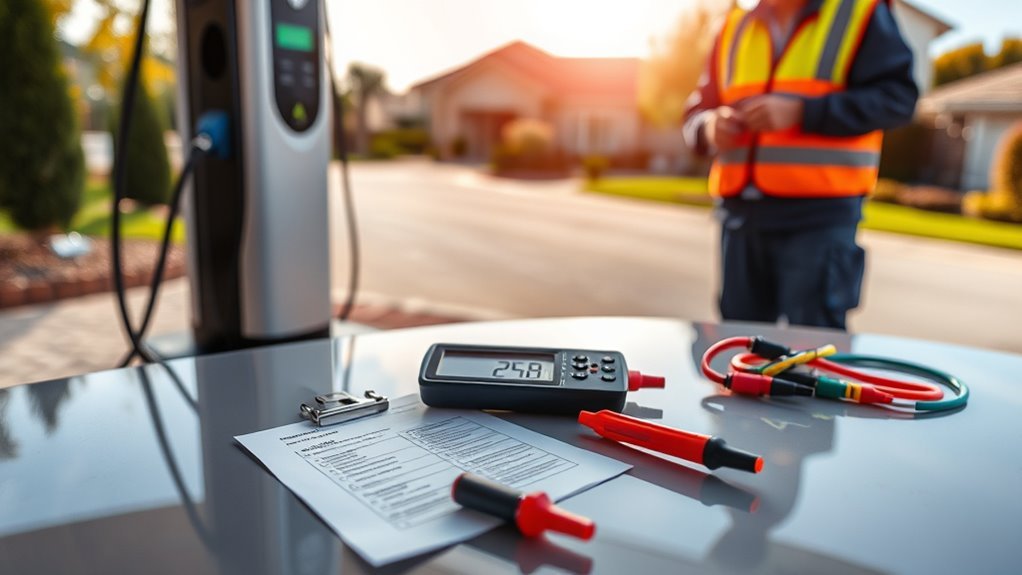
To guarantee effective EV charger commissioning, focus on configuring key settings, performing thorough safety checks, and conducting essential testing procedures. Start by connecting the charger to the correct power supply phase and aligning voltage and current settings. Verify all connections for security and perform electrical testing, including earth fault checks. Document everything meticulously for compliance. Regular routine maintenance is crucial for longevity and performance. There’s much more you can explore to further optimize your EV charger commissioning process.
Why EV Charger Commissioning Matters: Key Steps to Success
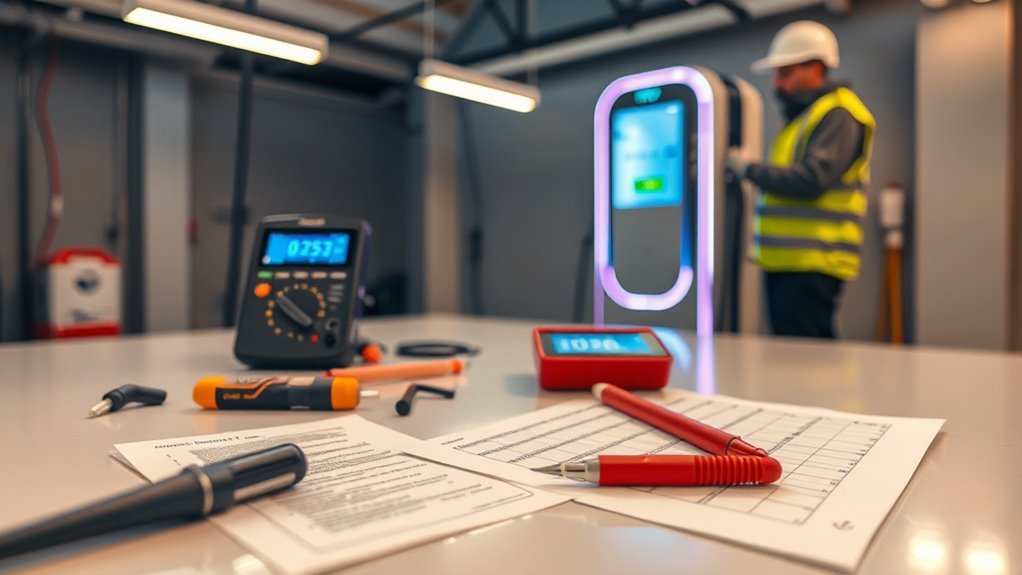
When you prioritize the commissioning of EV chargers, you’re not just ensuring compliance with BS 7671 requirements; you’re also enhancing user safety and reliability.
A thorough importance assessment during the commissioning process guarantees that every charger operates at peak performance. By verifying critical settings such as supply phase, voltage, and current specifications, you mitigate risks that could lead to operational failures.
Conducting detailed testing, including earthing and RCD tests, identifies potential defects before the charger goes live, greatly reducing hazards.
Utilizing an extensive checklist further standardizes your approach, ensuring all safety measures and settings are methodically addressed.
The commissioning benefits extend beyond compliance; successful implementation maximizes the lifespan and efficiency of your charging infrastructure.
This proactive strategy minimizes downtime and operational disruptions, empowering fleet operations to run smoothly.
Ultimately, investing in proper commissioning isn’t just a regulatory obligation—it’s a pathway to enhanced safety and reliability for all users.
Key Settings to Configure Before Testing
Before testing your EV charger, you need to configure critical settings related to power supply and network connectivity.
Make certain that the charger is connected to the correct power supply phase, with voltage and current settings aligned to specifications.
Additionally, set up your network options—whether WiFi, 4G, or Ethernet—to facilitate remote monitoring and diagnostics.
Network Configuration Settings
Configuring network settings correctly is essential for the successful commissioning of EV chargers, as it directly impacts their performance and usability.
Start by verifying that network connectivity options—WiFi, 4G, or Ethernet—are set up for robust remote monitoring and management. Confirm the charger is configured for the correct supply phase, voltage, and current specifications.
Activate essential features like free vend and RFID for user authentication and payment processing. Don’t forget to check that the firmware version is up-to-date, as this guarantees peak performance and security.
Document all configuration options and changes meticulously for future reference and compliance with installation standards. This structured approach fosters reliability and enhances user experience.
Power Supply Specifications
Properly setting the power supply specifications is essential for guaranteeing ideal performance of EV chargers during testing.
First, identify the power phase—whether it’s single-phase or three-phase—since this choice influences compatibility with your electrical system.
Next, conduct voltage verification; verify your settings match local supply standards, typically 230V for single-phase or 400V for three-phase in the UK, to avoid charger damage.
Additionally, check current settings, aligning them with the charger’s rated capacity and vehicle requirements, usually between 16A and 32A.
Finally, confirm kilowatt ratings meet your charging needs.
Don’t forget to document any activated configuration options like WiFi or Ethernet settings for efficient remote monitoring and troubleshooting.
Proper preparation is key to a successful commissioning process.
Safety Checks to Ensure Compliance and Reliability
To guarantee compliance and reliability, start with a thorough visual inspection for any physical damage and verify that all connections are secure.
Next, conduct electrical testing procedures, including earth fault loop impedance tests and RCD functionality checks, to confirm the system meets safety standards.
Document your findings meticulously to support ongoing maintenance and compliance efforts.
Visual Damage Inspection
Before commissioning an EV charger, it’s essential to conduct a thorough visual inspection to identify any visible damage or cracks on the casing, as these issues can compromise both safety and functionality.
Begin your damage assessment by checking battery terminals for signs of corrosion or loose connections, which may lead to performance issues.
Guarantee charging ports and connectors are clean and free of debris, facilitating proper electrical contact and minimizing the risk of short circuits.
Confirm the charger’s compatibility with the specific battery model to avoid malfunctions and safety concerns.
Document your findings meticulously to guarantee compliance with safety regulations and to inform any necessary maintenance actions, reinforcing the reliability of the EV charging system.
Electrical Testing Procedures
Five key electrical testing procedures are critical for guaranteeing the safety and reliability of EV chargers.
First, verify the earthing system to minimize electric shock risks.
Next, measure insulation resistance and continuity to confirm the charger operates safely within voltage and current ratings.
Conduct load testing under various operational scenarios to assess performance and identify potential faults early.
Ascertain compliance with RCD requirements and international safety standards like IEC 60364, as this is essential for legal adherence.
Finally, meticulously document all test results to maintain compliance records, which aids in future inspections and maintenance.
Essential Testing Procedures for EV Chargers
As you prepare to test EV chargers, it’s essential to follow a structured approach that includes important safety and performance evaluations.
Begin with earthing tests and RCD tests to guarantee compliance with electrical standards and safety protocols. Use an EV simulator and multimeter to assess voltage, current, and power specifications, documenting performance metrics for future reference.
Regular inspections are critical; note any defects found during testing and assign corrective actions promptly to maintain operational integrity.
Additionally, verify connectivity options such as WiFi, 4G, and RFID to enhance user accessibility. Consistently testing these configurations allows for valuable user feedback, confirming that the charger meets practical needs.
Troubleshooting Common Issues During EV Charger Commissioning
What steps can you take to troubleshoot common issues during EV charger commissioning?
Start by utilizing diagnostic tools to verify the power supply phase and voltage against the charger’s specifications. This guarantees proper functionality from the get-go.
Next, check network configurations for WiFi or Ethernet connectivity issues. Misconfigurations can hinder communication between the charger and the network.
Lastly, perform a thorough visual inspection for any physical damage or loose connections. Ascertain that seals and gaskets are intact to prevent water ingress.
- Verify power supply specifications using diagnostic tools.
- Check network settings to resolve connectivity issues.
- Conduct visual inspections for physical integrity and safety.
How to Document Results and Create Reports
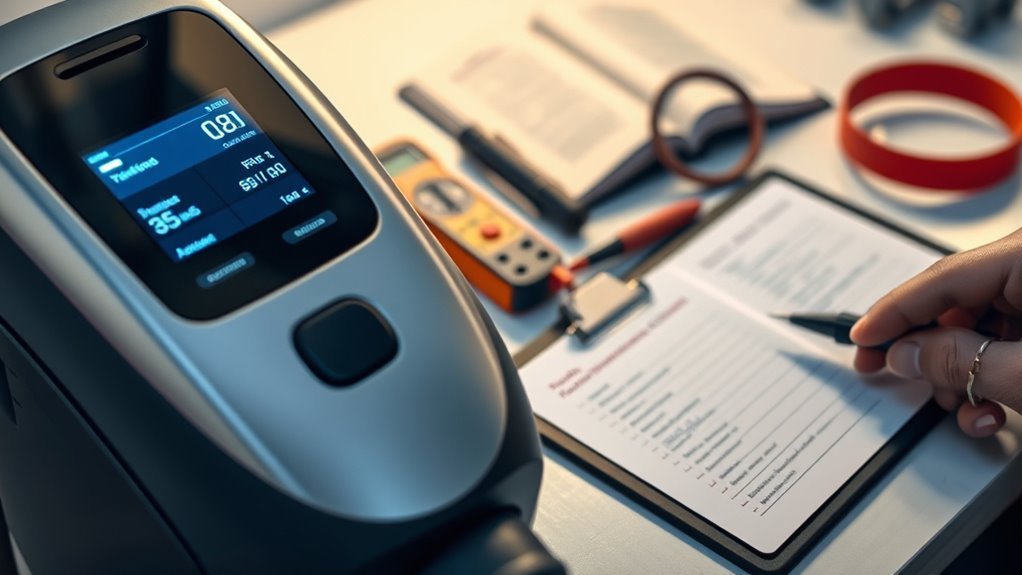
How can you guarantee effective documentation during the EV charger commissioning process? Start by meticulously documenting charger information, such as the model, serial number, and firmware version. This guarantees accurate records for future reference and troubleshooting.
Utilize standardized documentation techniques to systematically record all test results, including earthing and RCD tests, maintaining a thorough inspection history.
When defects arise, assign actions and track corrective measures, fostering accountability. For report generation, leverage digital templates to streamline the process, enhancing communication with team members and stakeholders. This approach not only simplifies sharing but also improves efficiency.
To minimize manual errors, consistently use checklists to guarantee all critical checkpoints and compliance requirements are met. By implementing these strategies, you’ll create a robust documentation framework that supports ongoing success in the EV charger commissioning process.
Ongoing Maintenance Tips for Your EV Charger
Maintaining your EV charger is vital for guaranteeing its reliability and performance over time. To enhance charger longevity, consider these routine maintenance tips:
- Conduct Regular Visual Inspections: Check for physical damage, loose connections, or signs of corrosion. Identifying these issues early can prevent malfunctions and guarantee safety.
- Clean and Inspect: Use a damp microfiber cloth to clean the charger regularly. Inspect cables for wear and verify moisture doesn’t infiltrate, especially in harsh weather conditions.
- Update Software and Test Performance: Regularly test your charger for error messages and performance issues. Keeping the software up to date is essential to avoid connectivity problems and maintain peak functionality.
Additionally, schedule annual professional inspections to receive thorough diagnostics and verify compliance with safety standards.
This proactive approach not only safeguards your investment but also minimizes costly repairs.
Further Reading on EV Charger Commissioning Best Practices
While guaranteeing a successful EV charger installation relies heavily on adherence to established commissioning best practices, further reading on this topic can greatly enhance your understanding of the process.
Familiarize yourself with installation techniques that comply with BS 7671 regulations, making sure all electrical connections are verified before operation. Explore key settings, including WiFi, 4G, and Ethernet connectivity, which are essential for user authentication via RFID access.
Testing procedures, particularly earthing and RCD tests, are critical for confirming safety and performance standards. Regular documentation of charger information like model and firmware helps track maintenance, assuring compliance with regulations.
Finally, invest time in user training; well-informed users are crucial for mitigating risks associated with electric shock or fire hazards. Thorough knowledge not only guarantees a reliable charging experience but also empowers you to navigate the complexities of EV charger commissioning with confidence.
Frequently Asked Questions
What Are the Safety Considerations for EV Chargers?
When considering EV chargers, prioritize electrical safety by ensuring proper earthing, RCD functionality, and regular charger maintenance. Conduct routine inspections and testing to prevent hazards and maintain reliability throughout the charger’s operational lifespan.
What Is a Commissioning Checklist?
A commissioning checklist’s your trusty guide through the thrilling world of EV charger setup. It guarantees every component functions correctly, from power supply to safety features, making your commissioning process both efficient and liberating. Embrace the power!
What Is the 80 20 Rule for EV Charging?
The 80/20 rule for EV charging emphasizes that focusing on the 20% of chargers yielding 80% of usage boosts charging efficiency. Prioritizing strategic installations guarantees ideal resource allocation and maximizes user satisfaction in the charging network.
How Often Do EV Chargers Need Testing?
You should test EV chargers at least annually for best performance and safety compliance. Frequent usage or harsh conditions may require semi-annual testing, ensuring effective charger maintenance and minimizing potential operational failures and costly repairs.
Conclusion
In summary, effective EV charger commissioning is essential for peak performance and safety. With the growing demand for electric vehicles—projected to reach 26 million units sold annually by 2030—ensuring your charging infrastructure is reliable and compliant becomes paramount. By meticulously following the outlined steps, you not only enhance efficiency but also contribute to a sustainable future. Remember, thorough testing and regular maintenance are key to prolonging the lifespan of your EV chargers and maintaining user satisfaction.






Leave a Reply