Before installing your EV charger, confirm your parking situation, guaranteeing ample space and secure mounting. Assess your home’s electrical capacity, verifying you have a dedicated circuit for the charger. Check the Wi-Fi signal at the installation site, aiming for strong connectivity for smart features. Ascertain the charger is compatible with your EV model and compare installation costs from multiple providers. After installation, maintain regular performance checks and necessary cleaning to assure longevity. Discover more essential steps to streamline your installation process.
How to Confirm Your Parking Situation Before Installation
How can you guarantee your parking situation is ready for EV charger installation? First, verify you have off-street parking, like a driveway or garage. EV chargers can’t be installed if cables cross public pavements or roads due to parking regulations.
Next, confirm that the charger mounts securely and that the cable reaches your EV parking space without creating trip hazards. Local councils discourage trailing cables across public areas for safety, so assess your setup carefully.
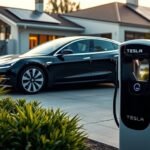
Ensure your charger is securely mounted and the cable safely reaches your EV parking space to avoid hazards.
Also, check the proximity of your charging location to the power supply; this affects installation feasibility and costs. Clear any obstructions around the intended installation area, facilitating a smooth process and compliance with safety regulations.
Finally, consult your local authority about installation permits to verify you meet all requirements. Taking these steps will liberate you from future inconveniences and help you embrace your electric vehicle experience fully.
Assess Your Home’s Electrical Capacity for EV Charger Installation
Once you’ve confirmed your parking situation is suitable for installation, the next step is to assess your home’s electrical capacity.
You’ll need to verify your electrical system can support the EV charger’s demands. Here’s what to take into account:
- Dedicated Circuit: A 7kW EV charger requires a dedicated 32A circuit; verify you have this in place.
- Main Fuse Upgrade: Older properties may need electrical upgrades to the main fuse for the additional load.
- Existing Supply: Check that your current electrical supply can handle the charger’s power requirements without exceeding capacity limits.
- Professional Assessment: Hire a qualified electrician to evaluate your wiring system and verify it meets current standards for safety and effectiveness.
How to Check Your Wi-Fi Signal Strength for Your EV Charger
When setting up your EV charger, checking the Wi-Fi signal strength at the installation site is vital for guaranteeing ideal functionality.
Use your smartphone to assess the signal; aim for at least two bars for effective performance. If you find the Wi-Fi signal weak, consider implementing some Wi-Fi troubleshooting tips. This could include repositioning your router closer to the charger or minimizing obstructions like walls.
Alternatively, explore signal boosting solutions such as a Wi-Fi extender to enhance connectivity and guarantee reliable operation.
Remember, while a loss of Wi-Fi connection won’t stop the charging process, it will limit access to essential smart features like Charge Scheduling and monitoring, which enhance your overall experience.
Verifying the signal strength before installation is critical to avoid complications later, assuring you enjoy the full benefits of your modern EV charger.
How to Ensure Charger Compatibility With Your EV Model
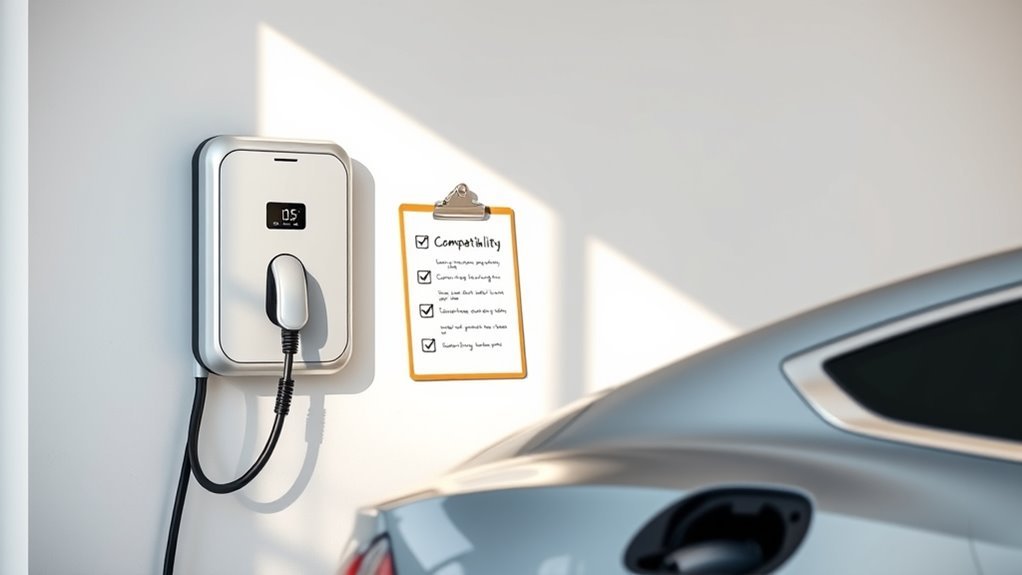
Are you confident your EV charger is compatible with your vehicle? Ensuring compatibility is essential for ideal performance and safety. Here’s what you need to check:
- Connector Types: Confirm your charger has the right connector, like Type 2 or CCS, which are standard in the UK.
- Charging Rates: Match your EV’s maximum charging rate with the charger’s output. A 7.4kW charger is usually adequate for home use.
- Specific Requirements: Review your EV’s unique charging needs, as some models may require dedicated features or higher charging rates.
- Onboard Charger Capacity: Verify your vehicle’s onboard charger capacity to understand how quickly it can accept power from the charger.
Compare Installation Costs and Providers
To make an informed decision, you should obtain multiple quotes from different installation providers.
Evaluate each provider’s reputation and customer support to guarantee reliability and quality service.
Don’t forget to factor in any additional costs that may arise from your specific installation needs.
Obtain Multiple Quotes
Obtaining multiple quotes for your EV charger installation is essential for guaranteeing you get the best value and service. Start by contacting at least three different installation providers to compare costs and services.
Here’s what to keep in mind:
- Verify that quotes include all components: charger, installation labor, and safety equipment testing.
- Understand that installation costs typically range from £800 to £1,500, with potential extra charges for complex setups.
- Ascertain each provider can meet your specific charger specifications.
- Investigate any government incentives or grants that could lower your overall cost, as installers may assist with applications.
Taking these steps helps you make an informed choice, paving the way for a successful installation.
Evaluate Provider Reputation
While evaluating provider reputation, it’s crucial to analyze both customer feedback and the overall experience of each installation company.
Start by diving into installation reviews and look for patterns in provider feedback. Strong reputations often stem from consistent positive experiences.
Research multiple providers to obtain quotes, making sure you compare a competitive range of installation costs, typically between £800 and £1,500 for standard setups.
Additionally, check for each provider’s accreditation and compliance with industry regulations, as this guarantees safety and quality.
Don’t overlook government incentives or rebates they offer, as these can greatly impact your final costs.
A thorough assessment of these factors will help you choose a reliable installation partner for your EV charger.
Consider Additional Installation Costs
After evaluating provider reputation, it’s time to reflect on the additional costs associated with EV charger installation.
Keep in mind that installation challenges can lead to unexpected expenses, so budget considerations are essential. Here are some key factors to take into account:
- Base Costs: Typical installation ranges from £800 to £1,500, covering the charger and standard services.
- Additional Expenses: Longer cable runs or complex setups may incur extra charges.
- Electrical Upgrades: If your current system needs enhancements, factor these into your budget.
- Government Grants: Look into the EV Chargepoint Grant, which can offset costs by up to £350 for eligible homeowners.
How to Make Sure Your Charger Works After Installation?
To guarantee your EV charger operates effectively post-installation, start by confirming its connection to a stable Wi-Fi network. This connectivity enables smart features like charge scheduling and real-time monitoring.
Next, test the charger by plugging in your electric vehicle; it should initiate charging without error messages, confirming proper installation and functionality.
Regularly check the charger’s status through its app or display to monitor performance and catch any potential faults early. If you encounter issues, consult troubleshooting tips or user feedback for guidance.
Additionally, verify that your home’s electrical capacity can support the charger, especially if you experience interruptions or inconsistencies in charging.
Finally, schedule periodic maintenance checks to inspect the charger and associated wiring, guaranteeing long-term functionality and compliance with safety standards.
What Maintenance Does Your EV Charger Need?
To keep your EV charger in top shape, regular cleaning is essential to eliminate dust and debris that can affect performance.
Inspect the cables frequently for wear and damage to prevent any potential issues.
Additionally, test the charger’s functionality every few months to guarantee it operates efficiently and effectively.
Regular Cleaning Procedures
Maintaining your EV charger is essential for peak performance and safety, and regular cleaning procedures play a key role in this process.
Follow these maintenance tips to guarantee your charger stays in top shape:
- Clean the charger and surrounding area regularly to prevent dust and debris buildup.
- Inspect the charging cable for wear or damage, addressing any frays immediately to avoid safety risks.
- Keep the charging socket and plug free from moisture and contaminants, as water ingress can lead to significant hazards.
- Check the LED indicators and display periodically for error messages or alerts, which may signal needed maintenance.
Adhering to a consistent cleaning frequency will enhance your EV charger’s longevity and reliability.
Cable Inspection Frequency
Regular cleaning helps keep your EV charger in ideal condition, but cable inspection is equally important for safe and efficient operation.
You should inspect your charging cable monthly for any signs of cable wear, fraying, or damage. This visual inspection guarantees that you can catch potential hazards early.
Additionally, keep the cable clean and free from debris, as dirt buildup can hinder connectivity and charging efficiency.
Establish a professional inspection schedule at least once a year to identify any underlying electrical issues.
If you notice unusual noises, smells, or charging irregularities, address them immediately.
Consult a qualified electrician for maintenance or repairs to guarantee your EV charger remains safe and effective.
Performance Testing Recommendations
Performing routine maintenance on your EV charger is essential for guaranteeing peak performance and safety.
To maintain efficiency benchmarks and monitor performance metrics, follow these recommendations:
- Regularly inspect the charging cable and connectors for wear or damage to guarantee safe and efficient charging.
- Conduct periodic testing of the charger, including checking electrical connections and functionality, at least once a year by a qualified electrician.
- Keep the charger and surrounding area clean and free from obstructions to maintain peak performance and safety.
- Monitor energy usage patterns and charging speeds to identify any inconsistencies that may indicate maintenance needs.
Frequently Asked Questions
What to Know Before Installing an EV Charger?
Before installing an EV charger, assess your home charging setup, confirm off-street parking, evaluate installation costs, and verify your electrical supply can handle the charger. Don’t forget to check Wi-Fi signal strength for smart features.
What Are the Requirements for EV Charger Installation in the UK?
To install an EV charger in the UK, verify compliance with installation regulations, confirm electrical safety standards, assess your home’s electrical capacity, secure landlord permission if necessary, and assure clear access to the meter and fuse box.
What Is the 80 20 Rule for EV Charging?
The 80/20 rule for EV charging states you can achieve 80% of your range efficiently and economically by charging at home. This approach maximizes charging efficiency and offers significant cost savings, reducing dependency on public stations.
What Factors Need to Be Considered for Site Selection of EV Charger Installations?
For site selection, assess the location for off-street parking and power accessibility. Confirm proximity to the electricity meter, adequate space around the charger, and compliance with local regulations to facilitate a safe installation.
Conclusion
To summarize, ensuring a smooth EV charger installation is like tuning a fine instrument; every detail matters for peak performance. By confirming your parking situation, evaluating your home’s electrical capacity, checking Wi-Fi signal strength, and ensuring compatibility with your EV model, you pave the way for a seamless experience. Don’t forget to verify functionality post-installation and stay on top of maintenance. With these steps, you’ll hit the road to electric driving with confidence and convenience!






Leave a Reply