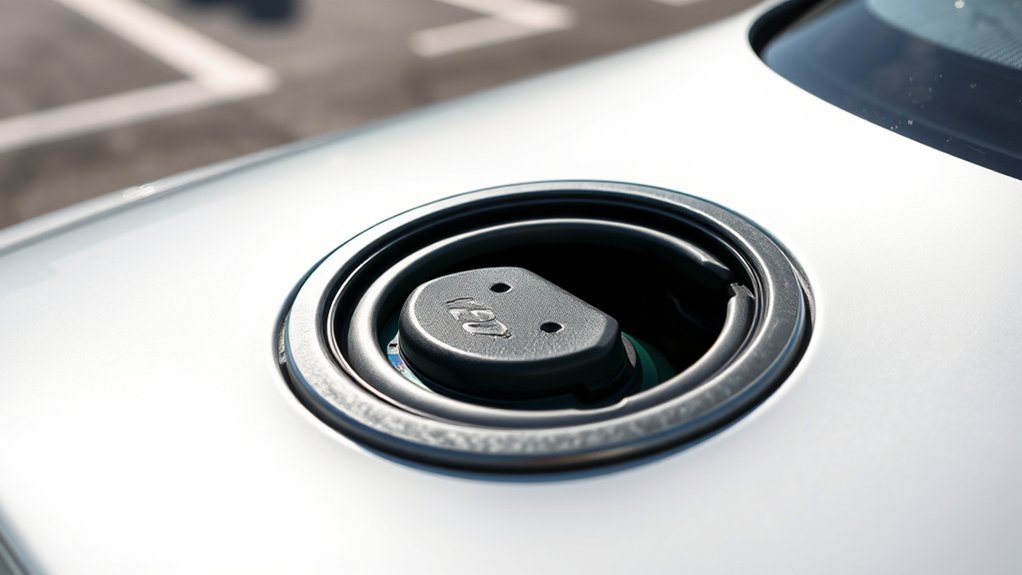
To determine if your car runs on petrol or diesel, start by checking the fuel filler cap for labels like ‘Diesel Fuel Only’ or ‘Gasoline Only.’ You might also see color indicators—yellow for diesel, green for petrol. Look for model names and badges that signify fuel type, such as “dCi” or “TDI” for diesel engines. If you’re unsure, the owner’s manual holds the definitive answer. There’s more to uncover about identification methods and misfuelling consequences.
Key Takeaways
- Check the fuel filler cap for labels indicating ‘Diesel Fuel Only’ or ‘Gasoline Only’ to identify fuel type.
- Look for color-coded indicators: yellow or black for diesel, green for petrol.
- Examine the model name for letters like “D” or badges such as “dCi” or “TDI” that indicate a diesel engine.
- Inspect the thickness of the fuel pump nozzle; diesel nozzles are thicker and won’t fit into petrol filler necks.
- Consult the owner’s manual or rental agreement for definitive fuel type specifications.
Understanding Petrol vs. Diesel Engines
When you immerse yourself in the world of engines, it’s essential to understand the fundamental differences between petrol and diesel engines, as they operate on distinct principles that affect performance and efficiency.
Petrol engines ignite fuel using spark plugs and work at lower compression ratios, providing quicker acceleration at higher RPMs. In contrast, diesel engines rely on compression ignition without spark plugs, producing more torque at low RPMs, which makes them ideal for heavy-duty applications.
Moreover, diesel fuel is denser and contains more energy per liter, resulting in superior fuel efficiency and longer driving ranges.
However, the combustion process in diesel engines generates darker exhaust smoke, while petrol engines emit lighter vapors.
Diesel systems often require larger intercoolers and turbochargers to enhance performance, and they include components like glow plugs for cold starts.
Understanding these differences can help you choose the right fuel type for your needs.
How to Check for Fuel Type Labels on Your Car
To determine the right fuel type for your car, start by checking the fuel filler cap for any clear labels or markings.
Don’t forget to inspect your dashboard indicators, as some vehicles display alerts when the wrong fuel is detected.
Being aware of these details can prevent costly mistakes at the pump.
Check Fuel Filler Cap
Before you pull up to the pump, it’s important to check your fuel filler cap for labels that indicate the correct fuel type for your vehicle.
Here’s what to look for:
- Fuel Cap Label: Check for clear markings like ‘Diesel Fuel Only’ or ‘Gasoline Only’.
- Color-Coded Indicators: Look for yellow or black if it’s diesel, and green for petrol.
- Additional Stickers: Inspect inside the fuel filler flap for any extra warnings about fuel type.
- Absence of Labels: If you don’t see any labels, further investigation is necessary to prevent misfueling.
Always check the fuel filler cap before refueling; misfueling can lead to costly engine damage.
Stay informed and keep your engine running smoothly!
Inspect Dashboard Indicators
While checking your fuel filler cap is essential, don’t overlook the important information displayed on your dashboard. Look for indicators that signal your car’s fuel type, like a “Diesel” message or specific symbols near the fuel gauge. Your dashboard might also display fuel consumption data, which often reveals that diesel engines are more efficient than petrol ones. To better understand what to look for, refer to the owner’s manual, which provides detailed explanations of dashboard indicators and fuel type specifications.
| Indicator Type | Description | Fuel Type |
|---|---|---|
| Warning Light | Diesel message or icon | Diesel |
| Symbol | Specific symbol near fuel gauge | Petrol |
| Consumption Data | Fuel efficiency stats | Diesel |
| Label | Fuel specifications on instrument cluster | Petrol |
| Manual Reference | Owner’s manual section | Both |
Identifying Fuel Type Through Model Names and Badges
When you’re trying to identify your car’s fuel type, model names and badges can be invaluable clues.
Look for letters like “D” in the model name or specific badges such as TDI or CRDi, which often indicate a diesel engine.
However, remember to cross-reference this information with other sources for the most accurate identification.
Model Name Indicators
Identifying a car’s fuel type can be as simple as checking its model name and badges. Many diesel vehicles showcase specific indicators that can save you time and hassle.
Here are some key pointers:
- Look for the letter “D” in the model name, like BMW 745d or Volkswagen Golf TDI, indicating a diesel engine.
- Watch for common badges such as “dCi,” “TDI,” or “HDi,” which often denote diesel models.
- Check the labels on the back of the car near the trunk for quick fuel type identification.
- Remember, model names can be misleading; some petrol cars may use similar naming conventions.
Badge Recognition Techniques
Recognizing the right fuel type for your car can often be accomplished by closely examining its badges and model designations. Many manufacturers embed fuel type identifiers into model names, especially for diesel variants. Look for letters like “D,” as in Audi’s “TDI,” or “d” in BMW models.
| Badge/Model Name | Fuel Type |
|---|---|
| TDI | Diesel |
| d | Diesel |
| dCi | Diesel Variant |
| HDi | Diesel Variant |
| EcoDiesel | Diesel |
These badges often appear on the rear and can help you identify if your vehicle is a diesel model. However, always verify with documentation to confirm accuracy.
How Rental Car Companies Can Help You Figure Out Fuel Type
How can you guarantee you’re fueling your rental car correctly? Understanding the fuel type is vital to avoid misfueling. Here’s how rental car companies can help you figure it out:
- Pickup Process: Rental companies usually provide clear fuel type information during vehicle pickup, so pay attention.
- Rental Agreement: Check your rental agreement for explicit instructions on whether your car requires diesel or petrol.
- Ask the Agent: Don’t hesitate to ask rental agents about upgrades to diesel vehicles if you’re unsure; they can clarify fuel specifications.
- Customer Support: If you still have questions after you’ve driven away, contact the rental company’s helpline for immediate assistance.
Always keep an eye on the fuel gauge and remember that knowing your vehicle’s fuel type is important for a smooth car rental experience.
Embrace this knowledge and drive with confidence!
Confirming Fuel Type With Your Car’s Documentation
When you’re ready to refuel your rental car, turning to the vehicle’s documentation is your best bet for confirming the correct fuel type. The owner’s manual, often tucked in the glovebox, provides essential fuel specifications that can save you from costly misfueling mistakes.
| Document Type | Fuel Type Information |
|---|---|
| Owner’s Manual | Definitive fuel type |
| Rental Agreement | Fuel requirements |
| Display Labels | Visual fuel type cues |
| Service Records | Historical fuel usage |
Checking these documents guarantees you’re aware of specific fuel needs, like octane ratings for petrol or diesel requirements. Adhering to proper refueling practices not only keeps your rental in top shape but also liberates you from the hassle of potential repairs. So, always make documentation your first stop before hitting the pump!
How to Listen for Engine Sounds: Petrol vs. Diesel
Listening closely to engine sounds can reveal whether you’re dealing with a petrol or diesel vehicle, and this knowledge can be incredibly useful when refueling.
Pay attention to engine sounds; they can help you identify petrol from diesel, making refueling easier.
Here are some key differences you’ll hear:
- Sound Profile: Diesel engines typically produce a deeper growl or rumble, while petrol engines emit a smoother, quieter purr.
- Idle Noise: At idle, older diesel engines may have a clicking or rattling noise, contrasting with the near-silence of modern diesel engines.
- Acceleration: Petrol engines rev higher and produce a sharper sound during acceleration, unlike the low-end torque of diesel engines.
- Robustness: Diesel engines operate at higher compression ratios, giving them a more robust sound profile compared to petrol engines.
How Exhaust Emissions Indicate Fuel Type
Understanding the differences in exhaust emissions can further enhance your ability to identify whether a vehicle runs on petrol or diesel.
When you observe the exhaust, diesel engines typically emit darker smoke due to burning heavier fuel, while petrol and diesel cars produce lighter, clearer vapors. You’ll notice that diesel exhaust has a distinct, oilier smell compared to the more volatile petrol fumes.
During acceleration, a diesel engine may produce a gray haze, whereas petrol engines usually show minimal visible emissions unless they’re malfunctioning.
Keep in mind that emission characteristics vary; diesel engines are designed for efficiency but can emit higher levels of nitrogen oxides and particulate matter.
Checking Fuel Pump Compatibility: What You Need to Know
How can you guarantee that you’re using the correct fuel for your vehicle? Checking fuel pump compatibility is essential to avoid costly misfueling. Here are four key points to keep in mind:
Ensuring fuel pump compatibility is crucial to prevent costly misfueling and protect your vehicle’s engine.
- Nozzle Size: Diesel pump nozzles are thicker than petrol nozzles, making it difficult to fit a diesel nozzle into a petrol car’s fuel filler.
- Filler Neck Diameter: A diesel filler neck is about 24 cm, while a petrol filler neck is around 21 cm. This size difference helps prevent misfueling.
- Resistance: If you feel resistance when inserting a fuel nozzle, you’re likely dealing with a petrol vehicle. Diesel nozzles are designed to prevent incorrect fueling.
- Compatibility Check: Always verify you’re using the right pump for your petrol or diesel car to protect your engine from damage.
What to Do If You Misfuel Your Vehicle?
If you find yourself in the unfortunate situation of misfueling your vehicle, it’s crucial to act quickly to minimize potential damage.
Don’t start the engine; doing so can circulate the incorrect fuel throughout your system and worsen the situation. Contact a professional roadside assistance service or a mechanic immediately to drain the contaminated fuel from your tank safely.
If you’ve mistakenly added gasoline to a diesel engine, brace yourself for potentially sky-high repair costs, possibly exceeding thousands of dollars due to damage to fuel injectors and other significant components.
Keep records of the misfueling incident, as they may be essential for insurance claims or discussions with rental car companies.
To prevent misfueling in the future, consider using fuel caps with different sizes or locking mechanisms, or install a fuel filler adapter.
Taking these steps can help you maintain your vehicle’s health and save you from unnecessary expenses.
Frequently Asked Questions
How to Check if Fuel Is Diesel or Petrol?
Check fuel indicators like caps and labels, listen for engine sounds, and consult vehicle manuals. Notice color differences between fuels; diesel’s darker. Consider fuel efficiency, as it often varies considerably between petrol and diesel engines.
How to Tell What Fuel Type a Car Is?
Determining your car’s fuel type is like solving a puzzle. Check fuel indicators on the dashboard, listen for engine sounds, inspect the fuel cap, or consult the owner’s manual and vehicle registration for clarity.
What Happens if I Accidentally Put Petrol in a Diesel Car?
If you accidentally put petrol in a diesel car, you face serious fuel contamination effects and engine damage risks. Recovery options exist, but costs can soar. Watch for warning signs and follow prevention tips to avoid mishaps.
How to Identify Petrol and Diesel Engines?
To identify petrol and diesel engines, listen for sound variations and assess performance metrics. Diesel engines often produce distinct clicks, while petrol runs quietly. Consider fuel efficiency and maintenance differences, as well as emissions comparison for further insights.
Conclusion
In the grand journey of car ownership, knowing your vehicle’s fuel type is like having a trusty map. Whether you’re cruising through the city or starting on a long road trip, understanding if your car runs on petrol or diesel keeps you from straying off course. If you ever find yourself in the misfueling dilemma, don’t panic—there’s a way back. Stay informed, listen to your engine, and keep your adventures fueled with confidence!







Leave a Reply