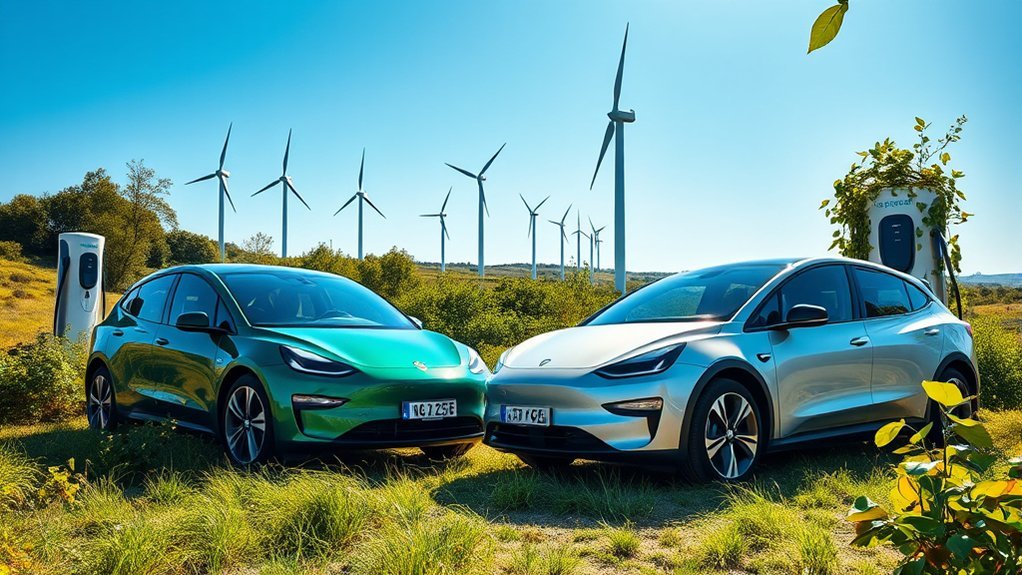
Electric vehicles (EVs) are indeed better for the environment compared to gasoline cars. They produce around 200 grams of CO2 per mile, significantly less than the 350 grams emitted by traditional vehicles. EVs have zero tailpipe emissions and their lifetime emissions can drop to 125 grams per mile by 2050 with renewable energy. Although battery manufacturing has its emissions, cleaner production methods are evolving. Want to find out more about the overall impact of EVs on our planet?
Key Takeaways
- Electric vehicles (EVs) produce significantly lower CO2 emissions—200 grams per mile compared to over 350 grams for gasoline cars.
- EVs have zero tailpipe emissions, contributing to reduced air pollution and greenhouse gas levels.
- Battery manufacturing accounts for 29% of EV emissions, but cleaner production methods can decrease overall environmental impact.
- Recycling EV batteries minimizes resource extraction and further lowers carbon footprints associated with new materials.
- Transitioning to renewable energy sources for charging and battery production will enhance the sustainability of EVs by 2050.
Comparing Lifetime Emissions of Electric Vehicles and Gasoline Cars

When you compare the lifetime emissions of electric vehicles (EVs) to those of gasoline cars, the differences become strikingly clear.
EVs produce around 200 grams of CO2 per mile over their lifetimes, markedly lower than the 350 grams emitted by gasoline cars. Even in areas reliant on coal, EVs can achieve an average annual CO2 emission of about 3,932 lbs., outperforming traditional vehicles.
EVs emit around 200 grams of CO2 per mile, significantly less than gasoline cars’ 350 grams, even in coal-dependent regions.
While it’s true that battery production contributes to 29% of EVs’ manufacturing emissions, they still enjoy zero tailpipe emissions during operation.
As our electric grid increasingly incorporates renewable energy sources, the potential for EVs to reach as low as 125 grams of CO2 per mile by 2050 becomes realistic.
How Electric Vehicles Affect Carbon Emissions
While many people recognize the potential of electric vehicles (EVs) to reduce carbon emissions, the actual impact they’ve on our environment is even more noteworthy.
EVs produce about 200 grams of CO2 per mile over their lifetimes, a stark contrast to gasoline cars, which emit over 350 grams. Even in coal-heavy regions, their zero tailpipe emissions during operation mean lower lifetime emissions overall.
By generating around 3,932 lbs. of CO2 equivalent annually, EVs greatly outpace petrol-powered vehicles, estimated at two tonnes of CO2. As the electricity grid shifts toward renewable energy, we could see their carbon footprint drop to as low as 125 grams per mile by 2050.
While manufacturing emissions account for about 29% of an EV’s total emissions, their lifecycle emissions remain lower than those of gasoline cars.
Shifting to EVs represents an essential step in combating greenhouse gases and lowering carbon emissions.
Battery Manufacturing and Climate Impact
Battery manufacturing plays an essential role in determining the overall environmental impact of electric vehicles (EVs). While producing large lithium-ion batteries can generate between 2.5 to 16 metric tons of CO2, accounting for about 29% of an EV’s lifecycle emissions, it’s important to look at the bigger picture.
- Emissions vary considerably based on power sources used in battery production.
- Cleaner energy mixes can greatly reduce overall emissions.
- Recycling EV batteries reduces the need for new materials, lowering the carbon footprint.
- Shifting to renewable energy in manufacturing is critical for future climate impact.
Despite these challenges, EVs typically produce lower lifetime greenhouse gas emissions than traditional gasoline vehicles due to their zero tailpipe emissions during operation.
EVs generate fewer lifetime greenhouse gas emissions than gasoline vehicles, thanks to their zero tailpipe emissions during operation.
Embracing advancements in battery manufacturing and renewable energy can help mitigate the climate impact, leading to a more sustainable transportation future.
Are Electric Vehicles Safe and Reliable?
How safe and reliable are electric vehicles (EVs) compared to traditional cars? You’ll find that EVs offer impressive safety and reliability metrics.
EV batteries have a low failure rate—averaging 2.5% for older models and less than 0.5% for those made since 2016. This high reliability, paired with manufacturer warranties, means replacements are rare. Furthermore, advancements in battery technology since 2010 have notably boosted performance and reliability for newer models.
EVs must meet the same Federal Motor Vehicle Safety Standards as conventional vehicles, ensuring they undergo rigorous safety testing. Their battery packs are equipped with advanced safety features, such as automatic shut-down systems upon collision detection, enhancing overall safety.
When you consider all these factors, it’s clear that electric vehicles not only prioritize performance but also offer a reliable and safe alternative to traditional cars, empowering you to drive with confidence.
The Future of Electric Vehicles in a Sustainable Grid
As the world shifts toward renewable energy, the future of electric vehicles (EVs) looks increasingly promising within a sustainable grid. You can expect significant improvements in lifecycle emissions as battery EV emissions are projected to drop to around 125 grams of CO2 per mile by 2050.
Here’s what you should know about the sustainable integration of EVs:
- Charging can primarily occur during off-peak hours, stabilizing the power grid.
- Investments of $7.5 billion in charging infrastructure will enhance accessibility for EV owners.
- Cleaner power sources in battery production will cut emissions further.
- Renewables, already the second-most prevalent electricity source, boost the climate benefits of EV adoption.
As technologies advance, the decarbonization of the power grid will align with your desire for a cleaner, greener future, making electric vehicles a cornerstone of sustainable living.
Frequently Asked Questions
How Do Electric Cars Impact Air Quality in Urban Areas?
Electric cars notably improve urban air quality by reducing vehicle emissions, lowering particulate matter, and cutting greenhouse gases. Their integration with public transportation and urban planning enhances pollution reduction, benefiting overall health and city regulations.
What Are the Ethical Concerns Regarding Battery Material Sourcing?
Battery mining ethics raise urgent concerns for you. Cobalt supply chains often involve labor rights violations and environmental degradation. You must advocate for transparency, recycling, and renewable sourcing alternatives to guarantee corporate responsibility in global supply chains.
Do Electric Vehicles Contribute to Noise Pollution?
Yes, electric vehicles can reduce noise pollution in urban environments. Their electric motors operate at lower sound levels, minimizing traffic noise and acoustic pollution. Effective vehicle design and adherence to noise regulations impact public perception positively.
How Long Do Electric Car Batteries Typically Last?
Electric car batteries typically last 8 to 15 years. Factors like charging frequency, temperature effects, and performance degradation influence lifespan. With technology advancements and recycling processes, their environmental impact lessens, ensuring a better user experience overall.
What Incentives Exist for Purchasing Electric Vehicles?
You can take advantage of tax credits, purchase rebates, government subsidies, and eco-friendly discounts when buying electric vehicles. Plus, enjoy benefits like carpool lane access, trade-in bonuses, and utility incentives to enhance your experience.
Conclusion
To sum up, while electric vehicles (EVs) can reduce lifetime emissions, their environmental impact is complex, particularly concerning battery production. For instance, a case study in Norway shows that widespread EV adoption has cut carbon emissions considerably, yet challenges remain in sourcing sustainable materials. As technology advances and renewable energy sources expand, the future of EVs looks promising. Embracing this change can lead us toward a more sustainable transportation system, benefiting both our planet and our communities.







Leave a Reply