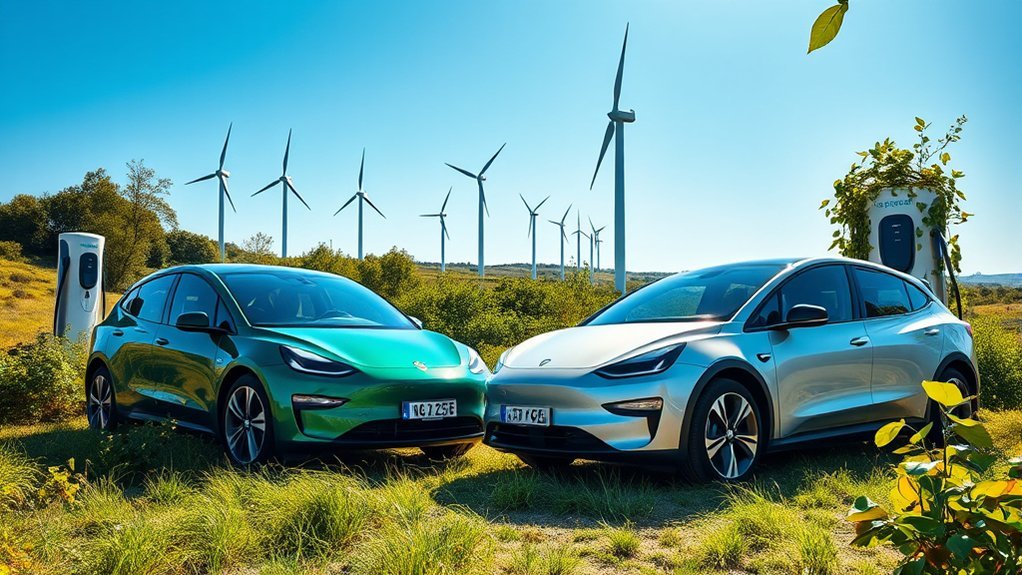
Gas-powered cars pump over 350 grams of carbon dioxide into the air every single mile. Drivers who switch to electric vehicles immediately cut that pollution number nearly in half over the lifespan of the car. This guide breaks down the true environmental impact of electric vehicles, from battery manufacturing emissions to long-term carbon footprint reductions.
Quick Answer
Electric vehicles significantly reduce environmental harm by producing zero tailpipe emissions. Even when factoring in the heavy carbon footprint of battery manufacturing, an electric vehicle produces about 200 grams of carbon dioxide per mile over its lifetime compared to 350 grams for a gas car. As local power grids shift to renewable energy, the total carbon footprint of driving electric will continue to shrink.
Key Takeaways
- Electric vehicles produce far fewer greenhouse gases, emitting about 200 grams of carbon dioxide per mile compared to over 350 grams for gas cars.
- Electric motors operate with zero tailpipe emissions, directly reducing local air pollution and global greenhouse gas levels.
- Battery production creates roughly 29 percent of the total emissions for an electric vehicle, but cleaner manufacturing methods continue to lower this impact.
- Recycling programs recover valuable metals from old batteries, limiting harmful mining operations and shrinking the carbon footprint of new cars.
- Charging cars on renewable power grids heavily boosts their sustainability, pushing total emissions down significantly by the year 2050.
Lifetime Emissions: Electric Vehicles vs. Gas Cars

Comparing lifetime greenhouse gases between electric and gas cars reveals a massive gap. Electric vehicles emit about 200 grams of carbon dioxide per mile over their lifespan. Gas vehicles output a much higher 350 grams per mile.
An electric vehicle running on a coal-heavy power grid still emits only 3,932 pounds of carbon annually. This easily beats the emissions of standard gas engines.
Electric vehicles emit around 200 grams of carbon dioxide per mile. This heavily undercuts the 350 grams produced by gas cars, even in regions relying on coal power.
Battery assembly causes about 29 percent of total manufacturing emissions for these vehicles. Drivers offset this initial pollution through zero tailpipe emissions during daily driving.
Power grids slowly add more solar and wind energy every year. Experts project electric car pollution will fall to just 125 grams of carbon per mile by 2050.
Do Electric Cars Really Lower Carbon Emissions?
Many drivers buy electric models specifically to lower their personal carbon footprint. The actual data shows a massive reduction in long-term pollution. Total lifecycle tracking proves electric models beat internal combustion engines in almost every scenario.
Gas vehicles pump out over 350 grams of carbon per mile. Electric equivalents average around 200 grams per mile. According to data from the Department of Energy, electric vehicles produce fewer lifetime emissions regardless of local power sources.
A standard petrol vehicle creates roughly two tonnes of carbon dioxide each year. An electric car cuts that output in half. Future grid improvements will push that pollution rate even lower over the next two decades.
Factory emissions do make up a large portion of an electric vehicle’s total climate impact. This upfront pollution quickly cancels out once the car hits the road. Switching to electric transportation serves as a vital step in fighting climate change.
The Climate Impact of Battery Manufacturing
Building lithium-ion batteries requires massive amounts of raw energy. Factories generate between 2.5 and 16 metric tons of carbon dioxide to produce a single large battery pack. Research from the International Council on Clean Transportation shows this phase accounts for nearly 29 percent of total lifecycle emissions.
- Varying local power grids change the total emissions of the manufacturing process.
- Using cleaner energy sources at battery plants dramatically reduces upfront pollution.
- Recycling old battery cells limits the need to mine fresh lithium and cobalt.
- Building factories near renewable energy hubs lowers the ultimate climate impact.
Electric cars overcome this initial manufacturing deficit within a few years of driving. Operating on battery power prevents thousands of pounds of exhaust pollution from entering the atmosphere.
Electric vehicles offset their high manufacturing emissions through years of clean driving. The lack of tailpipe exhaust gives them a lower total lifetime footprint than gas engines.
Engineers continue to improve factory efficiency and rely more heavily on green energy. These upgrades make zero-emission transportation cleaner at every step of the supply chain.
What Happens to Old EV Batteries?
Drivers often worry about dead batteries filling up local landfills. Recycling companies currently break down expired battery packs to extract highly valuable metals like lithium and cobalt. Energy companies also repurpose old car batteries to store excess solar power for community grids.
Reusing these materials heavily reduces the need for destructive mining operations. A robust recycling network ensures electric cars stay environmentally friendly long after they stop running.
Are Electric Vehicles Safe and Reliable?
Drivers often wonder how battery-powered cars hold up over time. Modern electric cars achieve excellent safety ratings and rarely suffer catastrophic breakdowns.
Older battery designs experienced a failure rate around 2.5 percent. Models built after 2016 see failure rates drop below 0.5 percent. Car companies provide extensive warranties that make out-of-pocket battery replacements extremely rare.
Government regulators hold battery vehicles to the exact same crash standards as gas vehicles. Safety inspectors crash test every model before it reaches dealership lots. Advanced software instantly cuts power to the battery pack during a severe collision to prevent fires.
Buyers get peace of mind knowing these cars undergo intense federal scrutiny. Heavy battery packs also lower the center of gravity to prevent rollover accidents.
How Renewable Energy Grids Improve EV Sustainability
An electric car gets cleaner every time the local power grid shuts down a fossil fuel plant. Planners expect total lifecycle emissions to drop near 125 grams of carbon per mile by 2050.
A cleaner power grid transforms how we charge our cars:
- Shifting vehicle charging to late-night hours prevents dangerous spikes in local power demand.
- Building new public chargers using recent $7.5 billion federal investments expands travel options.
- Running battery factories entirely on solar power heavily cuts initial production pollution.
- Adding more wind and solar generation directly increases the climate benefits of driving electric.
Grid decarbonization remains the most crucial step in sustainable transportation. Cleaning up the power supply turns these vehicles into true zero-emission machines.
Frequently Asked Questions
How Do Electric Cars Impact Air Quality in Urban Areas?
Battery vehicles completely eliminate tailpipe exhaust on city streets. This heavily reduces the dangerous particulate matter that causes respiratory illnesses. Replacing diesel delivery trucks with battery options cleans up the air in densely populated neighborhoods.
What Are the Ethical Concerns Regarding Battery Material Sourcing?
Mining companies extract raw materials like cobalt and lithium under harsh conditions. Some overseas mining operations face intense scrutiny for labor rights violations and severe environmental damage. Automakers now push for strict supply chain transparency and heavy recycling to solve these ethical issues.
Do Electric Vehicles Contribute to Noise Pollution?
Electric motors operate in near total silence compared to loud combustion engines. Replacing gas cars with electric models dramatically lowers acoustic pollution near busy highways. Regulators require these cars to emit a low hum at slow speeds to warn nearby pedestrians.
How Long Do Electric Car Batteries Typically Last?
Most modern battery packs last between 10 and 15 years. Extreme hot weather and constant fast charging degrade the chemical cells slightly faster. Federal law requires car companies to provide an eight-year or 100,000-mile warranty on all high-voltage batteries.
What Incentives Exist for Purchasing Electric Vehicles?
The federal government offers tax credits up to $7,500 for qualifying electric vehicle purchases. Many states add direct purchase rebates and heavily discounted registration fees. Local utility companies often pay owners to install home charging stations to support the grid.
Always consult a qualified financial professional before making purchasing decisions based on tax credit information.
Switching from a gas engine to an electric motor instantly shrinks your daily carbon footprint. While factory emissions and raw material mining present real challenges, electric cars remain significantly cleaner over their total lifespan. Check your local state incentives to see if purchasing a zero-emission vehicle makes financial sense for your next upgrade. Driving cleaner technology today helps build a healthier environment for tomorrow.







Leave a Reply