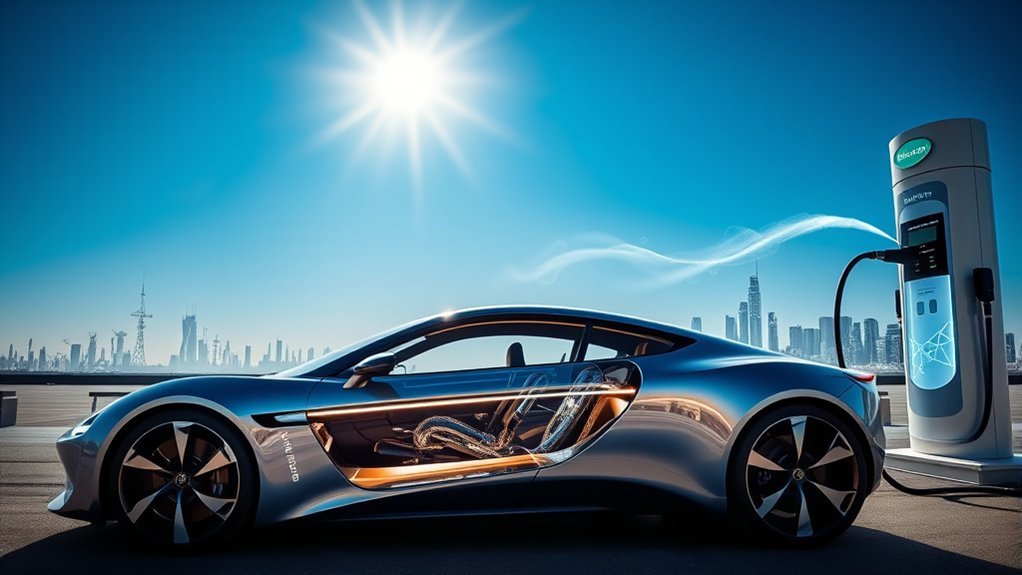
A hydrogen fuel cell car works by converting hydrogen gas and oxygen from the air into electricity through an electrochemical reaction. This happens in the fuel cell stack, which generates power while producing only water vapor as a byproduct. The electricity then powers the electric motor for vehicle operation. Hydrogen is stored in high-pressure tanks, allowing for quick refueling. Understanding this technology reveals its potential in sustainable transportation, leading to intriguing advancements ahead.
Key Takeaways
- Hydrogen fuel cell cars generate electricity through an electrochemical reaction between hydrogen gas and oxygen, producing only water vapor as a byproduct.
- The fuel cell stack is the core component, consisting of multiple cells that convert hydrogen and oxygen into electrical energy.
- High-pressure hydrogen storage tanks safely store hydrogen gas, enabling efficient operation and extended vehicle range.
- An electric motor converts the generated electricity into mechanical energy for vehicle acceleration, while a small battery assists during regenerative braking.
- Hydrogen fuel cell vehicles offer zero emissions, supporting sustainable transportation, although challenges like limited refueling infrastructure and high production costs persist.
What Is a Hydrogen Fuel Cell and How Does It Work?
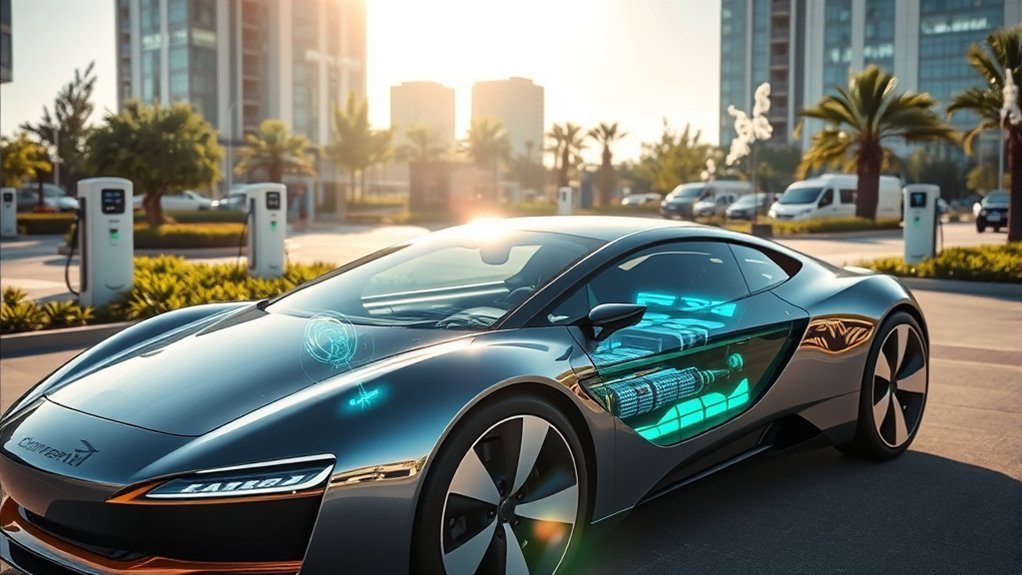
A hydrogen fuel cell is a device that efficiently converts hydrogen gas and oxygen into electricity, primarily through an electrochemical reaction. This innovative hydrogen fuel cell technology utilizes a fuel cell stack, consisting of multiple individual cells that collaborate to generate sufficient electricity.
The chemical reaction occurs when hydrogen gas, stored in high-pressure tanks, interacts with oxygen from the air, producing electricity and water vapor as the only emission, achieving zero emissions. The electricity generated powers the electric motor, offering instant torque and high efficiency for vehicle propulsion.
Additionally, power electronics manage the flow of electricity, optimizing performance and enabling regenerative braking to recapture energy. This seamless integration of components highlights the potential of hydrogen fuel cell technology, paving the way for a sustainable, emissions-free future in transportation.
Essential Components of Hydrogen Fuel Cell Vehicles
Understanding the workings of hydrogen fuel cells sets the stage for appreciating the integral components of hydrogen fuel cell vehicles (FCEVs). These components work in harmony, ensuring efficient energy conversion and vehicle performance.
| Component | Description |
|---|---|
| Fuel Cell Stack | The heart of FCEVs, where hydrogen and oxygen react to generate electrical energy, emitting only water vapor. |
| Hydrogen Storage Tanks | High-pressure tanks, operating at 350 or 700 bar, made from advanced materials for safety, storing sufficient hydrogen for vehicle operation. |
| Electric Motor | Converts the generated electrical energy into mechanical energy, providing high efficiency and instant torque for acceleration. |
Power electronics manage energy flow, optimizing use and controlling regenerative braking. An auxiliary battery or supercapacitor stores energy from regenerative braking, enhancing power delivery. This synergy among components showcases the potential of fuel cell technology in advancing sustainable transportation.
How Is Electricity Generated in Hydrogen Fuel Cell Cars?
Electricity in hydrogen fuel cell cars is generated through an electrochemical reaction between hydrogen and oxygen within the fuel cell stack. The stack consists of multiple fuel cells, where each cell combines high-pressure hydrogen gas with oxygen from the air. This reaction produces electricity, which powers the electric motor that drives the vehicle.
As a result, the only emissions released into the atmosphere are water vapor and heat, making this technology environmentally friendly.
Additionally, a small battery captures energy from regenerative braking, providing extra power during acceleration. This seamless integration of hydrogen and oxygen allows these vehicles to operate silently and efficiently while achieving a driving range of 300 to 400 miles on a single tank of hydrogen.
Storing and Managing Hydrogen in Fuel Cell Vehicles
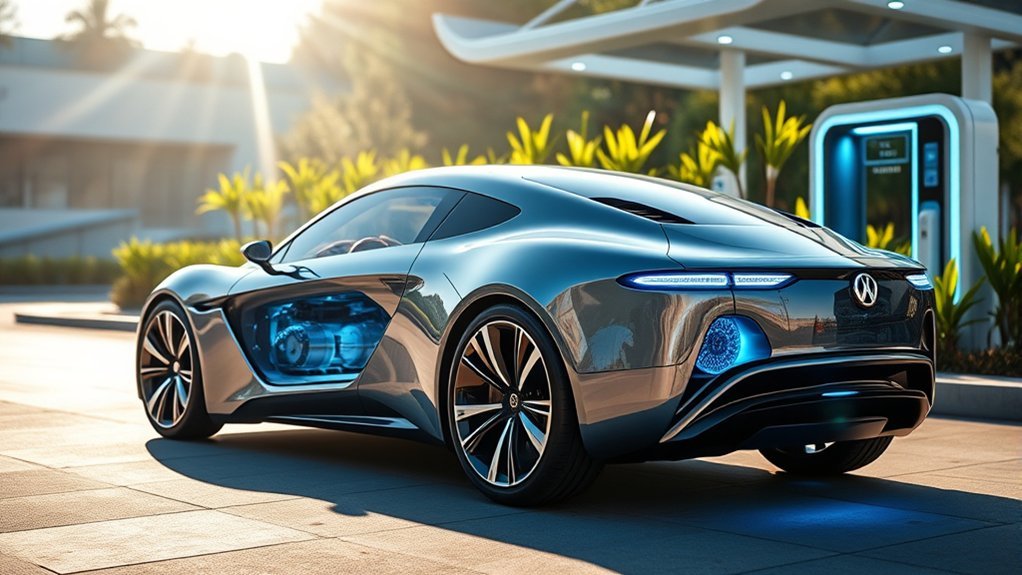
While you drive a hydrogen fuel cell vehicle (FCEV), effective storage and management of hydrogen is vital for ideal performance and safety.
These vehicles rely on advanced hydrogen storage systems that hold gas at high pressures—typically 350 or 700 bar—to guarantee you have enough fuel for your journeys.
Consider the following key aspects:
- The size of the hydrogen tank affects your vehicle’s range; larger tanks mean longer trips.
- Efficient refueling infrastructure is essential, allowing you to refuel in about 5 minutes.
- FCEVs utilize a battery for energy management, capturing energy during regenerative braking.
- The design of hydrogen storage systems must balance fuel capacity with vehicle weight and safety.
- Proper management guarantees both performance and safety in various driving conditions.
Advantages and Challenges of Driving a Hydrogen Fuel Cell Vehicle
When considering hydrogen fuel cell vehicles, you’ll notice their significant environmental benefits, primarily through zero emissions.
However, the limited hydrogen refueling infrastructure poses a challenge that could hinder widespread adoption.
Balancing these advantages with the existing limitations is essential for the future of FCEVs.
Environmental Benefits Overview
As you explore the environmental benefits of hydrogen fuel cell vehicles (FCEVs), you’ll find that they offer significant advantages over traditional combustion engines.
Here are some key points to take into account:
- FCEVs emit only water vapor, drastically reducing greenhouse gas emissions.
- Hydrogen can be generated from renewable sources, promoting sustainable transportation.
- With a driving range of 300 to 400 miles, FCEVs are ideal for long-distance travel.
- Refueling takes about 5 minutes, matching the convenience of gasoline vehicles.
- The expansion of hydrogen refueling infrastructure is essential for widespread adoption.
Infrastructure Development Challenges
Despite the clear environmental benefits of hydrogen fuel cell vehicles (FCEVs), infrastructure development challenges greatly hinder their widespread adoption.
The limited number of hydrogen refueling stations—only 23 in France as of 2023—highlights the urgent need for rapid infrastructure development. Quick refueling capabilities are essential to compete with traditional fuels, yet high establishment costs deter investments, particularly in less populated areas.
Additionally, safety regulations and public perception surrounding hydrogen storage complicate the rollout of new stations. Extensive education campaigns are necessary to build consumer trust.
Fortunately, European governments are initiating support for integrating hydrogen as a complementary fuel source alongside battery electric vehicles, paving the way for sustainable mobility solutions in the future.
Environmental Impact and Challenges of Hydrogen Fuel Cell Cars
While hydrogen fuel cell cars offer a promising alternative to traditional fossil fuel vehicles, their environmental impact and challenges are complex and multifaceted. Understanding these factors is essential for making informed decisions about sustainable transportation.
- Hydrogen production methods heavily influence their carbon footprint, with green hydrogen from renewable sources being ideal.
- These vehicles produce zero emissions, emitting only water vapor, which enhances air quality.
- The limited refueling infrastructure for hydrogen stations poses a significant challenge for widespread adoption.
- High costs associated with hydrogen production and fuel cell technology hinder mass-market viability, necessitating advancements.
- Despite their benefits, they face energy efficiency challenges, as the overall energy conversion process is less efficient than battery electric vehicles.
Addressing these issues will be critical in determining the future role of hydrogen fuel cell cars in our quest for cleaner transportation solutions.
The Future of Hydrogen Fuel Cell Cars in Sustainable Transportation
As you consider the future of hydrogen fuel cell cars, recognize their potential to greatly reduce environmental impact through zero-emission operation.
Advancements in hydrogen technology and production methods, particularly green hydrogen, will play an important role in this change.
However, addressing the challenges of infrastructure development is essential for achieving widespread adoption and realizing the benefits of sustainable transportation.
Environmental Impact Reduction
Hydrogen fuel cell cars represent a transformative shift in sustainable transportation, as they emit only water vapor, thereby greatly enhancing air quality and reducing greenhouse gas emissions.
By adopting these vehicles, you contribute to significant environmental impact reduction:
- Zero emissions: No harmful pollutants released.
- Sustainable energy: Supports a change away from fossil fuels.
- Hydrogen production: Emphasizes green hydrogen from renewable sources.
- Refueling infrastructure: Essential for widespread adoption and accessibility.
- Transportation sector: Reduces reliance on traditional, polluting vehicles.
As these cars offer a driving range of 300 to 400 miles and refueling times around 5 minutes, they present a practical and eco-friendly alternative, paving the way for a cleaner, more sustainable future.
Advancements in Hydrogen Technology
The future of hydrogen fuel cell cars in sustainable transportation hinges on significant advancements in hydrogen technology. Collaborations like Cellcentric between Volvo Group and Daimler Truck AG are crucial, focusing on efficient fuel cell systems. Enhanced efficiency of hydrogen fuel and lower production costs are on the horizon due to technology innovation and increased investment. Green hydrogen production stands to cut greenhouse gas emissions drastically, promoting a cleaner energy shift. However, expanding hydrogen refueling infrastructure remains essential for the adoption of hydrogen-powered vehicles. Research is expected to reduce the total cost of ownership, making these vehicles competitive with traditional and battery electric options.
| Key Areas | Current Status | Future Potential |
|---|---|---|
| Efficiency of Hydrogen Fuel | Mid-level efficiency | High efficiency |
| Green Hydrogen Production | Limited capacity | Widespread availability |
| Hydrogen Refueling Infrastructure | Sparse locations | Extensive network |
Infrastructure Development Challenges
While expanding hydrogen refueling infrastructure is essential for the widespread adoption of fuel cell vehicles, several challenges must be addressed.
Key obstacles include:
- High initial investment: Building stations requires significant funding and collaboration among stakeholders.
- Safety measures: Ensuring safe storage and fueling practices is important for public confidence and regulatory compliance.
- Development of infrastructure: With only 23 stations in France as of 2023, substantial expansion is necessary to meet targets.
- Green hydrogen logistics: Efficient distribution systems are crucial for making eco-friendly hydrogen widely available.
- Consumer adoption: Without adequate infrastructure, potential buyers remain hesitant to switch to hydrogen fuel cell vehicles.
Overcoming these challenges is essential for a sustainable future in transportation.
Frequently Asked Questions
How Do Hydrogen Fuel Cell Cars Work?
Hydrogen fuel cell cars convert hydrogen into electricity, emphasizing fuel cell efficiency and environmental impact. You’ll discover hydrogen production methods, vehicle range, refueling infrastructure, and market adoption, paving the way for future advancements in transportation.
What Is the Downside of Hydrogen Cars?
Hydrogen cars face significant downsides, including costly technology, limited infrastructure, and safety concerns. Their energy efficiency lags behind electric vehicles, and production methods can harm the environment, creating a complex web of challenges for consumers.
How Expensive Is It to Refill a Hydrogen Car?
Refilling a hydrogen car typically costs $13 to $16 per kilogram. Analyzing hydrogen pricing trends, refill station availability, and government incentives can enhance consumer adoption rates while considering maintenance expenses and environmental impact for a thorough cost comparison.
What Do You Fill a Hydrogen Car With?
You fill a hydrogen car with hydrogen gas from fueling stations. This innovative fuel source, harnessed through fuel cell technology, promises energy efficiency, minimal environmental impact, and incorporates safety measures for a liberated, sustainable future in transportation.
Conclusion
In the journey toward sustainable transportation, hydrogen fuel cell cars stand as a beacon of hope, illuminating the road ahead. Like a river flowing through a landscape of challenges, they offer clean energy while maneuvering around obstacles of infrastructure and production. As you steer into the future, embracing this technology could transform not just your ride, but the very air we breathe. With innovation as your compass, the potential for hydrogen fuel cells to reshape mobility is boundless.







Leave a Reply