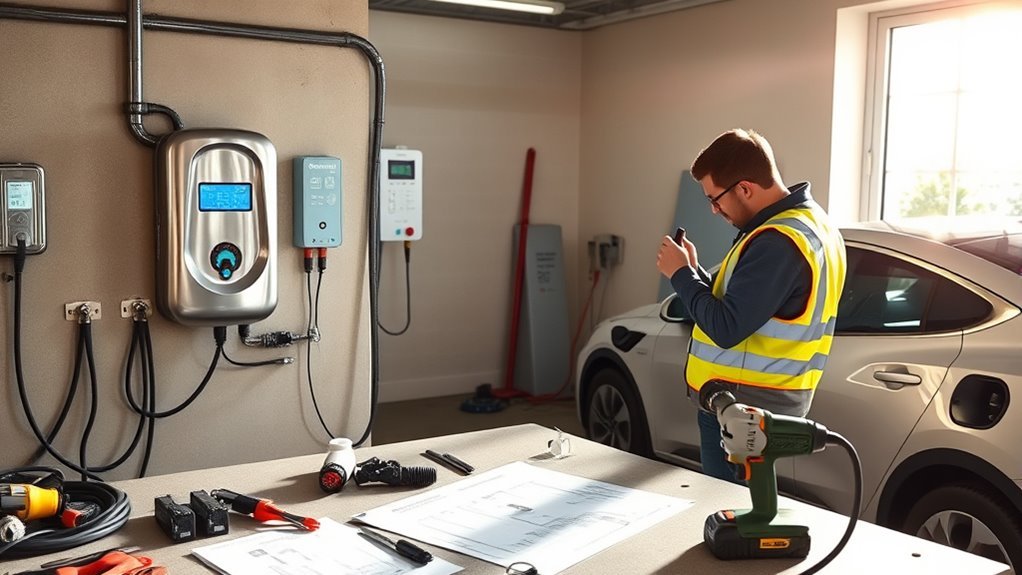
To install a home EV charger in the UK, start by evaluating your electrical capacity and verify your panel can support a 7kW charger. Check regulations regarding permissions, especially if you live in a rented or listed property. Hire a certified installer from NICEIC or NAPIT after comparing quotes and their experience. Choose a suitable location for installation, typically within 15 meters of the fuse box. Follow necessary steps for installation and optimize usage afterwards. There’s more important detail ahead.
Assess Your Home’s Electrical Capacity for EV Charging
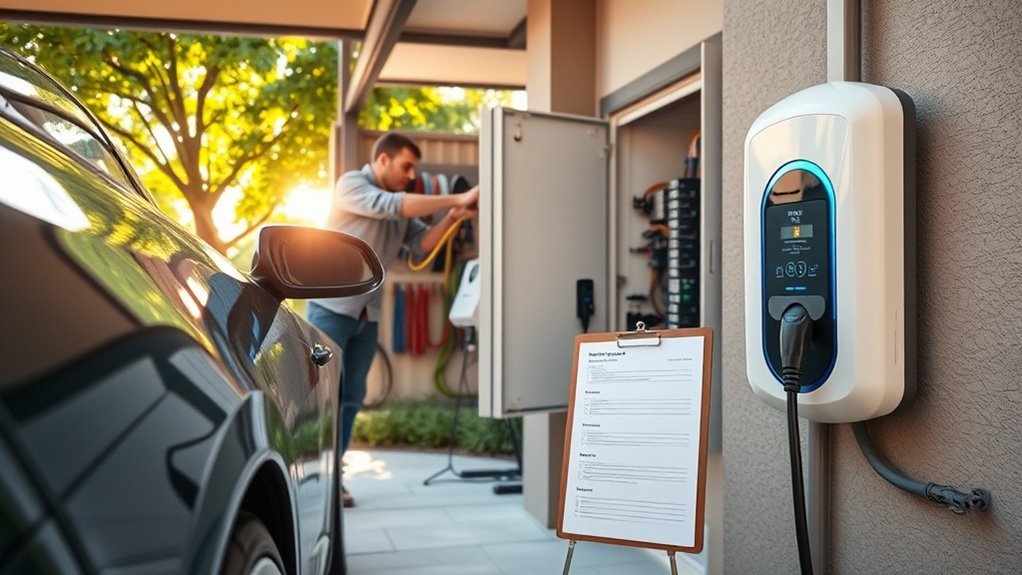
Evaluating your home’s electrical capacity for EV charging is vital before installation. Start by checking your electrical panel; it should have a main fuse rated between 60–100A to support a standard 7kW charger.
A qualified electrician needs to conduct a wiring assessment to identify if your existing system requires upgrades. This step’s important to prevent overloading your electrical system. If you only have single-phase power, charging rates may be limited to 7.4kW, which is sufficient for many users but might require a three-phase upgrade for faster charging.
Additionally, inspect earthing and bonding conditions, as they directly impact the safety and compliance of your installation. Remember, any electrical work, including potential upgrades to the panel or circuit protections, must be performed by a certified professional to meet BS 7671 wiring regulations.
Prioritizing this assessment guarantees a safe and efficient EV charging experience.
Understanding Regulations and Permissions for Installing Your Home EV Charger
Before installing your home EV charger, it’s essential to understand the relevant regulations and permissions involved.
If you own your property and have off-street parking, you likely won’t need planning permission, but compliance with building regulations is mandatory.
Renters must secure written approval from their landlords, who can’t unreasonably withhold consent.
Planning Permission Requirements
When installing a home EV charger, understanding planning permission requirements is vital to guarantee compliance with local regulations.
Typically, if you have off-street parking, you won’t need planning permissions for installation. However, you must still adhere to building regulations.
If your property is listed or in a conservation area, additional permissions may be necessary. For renters, obtaining written consent from your landlord is essential before proceeding.
Make sure your installation adheres to local council guidelines and is carried out by certified professionals, such as those registered with NICEIC or NAPIT.
Finally, confirm with your local Distribution Network Operator (DNO) that the electrical grid can support your new charger, as this is part of the installation guidelines.
Landlord Approval Process
Securing landlord approval is a crucial step in the process of installing a home EV charger, especially for renters. You must obtain written permission from your landlord, who can’t unreasonably refuse such requests under UK law.
Effective landlord communication is essential; present your case clearly, emphasizing potential grants of up to £350 that could offset installation costs.
Be mindful of installation timelines, as delays can occur if your property is listed or situated in a conservation area, requiring additional local authority approvals.
Confirm that the installation is conducted by a certified installer, either NICEIC or NAPIT registered, to comply with safety regulations.
This proactive approach not only streamlines the process but also fosters a cooperative relationship with your landlord.
Building Regulations Compliance
Installing a home EV charger requires adherence to building regulations, ensuring that your setup meets essential safety standards. Compliance is vital, as home EV charger installations in the UK are considered notifiable work under these regulations. Generally, you won’t need planning permission if you have off-street parking, but listed or conservation properties may require additional approvals. Always engage qualified professionals registered with NICEIC or NAPIT to follow proper installation guidelines. Don’t forget to notify your local Distribution Network Operator (DNO) to confirm grid compatibility. If you’re a tenant, secure written permission from your landlord, who can’t unreasonably refuse consent.
| Aspect | Requirement |
|---|---|
| Compliance Document | BS 7671 |
| Professional Registration | NICEIC or NAPIT |
| Planning Permission | Not needed (most cases) |
| Tenant Permission | Required from landlord |
How to Hire a Certified Installer for Your EV Charger
When hiring a certified installer for your EV charger, start by verifying their certification and credentials with recognized bodies like NICEIC or NAPIT.
It’s crucial to compare multiple quotes to understand pricing and services, as installation costs can vary greatly.
Additionally, check the installer’s experience and customer reviews to guarantee quality and reliability in their work.
Verify Certification and Credentials
To guarantee a safe and efficient installation of your home EV charger, it’s crucial to verify the certification and credentials of your chosen installer.
Start by confirming they’re certified by recognized bodies like NICEIC or NAPIT, which underscores the certification importance in adhering to UK electrical safety standards.
Look into the installer’s qualifications, specifically their experience with EV charger installations, to ascertain they’re familiar with relevant regulations and procedures.
Request to see proof of training in EV charging installations and any necessary electrical certifications.
Additionally, verify their insurance coverage to protect against potential liabilities during installation.
Finally, read reviews and testimonials from past customers to assess the installer’s reliability and service quality within the EV charging context.
Compare Multiple Quotes
How can you guarantee you’re making the best choice for your home EV charger installation? Start by obtaining quotes from at least three certified installers. This allows for effective cost analysis, helping you compare pricing, services, and installation timelines.
Verify each installer is registered with recognized bodies like NICEIC or NAPIT to confirm their qualifications and compliance with safety standards. Request detailed cost breakdowns that include labor, materials, and potential electrical upgrades.
Additionally, check customer reviews to assess reliability and quality of service. Don’t forget to inquire about warranties and after-service support to safeguard against future issues.
Check Installation Experience
Wondering how to guarantee your EV charger installation goes smoothly? Start by hiring a certified installer with the right qualifications, registered with recognized bodies like NICEIC or NAPIT. This guarantees compliance with safety regulations.
Next, assess their experience specifically in EV charger installations; their expertise influences the quality and efficiency of the work. Request multiple quotes to compare costs and services, typically ranging from £800 to £1,500.
Don’t forget to check customer reviews and testimonials to gauge their reputation. Finally, confirm that the installer conducts a pre-installation survey to evaluate your property’s suitability and discuss any necessary electrical upgrades.
This diligence will help you achieve a successful and safe installation.
Choosing the Best Location for Your EV Charger Installation
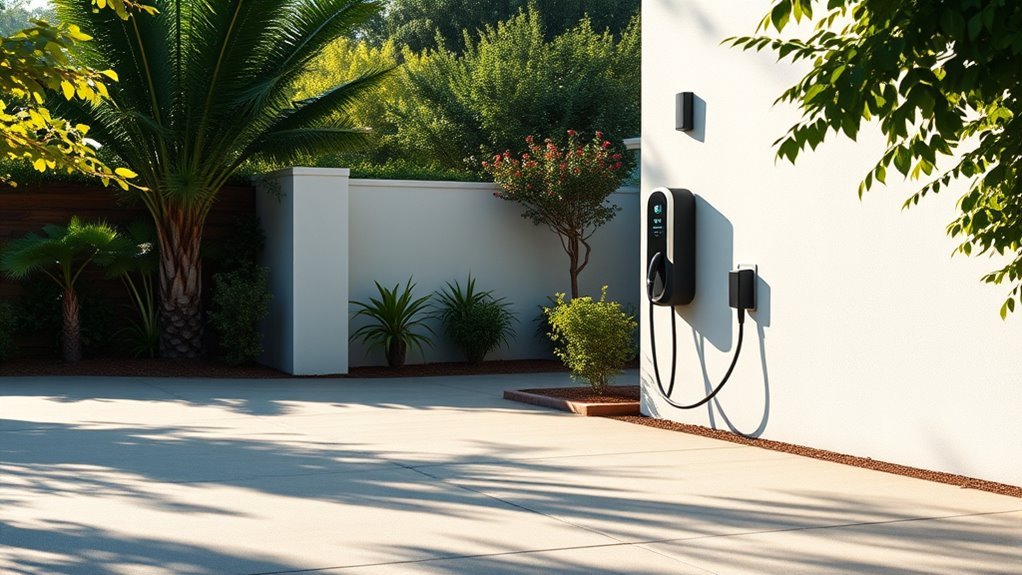
Choosing the right location for your EV charger installation is vital for efficiency and convenience. Aim to position your charger within 15 meters of your fuse box to keep installation costs down and simplify the process.
For ideal charger accessibility, mount the unit 750–1200 mm above ground level, guaranteeing it’s at least 2 meters away from public roads for safety. Off-street parking is important; this prevents obstruction of pedestrian pathways and allows direct access to your vehicle.
Consider the proximity of your EV’s charging socket to minimize excess cable slack and maintain installation aesthetics. If you’re opting for a smart charger, confirm the site has a strong Wi-Fi signal, as this enhances features like scheduling and monitoring.
Your EV Charger Installation Steps
Before you start the installation of your EV charger, it’s essential to conduct a pre-installation survey with a certified professional. This survey will assess your property’s electrical capacity and identify the best location for the charger.
Choose a mounting spot within 15 meters of the fuse box, ideally 750-1200mm above ground, and close to your EV parking space.
Next, hire a certified installer registered with NICEIC or NAPIT to guarantee compliance with UK electrical safety standards—DIY installations aren’t allowed. The installation process typically takes 2-5 hours, involving mounting the charger, running cables, and completing necessary safety tests.
Once the charger is installed, register your device and warranty within 30 days.
Don’t forget to set up the companion app to monitor your home charging and take advantage of its smart features. Following these installation tips guarantees a safe and efficient charging experience.
Post-Installation: Maximizing Your EV Charger Experience
Once your EV charger is installed, taking full advantage of its capabilities is essential for a best charging experience. Start by registering your charger and warranty within 30 days to secure support.
Download the companion app to monitor usage effectively and set charging schedules that suit your lifestyle. These smart features can optimize energy consumption, ensuring you charge efficiently.
Consider pairing your charger with a charge card like the loveelectric Charge Card, which can offer discounts of up to 60% at public stations. Switching to an EV tariff can further enhance your savings, especially if you have a smart meter for half-hourly readings to leverage lower off-peak rates.
Finally, keep all installation certificates and documentation organized for future reference and compliance.
Frequently Asked Questions
Can I Install an EV Charger Myself in the UK?
You can’t install an EV charger yourself in the UK due to strict safety regulations. DIY installation is prohibited, so hiring a certified professional guarantees safety and compliance, protecting you from potential hazards and insurance issues.
What Is the 80 20 Rule EV Charging?
Imagine filling a glass with water, stopping at the 80% mark. The 80/20 rule in EV charging maximizes efficiency metrics, allowing you to charge efficiently, prolong battery life, and meet daily driving needs seamlessly.
How Much Does It Cost to Install an Electric Car Charger at Home in the UK?
Installing an electric car charger at home in the UK typically costs between £800 and £1,500. Factors influencing this cost breakdown include charger type, property setup, and necessary electrical upgrades, impacting your overall budget.
How Much Does It Cost to Install a 240V Outlet for EV Charger?
When it comes to EV charger pricing, expect to fork out between £300 and £1,000 for a 240V outlet. Installation factors like electrical upgrades can push costs up to £2,000. Always hire a certified electrician.
Conclusion
In summation, successfully securing a superb home EV charger setup hinges on careful consideration and competent choices. By evaluating your electrical capacity, adhering to regulations, and hiring a qualified installer, you’ll guarantee a seamless solution for charging convenience. Selecting a strategic spot for installation will further enhance efficiency. Ultimately, with proper planning and professional help, you’ll foster a fantastic charging experience that meets your needs and supports sustainable driving.






Leave a Reply