With a full car license, you can usually ride low-powered scooters and mopeds (50cc or less) in many states. Some states even permit three-wheel motorcycles for car license holders. However, rules vary by state, so it’s essential to check local regulations. Remember, there’s a significant difference between a car license and a motorcycle endorsement, including the skills and safety gear needed. If you want to understand specific rules and gear recommendations, there’s more to explore.
Key Takeaways
- With a full car license, you can ride low-powered scooters and mopeds (50cc or less) in most states.
- Some states allow three-wheel motorcycles (e.g., Can-Am Spyder) to be operated with a full car license.
- California permits operating motor-driven cycles under 149cc without a motorcycle endorsement.
- Always check local DMV regulations, as rules may vary significantly by state.
- Ensure you wear proper safety gear, as licensing does not guarantee safe riding practices.
Motorbikes You Can Ride With a Car License
If you hold a full car license, you might be surprised to learn that you can legally ride certain motorbikes without needing a separate motorcycle endorsement.
Did you know that a full car license may allow you to ride certain motorbikes without a motorcycle endorsement?
In many states, you can hop on low-powered scooters and mopeds with an engine size of 50cc or less, enjoying the freedom of the open road. Some states even permit three-wheel motorcycles, like the Can-Am Spyder, for car license holders due to their stability.
You’ll also find that automatic-transmission motorcycles may be allowed, making them a breeze for new riders.
However, keep in mind that most jurisdictions impose restrictions, such as speed limits of 30-40 mph and limits on carrying passengers.
Always check with your local DMV for the latest regulations, as rules can vary considerably from state to state. Embrace the liberation of two wheels, but stay informed about what you can legally ride!
State-Specific Car License Regulations
When it comes to riding motorbikes with a full car license, state-specific regulations can greatly impact your experience.
Each state has unique licensing requirements and vehicle classifications that determine what you can ride and at what age.
Understanding these variations will help you navigate the rules more effectively and guarantee you’re compliant with local laws.
State-Specific Licensing Requirements
Understanding state-specific licensing requirements for motorbikes is essential, especially since regulations can vary considerably from one state to another.
For instance, in Alabama, you need a “B” restricted motorcycle license for motor-driven cycles, with a minimum age of 14.
In contrast, Alaska mandates a Class M1 motorcycle license for vehicles over 50 cc, while a M2 permit is necessary for mopeds.
California allows you to operate motor-driven cycles under 149 cc with a full car license, but an M1 motorcycle license is essential for larger bikes.
Florida requires both a driver’s license and a motorcycle endorsement, and in Georgia, you’re eligible to operate motor-driven cycles at age 15 with a valid driver’s license.
Always check with your local DMV to operate legally.
Vehicle Classification Differences
Maneuvering the vehicle classification differences across states can be essential for anyone looking to ride with a full car license. Many states allow motorcycle drivers to operate mopeds and scooters with engine sizes of 50cc or less, typically capping speeds at 30-40 mph.
Some jurisdictions even permit three-wheeled motorcycles, or trikes, under a full car license due to their stability. Additionally, automatic-transmission motorcycles may be allowed, making it easier for new riders to enjoy the freedom of the road.
However, each state has distinct regulations, so always check with your local Department of Motor Vehicles for compliance. Remember, most areas restrict carrying passengers on these vehicles to guarantee safety and adherence to local laws.
Differences Between Car Licenses and Motorcycle Endorsements
While you might think that holding a full car license grants you the freedom to ride a motorcycle, the reality is quite different due to the unique challenges associated with operating two-wheeled vehicles. A standard Class C driver’s license allows you to drive cars, but it doesn’t verify the skills necessary for motorcycles with engines. Most states require a motorcycle endorsement (Class M) for full motorcycles, emphasizing safety and stability.
Here’s a quick comparison:
| Car License (Class C) | Motorcycle Endorsement (Class M) |
|---|---|
| Operates cars | Operates motorcycles, mopeds, or scooters |
| No specialized tests | Requires written and skills tests |
| Limited to 4 wheels | Two-wheeled vehicles only |
Understanding these differences is vital for your journey toward riding freedom. Don’t underestimate the skills necessary to handle a motorcycle safely!
Key Restrictions for Riding Low-Powered Motorbikes With a Car License
When you ride a low-powered motorbike with just your car license, you need to be aware of key restrictions.
These bikes typically have engine size limits of 50cc or less and speed caps ranging from 30 to 40 mph.
Additionally, remember that you can’t carry passengers, as these rules are designed to prioritize your safety and stability on the road.
Engine Size Limits
If you hold a full car license, you might be surprised to learn that you can ride low-powered motorbikes, but there are important engine size limits to contemplate.
These guidelines help guarantee safety and compliance for motorcycle operators. Here are the key points to remember:
- Engine size limits for two-wheeled vehicles are typically capped at 50cc or less.
- Some states allow three-wheel motorcycles, but engine restrictions still apply.
- Always check local DMV regulations, as they can vary greatly.
- Carrying passengers on low-powered vehicles is generally prohibited to emphasize individual skill.
Being aware of these engine size limits empowers you to ride confidently while enjoying the freedom of the open road!
Speed Restrictions
Understanding the speed restrictions for low-powered motorbikes is just as important as knowing the engine size limits.
If you’re riding a low-powered bike, like a moped or scooter with an engine under 50cc, expect speed limits typically ranging from 30 to 40 mph. Exceeding these limits can lead to penalties, including fines or even license suspension.
Remember, while a full car license allows you to ride these motorcycles, you’ll still need to adhere to these speed restrictions. Always wear a helmet, as it’s mandatory in nearly all states, regardless of your engine size.
If you decide to ride a motorcycle over 50cc, be prepared to obtain a motorcycle endorsement. Enjoy your freedom, but stay safe and within the law!
No Passengers Allowed
Riding low-powered motorbikes, such as scooters and mopeds, can be a thrilling experience, but it’s essential to know the rules that come with it.
For motorcycle riders using a car license, one key restriction is the “no passengers allowed” rule. Here’s what you should keep in mind:
- This rule applies mainly to vehicles with engines of 50cc or less.
- Riding with passengers can compromise safety by affecting stability and handling.
- Violating this rule may lead to serious legal consequences, including fines or license suspension.
- Always check your local laws, as they can vary and impact compliance.
Understanding these restrictions guarantees your freedom on the road remains safe and enjoyable!
Safety Gear Recommendations for Riding With a Car License
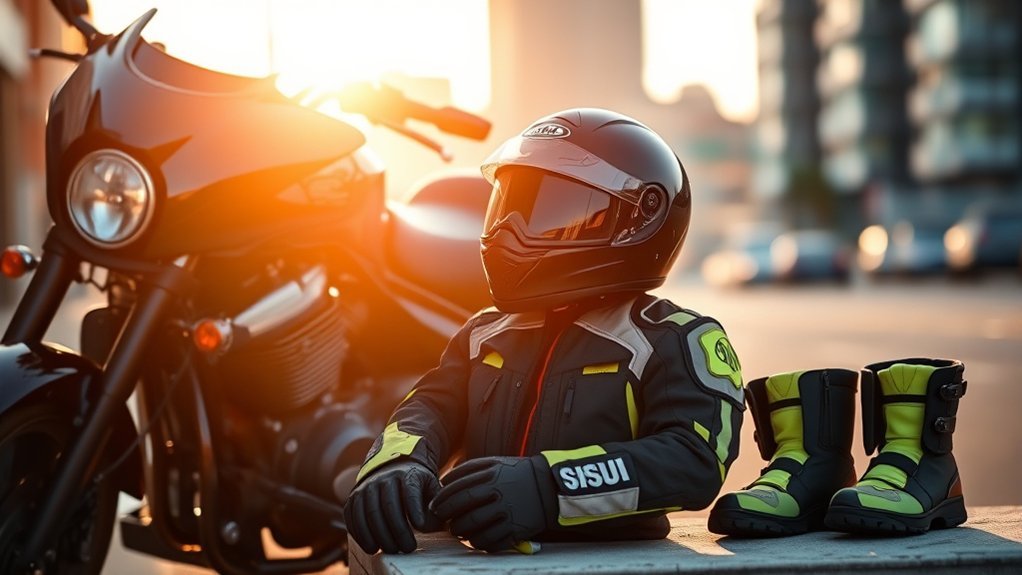
While you may feel confident zipping around on your motorbike with just a car license, it’s essential to prioritize safety gear to protect yourself on the road.
First and foremost, you must wear a DOT-compliant motorcycle helmet, as it’s mandatory in most states to shield your head in case of an accident. Beyond that, don’t skimp on additional safety gear; gloves, jackets made of abrasion-resistant materials, and sturdy pants can considerably reduce injury risk during falls.
Wearing a DOT-compliant helmet and quality safety gear is crucial for reducing injury risk on your motorcycle.
Eye protection is vital too, especially for low-powered motorcycles or scooters, as it helps safeguard your vision from debris and wind. Proper footwear, like sturdy boots that cover your ankles, provides both protection and grip while riding.
Finally, invest in reflective gear or vests to enhance visibility, especially in low light or adverse weather conditions. Prioritizing these safety measures can liberate you from worry while you enjoy the freedom of the open road.
Penalties for Riding Without Proper Licensing?
What happens if you hit the road on a motorcycle without the proper licensing? The consequences can be quite severe, and you might find yourself facing significant penalties. Here’s what you could encounter:
- Fines: States can impose fines ranging from $100 to $500 or more for riding without proper licensing.
- Impoundment: Your motorbike may be impounded, leaving you without transportation until you meet the licensing requirements.
- License Suspension: Operating a motorbike unlawfully can lead to suspension of your car driver’s license, affecting your mobility.
- Insurance Issues: Many states require valid insurance, even for low-powered vehicles. Riding without it can incur additional penalties and complicate matters further.
Navigating the licensing maze is essential for your freedom on two wheels.
Don’t let ignorance of the law reduce your riding liberation; stay informed and compliant!
Frequently Asked Questions
What Motorcycle Can I Ride With a Full Car Licence?
With a full car license, you can ride motorcycles classified under low-powered categories, typically under 50cc. Always check local riding regulations, license requirements, and insurance policies, and wear proper safety gear for protection.
Can I Drive a Motorcycle With a Car License in the USA?
Yes, you can drive certain motorcycles with a car license, but you must check state-specific laws. Remember car license restrictions, take motorcycle training courses, and verify you have proper insurance for allowed bike types. Riding safely matters!
What Is Required to Ride a Motorcycle in Virginia?
To ride a motorcycle in Virginia, you’ll need a Class M license, complete training courses, pass road tests, and embrace motorcycle safety, all while enjoying the thrill of liberation on two wheels—just don’t forget your insurance!
What Bike Can I Ride on a Restricted Licence?
With a restricted licence, you can ride low-powered bikes under 50cc. Check state regulations for age restrictions, insurance requirements, and training course benefits, as they can vary considerably and impact your riding experience.
Conclusion
In conclusion, while riding a motorbike with just a car license is possible, it’s essential to understand the specific regulations in your state. Remember, “it’s better to be safe than sorry.” Always gear up and stay informed about the limitations and requirements to guarantee a smooth ride. Ignoring the rules could lead to serious penalties, so take the time to ride responsibly and enjoy the freedom that comes with being on two wheels!

Leave a Reply