
You can renew your car’s MOT up to one month minus one day before it expires. This timing helps you stay compliant with legal requirements and avoid potential fines. Just remember, booking too early resets your renewal date to the test date, which can complicate future scheduling. It’s important to prepare your vehicle thoroughly and understand the implications of MOT testing. Continue for more essential insights into MOT rules and tips for an efficient experience.
Key Takeaways
- You can book an MOT test up to one month minus one day before the expiry date.
- Early booking resets the renewal date to the test date, complicating future scheduling.
- Driving with an expired MOT risks prosecution and fines up to £1,000.
- Ensure your vehicle meets roadworthiness standards before driving it for an MOT test.
- Always choose a DVSA-approved testing centre for compliance and reliability.
What Is the MOT and Why Is It Important?

The MOT, or Ministry of Transport test, is an essential annual inspection for vehicles over three years old in the UK. This mandatory test guarantees your vehicle meets fundamental safety and environmental standards. Conducted by DVSA-approved centres, the MOT checks significant components like brakes, lights, and steering to confirm they’re in safe working order.
Having a valid MOT isn’t just a legal requirement under the Road Traffic Act 1988; it’s critical for your safety and others on the road. Driving without a valid MOT can lead to hefty fines, points on your driving license, and invalidated insurance.
The MOT helps you identify potential issues before they escalate into dangerous and costly problems. By prioritizing this test and its renewal, you’re not only complying with the law but actively contributing to road safety, promoting freedom for all road users.
What Happens If Your MOT Expires?
Letting your MOT expire can lead to serious consequences. When your MOT is expired, your vehicle cannot be driven on public roads, and you risk prosecution for driving without a valid MOT. This can result in hefty fines and points on your driving license. You also can’t renew your vehicle tax until you pass the MOT, forcing you to register your vehicle as ‘off the road’ if your tax is due.
However, there are exceptions. You can legally drive your vehicle to a pre-arranged MOT test or for necessary repairs. Remember, your vehicle must always meet minimum roadworthiness standards before it can be legally driven again.
| Consequence | Details |
|---|---|
| Driving Penalties | Fines up to £1,000 and points |
| Vehicle Tax Issues | Cannot renew without a valid MOT |
| Legal Exceptions | Drive only to a pre-arranged MOT test |
Stay vigilant and keep your MOT up to date!
How Early Can You Book Your MOT Test?
You can book your MOT test up to one month minus one day before your current expiration date, ensuring your renewal date stays the same for the following year.
For instance, if your current MOT expires on 20 March, you can schedule your test from 19 February. This early booking not only helps you avoid the stress of driving with an expired MOT but also gives you time to address any potential repairs if your vehicle doesn’t pass an MOT.
Remember, booking too early resets your renewal date, pushing it to 12 months from the test date instead of the original expiry date. Stick to the one month minus one day rule to keep everything in check.
This way, you maintain flexibility in scheduling your MOT testing while ensuring your car remains roadworthy and compliant. So, don’t hesitate—book your MOT early and drive with confidence!
What Are the Risks of Testing Your MOT Too Early?
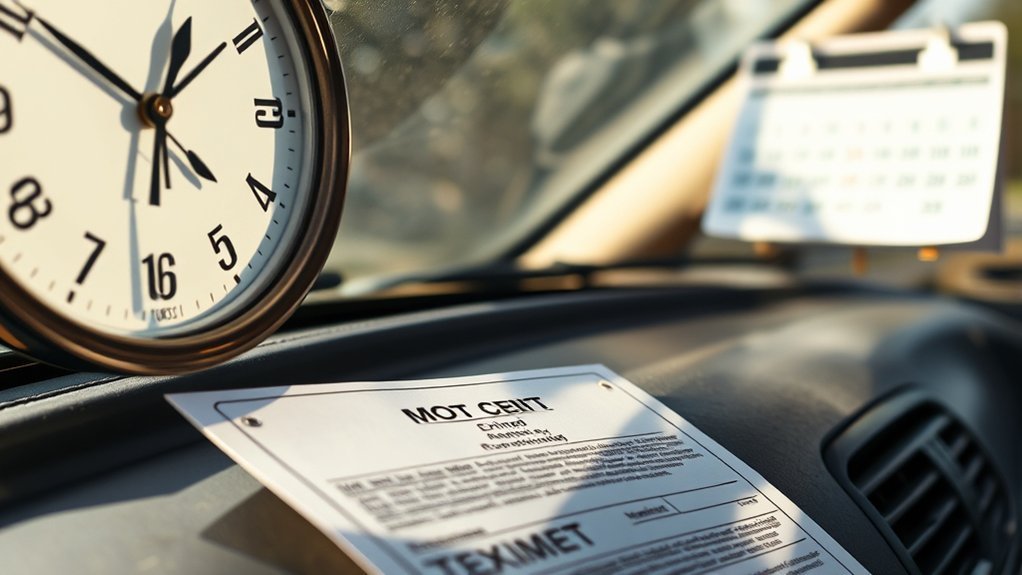
Testing your MOT too early can reset your renewal date and create confusion about when your vehicle is actually due for its next check.
This not only complicates your scheduling but also raises legal risks if you’re caught driving with an expired MOT.
It’s important to understand these implications to guarantee your vehicle remains compliant and safe on the road.
New Expiry Date Implications
While it might seem convenient to test your MOT early, doing so can lead to significant implications regarding your vehicle’s expiry date.
If you book an MOT test outside the one month minus one day window, you risk resetting your new expiry date. For example, if you test your vehicle a month before its current MOT certificate expires, the new expiry date will be just one day short of a full year from the test date.
This early testing can create confusion about your vehicle’s roadworthiness and legality, and it may result in financial loss, negating the value of the time left on your previous certificate.
To avoid these pitfalls, always comply with DVSA guidelines when booking an MOT.
Compliance and Legal Risks
Booking your MOT too early carries significant compliance and legal risks that every vehicle owner should be aware of.
If you test your vehicle more than one month minus one day before the current expiry, you reset the renewal date, putting you at risk of fines or penalties. Driving without a valid MOT after the expiry date can cost you up to £1,000 and may even result in points on your driving license.
There’s no grace period for driving after your MOT has expired, unless you’re on your way to a pre-booked test. Understanding the one-month minus one-day rule is essential for maintaining compliance and steering clear of unnecessary legal complications with early MOT testing.
Top Advantages of Booking Your MOT Early

When you book your MOT early, you not only secure peace of mind but also set yourself up for a smoother experience throughout the year. Scheduling an early MOT allows you to maintain your renewal date, preventing the risk of driving with an expired MOT.
If your vehicle fails its MOT, you have ample time to address any repairs without the last-minute stress. Plus, combining early MOT testing with a service can save you money and guarantee your vehicle remains in peak condition.
Having a valid MOT before selling your car can greatly boost buyer confidence, showing that the vehicle was recently checked by professionals.
Early booking also helps you avoid potential fines and the anxiety of rushing to meet deadlines. So, take charge of your vehicle’s maintenance and enjoy the benefits of early scheduling—it’s a smart choice that keeps you liberated from MOT worries!
What’s the One Month Minus One Day Rule?
Understanding the “one month minus one day” rule is essential for managing your car’s MOT effectively. This rule allows you to book an MOT up to 30 days before your current certificate expires, without altering the renewal date.
For example, if your MOT expires on the 20th, you can schedule your test as early as the 21st of the previous month. Early testing is a smart way to guarantee compliance and maintain your vehicle’s legality, avoiding penalties for expired MOTs.
Be certain to stick to this one-month minus one day window; testing outside of it will reset your renewal date to one year from the early test date, not the original expiry date.
Preparing Your Car for an Early MOT Test
Preparing your car for an early MOT test is essential to guarantee a smooth inspection. If your MOT is due soon, don’t wait until the final moment. Start preparing your car early.
First, check that tyres are inflated to the correct pressure and that the tread depth meets legal minimum standards. Next, verify all lights—headlights, brake lights, and indicators—are functioning properly to avoid failures during the test.
Simple checks on the brakes, handbrake, and steering are also important, as these components are closely examined. Don’t forget to clear any obstructions from your view and inspect wiper blades for damage, maintaining visibility.
Finally, give your car a good clean inside and out, as excessive clutter can distract the tester or lead to a refusal of inspection. Taking these steps will help you breeze through your first MOT without a hitch!
How to Address MOT Failures Effectively?
If your car fails the MOT, the test centre will give you a detailed report of the issues to fix.
It’s essential to tackle these repairs quickly to avoid fines and guarantee your vehicle is roadworthy.
Once you’ve made the necessary fixes, you can book a retest, keeping in mind any potential fees or free retest options available.
Common Reasons for Failures
While many drivers hope for a smooth MOT experience, several common issues can lead to failures, making it essential to address them beforehand.
First, check your lights—ensure all are functioning properly, as this impacts visibility and safety.
Next, inspect your tyres; they must have a legal tread depth of at least 1.6mm and be properly inflated to avoid failing the MOT test.
Don’t overlook your brakes; they should respond effectively and show no signs of wear or unusual noises.
Finally, emissions must meet legal standards, so regular maintenance is vital.
Immediate Repair Actions
Addressing MOT failures quickly is essential to getting your vehicle back on the road legally and safely.
Once your vehicle last passed, a detailed report will outline necessary repairs. Don’t delay—complete those repairs promptly to avoid fines for driving a vehicle with an invalid MOT.
If you act fast, you might qualify for free retesting within 10 days, saving you money. Some testing centers even offer discounted rates if repairs are done within one month minus one day of failure.
Guarantee all repairs meet minimum roadworthiness standards before attempting to drive again.
Retest and Follow-Up Steps
Once your vehicle has failed its MOT, it’s crucial to take immediate action to rectify the issues outlined in the failure report.
Here’s what you should do to guarantee your vehicle meets roadworthiness standards:
- Complete Necessary Repairs: Address all faults listed in the report as soon as possible to ensure compliance and safety.
- Schedule a Retest: Book your retest at the same centre, especially if it offers free retests within 10 days of the initial failure.
- Avoid Driving with an Expired MOT: Remember, driving with an expired MOT can lead to fines and legal issues.
Common Myths About MOT Testing Explained
MOT testing is often shrouded in misconceptions that can lead to confusion and potential legal issues for drivers. One common myth is that you can drive after your current certificate expires; in reality, driving is prohibited unless you’re heading to a pre-booked test.
Early testing can be beneficial, but it only extends your MOT if done within one month minus one day before your current expiry date.
Another misconception is that MOTs evaluate overall vehicle performance, but they primarily focus on road safety and environmental impact instead.
Even new cars aren’t exempt after their initial three years; they require regular MOT checks as well.
Understanding these common myths is essential for proper vehicle maintenance and ensuring you comply with legal requirements.
Stay informed, and you’ll keep your vehicle roadworthy and legally compliant.
Tips for Finding the Right MOT Testing Centre
Finding the right MOT testing centre can make all the difference in guaranteeing your vehicle’s roadworthiness. To help you choose wisely, consider the following tips:
- DVSA-Approved: Always opt for a DVSA-approved MOT testing centre. This guarantees compliance with essential safety and environmental standards.
- Research Reputation: Look up online reviews and ratings. A centre with positive feedback is more likely to provide reliable service with experienced staff who can accurately identify potential issues.
- Transparent Policies: Confirm that the centre has clear, transparent pricing and retest policies. Understanding any fees associated with retesting after a vehicle fails its MOT can save you from unexpected costs.
Frequently Asked Questions
How Early Can You Get Your MOT Renewed?
You can renew your MOT up to one month minus one day before it expires. Early renewal benefits include maintaining your MOT expiry dates and addressing common failures during vehicle safety checks at various test locations.
Conclusion
So there you have it—booking your MOT early is like getting a jump on spring cleaning before the dust bunnies take over. Sure, you might dodge the panic of a last-minute rush, but don’t forget: testing too early could have you living in the fast lane of potential failures. Just remember, your car’s not a fine wine; it doesn’t get better with age. So, gear up, stay savvy, and keep your wheels in check!







Leave a Reply