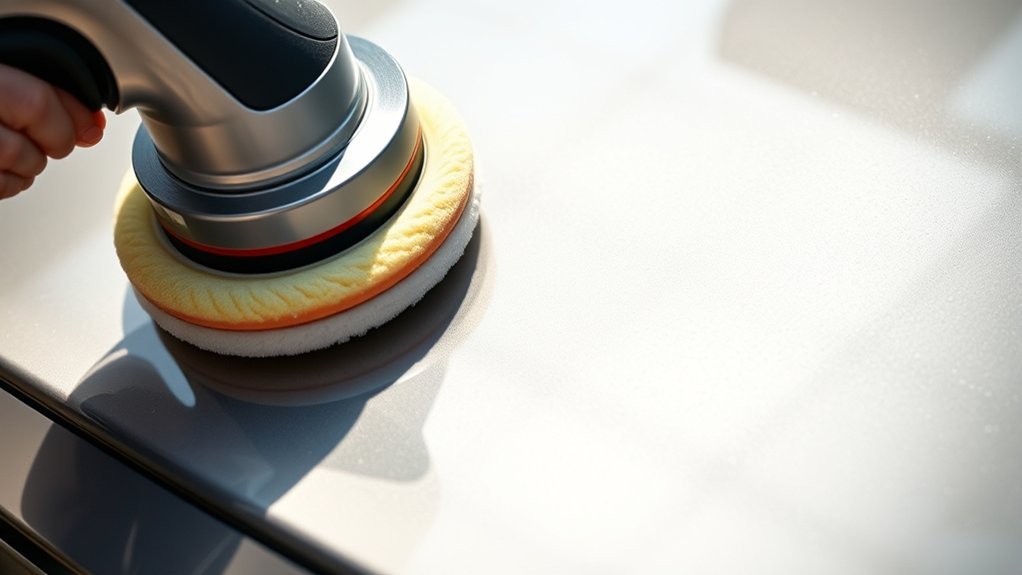
To buff scuffs out of your car paint, start by cleaning the area to remove dirt. Use a clay bar with lubricant to eliminate contaminants, then apply a heavy-duty buffing compound with a suitable pad in a shaded area. Wipe off any residue with a microfiber towel before finishing with polish or wax. Understanding the differences between scuffs and deep scratches is essential for effective correction. Continue exploring effective techniques and tips for best results.
Key Takeaways
- Clean the affected area to remove dirt and debris before starting the buffing process.
- Use a clay bar with lubricant to eliminate any embedded contaminants on the surface.
- Apply a heavy-duty buffing compound with a suitable buffing pad to effectively buff out scuffs.
- Buff in a circular motion, working in small sections for even coverage and blending repairs.
- Finish by wiping the area with a microfiber towel and applying car polish or wax for protection and shine.
What Are Scuff Marks and How Do They Form?
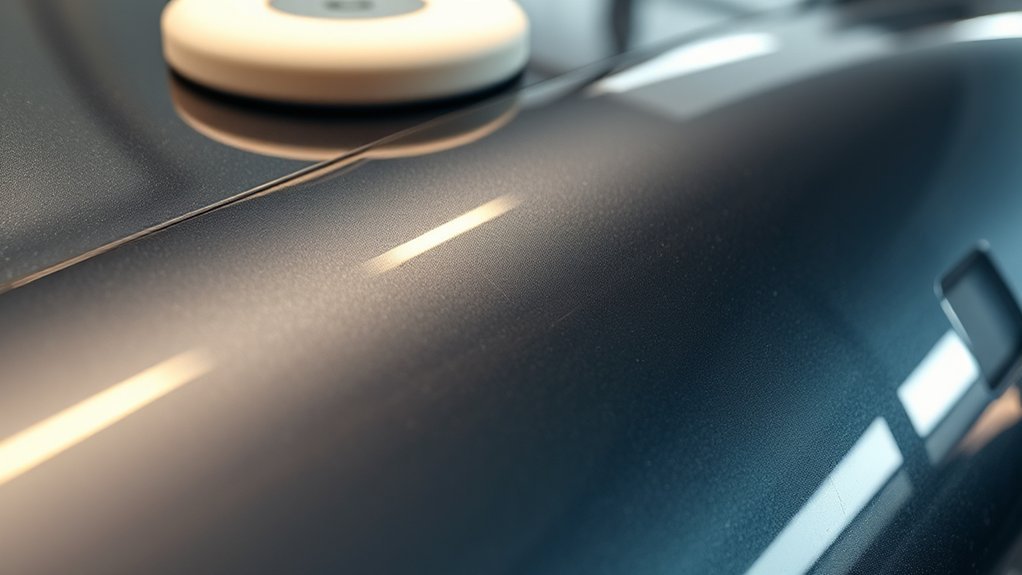
When you encounter scuff marks on your car, it’s essential to understand what they’re and how they form. Scuffs from car surfaces are often surface-level imperfections, commonly known as paint transfer. They typically occur due to contact with shoes, other vehicles, or accidents in parking lots.
The severity of these marks largely depends on the type of contact; lighter impacts usually result in minor surface damage, while heavier impacts may cause deeper scratches. Unlike deep scratches that penetrate the clear coat, scuff marks remain on the surface and can often be removed without harming your car’s paint.
Common sources include everyday activities like loading items or brushing against objects in tight spaces. Timely removal and proper maintenance of these scuffs can help preserve your vehicle’s appearance and prevent more significant paint damage over time.
Understanding scuff marks empowers you to maintain your car’s aesthetic appeal effectively.
Step-by-Step Guide to Removing Scuff Marks Safely
Scuff marks, while relatively minor, can detract from your car’s appearance if left untreated. Start the paint correction process by thoroughly cleaning the affected area to remove dirt and debris. This guarantees ideal results when you apply a clay bar or buffing compound.
Next, use a clay bar with lubricant to gently remove surface contaminants and scuff marks, preparing the paint for further correction without causing damage.
Using a clay bar with lubricant effectively eliminates surface contaminants and scuff marks, ensuring safe paint correction.
Once prepped, apply a heavy-duty buffing compound using a buffing pad in a shaded area to avoid quick drying that could risk the paint’s integrity.
After buffing, wipe the area with a microfiber towel to remove any residue, inspecting for remaining scuffs that may require touch-up paint.
Finally, finish by applying a car polish or wax to protect your newly corrected surface and enhance your vehicle’s overall shine.
Must-Have Supplies for Successful Paint Correction
To achieve successful paint correction, you’ll need several essential supplies that guarantee effective results without damaging your vehicle’s finish.
Start with a clay bar or mitt to remove embedded contaminants; this guarantees a clean surface for the buffing process. Pair this with a high-quality clay lubricant for smooth application. Heavy-duty buffing compounds are vital for effective scuff removal, and don’t forget to select the appropriate buffing pad for your specific needs, as it greatly impacts the outcome.
Microfiber towels are a must for cleaning and drying after buffing, preventing potential scratches that traditional towels could cause.
Finally, prepare a water bucket and hose for rinsing your vehicle before starting. Always choose automotive-specific products to avoid paint damage; non-specialized items can lead to further imperfections.
Equip yourself with these essentials, and you’ll be well on your way to achieving a flawless finish.
Scuffs vs. Deep Scratches: Key Differences
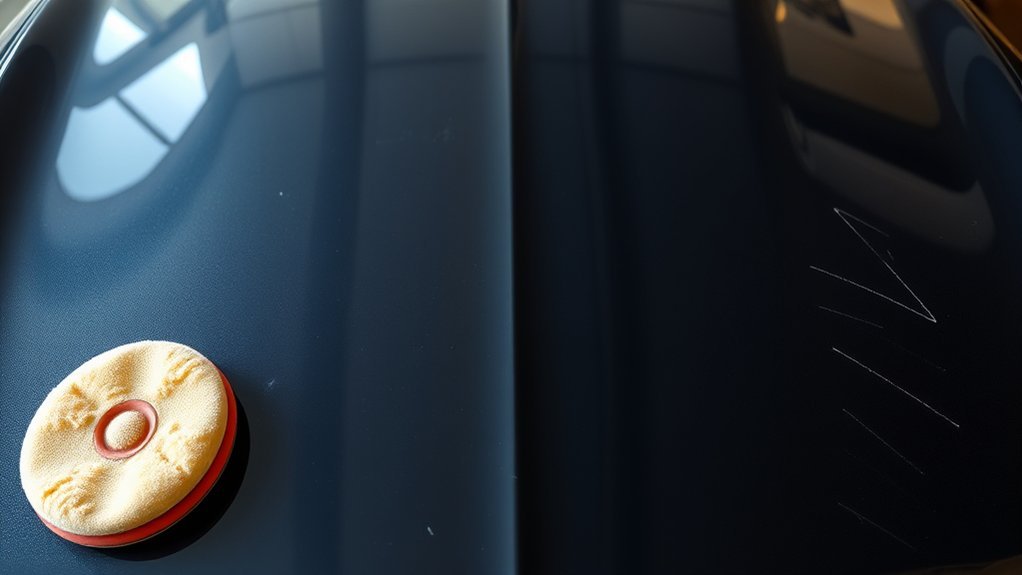
When evaluating paint damage, it’s essential to differentiate between scuff marks and deep scratches.
Scuffs are surface-level imperfections that can often be buffed out easily, while deep scratches penetrate the clear coat and may require more extensive repair methods.
Understanding these differences helps you choose the right approach to maintain your vehicle’s paint integrity.
Surface-Level Damage Explained
Understanding surface-level damage is crucial for any car owner looking to maintain their vehicle’s appearance. Scuffs are typically minor imperfections that only affect the clear coat, making them easier to remove compared to deep scratches, which penetrate the paint more severely.
The severity of scuff marks often depends on the type of contact; softer materials usually cause less damage than harder objects. To effectively remove scuffs, you can use a clay bar or buffing compound, allowing you to restore your car’s finish without extensive repairs.
In contrast, deep scratches may require touch-up paint or even complete panel repainting. Recognizing the difference between scuffs and deep scratches is essential for choosing the right repair method and preserving your car’s paint integrity.
Repair Methods Comparison
Recognizing the differences between scuffs and deep scratches is essential for choosing the appropriate repair method.
Scuffs are surface-level imperfections that typically buff out easily, using a heavy-duty buffing compound and pad. This process often restores the paint without causing damage.
In contrast, deep scratches penetrate beyond the clear coat, compromising its integrity. Repairing these may require professional intervention, touch-up paint, or even repainting to guarantee the vehicle’s finish remains intact.
While polishing techniques effectively address scuffs, deep scratches necessitate a more thoughtful approach to avoid further harm. Understanding these distinctions helps you select the right method, guaranteeing the safety and longevity of your car’s paint job.
Tips for Inspecting and Finalizing Your Paint Correction
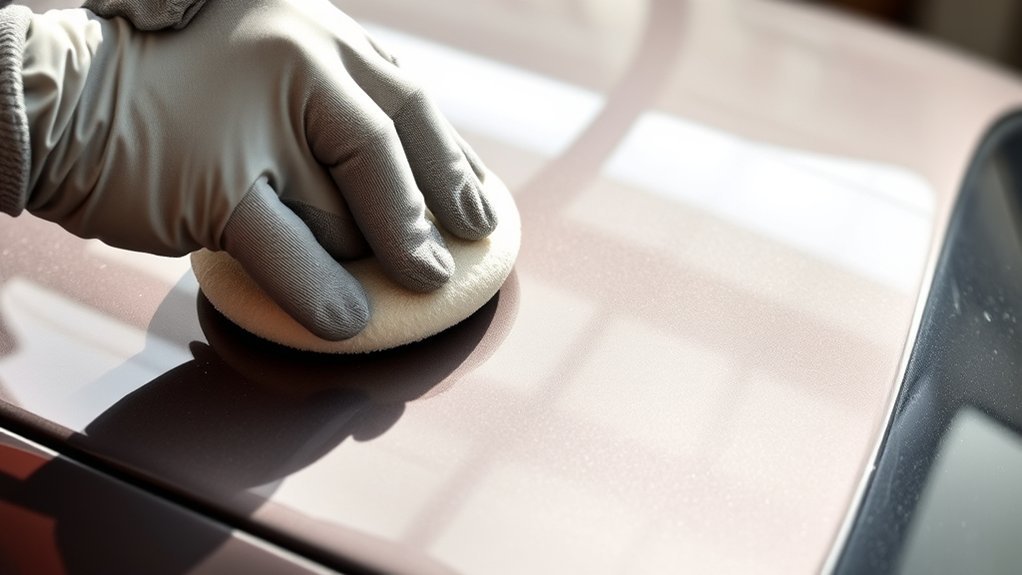
To guarantee the success of your paint correction process, it’s essential to conduct a meticulous inspection after buffing. Start by examining the clear coat under good lighting to spot any remaining scuffs or imperfections. Wipe down the area with a clean microfiber towel to remove buffing residue, ensuring a clear view of the paint’s condition.
| Inspection Step | Action |
|---|---|
| 1. Visual Check | Inspect under bright light |
| 2. Surface Cleaning | Use a microfiber towel |
| 3. Final Touch-Up | Apply polish or wax for shine |
For scuffs that resist buffing, consider touch-up paint to restore aesthetics. Regular inspections and maintenance are key to catching new scratches early, thereby preserving the longevity of your paint correction results.
When to Seek Professional Help for Paint Damage?
When should you consider seeking professional help for paint damage? If you notice scuffs or scratches that penetrate the clear coat, it’s best to consult an expert. Attempting to buff these out might compromise your paint’s integrity.
Similarly, if the damage exceeds the size of a quarter, specialized tools and techniques are often necessary for effective correction.
Additionally, if you encounter paint transfer from another vehicle or object, professionals can assess the situation accurately and use specific products to remove it without further harming your car’s finish.
If you’re uncertain about the quality of your vehicle’s paint, especially with newer water-based finishes that can be more prone to damage, expert assistance is advisable.
Finally, when in doubt about your skill level or the complexity of the damage, seeking professional help can save time and protect your vehicle’s aesthetic and value.
Maintaining Your Car’s Finish After Removing Scuffs
Maintaining your car’s finish after removing scuffs is crucial for preserving its appearance and value. Applying a high-quality wax or sealant post-correction provides a protective layer that helps prevent future scratches while enhancing shine.
Consider using a ceramic coating for long-lasting protection against environmental contaminants, making it easier to maintain your car’s pristine look. Regular inspections of your car’s finish are essential; catch new imperfections like scuffs or scratches early to avoid long-term damage.
To prolong the results of paint correction, wash your car with pH-balanced soap and steer clear of automatic car washes that can inflict new scratches. Additionally, store your vehicle in a garage or shaded area to shield the paint from UV rays and harsh weather conditions.
Frequently Asked Questions
How to Buff Scuffs Out of Car Paint?
To buff scuffs out of car paint, start with thorough cleaning, then use a clay bar. Apply a buffing compound with a foam pad, and finish with a polish or wax for protection and shine.
Can Scuffs Be Buffed Out?
Sure, scuffs can be buffed out—if you ignore scuff prevention! Clean the area first, then use a heavy-duty buffing compound. Just remember, deeper scratches might need professional help, so don’t overestimate your skills!
Will Magic Eraser Get Scuff Marks off a Car?
Yes, a Magic Eraser can remove scuff marks from your car, but use it cautiously. Test on an inconspicuous spot first to prevent damaging the clear coat, and consider automotive-specific cleaners for safer results.
Is 70% Isopropyl Alcohol Safe for Car Paint?
70% isopropyl alcohol can be safe for car paint if used cautiously. Always dilute it to around 10-15% concentration for cleaning, and test it on an inconspicuous area to prevent damaging the clear coat.
Conclusion
To sum up, effectively removing scuff marks can greatly enhance your car’s appearance and maintain its value. Did you know that a well-maintained vehicle can retain up to 70% of its value over time? By following the steps outlined and using the right supplies, you can achieve professional-looking results at home. Don’t forget to regularly inspect your car’s finish and apply protective measures to keep it looking its best for years to come.







Leave a Reply