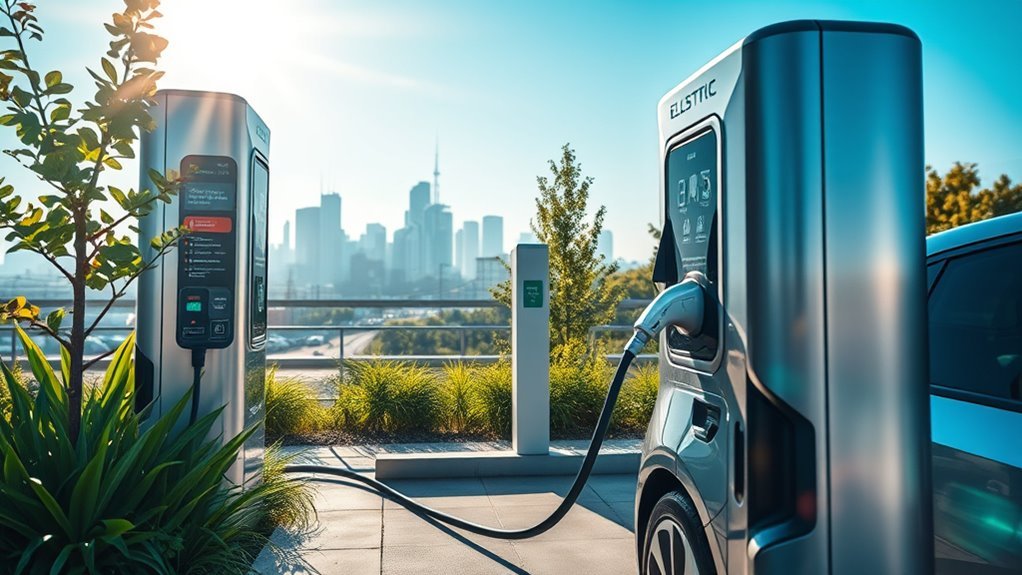
The Public Charge Point Regulations 2023 establish essential guidelines for electric vehicle charging in the UK. You’ll see requirements for transparent pricing, 99% uptime for rapid chargers, and mandatory contactless payments for new points over 8 kW by November 2024. A 24/7 helpline is also required to support users effectively. Following these rules is important for Charge Point Operators to avoid financial penalties and maintain user trust. Discover how these regulations shape the future of EV infrastructure.
Understanding the Key Features of the Public Charge Point Regulations 2023

As the shift towards electric vehicles gains momentum, understanding the key features of the Public Charge Point Regulations 2023 is essential for both Charge Point Operators (CPOs) and users alike.
The regulations mandate transparent pricing displayed in pence per kilowatt-hour (p/kWh) starting November 24, 2023. By November 2024, new public charge points over 8 kW must enable contactless payments, enhancing convenience for users without pre-registration.
Starting November 24, 2023, transparent pricing will be mandatory, with contactless payments required for new charge points by November 2024.
CPOs are also tasked with maintaining a 99% availability rate for rapid charge points, with annual reporting beginning in 2026. In addition, a 24/7 helpline for user assistance will be required, ensuring effective support and education on charging technology.
Finally, by November 2025, CPOs must integrate at least one roaming provider for seamless payment across networks. These features not only promote user education but also empower users to confidently navigate the evolving landscape of electric vehicle charging.
Why Public Charge Points Are Essential for EV Adoption
Public charge points are essential for your electric vehicle (EV) experience, especially if you lack home charging options.
They not only provide accessible infrastructure but also help reduce range anxiety, making long-distance travel feasible.
Accessible Charging Infrastructure
While many urban dwellers and long-distance travelers rely on public charge points for their electric vehicles (EVs), the necessity of accessible charging infrastructure becomes increasingly evident.
Effective charging accessibility is vital, particularly for those without off-street parking options. The UK’s Public Charge Point Regulations 2023 address this need by enhancing urban infrastructure to support the shift to electric vehicles.
With mandates for 24/7 operational helplines and 99% uptime for rapid chargers, you can expect improved confidence in public charging networks. Additionally, transparent pricing metrics, displayed in pence per kilowatt-hour, alleviate concerns about costs.
Reducing Range Anxiety
Range anxiety poses a significant barrier to electric vehicle (EV) adoption, especially for those who rely on public charge points for their charging needs. To address this, effective range management is essential.
The Public Charge Point Regulations 2023 guarantee that rapid charge points maintain 99% availability, allowing you to travel confidently without the fear of running out of charge.
With transparent pricing displayed in pence per kilowatt-hour, you can make informed decisions, easing concerns about unexpected costs.
Additionally, a 24/7 helpline offers immediate assistance, enhancing your confidence in the reliability of public charging infrastructure.
As public charge points connect to a roaming network by 2025, charge accessibility will improve, facilitating seamless travel and fostering a more liberated EV experience.
Who Needs to Comply With Public Charge Point Regulations?
If you’re involved in operating or manufacturing public charge points in the UK, you need to understand the compliance requirements set by the Public Charge Point Regulations.
This includes ensuring that both you and any third-party operators meet the established standards, while recognizing the specific exemptions for workplace chargers.
Non-compliance can lead to significant penalties, making it essential to navigate these regulations carefully.
Charge Point Operators’ Responsibilities
Charge Point Operators (CPOs) play an essential role in ensuring compliance with the Public Charge Point Regulations 2023.
As a CPO, you’re tasked with maneuvering regulatory challenges while upholding operator accountability. You must display the total cost of charging sessions clearly by November 24, 2023, and implement contactless payment options for new charge points over 8 kW and rapid points over 50 kW by November 2024.
Establishing a 24/7 free helpline for driver assistance is also vital, with metrics on call volume and resolution times reported quarterly to the Department for Transport starting in 2024.
Compliance with both the Public Charge Point Regulations and the Electric Vehicle (Smart Charge Points) Regulations is mandatory for your operations.
Compliance Scope and Exemptions
While the Public Charge Point Regulations 2023 establish a broad framework for compliance, understanding who falls under these regulations is vital for effective implementation.
Charge Point Operators (CPOs) must comply, as they manage public charge points, ensuring an improved consumer charging experience. This includes both owners and third-party operators, regardless of the EU exit’s ramifications.
However, certain exemptions exist. Workplace charge points and those designated for specific users, like fleet vehicles, don’t need to adhere to these regulations.
Recognizing these compliance challenges and exemption criteria is significant for CPOs, as it enables them to navigate the landscape efficiently while focusing on delivering a seamless public charging network that meets the evolving needs of electric vehicle users.
How Pricing Transparency Enhances User Experience
As public charge points implement pricing transparency regulations effective November 24, 2023, you’ll find that understanding the cost of charging your electric vehicle becomes considerably easier. By displaying total charging session costs in pence per kilowatt-hour (p/kWh), including connection fees, the new rules facilitate straightforward cost comparison. This clarity empowers you to make informed decisions before initiating a charge.
Moreover, clear pricing information available through charging station displays and ChargePoint applications enhances your overall experience. You’ll no longer face unexpected charges mid-session, as dynamic pricing increases are prohibited unless disclosed in advance. This commitment to transparency fosters trust among EV drivers, bolstering your confidence in the public charging network.
Ultimately, these regulations aim to eliminate financial uncertainties, encouraging electric vehicle adoption and creating a more liberated driving experience. User feedback will further refine these systems, ensuring they meet your needs effectively.
Impact of Contactless Payments on Charging
The introduction of contactless payment options at public charge points is set to transform the charging experience for electric vehicle (EV) drivers, making it more efficient and user-friendly. Effective from November 2024, all new public charge points over 8 kW must facilitate payments through methods like Apple Pay and Google Pay, enhancing contactless convenience. This shift eliminates the need for pre-existing contracts, simplifying the payment process.
| Advantage | Description |
|---|---|
| Speed | Quick transactions reduce wait times. |
| Accessibility | No account setup needed for use. |
| Enhanced Security | Secure payments through established methods. |
| Increased Adoption | Encourages EV use by simplifying access. |
What You Should Know About Charge Point Reliability Standards
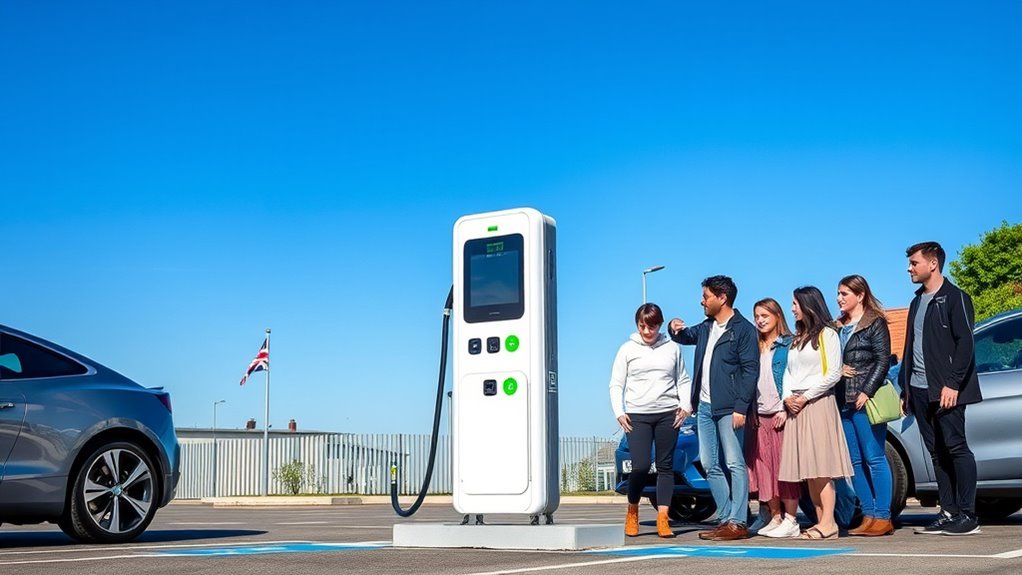
Charge point reliability standards are essential for ensuring that electric vehicle drivers can depend on charging infrastructure when they need it. As of November 2024, Charge Point Operators (CPOs) must maintain a minimum reliability rate of 99% for rapid charge points (≥ 50 kW). This regulation aims to alleviate range anxiety by guaranteeing consistent access to functioning stations.
CPOs are responsible for tracking uptime through the Open Charge Point Interface (OCPI) and reporting reliability metrics to the Department for Transport starting in 2026. Proactive maintenance and continuous monitoring of charge point technology will be significant to comply with these standards. User feedback will play a critical role in identifying issues and enhancing operational uptime.
Non-compliance could lead to financial penalties, emphasizing the importance of maintaining high reliability. Ultimately, these standards empower drivers, ensuring they can travel with confidence, knowing charging options will be available when needed.
How Does Helpline Support Enhance Charging Experiences?
Having immediate access to a helpline enhances your charging experience by providing quick assistance for any issues that arise.
This support not only helps troubleshoot common problems but also boosts your confidence in using public charge points.
Ultimately, knowing help is just a call away alleviates range anxiety and promotes a smoother changeover to electric vehicle adoption.
Immediate Assistance Availability
How can immediate assistance elevate your charging experience?
With the introduction of a free 24/7 helpline by Charge Point Operators (CPOs) from November 2024, you’re empowered to resolve any charging issues swiftly. This helpline effectiveness fosters user engagement, allowing you to navigate problems without feeling stranded.
The availability of a toll-free number means you can tackle challenges head-on, improving your confidence in the public charging network. Additionally, CPOs must report quarterly on helpline performance, ensuring they remain accountable and committed to continuous improvement.
Troubleshooting Common Issues
While maneuvering through the complexities of public charging, having immediate access to a dedicated helpline can greatly enhance your experience. The helpline, which will be available 24/7 starting November 2024, guarantees you receive timely assistance during charging issues. With proper helpline training, operators can utilize customer feedback to address concerns effectively.
| Helpline Features | Benefits |
|---|---|
| 24/7 Availability | Immediate assistance |
| Prominently Displayed | Easy access for all drivers |
| Regular Reporting Metrics | Accountability and quality assurance |
Enhancing User Confidence
As the landscape of electric vehicle charging evolves, the introduction of a dedicated 24/7 helpline greatly boosts user confidence in public charge points.
With helpline accessibility prominently displayed at charging stations, you can easily reach support whenever needed. This immediate assistance alleviates concerns, ensuring a smoother user experience.
Starting November 2024, all Charge Point Operators (CPOs) must offer this essential support, which enables them to address issues swiftly and effectively.
Reporting metrics such as call volume and resolution times to the Department for Transport enhances accountability, fostering trust in the system.
Essential Data for Compliance With Open Data Regulations
To comply with open data regulations, Public Charge Point Operators (CPOs) must meticulously maintain and update essential data records. This includes critical information such as location, connector types, payment methods, and availability status.
Achieving data accuracy is non-negotiable, as inaccurate records can hinder user experiences and operational efficiency. CPOs are mandated to update this data within 30 seconds and share it in a machine-readable format, ensuring that government bodies and electricity system operators can access it easily.
Utilizing the Open Charge Point Interface (OCPI) for reporting charge point status further enhances transparency. As these regulations come into effect on November 24, 2024, CPOs must prepare by integrating payment through at least one roaming provider by November 2025.
The Role of Payment Roaming in Expanding Driver Access
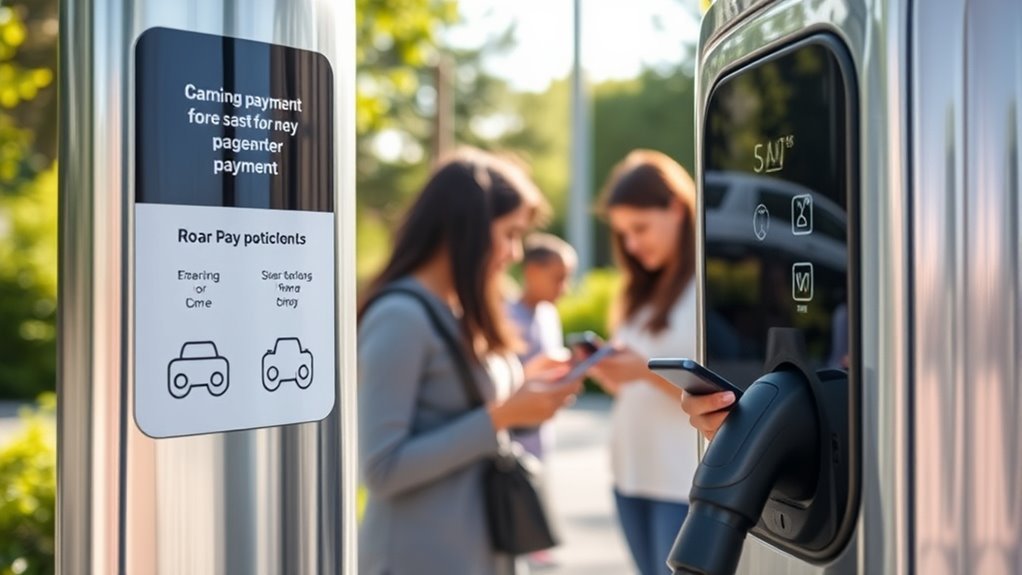
Payment roaming plays a pivotal role in expanding driver access to electric vehicle (EV) charging infrastructure, ensuring you can charge your vehicle seamlessly across various networks. Effective from November 2025, public charge point operators (CPOs) must enable payment through at least one roaming provider, enhancing payment interoperability and user convenience. This means you won’t need separate contracts for each network, simplifying your charging experience.
| Feature | Benefit |
|---|---|
| Payment Roaming | Access multiple networks |
| Single Payment Method | Simplifies transactions |
| Transparency | CPOs report agreements |
| Increased Usability | Supports EV adoption |
| Connectivity | Over 500,000 charge points |
Consequences of Non-Compliance With Public Charge Point Regulations?
Failure to comply with the Public Charge Point Regulations can have serious implications for Charge Point Operators (CPOs), potentially resulting in hefty penalties and reputational damage.
Understanding the penalties overview is vital to avoid setbacks that could undermine your operations.
Consider these consequences of non-compliance:
- Financial penalties: Up to £10,000 per charge point for failing to meet standards.
- Customer dissatisfaction: Lack of a 24/7 helpline can lead to operational challenges and negative feedback.
- Reputational damage: Failing to maintain a 99% uptime rate can diminish trust and reliability.
To mitigate these risks, implementing robust compliance strategies is essential.
By adhering to transparent pricing, contactless payment standards, and data-sharing obligations, you can safeguard your business against regulatory scrutiny and financial repercussions.
Prioritize compliance to guarantee sustainable operations and foster a positive relationship with drivers.
Frequently Asked Questions
What Types of Charge Points Are Affected by the New Regulations?
The new regulations affect home charging stations and public networks, ensuring they meet certain standards. You’ll need to understand how these changes impact your charging options, promoting accessibility and efficiency for electric vehicle users.
How Will These Regulations Impact Existing Charge Point Operators?
These regulations’ll push existing charge point operators to enhance operator compliance, as 70% of the market could shift. You’ll face intensified market competition, driving innovation and better services for electric vehicle users.
Are There Any Penalties for Failing to Comply With the Regulations?
Yes, there’re penalties for non-compliance, including financial fines and potential enforcement actions. You’ll need to implement compliance measures effectively to avoid these penalties and guarantee your operations align with the regulations set forth.
Will Users Be Able to Charge Vehicles Using Loyalty Programs?
Yes, you can charge your vehicle using loyalty programs, enhancing your user experience. These loyalty incentives act like keys, unfastening the potential for savings and convenience, empowering you to embrace electric vehicle ownership fully.
How Will Data Sharing Be Managed and Protected Under These Regulations?
Data sharing will prioritize user consent and data privacy. You’ll have control over what information’s shared, ensuring your data remains protected. Regulations will enforce strict guidelines to safeguard against unauthorized access and misuse.
Conclusion
In conclusion, the Public Charge Point Regulations 2023 are essential for fostering electric vehicle adoption and enhancing user experiences. With over 400,000 electric vehicles registered in the UK as of 2023, the demand for accessible charging infrastructure is undeniable. By ensuring compliance with these regulations, you not only contribute to a more sustainable future but also improve the convenience and reliability of charging for all users. Embracing these changes will position you at the forefront of the evolving EV landscape.






Leave a Reply