The Smart Charge Points Regulations 2021 require that all new electric vehicle charge points in the UK feature smart technology, prioritizing off-peak charging and implementing randomized delays to manage electricity demand. They mandate robust cybersecurity measures, including unique PINs and SSL encryption, alongside regular firmware updates. Manufacturers must keep compliance documentation for ten years, ensuring transparency and reliability. Understanding these requirements can help you navigate the evolving landscape of electric vehicle infrastructure and its benefits.
What You Need to Know About the Smart Charge Points Regulations 2021
As the shift to electric vehicles accelerates, understanding the Smart Charge Points Regulations 2021 becomes vital for both consumers and businesses.
These regulations, effective from June 30, 2022, require all new electric vehicle charge points in Great Britain to feature smart technology. This functionality enables charge points to send and receive information, responding to external signals for optimized energy use.
You’ll find that the regulations mandate a default charging schedule prioritizing off-peak hours, along with a randomized delay of up to 10 minutes to mitigate electricity demand surges.
Compliance documentation, including a State of Compliance document, is vital for proving adherence to safety and functionality standards. Additionally, enhanced cybersecurity measures are essential, requiring unique, randomly generated PINs and encrypted communications to protect user data.
These regulations not only enhance consumer experience but also support the UK’s ambitious net-zero greenhouse gas emissions target by 2050.
Purpose of the Regulations
The Smart Charge Points Regulations serve an essential role in achieving the UK’s net-zero emissions target by 2050.
They enhance grid stability and promote electric vehicle adoption through structured charging schedules that prioritize off-peak energy use.
Achieving Net-Zero Emissions
While aiming for net-zero greenhouse gas emissions by 2050, the Smart Charge Points Regulations play an important role in promoting electric vehicle (EV) adoption across the UK.
By mandating smart functionality in chargepoints, these regulations support decarbonizing transportation and foster a sustainable infrastructure that integrates renewable energy sources into the energy grid.
They guarantee standardized manufacturing and installation processes, improving consumer confidence and interoperability among various EV models.
Additionally, the regulations address potential energy grid challenges posed by increased EV usage, optimizing charging practices to maintain grid stability.
Enhancing Grid Stability
To enhance grid stability amid the rising adoption of electric vehicles (EVs), the Smart Charge Points Regulations implement several key measures that directly address increased electricity demand.
By promoting off-peak charging with pre-configured schedules, these regulations alleviate stress during peak hours, specifically from 8 am to 11 am and 4 pm to 10 pm on weekdays. A randomized delay of up to 10 minutes for starting charging sessions prevents simultaneous charging, further supporting grid resilience and mitigating demand surges.
Additionally, the regulations facilitate renewable energy integration, allowing charge points to prioritize charging when low demand or high renewable supply occurs.
Promoting EV Adoption
Recognizing the urgent need to combat climate change, the Smart Charge Points Regulations 2021 play a crucial role in promoting electric vehicle (EV) adoption across the UK.
By enforcing smart charging features, these regulations address the increased electricity demand from a rising number of EVs, ensuring a more sustainable energy system. They also facilitate the integration of renewable energy sources, aligning with the government’s net-zero goals.
Enhanced safety and interoperability standards boost consumer confidence, encouraging more individuals to shift to EVs. In addition, the regulations emphasize consumer education and promote government incentives, making EV adoption not only feasible but also attractive.
This all-encompassing approach fosters a reliable, efficient charging network, ultimately driving widespread EV acceptance.
Key Features of the Smart Charge Points Regulations
The Smart Charge Points Regulations 2021 introduce several key features designed to enhance the efficiency and safety of electric vehicle charging.
One significant aspect is the mandated pre-configured charging schedule, which prioritizes off-peak hours to minimize grid demand during peak times. To further prevent simultaneous high-demand charging surges, chargepoints must also implement a randomized delay of up to 10 minutes before starting a session.
User experience is enriched with features allowing you to view total charging time and energy supplied in kWh, as well as access historical charging events over the past year.
Security is paramount; all chargepoints come equipped with tamper detection mechanisms and a security event log to monitor unauthorized access.
Finally, compliance with the regulations requires each chargepoint to include a State of Compliance document, ensuring adherence to established safety and functionality standards.
Supporting Grid Stability and EV Adoption Through Regulations
The Smart Charge Points Regulations 2021 play an essential role in optimizing electricity demand management by scheduling EV charging during off-peak hours.
By enhancing renewable energy integration and promoting interoperability among charge points, these regulations not only stabilize the grid but also encourage wider adoption of electric vehicles.
You’ll find that these measures create a more resilient energy network while supporting the changeover to a sustainable transportation future.
Optimizing Electricity Demand Management
While electric vehicle (EV) adoption continues to rise, effectively managing electricity demand becomes essential for maintaining grid stability.
The Smart Charge Points Regulations 2021 focus on several key strategies to achieve this:
- Pre-configured Charging Schedules: Charge points prioritize off-peak hours, avoiding peak demand from 8 am to 11 am and 4 pm to 10 pm on weekdays.
- Randomized Charging Delays: A delay of up to 10 minutes before charging starts promotes staggered usage.
- Smart Functionality: Charge points can adjust rates based on external signals, enhancing energy efficiency.
- Transparency: Consumers receive data on charging statistics, aiding in demand forecasting and encouraging responsible charging behaviors.
These measures collectively support grid stability while facilitating the shift to a sustainable energy future.
Enhancing Renewable Energy Integration
As electric vehicle adoption accelerates, enhancing renewable energy integration has become critical for achieving grid stability.
The Smart Charge Points Regulations 2021 promote off-peak charging and demand-side response services, ensuring chargepoints prioritize charging when renewable energy supply peaks. This approach not only reduces reliance on fossil fuels but also balances the grid efficiently.
By mandating a default charging schedule that favors low-demand periods, the regulations support energy storage solutions and minimize the risk of simultaneous charging surges. With randomized delays of up to 10 minutes for charging initiation, they further enhance grid reliability during high EV adoption phases.
Promoting Interoperability Among Chargepoints
Guaranteeing interoperability among chargepoints is essential for fostering a robust electric vehicle (EV) ecosystem that supports both grid stability and user convenience.
The Smart Charge Points Regulations address interoperability challenges by mandating:
- Compatibility with a wide range of EVs, enhancing seamless charging.
- User-friendly interfaces to boost consumer confidence and accessibility.
- Demand-side response services to adjust charging rates during peak periods, promoting grid stability.
- Regular testing and certification to ascertain adherence to safety and interoperability standards.
These regulations not only facilitate user flexibility but also create a standardized approach to EV charging solutions.
What Charge Point Manufacturers Need to Know About Compliance
Compliance with the Electric Vehicles (Smart Charge Points) Regulations 2021 is essential for charge point manufacturers aiming to succeed in a rapidly evolving market. Understanding compliance challenges and keeping up with regulatory updates is crucial.
| Compliance Aspect | Requirements | Timeframe |
|---|---|---|
| Smart Functionality | Must enable communication and demand response | Ongoing |
| Documentation | Maintain State of Compliance & technical file | Minimum 10 years post-sale |
| Off-Peak Charging | Prioritize off-peak hours and include randomized delay | For all new charge points |
| Cybersecurity Measures | Implement unique PINs and encryption for data protection | Immediate implementation |
| Firmware Updates | Regular updates and clear user instructions required | Ongoing |
User Experience Enhancements in Smart Charge Points Regulations
With the implementation of the Smart Charge Points Regulations 2021, user experience has become a focal point in the design and functionality of charge points.
These regulations aim to enhance user engagement through several key features:
- Detailed Statistics: Access to total charging time and energy supplied in kWh, along with a historical record of charging events for the past 12 months.
- Communication Reliability: Charge points must function effectively during any communication loss, ensuring uninterrupted vehicle charging.
- Compliance Transparency: A compliance statement is required for all new charge points, boosting user confidence in the technology.
- User-Friendly Interface: Enhanced user interfaces allow for easier operation and configuration of charging schedules tailored to individual needs.
These enhancements not only prioritize safety but also greatly improve overall user interaction, making the charging process more intuitive and reliable.
Security Measures Mandated by the Regulations
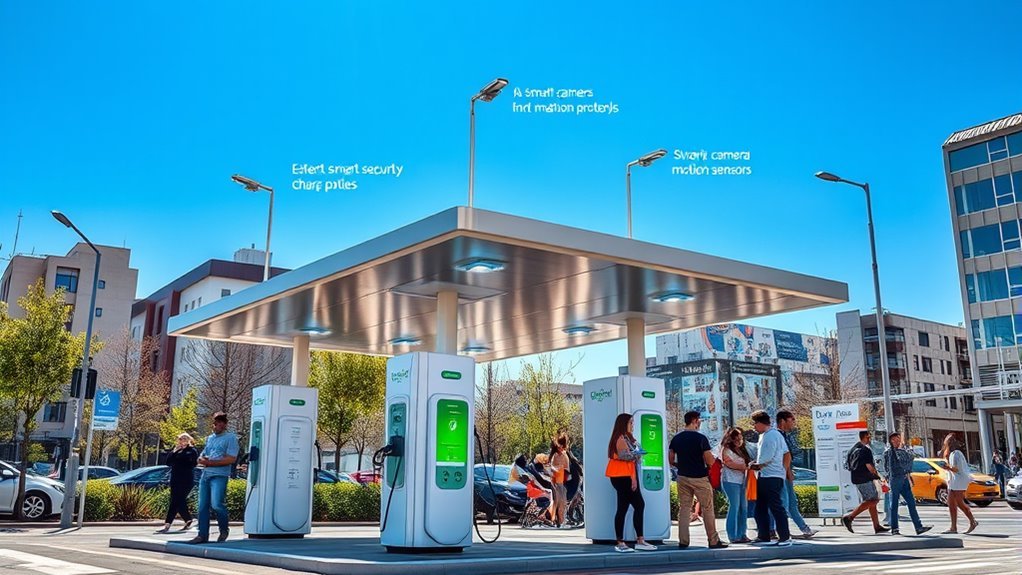
As the reliance on electric vehicle charging infrastructure grows, the Smart Charge Points Regulations 2021 mandate robust security measures to protect both users and systems from potential threats.
These regulations enforce stringent cybersecurity protocols, requiring unique, randomly generated PINs for each charger, eliminating the risk of shared default settings. Additionally, software updates must be delivered securely, with TLS certificates verifying the source to maintain integrity.
The regulations mandate unique PINs for each charger and secure software updates, ensuring robust cybersecurity and system integrity.
Sensitive security parameters are safeguarded without hard-coded credentials, thwarting unauthorized access. All communications between charge points and their connected systems are mandated to use SSL encryption, guaranteeing secure communications and the confidentiality of data transmitted.
Moreover, the regulations require detailed security logs that document significant events related to charge point operations. This accountability guarantees traceability for any tampering or breaches, reinforcing the overall security framework.
Frequently Asked Questions
How Do These Regulations Affect Existing Charge Point Installations?
These regulations can require you to upgrade existing infrastructure to meet new standards. If your installation doesn’t comply, it may need modifications, ensuring it’s efficient and aligns with current technological advancements for electric vehicle charging.
Are There Any Penalties for Non-Compliance With the Regulations?
Non-compliance’s like walking a tightrope; penalties can include fines or corrective actions. Authorities enforce penalty structures through compliance monitoring, ensuring everyone meets standards. Stay informed to avoid consequences that could hinder your operations and growth.
Will Users Be Notified of Charging Delays?
Yes, you’ll receive charging notifications to enhance your user experience. These alerts keep you informed about any delays, allowing you to adjust your plans accordingly and maintain control over your charging sessions.
Can Users Manually Override Default Charging Hours?
Yes, you can manually override default charging hours. This feature allows you to tailor charging times according to your preferences, giving you greater control over energy use and costs while aligning with your lifestyle needs.
How Are EV Users’ Personal Data Protected Under These Regulations?
Like a fortress guarding secrets, these regulations guarantee your data security and user privacy. They mandate strong encryption and limited data sharing, empowering you to charge your EV confidently, knowing your information remains protected.
Conclusion
In conclusion, the Smart Charge Points Regulations 2021 aim to enhance the UK’s EV infrastructure while prioritizing security and user experience. As the saying goes, “An ounce of prevention is worth a pound of cure.” By adhering to these regulations, manufacturers can not only guarantee compliance but also contribute to a more reliable and efficient charging network. Embracing these guidelines will foster trust among users and support the broader goal of increasing electric vehicle adoption across the country.






Leave a Reply