Choosing between Tesla’s LFP and NCA batteries depends on how you use your vehicle. LFP batteries offer superior longevity and lower costs, while NCA batteries provide more power and better range in cold weather. This guide helps you weigh these factors to pick the right option for your daily driving needs.
Quick Answer
Select an LFP battery if you prioritize budget and high-frequency charging, as these batteries withstand 5,000 cycles and favor daily 100% charges. Choose an NCA battery if you require better cold-weather performance, longer range, and faster acceleration for high-performance driving.
Key Takeaways
- LFP batteries last up to 5,000 charge cycles, while NCA batteries typically last 1,000 to 1,500 cycles.
- NCA batteries provide higher energy density, resulting in better range and faster acceleration.
- LFP chemistry is more stable, lowering the risk of thermal runaway compared to NCA.
- LFP batteries perform best when charged to 100%, whereas NCA batteries prefer staying between 50% and 90% for long-term health.
- Cold weather significantly reduces LFP range and charging speed, making NCA a better choice for freezing climates.
Advantages of Tesla’s LFP Batteries
Tesla’s LFP batteries provide a durable solution for budget-conscious owners. These batteries cost about $98.50 per kWh, which lowers the overall price of the vehicle. Their 5,000-cycle lifespan means you can drive the car for many years without significant battery degradation.
LFP chemistry offers high thermal stability, which keeps the battery safe under stress. This stability reduces fire risks during operation. Because these batteries contain no nickel or cobalt, they also reduce the environmental and ethical issues associated with mining those minerals.
Tesla recommends charging LFP batteries to 100% regularly to keep the battery management system calibrated. This makes them convenient for daily commuters who want to charge fully without worrying about cell damage.
Key Differences Between Tesla’s LFP and NCA Batteries
Comparing these two chemistries reveals trade-offs in power, range, and cost. Understanding these differences helps you match a vehicle to your lifestyle.
LFP batteries offer a long lifespan of up to 5,000 cycles. In contrast, NCA batteries usually last between 1,000 and 1,500 cycles. However, LFP batteries have lower energy density, which means the car may hold about 30% less energy than an NCA-equipped model of the same size.
NCA batteries win on performance. They provide faster acceleration and better handling in cold weather. If you live in a region with long, freezing winters, an NCA battery will maintain your range better than an LFP version.
Economically, LFP batteries remain the cheaper option to produce. If you want a reliable, daily-driver vehicle that lasts a long time, the LFP option provides significant value.
Performance Comparison: LFP vs NCA in Real-World Conditions
Real-world usage shows that these batteries behave quite differently under pressure. You should consider your local climate and how you drive before choosing.
Acceleration and Responsiveness
NCA batteries provide better power output than LFP batteries. Because NCA batteries are lighter, they help the vehicle accelerate faster and respond quickly when you press the pedal.
LFP batteries use a heavier design, which can make the car feel less agile. While LFP is perfect for city driving, performance-focused drivers typically prefer the crisp response that NCA cells provide.
Cold Weather Performance Impact
Cold weather slows down chemical reactions inside LFP batteries. This causes a noticeable drop in range and makes the battery slower to charge in freezing temperatures.
NCA batteries handle cold much better. If you drive in extreme winter conditions, an NCA-equipped Tesla will lose less range than an LFP-equipped model. Always keep your vehicle plugged in during cold weather to help the car precondition the battery.
Range Maintenance and Capacity
Both battery types lose capacity as they age. On average, LFP batteries show about 12% capacity loss after three years. NCA batteries tend to lose about 8% in the same period, suggesting they maintain their maximum range better over time.
Keep in mind that LFP batteries occasionally need a full charge to recalibrate the software. If the range display seems inaccurate, charging to 100% usually fixes the issue. Always consult your owner manual for specific maintenance steps.
Best Charging Practices for Maximizing Tesla Battery Life
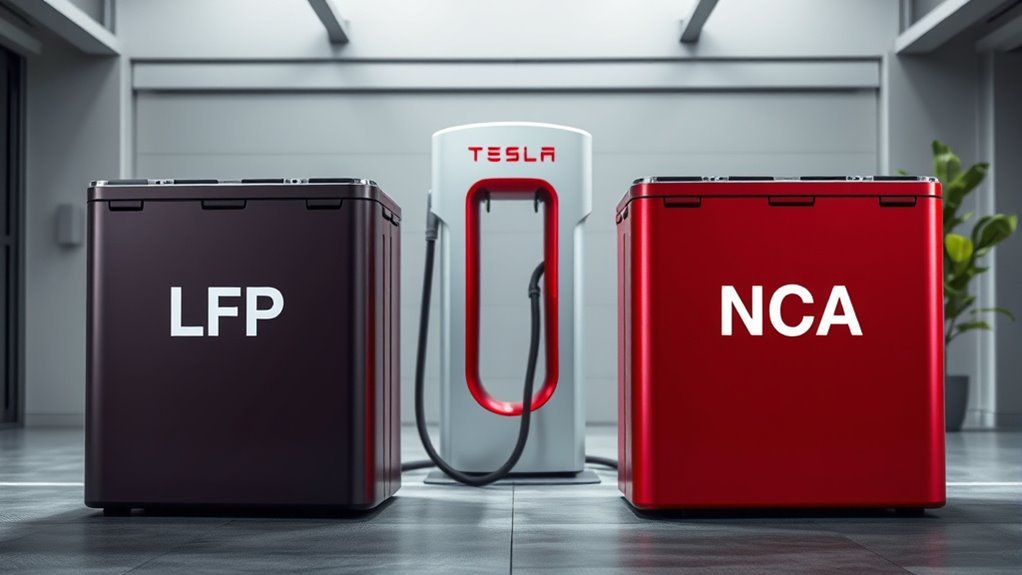
Charging habits change depending on the battery type. Improper charging can shorten the life of any lithium-ion battery, so follow these guidelines closely.
For LFP owners, you should charge to 100% at least once a week. This ensures the battery management system can measure the charge accurately. This chemistry handles full charges without the stress that plagues other types.
For NCA owners, keep your charge between 50% and 90% for daily use. Charging to 100% for an NCA battery should only happen when you need the full range for a long road trip. Staying within this window helps keep your battery healthy for years.
Maintain your NCA battery charge between 50% and 90% for optimal lifespan and minimize degradation.
Safety Risks: Comparing LFP and NCA Batteries
Safety is a priority for every driver. LFP batteries hold a higher thermal runaway temperature, which makes them less likely to catch fire if damaged.
Fire Risk Comparison
LFP chemistry remains stable up to 270°C. NCA batteries reach a critical state at 150°C. Because of this higher heat threshold, LFP batteries are rarely involved in thermal events. This makes them a great choice for rideshare drivers or high-mileage users who want an extra layer of safety.
Thermal Stability Assessment
Thermal stability measures how a battery reacts to heat. Because LFP batteries have a more stable chemical structure, they resist heat-related damage better than NCA batteries. This resistance allows them to support more charge cycles over their life, as they do not degrade as quickly under thermal stress.
Longevity and Degradation Rates
While LFP batteries reach 5,000 cycles, the actual degradation rate of NCA batteries is often lower in terms of percentage. You may see slightly better range retention over time with an NCA battery. However, the LFP battery’s ability to withstand 100% charging means you have access to the full battery capacity every day, which balances out the difference for most owners.
Cost Comparison: Pricing for LFP vs NCA Tesla Batteries
LFP batteries cost less to manufacture because they use abundant iron and phosphate instead of expensive nickel and cobalt. This makes the base model Teslas more affordable for the average buyer.
NCA batteries remain more expensive due to the cost of cobalt and nickel. While these materials improve energy density, the price jump is often significant. If your main goal is to get the most miles for your dollar, the LFP option is the clear winner.
Real-World Applications: Choosing Your Tesla Battery
How you use your car dictates your choice. If you commute in a city and want a car that lasts for years, choose the LFP battery. You’ll save money on the purchase and enjoy the ease of charging to 100%.
If you take frequent long-distance trips or live in a cold climate, choose the NCA battery. The extra range and better cold-weather efficiency will provide a better experience. Assess your driving routine to see which set of trade-offs fits your lifestyle.
Future Developments in Tesla Battery Technology
Tesla continues to innovate to solve these battery trade-offs. The 4680 cell design aims to combine the low cost of LFP with higher energy density. Researchers also explore solid-state batteries, which could offer even higher safety and range in the future.
As the patents for LFP production expire, more manufacturers are moving toward this chemistry. This shift will likely drive prices down even further and make high-quality, durable electric vehicles accessible to more people around the world.
Frequently Asked Questions
Is NCA or LFP Better?
Neither is objectively better. LFP is better for durability and cost, while NCA is better for range and performance in cold climates.
Which is better, NMC or LFP?
NMC batteries are similar to NCA in their high energy density and performance, while LFP is better for long-term cycling and affordability.
Why does Tesla use LFP?
Tesla uses LFP to reduce vehicle costs and provide a long-lasting, safe option for entry-level models.
What is the lifespan of a Tesla NCA battery?
An NCA battery typically lasts 1,000 to 1,500 cycles, often remaining functional for over 300,000 miles if maintained correctly.
Conclusion
Choosing between LFP and NCA batteries comes down to your personal driving habits. LFP batteries offer a reliable, cost-effective, and long-lasting choice for standard daily driving. NCA batteries provide the power and range needed for performance-driven users and cold climates. Match your choice to your specific needs to ensure long-term satisfaction with your Tesla.







Leave a Reply