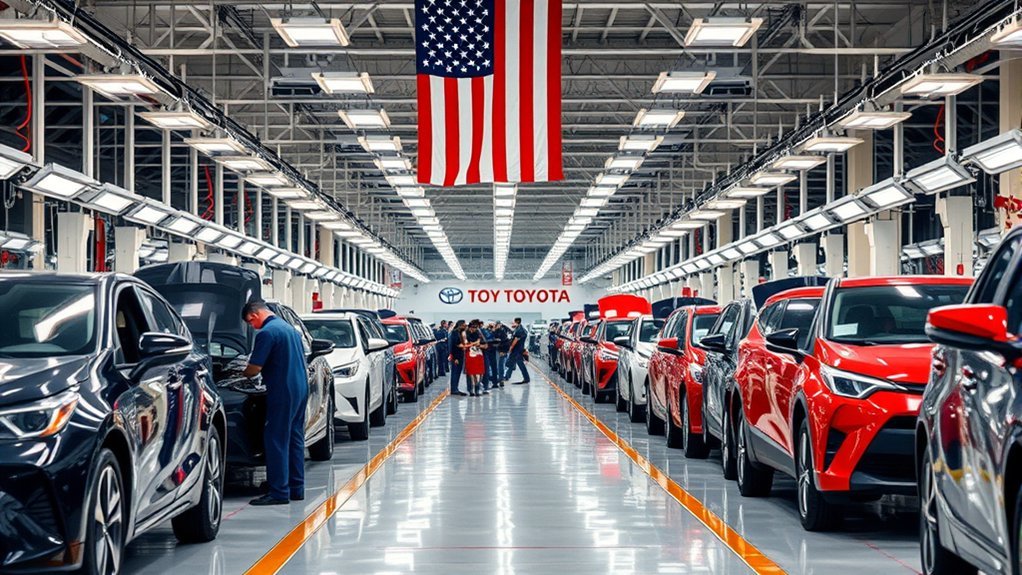
Buying a new car often sparks questions about where the vehicle actually comes from. You might assume a Japanese brand builds all its vehicles overseas. This article explains exactly how much of the Toyota lineup originates right here in the United States.
Quick Answer
About half of all Toyotas sold in the United States roll off domestic assembly lines. When factoring in Canada and Mexico, the North American production share rises above 70%. Popular models like the Camry, Tundra, and Highlander feature a high percentage of American-made parts and support thousands of local jobs.
What Percentage of Toyotas Sold in the U.S. Are Built Domestically?
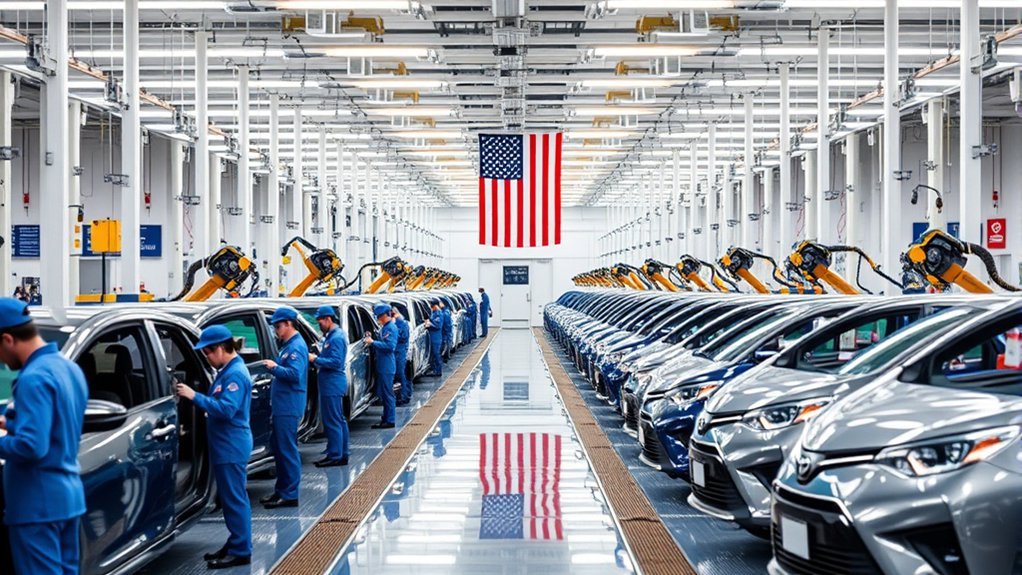
About half of all Toyotas sold in the United States roll off domestic assembly lines. This figure highlights a massive commitment to local auto manufacturing. When you include production from Canada and Mexico, the North American share jumps past 70%.
The popular Toyota Camry rolls off the assembly line at the massive plant in Georgetown, Kentucky. Recent data shows this sedan consistently ranks among the most American-made cars available. Toyota strategically places its massive production plants across Kentucky, Texas, and Indiana.
Toyota’s strategic plants in Kentucky, Texas, and Indiana highlight a lasting dedication to domestic production and quality.
A network of nearly 270 domestic supplier locations provides the parts for these factories. This massive supply chain ensures a large portion of your vehicle genuinely supports the local workforce. This data-driven strategy empowers consumers who value locally built vehicles.
How Toyota Manufacturing Impacts the American Economy
The company’s massive U.S. footprint directly drives rapid job creation. Toyota employs thousands of local workers and partners with countless regional suppliers. Over 34 million vehicles have rolled off North American assembly lines since 1986.
This steady production fuels local investment and stabilizes nearby communities. Buying an American-built vehicle means you actively contribute to a strong domestic economy.
Driving U.S. Job Creation
Toyota has generated hundreds of thousands of jobs since opening its first stateside plants. Factory workers produce 13 different models locally to supply the vast majority of U.S. sales. Operations on this scale inject billions of dollars into local communities every year.
Supporting Local U.S. Suppliers
A local manufacturing presence significantly boosts regional supply networks. Toyota partners with roughly 270 U.S. suppliers to build its vehicles. These partnerships help regional businesses thrive and expand their own workforces.
Strong local supply chains reduce reliance on global imports. This interdependence protects regional economic stability and keeps manufacturing money inside the country. Toyota proves that global corporations can positively impact local towns through robust supplier networks.
Boosting Local Economic Growth
Expanding U.S. operations directly translates to visible economic growth. Manufacturing facilities provide steady wages and stimulate spending in surrounding towns across Kentucky, Texas, and Indiana.
High domestic content means the money you spend on a new vehicle largely stays within the national economy. This local approach also supports sustainability by cutting down on wasteful international shipping.
Key Advantages of Building Toyotas Locally
Building cars near the buyer offers major benefits beyond simple job creation. The automaker enjoys lower transportation expenses and a much faster supply chain. Factory managers can adjust to consumer preferences quickly.
Lower Shipping and Logistics Costs
Assembling vehicles in the U.S. slashes international shipping costs. Toyota avoids the steep expenses of sending finished cars across the ocean from Japan. Placing factories near key U.S. markets improves overall logistics efficiency.
Faster parts delivery keeps assembly lines moving without expensive delays. This close proximity cuts transit expenses and supports corporate environmental goals.
Faster Response to Market Changes
Local production allows automakers to quickly adapt to changing buyer demands. Factory managers track real-time U.S. sales data to adjust their build combinations. Relying on domestic assembly lines prevents long wait times caused by global shipping bottlenecks.
This agility keeps dealerships stocked with the exact models buyers want right now. Integrating these local practices boosts product quality and cultivates continuous improvement.
Promoting Eco-Friendly Manufacturing
Building cars locally heavily reduces harmful transportation emissions. Shorter shipping routes mean fewer carbon emissions from cargo ships and freight trains. The Environmental Protection Agency notes that reducing supply chain transit distances significantly lowers industrial carbon footprints.
Key sustainability practices include:
- Installing energy-efficient systems inside massive U.S. assembly plants.
- Buying parts from nearby suppliers to cut down truck delivery mileage.
- Implementing advanced recycling programs to keep factory waste out of landfills.
These dedicated efforts support local economies and push the industry toward a healthier planet.
Applying the Toyota Production System in America
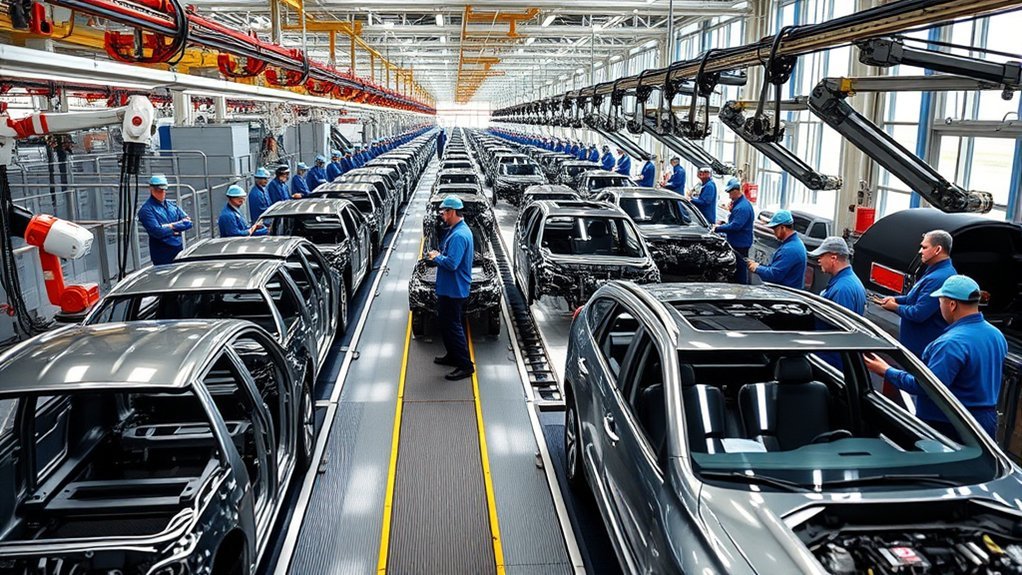
Toyota successfully adapted its famous production system to fit the American workforce. The system blends raw efficiency with local manufacturing expertise to enhance productivity.
The core philosophy relies on continuous improvement, known as Kaizen. Factory workers actively suggest process improvements to guarantee high quality control. Tailoring this system to American standards has resulted in superior product reliability and process enhancements.
Integrating local practices empowers the workforce to solve unique assembly challenges. Efficient factory processes also reduce wasted materials and support environmentally sustainable practices.
Top Toyota Models Built in America
Buyers looking for high domestic content have plenty of Toyota options. The Camry frequently tops industry lists for American-made parts. Workers assemble this popular sedan at the massive Georgetown, Kentucky plant.
Other highly domestic models include:
- Toyota Tundra: Workers assemble this full-size truck exclusively in San Antonio, Texas.
- Toyota Sienna: The popular minivan boasts a high percentage of U.S. parts and rolls out of Princeton, Indiana.
- Toyota Highlander: This family SUV represents another staple of the Indiana manufacturing facility.
Choosing one of these models directly supports the thousands of Americans who build them.
Major Toyota Manufacturing Plants in the U.S.
Understanding where specific models originate requires looking at Toyota’s primary U.S. factories. The company operates several massive regional hubs across the country.
The Kentucky plant serves as the largest Toyota facility in the world. The Texas facility focuses entirely on large body-on-frame vehicles like the Tundra and Sequoia. Meanwhile, the Indiana plant specializes in spacious family vehicles like the Sienna and Grand Highlander.
How Sustainability Shapes Toyota’s Future
Modern auto manufacturing requires a strict focus on environmental responsibility. Toyota minimizes factory waste while simultaneously improving assembly speed. The Kaizen philosophy encourages every employee to submit ideas for reducing energy consumption.
Recent corporate announcements outline massive investments in American electric vehicle infrastructure. The automaker is currently building major battery manufacturing sites across various states to prepare for future demands.
| Sustainability Initiative | Primary Impact |
|---|---|
| Waste Reduction Programs | Keeps industrial byproducts out of local landfills |
| Domestic Assembly Lines | Cuts international shipping emissions significantly |
| Employee Kaizen Programs | Drives daily efficiency and safety improvements |
| U.S. Battery Plants | Prepares the domestic market for electric vehicles |
| Local Integration | Aligns global strategies with local community needs |
Always consult official brand reports for the most current environmental impact data.
Decades of Excellence at Toyota Motor Manufacturing Kentucky
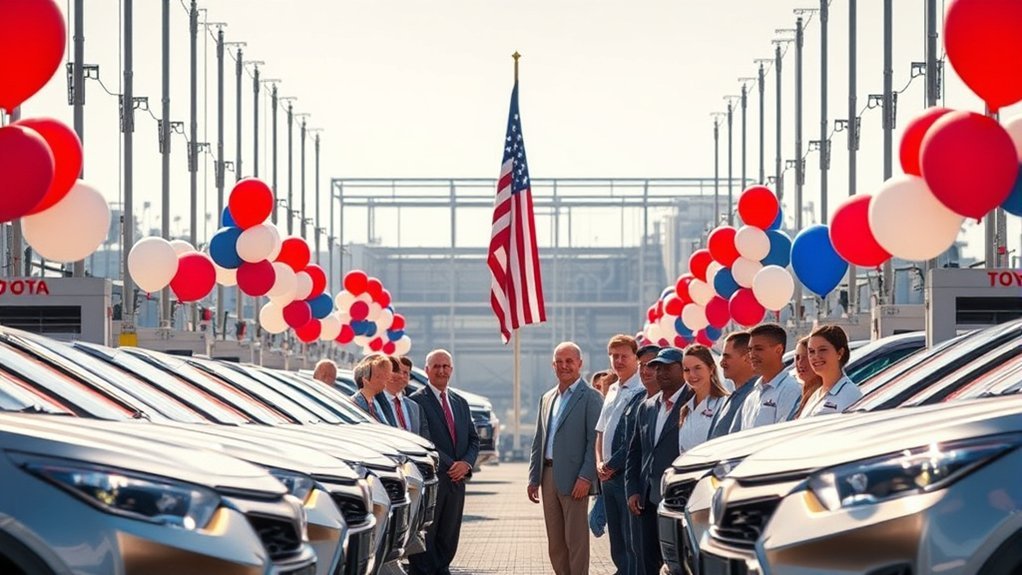
Toyota Motor Manufacturing Kentucky (TMMK) stands as the crown jewel of the company’s American operations. The plant opened in 1986 and completely transformed the local auto industry.
The Kentucky plant exemplifies how international automakers can build lasting legacies in American communities.
The massive facility produces America’s top-selling passenger cars. You can easily see the scale of TMMK’s local influence.
- Workers have assembled over 10 million vehicles at this specific location.
- The massive payroll drives substantial economic growth across central Kentucky.
- The plant leads the way in testing new sustainable manufacturing techniques.
This facility proves that high-quality auto manufacturing still thrives in the United States.
Future Innovations in U.S. Auto Manufacturing
Toyota continues to aggressively upgrade its U.S. factories to handle future technologies. The auto industry is shifting heavily toward battery-powered vehicles. Toyota handles this shift by building new battery production sites across North America.
This transition supports local job markets while pushing the industry toward a greener future. Engineers continue to refine assembly line robotics to improve worker safety and vehicle precision.
| Focus Area | Current Initiatives | Long-Term Goals |
|---|---|---|
| Battery Production | Building new facilities in North Carolina | Supply millions of electric vehicles locally |
| Green Manufacturing | Installing eco-friendly plant systems | Achieve carbon neutrality at all factories |
| Assembly Innovation | Upgrading robotics and factory ergonomics | Build cars faster without sacrificing quality |
| EV Infrastructure | Collaborating on charging networks | Meet rising consumer demand for clean energy |
Check your specific vehicle window sticker, as supply chain shifts can alter domestic parts percentages over time.
Why Domestic Content Matters for Buyers
The percentage of local parts inside a vehicle heavily influences many buyers. Knowing that roughly half of all U.S. Toyotas roll off domestic lines brings peace of mind.
Keep these facts in mind while car shopping:
- High domestic content directly sustains the U.S. manufacturing workforce.
- Locally built vehicles suffer fewer shipping delays during global supply chain crises.
- Domestic assembly operations follow strict U.S. environmental and labor regulations.
Buying an American-assembled Toyota means your money supports local families. This connection promotes responsible manufacturing and strengthens regional economies.
Frequently Asked Questions
What Percent of Toyota Is Made in America?
About half of all Toyotas sold in the United States undergo assembly domestically. When factoring in the broader North American market, that figure rises above 70%. These factories use a vast network of local suppliers.
Which Toyotas Are Made in America?
Factory workers build several popular models inside the United States. The current list includes the Camry, Corolla, Tacoma, Tundra, Sequoia, Sienna, Highlander, and Grand Highlander. Each vehicle reflects a strict commitment to local manufacturing.
What Car Is 100% Made in the USA?
No modern vehicle is 100% made in the United States due to global electronics supply chains. However, vehicles like the Tesla Model Y, Honda Ridgeline, and Toyota Camry consistently rank among the highest for domestic parts content.
Where Are Most Toyota Cars Manufactured?
Toyota operates massive assembly plants in Kentucky, Texas, Indiana, and Mississippi. The Kentucky plant serves as the largest global facility. The Texas location handles full-size trucks, while Indiana focuses on family SUVs.
Conclusion
Understanding where your vehicle comes from empowers you to make a smarter purchase. Checking the window sticker reveals exactly how much of your new car supports the domestic workforce. Look for models built in states like Kentucky or Texas to keep your automotive investment local. The future of American manufacturing relies on buyers who value locally assembled products.







Leave a Reply