If your Toyota Camry is burning oil, you might notice symptoms like a drop in oil levels, blue smoke from the exhaust, or engine rattling during cold starts. Common causes include worn piston rings, stuck oil control rings, and deteriorating valve stem seals. Regular oil changes and using high-mileage oils can help, along with monitoring oil levels frequently. Addressing issues early is essential, and there’s more to discover about maintaining your vehicle’s performance effectively.
Understanding Oil Consumption in the Toyota Camry

When you own a Toyota Camry, especially a model from around 2017, understanding oil consumption becomes essential, as excessive usage can lead to significant engine problems.
Many drivers encounter issues like worn piston rings and clogged oil control rings, which contribute to excessive oil consumption. It’s not uncommon for owners to see a drop in oil levels without visible leaks, leading to potential engine wear over time.
Worn piston rings and clogged oil control rings can lead to unseen oil loss and engine wear.
While manufacturer guidelines may suggest that burning one quart of oil every 1,200 miles is acceptable, many experience much higher consumption rates, which can result in blue smoke during acceleration.
To combat these issues, you should regularly monitor your oil levels and schedule oil changes every 5,000 to 7,000 miles.
Additionally, using high-mileage synthetic oils can help reduce oil burning by cleaning engine components and improving seal integrity, ensuring a healthier engine and a more liberating driving experience.
Recognizing Symptoms of Oil Consumption
While many drivers enjoy the reliability of their Toyota Camry, it’s vital to remain vigilant for signs of oil consumption that could indicate deeper engine issues.
Recognizing these symptoms early can save you from costly repairs down the line.
- A noticeable drop in oil levels between changes, sometimes losing up to 3.5 quarts in five weeks without leaks.
- Rattling noises from the engine during cold starts, especially when accelerating, might hint at oil consumption problems.
- Blue smoke from the exhaust during acceleration or startup signals burning oil, often linked to worn piston rings or valve seals.
Frequent checks of your oil levels are important, especially during gas fill-ups, to avoid missing excessive consumption.
Despite regular servicing, some Camry models may still experience these issues due to inherent engine design.
Stay proactive to keep your ride smooth and reliable!
Key Causes of Oil Consumption in the Toyota Camry
Understanding the key causes of oil consumption in your Toyota Camry can help you address potential issues before they escalate.
Worn piston rings are a primary culprit, allowing oil to seep into the combustion chamber, where it burns during operation. Additionally, stuck oil control rings can greatly contribute to oil burning, often becoming noticeable only after they gunk up completely.
Over time, deteriorating valve stem seals may also leak oil into the combustion areas, worsening oil consumption problems. Internal engine wear, particularly in high-mileage vehicles, can lead to excessive oil consumption without visible leaks, making regular monitoring essential.
Moreover, the design of modern engines, which often utilizes low-tension piston rings for better emissions, may inadvertently facilitate oil burning as the vehicle ages and accumulates mileage.
Staying informed about these causes empowers you to take action before they lead to costly repairs.
Effective Solutions to Reduce Oil Consumption
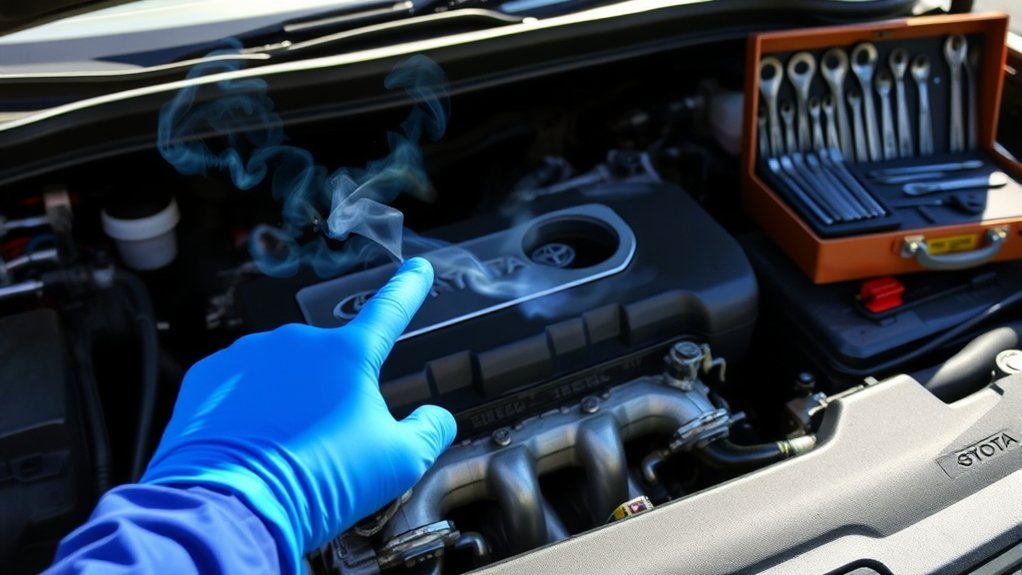
To tackle oil consumption in your Toyota Camry, start by committing to regular oil changes every 5,000 to 7,000 miles.
Consider using high-mileage synthetic oil, which can enhance engine health while reducing consumption.
Additionally, incorporating engine cleaning additives may help minimize oil burning, but be careful to avoid potential clogging issues.
Regular Oil Changes
Regular oil changes play an essential role in maintaining your Toyota Camry’s engine health and greatly reducing oil consumption. Keeping your oil fresh helps prevent oil control rings from sticking, a common cause of oil burning issues.
Here’s how to maximize the benefits:
- Change your oil every 5,000 to 7,000 miles to clear debris and sludge.
- Use high-mileage synthetic oils with seal conditioners to rejuvenate aging seals.
- Monitor oil levels at every fuel fill-up to catch drops early.
Additionally, consider adding engine cleaning additives like Sea Foam during oil changes. This can enhance engine cleanliness and potentially reduce oil burning by clearing clogged return holes.
Stay proactive, and your engine will thank you!
Use High-Mileage Oil
If your Toyota Camry is showing signs of oil consumption, switching to high-mileage oil could be a game changer.
High-mileage oils are specially formulated to rejuvenate aging engine seals, which may help reduce oil leaks and overall oil consumption. These oils contain additives that enhance lubrication and improve engine performance, particularly in older engines that experience wear.
By providing better viscosity at operating temperatures, high-mileage oils can greatly mitigate oil burning. Many drivers notice a reduction in oil consumption after making this switch.
Incorporating high-mileage oil into your maintenance routine not only extends your engine’s life but also helps you avoid more severe issues down the road.
Embrace this solution for a healthier, more efficient engine.
Additives for Engine Cleaning
While switching to high-mileage oil can improve your Toyota Camry’s oil consumption, exploring engine cleaning additives may provide additional benefits.
These additives can help you tackle oil burning issues effectively:
- Sea Foam: Cleans piston rings and dissolves sludge.
- High-quality oil additives: Enhance oil flow and maintain engine internals.
- Seal conditioners: Restore worn seals to reduce oil loss.
Using these additives during oil changes or as a top-up can maximize their effectiveness.
However, remember that while they offer temporary relief, they shouldn’t replace regular maintenance.
Keep monitoring your engine’s health to truly manage oil consumption and guarantee your vehicle runs smoothly for years to come.
Maintenance Practices to Prevent Oil Burning
To maintain your Toyota Camry’s engine health and prevent oil burning, staying on top of routine maintenance is vital. Regular oil changes every 5,000 to 7,000 miles are essential, especially for high-mileage vehicles.
By monitoring oil levels frequently, ideally at each fuel fill-up, you can catch excessive oil consumption early, allowing for timely intervention.
Monitoring oil levels regularly, especially at each fill-up, enables early detection of excessive consumption for prompt action.
Consider using high-mileage synthetic oils that contain seal conditioners to reduce oil consumption and enhance performance in aging engines. Incorporating oil additives, like Sea Foam, may help clean the engine, but be cautious to avoid clogging oil return holes.
Always follow manufacturer recommendations regarding oil change intervals tailored to your driving conditions, as this can greatly impact your engine’s longevity and efficiency.
Taking these proactive steps not only protects your investment but also allows you to enjoy a smoother, more reliable ride.
When to Seek Professional Help for Oil Issues?
If your Toyota Camry shows signs of persistent oil consumption, like using a quart every 1,200 miles or more, it’s time to contemplate professional help.
Noticeable drops in oil levels or engine performance issues, such as rattling sounds, can indicate serious problems that shouldn’t be ignored.
Addressing these symptoms early can prevent costly repairs down the road.
Persistent Oil Consumption Symptoms
As you drive your Toyota Camry, noticing a significant drop in oil levels—like losing 3.5 quarts in just five weeks—should raise immediate concerns, especially if there are no visible leaks.
Persistent oil consumption can signal deeper issues, so keep an eye out for these symptoms:
- Blue smoke during acceleration or startup, indicating oil burning.
- Unusual engine noises or performance dips, pointing to possible piston ring failure.
- Inconsistencies in maintenance records or unresolved oil changes.
If regular oil changes and maintenance haven’t resolved the oil consumption issues, it’s time to consult a licensed mechanic.
Stuck oil control rings or worn piston rings can lead to excessive oil consumption, which may require significant repairs.
Don’t wait—address these problems swiftly for peak engine performance.
Engine Performance Degradation
Experiencing engine performance degradation in your Toyota Camry can be alarming, especially when linked to oil consumption issues.
If you notice a significant drop in oil levels, like losing more than a quart every 1,000 miles, it’s time to seek professional help. Symptoms such as blue smoke from the exhaust indicate oil burning in the combustion chamber, requiring immediate attention.
You should also be wary of stalling issues during turns or braking, as these may suggest severe oil consumption. A persistent rattling noise, particularly during cold starts, signals underlying problems that need diagnosing.
Regularly monitoring oil levels helps you catch these issues early, preventing severe engine damage and ensuring your Camry runs smoothly.
Manufacturer Support and Warranty Considerations
While maneuvering through the complexities of oil consumption issues in your Toyota Camry, understanding the manufacturer’s support and warranty considerations can greatly impact your experience.
Knowing how to approach Toyota regarding excessive oil consumption can provide you with the help you need.
- Document your maintenance records to support your claims.
- Engage with Toyota’s corporate support for potential assistance.
- Utilize the oil loss test at a dealership to diagnose the issue.
Toyota has acknowledged engine design flaws in models like the 2017 Camry, and they may still offer repair support, even if your vehicle is out of warranty.
By maintaining consistent records, you position yourself favorably to receive assistance with repair costs.
Many owners have successfully navigated this process—don’t hesitate to reach out and seek the help you deserve for your oil burning issues.
Frequently Asked Questions
What Causes a Toyota Camry to Burn Oil?
A Toyota Camry can burn oil due to engine wear, faulty piston rings, valve seals, or gasket failures. High mileage, poor maintenance habits, and driving conditions can exacerbate oil consumption and turbocharger issues, affecting oil viscosity.
What’s the Worst Year for a Toyota Camry?
The 2017 Toyota Camry’s your worst bet, plagued by reliability issues and excessive oil consumption. While the best models shine with fuel efficiency and resale value, knowing common problems and maintenance tips can enhance your experience.
What Is the Most Common Cause of Engine Burning Oil?
Worn piston rings and valve seals often cause engine burning oil. Poor maintenance habits, driving conditions, and low fuel quality can worsen oil consumption. Additionally, gaskets failure and turbocharger issues may also contribute to engine wear.
Why Is My Oil Disappearing but No Leak?
If your oil’s disappearing without a leak, it’s likely due to engine wear, like worn piston rings or degraded valve seals. Regular maintenance, compression tests, and using oil additives can help manage oil consumption effectively.
Conclusion
To sum up, if you’re noticing your Toyota Camry burning oil, don’t ignore it. Imagine driving down the road, confident your engine is running smoothly, not worrying about costly repairs down the line. By understanding the symptoms and causes, you can take proactive steps to reduce oil consumption. Regular maintenance and timely interventions can keep your Camry performing at its best. Don’t wait for a minor issue to become a major headache—act now for peace of mind.







Leave a Reply