A flashing tire pressure light on your Toyota Corolla dashboard usually means you have a slow leak or changing weather has dropped the air pressure. Driving on underinflated tires ruins gas mileage, makes steering sluggish, and wears out the tread much faster. This guide explains the exact tire pressure your Corolla needs, where to find your specifications, and how to fill your tires correctly.
Quick Answer
Most recent Toyota Corolla models require a tire pressure of 38 PSI in the front and 36 PSI in the rear. Check the sticker inside the driver’s door jamb to confirm the exact requirements for your specific trim and wheel size.
Why Proper Toyota Corolla Tire Pressure Matters
Tire pressure measures the air volume inside your tires in pounds per square inch (PSI). The recommended rating balances vehicle weight across the tire tread. Toyota recommends 38 PSI for the front tires and 36 PSI for the rear tires on most 2022 Corolla models.
Air expands and contracts as temperatures rise and fall. Cold winter mornings can cause tire pressure to drop, triggering a dashboard warning light. Ignoring these fluctuations hurts your car’s performance. Underinflated tires bend too much and build up excess heat, which increases the risk of a high-speed blowout.
Toyota Corolla Tire Pressure by Model Year
Toyota updates the Corolla’s suspension and vehicle weight over time. Because of this, the correct tire pressure changes depending on the year your car was built.
Standard Corolla Tire Sizes and PSI
Following manufacturer specifications gives you the best handling and the longest lifespan for your tires. The modern standard sizes cover several different trims.
- 2022 Toyota Corolla: 38 PSI (front) and 36 PSI (rear).
- Common factory tire sizes: 195/65R15, 205/55R16, 215/45R17, and 225/40R18.
- Checking schedule: Test pressure once a month and before long trips.
How PSI Changes Across Generations
You will see distinct differences if you compare tire pressure recommendations across older and newer Corolla models. The 12th generation (2020 and newer) typically needs higher pressure.
The 2022 model requires 38 PSI for the front tires and 36 PSI for the rear to handle the weight distribution. Earlier cars like the 2019 and 2020 models often recommend a flat 35 PSI for all four tires. If you drive a 2018 or older model, the standard rating drops to about 33 PSI.
Always verify the pressure for your specific car. Trim packages like the LE and XSE use different wheel sizes that require different inflation levels.
Where to Find Your Corolla’s Exact PSI Rating
You can find your car’s exact tire pressure rating on the compliance sticker. Open the driver’s side door and look at the metal door jamb. You will see a white and yellow sticker listing the correct PSI for both front and rear tires.
The recommended tire pressure for a Corolla ranges from 33 PSI to 38 PSI depending on the model year, trim package, and wheel size.
You have a few other ways to confirm the right numbers:
- Read the tire and maintenance section in your printed owner’s manual.
- Check the maintenance tab inside the Toyota mobile app.
- Ask a certified Toyota mechanic during your next service visit.
Do not use the maximum PSI number printed on the rubber sidewall of the tire. That number shows the absolute limit the tire can hold, not the safe operating pressure for the car.
Benefits of Correct Tire Pressure
Keeping your tires properly inflated protects your wallet and keeps you safe. Good air pressure reduces rolling resistance, meaning the engine works less to push the car forward.
Better Gas Mileage
According to the U.S. Department of Energy, properly inflated tires reduce rolling resistance and boost fuel economy. Ignoring a slow leak forces you to buy gas more often.
- Fuel savings: Gas mileage drops by about 0.2% for every 1 PSI drop across all four tires.
- Smoother ride: Properly inflated tires absorb small road bumps better.
- Lower costs: Tires wear evenly, meaning you will not have to replace them early.
Shorter Stopping Distances
Correct tire pressure ensures the entire width of the tire tread touches the pavement. This full contact patch improves grip when you slam on the brakes.
Underinflated tires curve up in the center, resting the car’s weight on the outer edges. Overinflated tires bulge in the middle, leaving the edges off the ground. Both scenarios reduce traction and increase how long it takes the car to stop. Always consult a qualified mechanic if your car struggles to stop quickly or pulls to one side.
| Tire Location | Common PSI Rating | Main Benefit |
|---|---|---|
| Front Tires | 38 PSI | Supports engine weight |
| Rear Tires | 36 PSI | Improves braking stability |
Signs Your Corolla Has the Wrong Tire Pressure
How do you know if your tires need air without using a gauge? The car often tells you through changes in how it drives. Watch for these warning signs:
- Dashboard warning lights: The Tire Pressure Monitoring System (TPMS) horseshoe icon lights up when pressure drops significantly.
- Sloppy steering: Low front tires make the steering wheel feel heavy or slow to respond.
- Harsh impacts: Overinflated tires act like solid rubber rings, sending every bump directly into the cabin.
- Uneven wear: Smooth edges mean underinflation, while a bald center strip means overinflation.
How to Check and Fill Your Corolla Tires
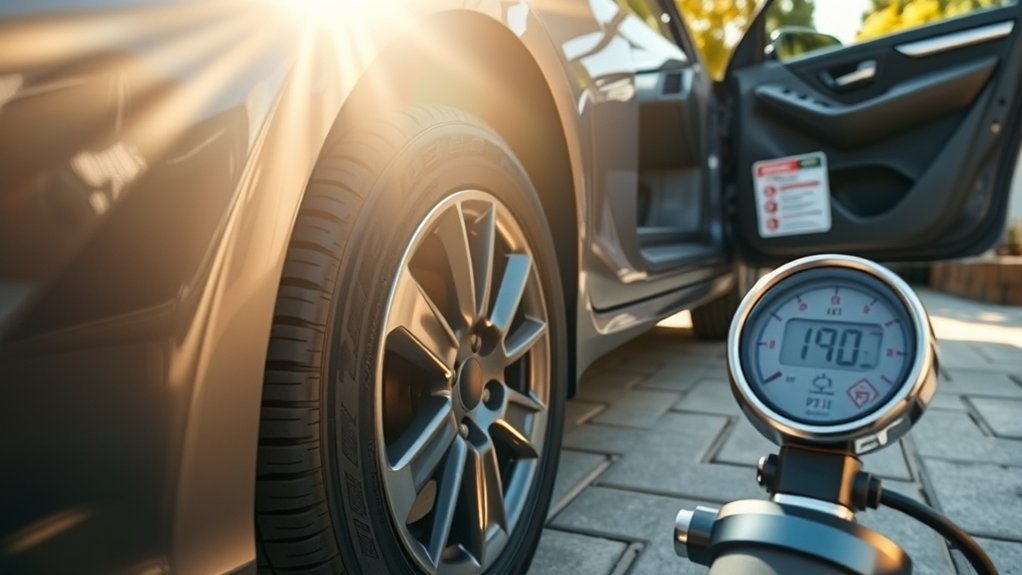
You need a reliable digital or analog tire pressure gauge to check your levels. Check the pressure before you start driving, or wait at least three hours after parking. Driving heats up the tires and artificially raises the pressure reading.
Follow these steps to fill your tires:
- Remove the plastic valve stem cap from the tire.
- Press the tire gauge onto the valve stem to get the current reading.
- Attach the air pump nozzle and add air in short bursts.
- Check the pressure frequently until you reach the target PSI.
- Press the small pin inside the valve stem to release air if you overfill it.
How to Reset the Corolla TPMS Light
Sometimes the low pressure warning light stays on after you fill your tires. You need to recalibrate the system to fix this issue.
Turn the car on without starting the engine. Find the TPMS reset button, usually located below the steering wheel or inside the glove box. Press and hold the button until the dashboard light blinks three times. Start the engine and drive for at least 20 minutes to let the system record the new pressure levels.
How to Choose Replacement Tires for a Corolla
Putting air in a damaged tire will not make it safe. When the tread depth drops below 2/32 of an inch, you need to buy new tires. Keep these points in mind when shopping:
- Match your climate: Buy all-season tires for varied weather, or swap to winter tires if you face heavy snow.
- Buy the right size: Look at the sticker inside the driver’s door to find your exact wheel size.
- Check speed ratings: Standard Corollas do fine with H or V speed ratings for highway driving.
- Read reviews: Compare traction and noise ratings, not just the lowest price tag.
Frequently Asked Questions
How do I find the correct tire pressure on a Toyota Corolla?
Open the driver’s side door and look for a yellow and white sticker on the metal door jamb. This sticker displays the correct tire pressure for both the front and rear tires specific to your car’s trim.
What PSI should my tires be on a Toyota Corolla?
Most newer models require 38 PSI in the front tires and 36 PSI in the rear tires. Older models from 2018 or earlier typically require 33 to 35 PSI all around. Always verify using the door jamb sticker.
Where is the tire pressure reset button on a Corolla?
The TPMS reset button sits below the steering wheel, near your knees, or sometimes inside the glove box. Press and hold it until the tire pressure light blinks three times to reset the system.
What to Do Next
The right tire pressure protects your Toyota Corolla from poor handling and keeps you safe on the highway. Check your tires at least once a month and adjust the air before temperatures drop in the winter. Grab a digital tire gauge to keep in your glove box and make checking your pressure a simple habit.







Leave a Reply