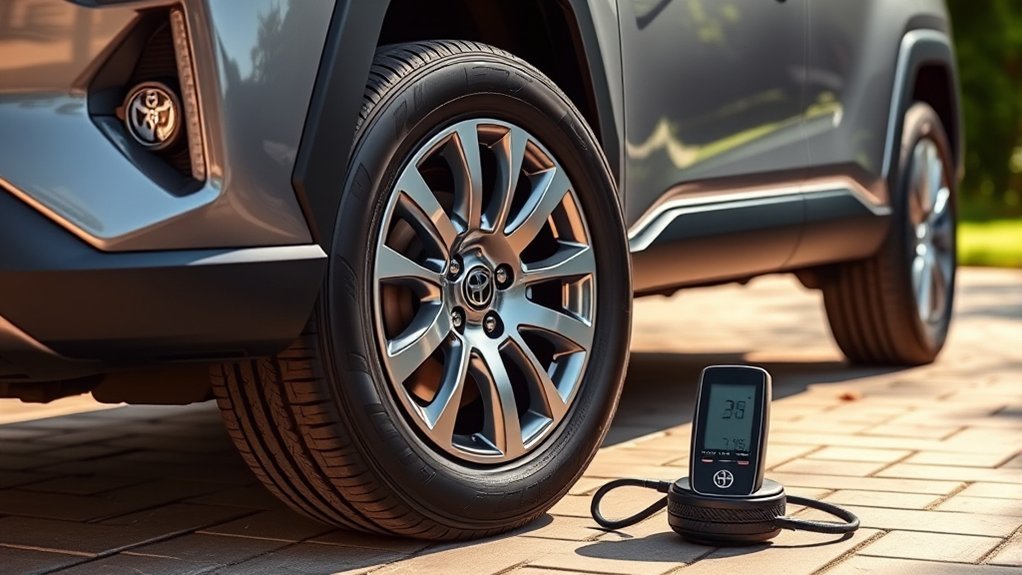
Driving a Toyota RAV4 with the wrong tire pressure silently drains your gas tank and accelerates tread wear. Many owners guess the correct number, which leads to bumpy rides and poor handling. This guide details the exact PSI for your specific RAV4 trim and explains how to maintain it for maximum safety and mileage.
Quick Answer
The recommended tire pressure for a Toyota RAV4 is typically 33 PSI for 17-inch and 18-inch tires, and 35 PSI for 19-inch tires. You can find the exact requirement for your specific model on the sticker located inside the driver-side door jamb. Maintaining this exact pressure ensures optimal fuel economy, safe handling, and even tire wear.
Recommended Tire Pressure by RAV4 Trim and Size
Knowing the correct tire pressure for your specific Toyota RAV4 trim keeps you safe on the road. The ideal pressure depends directly on your tire size and model year.
Most fifth-generation RAV4s require 33 PSI for 17-inch and 18-inch tires. Models equipped with 19-inch tires need 35 PSI. You can find the exact specifications for your RAV4 printed clearly on the driver-side door jamb sticker.
Newer RAV4 models display real-time tire pressure readings directly on the dashboard screen. Check your tire pressure every two weeks to maintain fuel efficiency and responsive handling.
How Tire Pressure Impacts RAV4 Performance
Your RAV4 requires exact tire pressure to maximize gas mileage, tire lifespan, and steering response. Proper inflation keeps the tread completely flat against the pavement.
Gas Mileage and Fuel Efficiency
Keeping your tires properly inflated saves you money at the gas pump. Correct pressure reduces rolling resistance, which allows your RAV4 to glide forward with less engine effort.
According to the U.S. Department of Energy, a drop of just 1 PSI can lower your fuel efficiency by about 0.2 percent. Checking your tires regularly prevents this unnecessary fuel waste.
Properly inflated tires also grip the road better and wear down much more evenly.
Tire Wear and Lifespan
Correct pressure directly controls how long your RAV4 tires will last. Maintaining the recommended 30 to 35 PSI ensures the tread wears evenly across the entire contact patch.
Underinflated tires sag, which places excessive wear on the outer edges of the tread. Overinflated tires bulge in the middle, causing the center to wear out rapidly.
Monitoring your pressure strictly extends the life of your tires and saves you replacement costs.
Handling, Braking, and Safety
Your RAV4 handles corners and sudden stops much better when you maintain the proper tire pressure. Correct inflation maximizes traction and stability in dangerous driving conditions.
Low tire pressure creates sluggish steering and increases your total braking distance. This severely compromises your safety during emergency stops.
The RAV4 electronic monitoring system alerts you to dangerous pressure drops, but manual checks remain the safest habit.
How to Check RAV4 Tire Pressure Accurately
Checking your tire pressure takes only a few minutes and requires a standard pressure gauge. Always measure your tires when they are cold. Heat from driving expands the air inside the tire and causes falsely high readings.
Follow these quick steps to check your pressure:
| Step | Action | Notes |
|---|---|---|
| 1. Remove cap | Take off the tire stem cap | Blocks dirt and moisture |
| 2. Use gauge | Press gauge firmly onto the stem | Creates an airtight seal |
| 3. Read pressure | Look at the gauge number | Compare to the door sticker |
| 4. Replace cap | Screw the cap back on tightly | Protects the inner valve core |
Perform this routine check twice a month to ensure your vehicle operates safely.
How to Reset the RAV4 Tire Pressure Light
Sometimes your low pressure dashboard light stays on even after you inflate the tires. You can reset the Tire Pressure Monitoring System (TPMS) easily from the driver seat.
Turn the engine on, but keep the vehicle parked. Use the steering wheel arrows to navigate to the settings menu on your central display.
Select the vehicle settings icon, choose “TPWS,” and hold the “OK” button until the tire pressure warning light blinks three times.
Standard Toyota RAV4 Tire Sizes
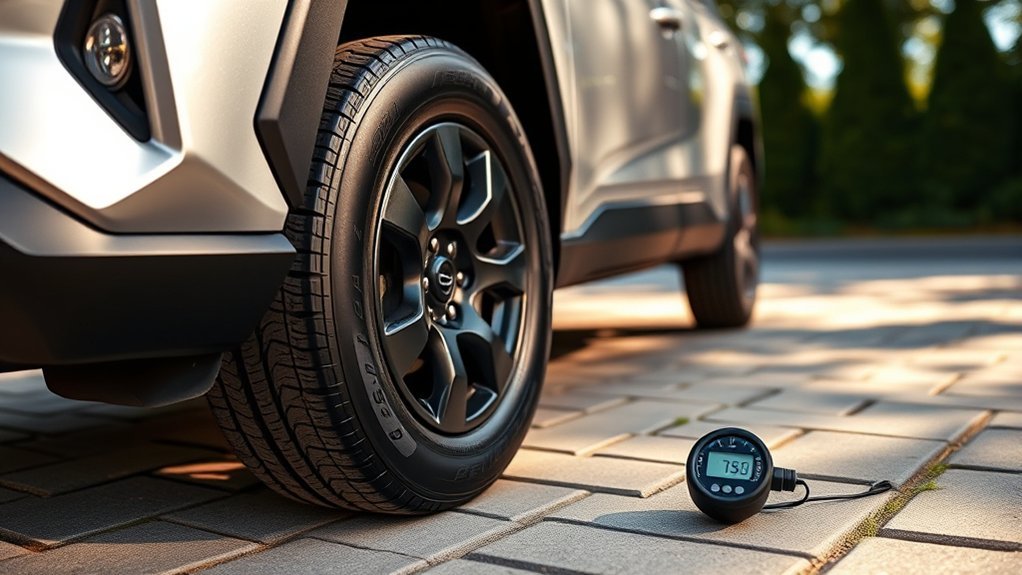
Selecting the correct tire size for your RAV4 guarantees maximum stability and road performance. Toyota outfits different trim levels with specific wheel dimensions straight from the factory.
Common RAV4 tire sizes include 225/65R17, 225/60R18, and 235/55R19. The TRD Off-Road trim uses rugged all-terrain tires, while the Limited trim features smoother highway options.
Check your driver-side door sticker to confirm the exact factory tire size. Mounting incorrect tire sizes throws off your speedometer and drastically decreases your gas mileage.
Custom Tire Pressure Adjustments for the RAV4
Many RAV4 owners adjust their baseline pressure settings to improve ride comfort or boost cargo capacity. Modifying your pressure helps balance heavy loads or softens the ride on rough, unpaved roads.
Always consult a qualified tire professional before driving on pressures significantly outside the Toyota manufacturer limits.
Popular Front and Rear Setups
Some drivers run slightly different pressures on the front and rear axles. A popular setup involves setting the front tires to 36 PSI and the rear tires to 33 PSI.
The heavier engine sits right over the front wheels, so extra pressure improves steering response. Other owners inflate all four tires to 36 PSI to counteract natural air loss over time.
| Adjustment Type | Pressure (PSI) |
|---|---|
| Standard Front | 36 |
| Standard Rear | 33 |
| Highway Commuting | 35 to 38 |
| Winter Weather Prep | Add 2 to 3 PSI |
Monitor your tire treads closely if you decide to deviate from the factory recommendations.
Cold Weather Pressure Drops
Freezing winter temperatures rapidly drain the pressure from your tires. The air inside contracts as it cools down, which quickly triggers the low pressure warning light.
Follow these specific guidelines during winter driving:
- Track temperature shifts: Tires lose about 1 PSI for every 10-degree drop in outside temperature.
- Add extra air: Inflate your tires an extra 2 to 3 PSI right before a major cold front arrives.
- Check frequently: Test your tire pressure weekly during winter months to ensure maximum snow traction.
Staying proactive prevents you from waking up to sudden flat tires on freezing mornings.
Balancing Front and Rear Axles
Carrying heavy cargo requires much more support from your rear tires. If you load the trunk with heavy luggage or tow a small trailer, you must increase the rear tire pressure slightly.
Toyota designs the RAV4 to handle perfectly with standard factory pressures. Adding massive weight squashes the rear tires, creating excess heat and major blowout risks.
Return your tires to standard pressures immediately after unloading the vehicle to prevent a harsh, bumpy ride.
Year-Round Tire Pressure Maintenance
Consistent maintenance prevents surprise highway blowouts and expensive early tire replacements. You must actively adapt your inflation routine as the seasons change.
Regularly checking your tire pressure prevents uneven tread wear and maximizes your daily gas mileage.
Follow these essential steps to protect your tires all year:
- Check all four tires with a manual gauge on the first and fifteenth of every month.
- Add air immediately when the seasons shift sharply from summer to fall.
- Inflate your compact spare tire to 60 PSI and test it twice a year.
Do not rely solely on the electronic dashboard system. Manual checks catch slow leaks long before they trigger the dashboard warning light.
The Importance of Routine Tire Care
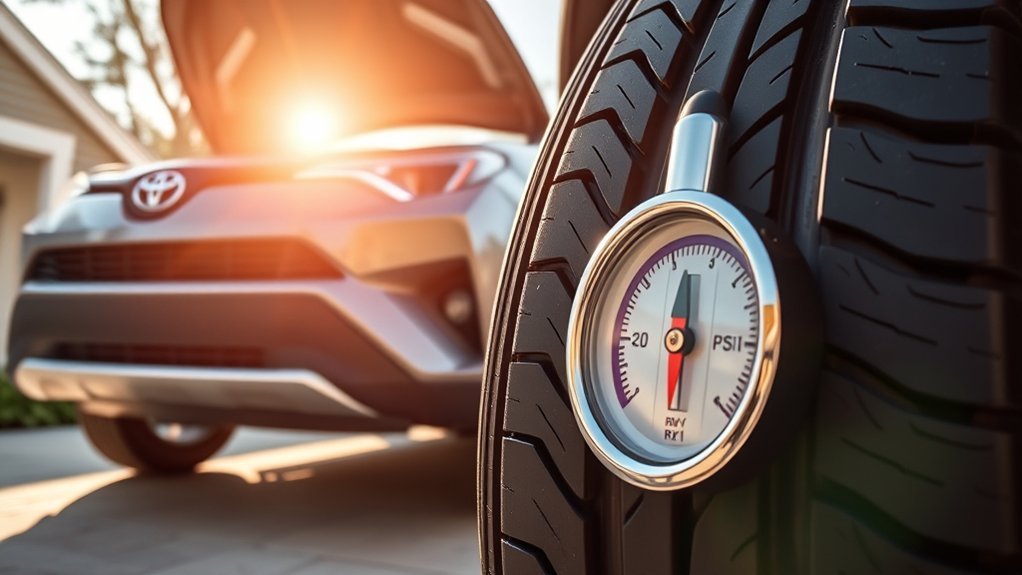
Proper tire care protects your financial investment in your vehicle. Ignoring your tires forces the engine and suspension to work much harder than necessary.
Underinflated rubber builds up intense, damaging heat on the highway. This excess heat degrades the internal structure of the tire and causes sudden tread separation.
Properly inflated tires efficiently channel water away from the treads during heavy rain. This prevents dangerous hydroplaning and keeps your vehicle planted firmly on the road.
Where to Buy Replacement RAV4 Tires
Finding replacement tires for your RAV4 requires comparing total prices and mileage warranties. You have several excellent retail options available locally and online.
Shop around to find the best mileage warranty and installation prices for your new RAV4 tires.
Consider these popular and reliable tire retailers:
- Toyota Dealerships: They sell exact factory replacements and understand the electronic TPMS system perfectly.
- Online Retailers: Companies like Tire Rack ship directly to local installers and provide massive brand selections.
- Warehouse Clubs: Stores like Costco offer strong road hazard warranties, competitive pricing, and free rotation services.
Always check your current tire treads using the penny test before you buy a completely new set.
Frequently Asked Questions
What PSI Should My RAV4 Tires Be?
Most modern RAV4 tires require 33 to 35 PSI. You must check the sticker on the driver-side door jamb for the exact number. Base models usually take 33 PSI, while models with 19-inch wheels need 35 PSI.
Is 40 PSI Good Tire Pressure for a Toyota?
No, 40 PSI exceeds the recommended limit for almost all passenger RAV4 models. Overinflating your tires causes a harsh ride and makes the center tread wear out extremely fast.
Should I Run 35 or 40 PSI for Tires?
You should run 35 PSI if your specific door sticker recommends it. Running 40 PSI actually reduces your traction because less rubber touches the road. Always stick to the manufacturer guidelines.
Is 37 PSI Tire Pressure Too High?
A pressure of 37 PSI runs slightly higher than the factory recommendation. The tire holds this pressure safely, but you feel more bumps in the road. Deflate the tire down to 35 PSI for optimal driving comfort.
Conclusion
Maintaining the proper tire pressure in your Toyota RAV4 protects your wallet and keeps your passengers safe. Grab a reliable tire gauge this weekend and check all four wheels while they remain cold. Keep your pressure set perfectly between 33 and 35 PSI. Taking this small step ensures excellent gas mileage and a remarkably smooth ride for years to come.







Leave a Reply