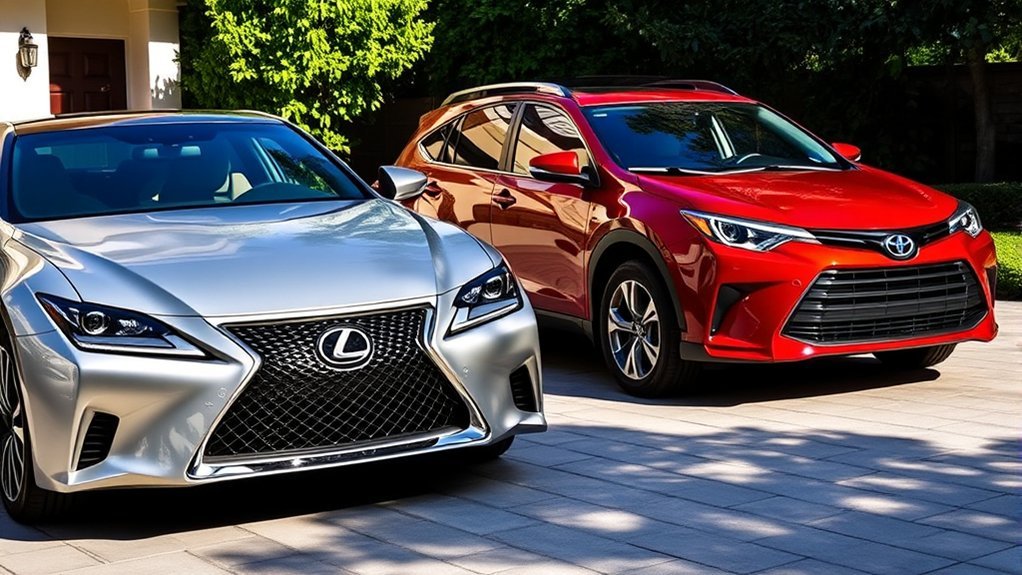
Choosing between a Toyota and a Lexus often forces buyers to weigh budget against luxury. Toyota delivers legendary reliability and affordable pricing for everyday drivers. Lexus takes those same reliable engineering roots and adds premium materials and a whisper-quiet ride. Understanding how these sibling brands differ helps you pick the right vehicle for your daily commute.
Quick Answer
Toyota focuses on affordability, high fuel efficiency, and mass-market practicality. Lexus operates as Toyota’s luxury division, building on that reliable foundation by adding premium materials, thick cabin insulation, and elevated customer service. Your choice depends on whether you value everyday budget savings or an upscale driving experience.
How Do Toyota and Lexus Brand Identities Differ?
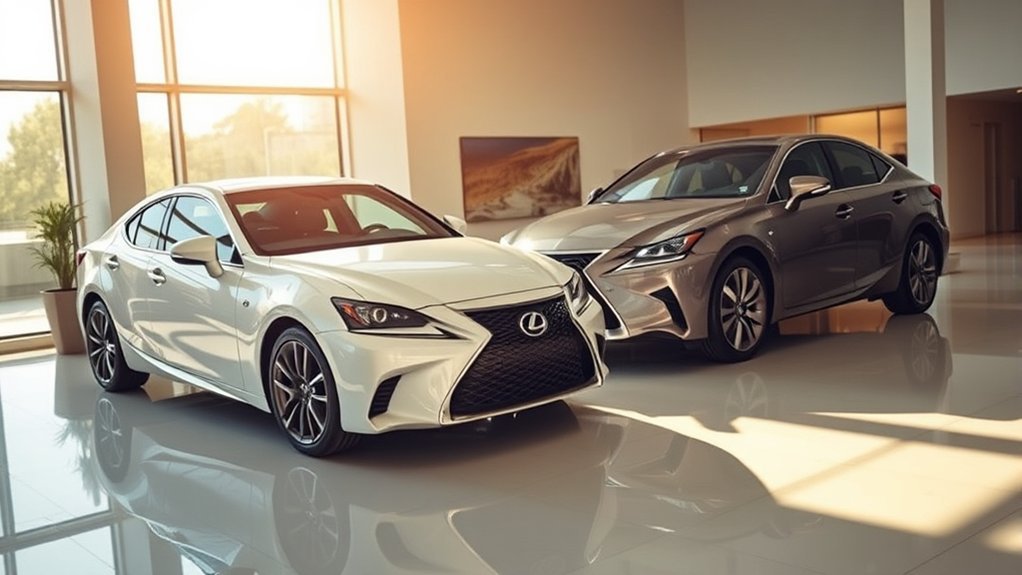
Drivers celebrate Toyota vehicles for their practical design and low ownership costs. These cars serve budget-conscious buyers who need dependable daily transport. Lexus operates as Toyota’s luxury division. The brand offers upscale models filled with premium features.
You will notice Lexus vehicles feature high-end materials, advanced technology, and heavily insulated cabins. Both brands use similar engineering and manufacturing processes. Lexus simply upgrades the final product with better comfort, sharper handling, and a quieter ride.
Lexus delivers a refined driving experience by adding premium cabin insulation and advanced suspension to a reliable Toyota foundation.
This dedication to luxury increases the purchase price. Buyers choosing a practical Toyota or a luxurious Lexus both get excellent reliability. Your choice simply reflects your lifestyle and daily driving priorities.
Which Brand Offers Better Performance?
Toyota shines with sporty models like the GR86 and Supra. Lexus focuses heavily on luxury cruisers like the LC and LS. Lexus vehicles feature powerful engines and advanced adaptive suspension systems.
Toyota prioritizes fuel efficiency and hybrid tech. This focus gives Toyota a clear edge in everyday practicality. These contrasting priorities show how each brand targets different driving needs.
Toyota vs. Lexus Sports and Utility Performance
Toyota and Lexus share a corporate parent, but their performance goals target different drivers. Toyota builds dedicated track cars like the GR86 and Supra. Reviewers consistently praise these models for driving dynamics and agility.
Lexus models like the RC F use massive V8 engines and premium suspension systems. These heavier Lexus cars prioritize high-speed cruising over nimble track handling. Toyota also dominates the rugged truck market with the Tacoma and Tundra. Lexus currently offers no pickup trucks.
Fuel Economy and Engine Power Differences
Engine power and fuel efficiency separate Toyota and Lexus buyers. Toyota leads the industry in fuel economy. The Toyota Prius and Camry Hybrid consistently score top marks for gas mileage. Lexus usually installs larger engines to provide effortless highway acceleration.
- Toyota hybrid models achieve higher fuel economy than similar Lexus hybrids.
- Sports cars like the Toyota GR86 deliver raw track performance without luxury weight.
- Lexus sacrifices some fuel efficiency to power heavy sound insulation and premium comfort features.
Your ideal vehicle depends entirely on whether you want maximum fuel savings or smooth V8 power.
Which Brand Provides Better Cabin Comfort?
Lexus designers focus heavily on interior comfort and sensory details. You will find real leather, genuine wood trim, and aluminum accents inside a Lexus. Toyota uses durable plastics and synthetic fabrics in standard models. Toyota reserves premium comfort features for its most expensive trim levels.
Lexus includes premium materials as standard equipment, while Toyota buyers must pay for top-tier trims to get advanced comfort features.
Stepping inside a Lexus reveals a cabin built for relaxation. Engineers use acoustic glass and extra sound-deadening materials to create a silent ride. Lexus models also feature advanced climate systems and highly adjustable ventilated seats.
These high-end amenities rarely appear in standard Toyota models. Drivers wanting a perfectly quiet commute should shop the Lexus lineup.
Does Lexus Justify Its Higher Price Tag?
Buyers often wonder if the steep Lexus price tag makes sense. The extra cost pays for noticeable upgrades in craftsmanship and standard technology. A base Lexus IS 300 includes premium features that cost extra on a Toyota Camry.
- High-end materials: Lexus installs softer leathers, real wood, and premium metals.
- Advanced technology: Premium audio systems and larger displays come standard on Lexus vehicles.
- Resale value retention: Luxury buyers often pay a premium for used Lexus models.
Toyota targets buyers who need affordable transportation. Lexus attracts drivers who want exclusivity and premium customer service. Paying the luxury markup makes sense if you value cabin silence and a VIP dealership experience.
How Do Toyota and Lexus Safety Ratings Compare?
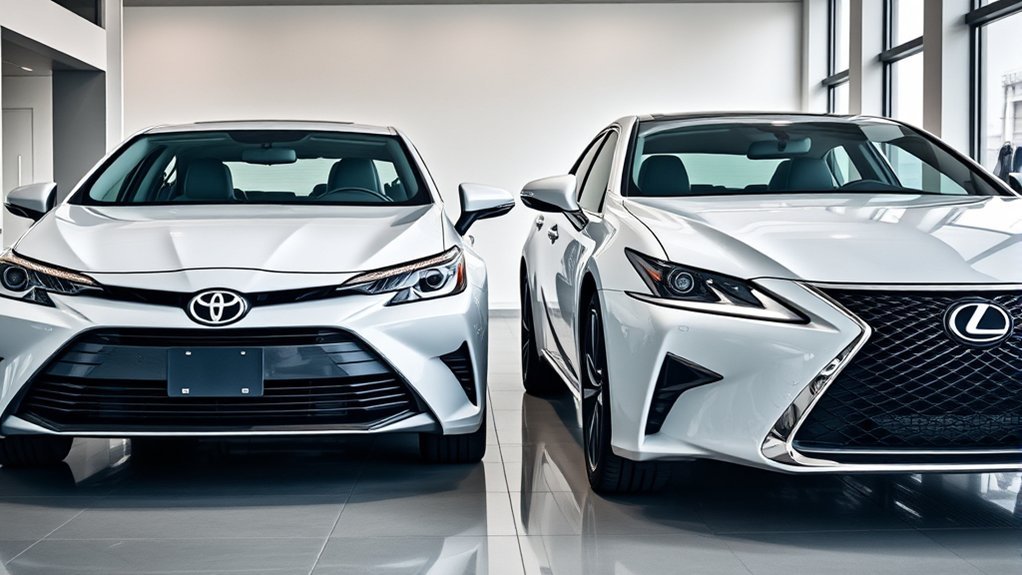
Both automakers include impressive safety technologies on almost every vehicle they sell. Lexus upgrades the standard package with the latest version of Lexus Safety System+. This advanced suite improves automatic braking and lane-keeping assistance.
Both brands consistently earn top crash test ratings from independent safety organizations. Always consult a qualified professional or check official safety ratings before making decisions based on this information.
Standard Driver Assistance Systems
Toyota and Lexus prioritize crash prevention across their entire vehicle lineups. Toyota equips almost all cars with Toyota Safety Sense. Lexus uses a nearly identical system called Lexus Safety System+. Both systems include radar cruise control, lane departure alerts, and automatic emergency braking.
- Dynamic radar cruise control for highway driving
- Lane tracing assist to keep the car centered
- Pre-collision systems with pedestrian detection
Lexus models occasionally debut the newest safety software a year before Toyota models. You can trust both brands to protect your family during a crash.
Semi-Autonomous Driving Features
Engineers continue adding semi-autonomous driving features to modern vehicles. Lexus models frequently include advanced parking assist and panoramic view monitors. Toyota reserves these cameras for top-tier models like the Highlander Platinum or Sequoia.
Both systems drastically reduce driver fatigue during long road trips. Lexus simply calibrates its lane-keeping systems to feel slightly smoother and less intrusive.
Independent Crash Test Scores
Independent agencies like the IIHS and NHTSA regularly test Toyota and Lexus vehicles. Both brands frequently earn Top Safety Pick awards. Engineers build both vehicle lines on the same high-strength steel platforms.
- Both brands share core structural engineering to absorb crash impacts.
- Lexus vehicles often carry more airbags as standard equipment.
- High safety scores across both lineups prove their shared engineering quality.
A Toyota Camry protects you just as well as a Lexus ES in a severe collision. Always check specific safety ratings for the exact model year you plan to buy.
Direct Model Comparisons: Toyota vs. Lexus
Comparing similar vehicles reveals exactly how the two brands differ. The Toyota Corolla dominates the compact car market with great fuel economy. The Lexus IS competes in a similar size class but uses rear-wheel drive for sporty handling.
The Toyota Camry provides excellent hybrid efficiency, while the similarly sized Lexus ES focuses heavily on a silent, floaty ride.
Toyota sells the GR86 to driving purists who want a lightweight sports car. Lexus sells the RC F and LC 500 to buyers who want heavy, powerful grand tourers. The Toyota RAV4 remains the best-selling SUV in America due to its low price.
The Lexus RX costs significantly more but provides a much smoother highway ride. Finally, Toyota builds the rugged Tacoma and Tundra pickups. Lexus focuses entirely on SUVs and cars.
Which Brand Offers Better Reliability and Resale Value?
Toyota and Lexus dominate the automotive industry in long-term reliability. Both brands build cars that easily surpass 200,000 miles with basic maintenance. Data from J.D. Power frequently ranks Lexus as the most reliable luxury brand. Toyota holds the top spot for mass-market vehicles.
- Toyota parts cost less, keeping routine maintenance bills very low.
- Lexus dealerships charge luxury rates for oil changes and basic service.
- Both brands hold extremely high resale value compared to domestic competitors.
Used car buyers happily pay top dollar for a well-maintained Toyota or Lexus. A Toyota costs less to maintain over ten years, making it the smarter financial choice.
Warranty Coverage Comparison
Understanding your warranty coverage helps estimate long-term ownership costs. Toyota provides a basic 3-year or 36,000-mile warranty on new vehicles. Lexus extends this bumper-to-bumper coverage to 4 years or 50,000 miles.
Both manufacturers offer excellent coverage on their hybrid battery systems. Always review the exact warranty terms before signing a purchase agreement.
How Does the Dealership Experience Differ?
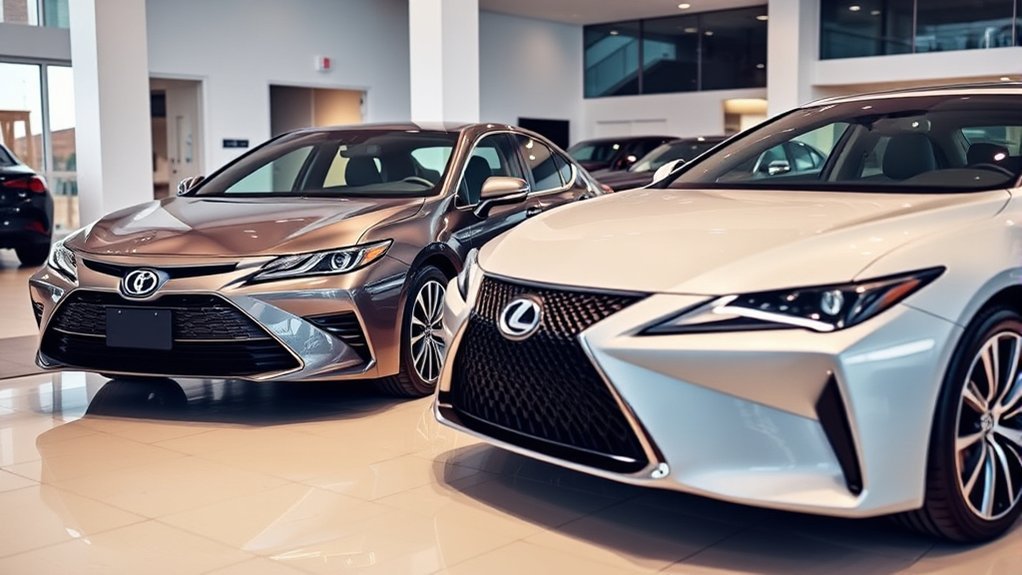
Buying or servicing a vehicle feels completely different depending on the brand. Lexus dealerships provide a high-end hospitality experience. Service centers feature quiet lounges, premium coffee, and fast Wi-Fi.
Lexus dealers almost always provide a free loaner car when you drop off your vehicle for service. Toyota dealerships handle a massive volume of daily customers. The buying process feels fast, efficient, and straightforward.
Waiting rooms provide basic comforts, but you rarely get a free loaner car for a standard oil change. You pay a premium for the Lexus badge, and that premium buys you VIP treatment.
Frequently Asked Questions
What is the main difference between Toyota and Lexus?
Lexus operates as the luxury division of Toyota. Toyota focuses on affordable, mass-market vehicles with great fuel economy. Lexus takes Toyota’s reliable engineering and adds heavy sound insulation, premium leather, and advanced technology.
Does a Toyota last longer than a Lexus?
Both brands easily run past 200,000 miles. Toyota vehicles sometimes last slightly longer because they use simpler technology. Lexus models feature complex electronics and air suspensions that can break down after a decade.
Are Lexus cars simply expensive Toyotas?
No. Lexus vehicles use unique platforms, more powerful engines, and vastly superior interior materials. Engineers design Lexus models specifically for silent operation and ride comfort. You pay extra for real luxury, not just a different badge.
What are the main drawbacks of buying a Toyota?
Toyota vehicles often feature noisy cabins at highway speeds. Standard models use hard plastics and basic cloth interiors that feel cheap. The brand also trails competitors in updating its infotainment software and screen resolution.
Make Your Final Decision
Your budget and daily driving habits dictate which brand belongs in your driveway. Buy a Toyota if you want unbeatable reliability, low maintenance costs, and high fuel economy. Choose a Lexus if you value a silent cabin, premium materials, and exceptional dealership service. Schedule a test drive with both brands to feel the difference in ride quality firsthand. You make a smart investment either way.







Leave a Reply