Quick Answer
The recommended tyre pressure for a modern Toyota Yaris is generally 32 PSI for both front and rear tyres when cold. Some trims may require up to 35 PSI. Always check the sticker inside the driver side door jamb for the exact numbers for your specific vehicle.
Driving a Toyota Yaris with the wrong tyre pressure drains your fuel tank and ruins your ride. A drop of just a few PSI can wear out your tread months before you expect it. This guide covers the exact pressure specs for recent Yaris models and shows you how to check them. Keep reading to find out how simple maintenance can transform your daily commute.
Why Correct Tyre Pressure Matters for Your Toyota Yaris
Keeping your Toyota Yaris tyres at the correct levels boosts both safety and vehicle performance. Proper inflation gives your vehicle peak handling and sharp braking capabilities. You will feel much more secure on the road.
Maintaining the recommended 32 to 35 PSI also improves your fuel efficiency. Properly inflated tyres reduce rolling resistance, which directly lowers your fuel consumption and saves you money. Check your tyre pressure once a month to catch inflation issues early.
This simple habit prevents uneven wear and extends the life of your tyres. Following manufacturer standards makes your ride smoother and much more comfortable.
Where to Find the Recommended Tyre Pressure for Your Yaris
Finding the exact tyre pressure for your specific Toyota Yaris takes only a few seconds. The manufacturer provides multiple ways to verify these numbers.
Toyota places a permanent tyre information label inside every modern Yaris to ensure you always have the exact pressure specs.
- Check the door jamb: Open the driver side door and look for a permanent sticker displaying the factory pressure values.
- Consult the owner manual: Open your handbook to find pressure details for heavy loads or high speed driving.
- Note the model year: Most recent Yaris models require 32 to 35 PSI based on the trim package.
- Monitor the levels: Check your numbers monthly to secure peak performance and top fuel economy.
Tyre Pressure Specs for the 2022 Toyota Yaris
Owners of the 2022 Toyota Yaris must maintain accurate tyre pressure to ensure peak safety. Toyota recommends exactly 32 PSI for both front and rear tyres on this model. You must measure the pressure when the tyres are cold.
Checking warm tyres gives false readings due to heat expansion. You can verify these numbers on your door jamb sticker or inside the owner manual.
| Tyre Position | Tyre Size | Recommended Pressure (PSI) |
|---|---|---|
| Front | 195/50R16 | 32 |
| Rear | 195/50R16 | 32 |
| Cold Check | Required | Yes |
| Fuel Efficiency | Result | Improved |
| Handling | Result | Enhanced |
Verify you run the correct pressure to maximize fuel efficiency and handling. Check the owner manual for any additional trim specific details.
Tyre Pressure Specs for the 2021 Toyota Yaris
Driving a 2021 Toyota Yaris requires the right tyre pressure for safe daily operation. Toyota sets the ideal pressure between 32 and 35 PSI for the front and rear tyres. Keep your ride smooth by following these basic maintenance tips:
- Test the tyre pressure at least once every four weeks.
- Measure the levels early in the morning when the tyres remain cold.
- Read the door jamb sticker for your exact trim specifications.
- Maintain proper inflation to extend tread life and save fuel.
Tyre Pressure Specs for the 2020 Toyota Yaris
Your 2020 Toyota Yaris needs ideal tyre pressure to handle safely on the road. The standard recommendation sits between 32 and 35 PSI for all four tyres. You must check these levels before you drive, as cold tyres provide the only accurate reading.
Review the tyre placard on the driver door jamb for your specific variant. Proper inflation boosts your fuel economy and keeps you safe at highway speeds.
A well maintained tyre delivers a smooth ride and sharp steering control. Make monthly pressure checks a permanent habit.
Compatible Tyre Sizes for the Toyota Yaris
Selecting the right tyre size guarantees peak performance for your Toyota Yaris. The correct tyres align perfectly with the factory pressure recommendations and enhance your grip on the road.
Using factory approved tyre sizes keeps your speedometer accurate and protects your suspension components.
Here are the most common tyre sizes for this model:
- 195/50R16
- 205/45R17
- 175/65R14
- 185/60R15
Each size requires specific pressure settings ranging from 32 to 35 PSI. Always read your door jamb sticker to confirm the numbers. Proper sizing and inflation keep your daily drives safe and efficient.
How to Check Your Tyre Pressure Accurately
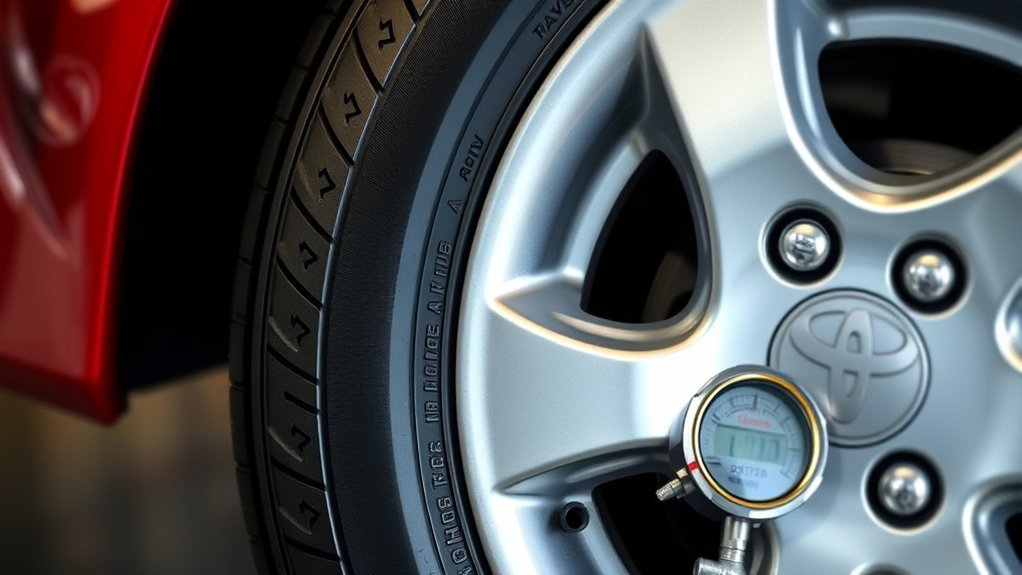
Knowing your tyre size helps, but you must also know how to measure the pressure correctly. Buy a reliable digital or analog tyre gauge and keep it in your glovebox. Always test the pressure in the morning before driving heats up the rubber.
Remove the valve cap and press the gauge firmly onto the valve stem. Read the number on the screen or dial and compare it to the door jamb sticker.
Add air if the reading falls short, or release air if it reads too high. Test the valve again until the pressure perfectly matches the factory spec. Proper inflation delivers better fuel economy and a much safer ride.
How to Spot Underinflated and Overinflated Tyres
You can often spot underinflated tyres by their squishy sidewalls and visible sagging. This condition hurts your fuel efficiency and makes steering feel heavy. Overinflated tyres look rounder and cause a very stiff ride.
They wear out the center tread quickly and reduce your traction. Routine checks stop both issues before they cost you money.
Signs of Underinflated Tyres
Low tyre pressure compromises your vehicle safety and control. Look for these specific warning signs:
- Soft sidewalls: The tyre bulges outward at the bottom and feels soft to the touch.
- Sluggish steering: The car reacts slowly when you turn the wheel or apply the brakes.
- Edge wear: The outer edges of the tread wear down much faster than the center.
- Low gauge readings: The measured PSI falls below the number on your door sticker.
Ignoring low pressure increases rolling resistance and wastes fuel. It also raises the risk of a dangerous high speed blowout.
Signs of Overinflated Tyres
Too much air pressure ruins your ride quality and damages your tyres. You will usually spot a bulging center tread if the tyre holds too much air. Overinflation forces the center of the tyre to bear the entire weight of the car.
This reduces your road grip and makes handling unpredictable. You will also feel every bump in the road and hear louder road noise. Check your pressure monthly to prevent sudden blowouts and uneven wear.
How Tyre Pressure Impacts Fuel Efficiency
Maintaining exact tyre pressure directly improves your fuel economy. According to the U.S. Department of Energy, proper inflation can improve gas mileage by up to three percent. Here is how correct pressure saves you money at the pump:
- Lowers rolling resistance: Firm tyres roll easily and require less engine power to move the car forward.
- Maximizes road contact: A flat, even tread patch provides better grip and reduces wheel slip.
- Conserves engine energy: Smooth rolling tyres reduce the mechanical strain on your drivetrain.
- Saves fuel money: Better gas mileage means fewer trips to the petrol station each month.
Driving with incorrect pressure forces your engine to burn more fuel to maintain the same speed.
How to Reset the Toyota Yaris Tyre Pressure Light
Modern Toyota Yaris models feature a Tyre Pressure Monitoring System (TPMS) that alerts you to low pressure. The warning light often stays on even after you refill the tyres. You can reset the system easily.
Turn the engine on, locate the TPMS reset button under the steering wheel, and hold it until the dashboard light blinks three times. Wait a few minutes for the system to record the new pressure before turning the engine off.
Tips for Maintaining Optimal Tyre Pressure Year-Round
Temperature changes affect tyre pressure drastically. You must adjust your maintenance routine as the seasons change. Cold weather causes air to contract, which lowers the pressure inside the tyre.
Hot weather expands the air and increases the pressure. Measure your tyres once a month and before any long road trip.
| Seasonal Change | Pressure Impact | Required Action |
|---|---|---|
| Winter Drop (Below 40°F) | Loses 1-2 PSI per 10°F drop | Add air to reach factory cold spec |
| Spring/Fall Fluctuations | Varies daily | Check levels every two weeks |
| Summer Heat (Above 80°F) | Gains pressure as tires heat up | Measure only when tires are cool |
| High Altitude Driving | Increases internal pressure | Monitor closely during mountain trips |
Never release air from a hot tyre to lower the pressure. The tyre will become dangerously underinflated once it cools down. Always keep a digital pressure gauge in your glovebox.
Frequently Asked Questions
What PSI should my tyres be on a Toyota Yaris?
Most Toyota Yaris models require 32 PSI for both the front and rear tyres. Some specific trims need up to 35 PSI. You must check the permanent sticker on your driver door jamb for the exact number. Proper inflation improves handling and extends the life of your tread.
Should I run 35 or 40 PSI in my tyres?
You should never run 40 PSI in a Toyota Yaris unless the sidewall specifies it for a heavy load. Running 32 to 35 PSI provides the best balance of fuel efficiency and ride comfort. Higher pressures cause the center tread to wear out rapidly and ruin your traction.
Is 40 PSI a good tyre pressure for a Toyota?
A pressure of 40 PSI is generally too high for small cars like the Yaris. This high pressure makes the ride extremely harsh and increases the risk of a blowout. Always stick to the factory recommendation located on your door frame.
Is 32 PSI a normal tyre pressure?
Yes, 32 PSI serves as the standard tyre pressure for many compact cars, including the Toyota Yaris. This pressure level gives the tyre a flat, even contact patch on the road. Check your levels monthly to keep your vehicle safe.
Get the Most Out of Your Toyota Yaris Tyres
Keeping your Yaris tyres inflated to the exact factory spec guarantees better gas mileage and a much safer commute. Check your tyre pressure this weekend using a reliable gauge while the tyres remain cold.
Adjusting your inflation takes less than five minutes but pays off for years to come. Take control of your basic car maintenance today and enjoy every mile on the road.







Leave a Reply