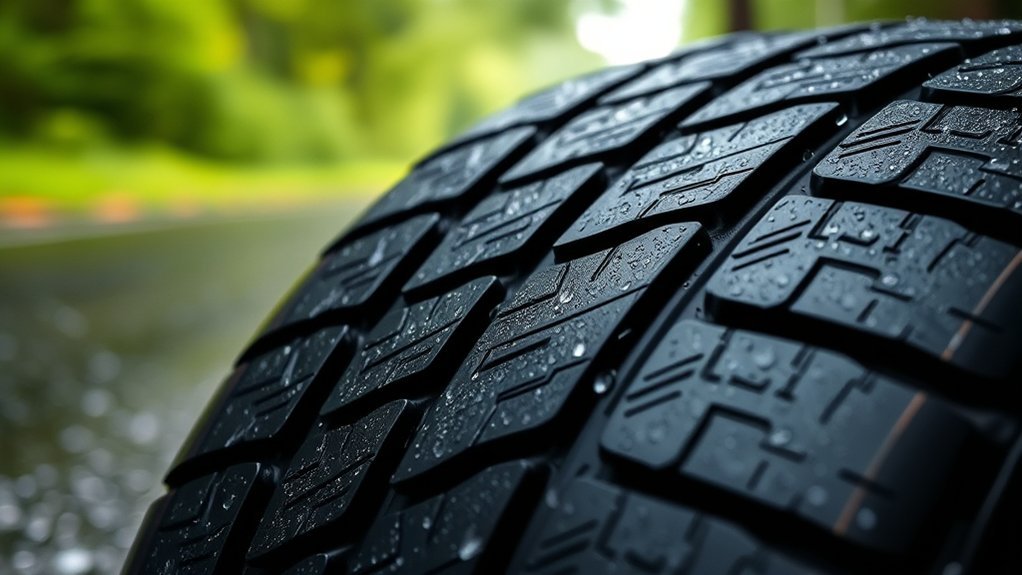
The legal minimum tread depth for car tires in most U.S. states is 2/32 inch (1.6 mm). This threshold is crucial for safety as it affects your vehicle’s grip and stopping distance, especially in wet conditions where deeper tread is preferred. Although some regions may have different laws, driving on tires below this minimum can result in legal penalties and increased risk of hydroplaning. Discovering more about tread depth can keep you informed about safe driving practices and maintenance tips.
Key Takeaways
- The legal minimum tread depth for passenger car tires in most U.S. states is 2/32 inch (1.6 mm).
- Some states may have additional regulations regarding tread depth beyond the legal minimum.
- Tires should ideally be replaced at 4/32 inch for wet conditions and 5/32 inch for winter conditions.
- Regular tire inspections help ensure compliance with legal requirements and enhance safety on the road.
- Driving on tires with tread depth below 2/32 inch can result in legal penalties and increased safety risks.
What Is Tire Tread Depth and Why Does It Matter?
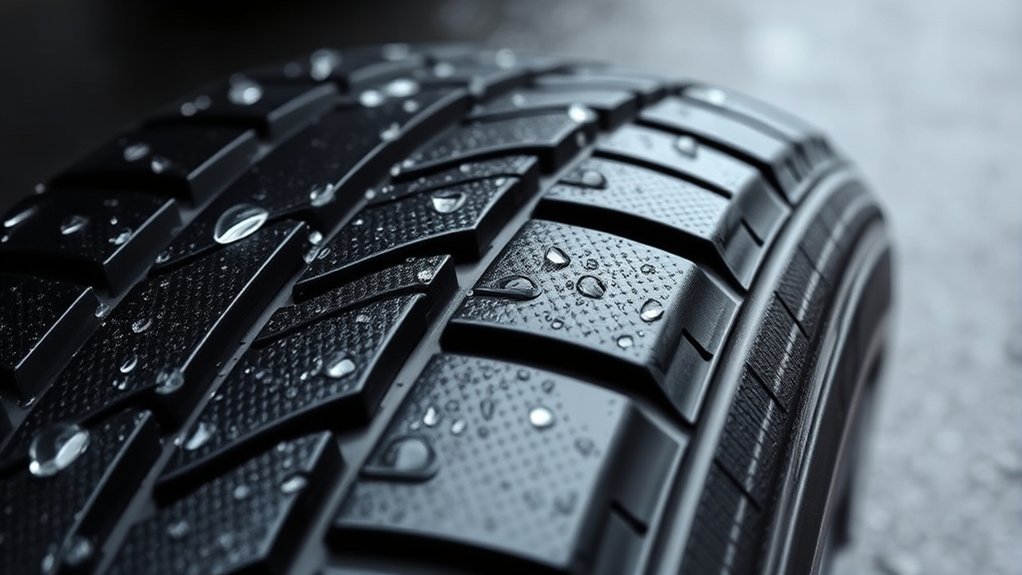
Tire tread depth is an essential measurement that impacts your vehicle’s performance and safety. It refers to the vertical distance from the top of the tread to the bottom of the grooves.
Tire tread depth significantly affects your vehicle’s safety and performance, measuring the distance from the tread’s top to the groove’s bottom.
Maintaining adequate tread depth is crucial for ensuring proper grip, reducing stopping distances, and preventing hydroplaning. Most regions establish a legal minimum tread depth of 2/32 inch (1.6mm), but for winter conditions, aiming for around 5/32 inch is advisable.
Worn tires can lead to unsafe driving conditions, greatly increasing stopping distances and jeopardizing your safety. Many tires come equipped with built-in wear indicators to signal when you’ve reached the legal minimum depth, emphasizing the need for regular tire maintenance.
Compliance with DOT requirements isn’t just a legal obligation; it’s essential for your safety on the road. Prioritizing tread depth can liberate you from the risks associated with inadequate tire performance.
How to Measure Your Tire Tread Depth Accurately
Maintaining proper tread depth is essential for safe driving, and knowing how to measure it accurately can help you avoid dangerous conditions. To measure tire tread depth, a tire tread depth gauge is your best tool. Position the gauge perpendicular to the tread to guarantee precise readings.
For a quick estimation, try the penny test: insert a penny with Lincoln’s head upside down. If you can see his head, your tread is less than 2/32 inch, which is below the legal minimum.
To guarantee compliance with safety regulations, measure tread depths in major grooves and take multiple readings around the tire’s circumference. This practice helps identify uneven wear, which can compromise safety.
Monitoring your tire tread depth regularly not only helps you maintain compliance but also enhances your driving safety, allowing you to navigate the roads with confidence.
What Are the Legal Tread Depth Requirements Where You Live?
What legal tread depth requirements apply in your area? In most U.S. states, the legal minimum tread depth for passenger car tires is 2/32 inch (1.6 mm), adhering to federal guidelines. However, keep in mind that some states have additional regulations, while others might not enforce any minimum at all. Regular inspections of your tires are vital for compliance and safety.
Here’s a summary of tread depth regulations:
| State Type | Legal Minimum Tread Depth | Additional Recommendations |
|---|---|---|
| Most States | 2/32 inch (1.6 mm) | Replace at 4/32 inch (wet) |
| Some States | Varies | Replace at 5/32 inch (snow) |
| Non-Enforcing States | None | Regular checks recommended |
Knowing your local legal requirements can help guarantee you maintain safe driving conditions and meet the necessary regulations.
How Tread Depth Affects Vehicle Safety?
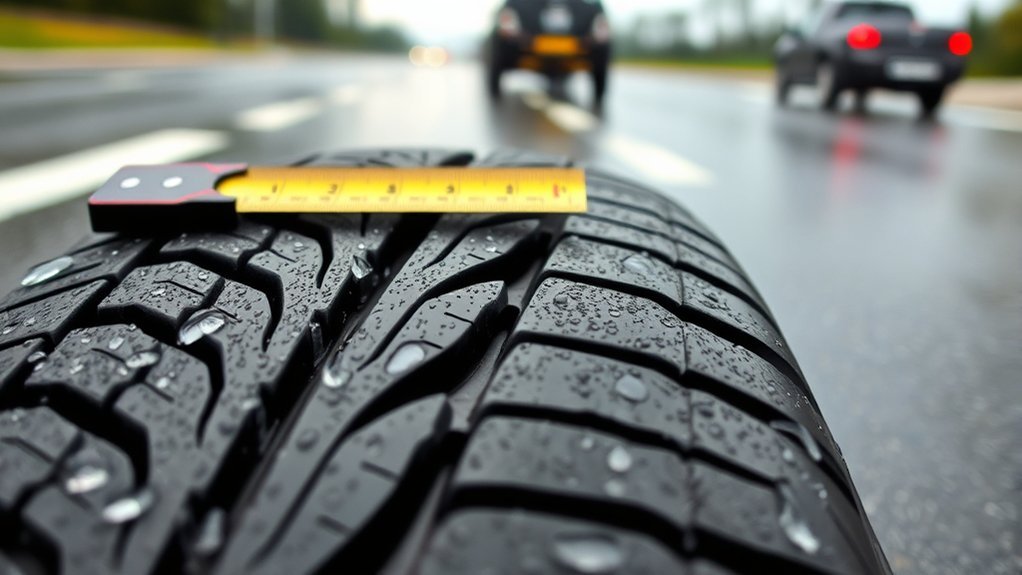
When tread depth is insufficient, your vehicle’s safety can be greatly compromised. Adhering to tread depth requirements is essential; while the legal minimum tire tread is 2/32 inch, ideal safety begins to decline below 4/32 inch, particularly in wet conditions.
Adequate tire tread depth is vital for maintaining traction on wet surfaces, markedly reducing stopping distances and the risk of hydroplaning. Tires with 5/32 inch or less start to lose effective winter traction, increasing the danger during snow and ice.
Insufficient tread can lead to a drastic loss of grip, elevating the risk of blowouts and negatively affecting vehicle stability on the road. Regular checks and maintenance of your tires can prevent dangerous driving conditions and enhance your overall safety.
Prioritizing adequate tire tread depth isn’t just about compliance; it’s about ensuring a secure driving experience.
Best Practices for Keeping Your Tire Tread Depth Optimal
Keeping your tires in top shape is vital for ideal tread depth and overall vehicle safety. To maintain sufficient tread, follow these best practices:
| Action | Frequency | Purpose |
|---|---|---|
| Regular Inspections | Monthly | Check for damage and irregular wear |
| Tire Pressure Checks | Weekly | Prevent uneven wear patterns |
| Tire Rotation | Every 5,000 to 7,500 miles | Promote even wear and extend lifespan |
| Tread Depth Measurement | Monthly | Guarantee compliance with legal limits |
Utilize a tire tread depth chart to gauge your tires accurately. Replace tires when tread depth dips to about 5/32 inch to maintain proper traction, especially in adverse conditions. For those managing a commercial fleet, adhering to these practices is imperative for safety and compliance. Prioritize tire care to liberate yourself from potential hazards on the road.
Debunking Myths About Tire Tread Depth Regulations
Many drivers mistakenly believe that meeting the legal minimum tread depth guarantees safety on the road.
In reality, relying solely on these standards can lead to dangerous conditions, especially in adverse weather.
Understanding the impact of tread wear is essential for ensuring peak performance and reducing the risk of accidents.
Legal Tread Depth Misconceptions
Drivers often underestimate the importance of tread depth, mistakenly believing that meeting the legal minimum of 2/32 inch guarantees safe driving.
Here are some common misconceptions:
- Legal Limit Equals Safety: Just because you meet the legal limit doesn’t mean your tires provide adequate traction, especially in wet or snowy conditions.
- Passenger vs. Commercial Vehicles: Most states require 2/32 inch for passenger vehicles, while commercial vehicles need at least 4/32 inch for steer tires.
- Tread Wear Indicators: These can signal when your tire’s tread depth is insufficient, even if it meets legal standards.
- Wet Road Performance: Research shows that tread depths under 4/32 inch can lose up to 50% of friction on wet surfaces, posing significant safety risks.
Safety Versus Minimum Standards
While meeting the legal minimum tread depth of 2/32 inch may seem sufficient, it doesn’t guarantee safe driving conditions, especially in adverse weather.
Research shows that tires with tread depths below 4/32 inch can lose up to 50% of available traction on wet roads, increasing hydroplaning risks. Many winter and all-season tires start losing effective traction around 5/32 inch, highlighting the inadequacy of these minimum standards.
Tread wear indicators are designed to alert you when tread depth becomes insufficient for safe performance, typically around 5/32 inch. Regular inspections and maintenance are critical; depending solely on legal minimums can lead to dangerous driving conditions and longer stopping distances.
Prioritize safety over compliance for a better driving experience.
Impact of Tread Wear
Although the legal minimum tread depth of 2/32 inch might suggest your tires are safe, this number can be misleading, especially when considering the realities of driving conditions. Here’s why:
- Wet Conditions: Tread depths below 4/32 inch can lead to a 50% loss in traction, increasing accident risk.
- Winter Performance: Experts recommend replacing tires at 5/32 inch for ideal snow traction and shorter stopping distances.
- Tread Wear Indicators: These signals show diminished traction around 5/32 inch, alerting you to unsafe performance.
- Fleet Safety: Adhering to DOT regulations isn’t just about legality; it’s vital for vehicle safety and handling.
Understanding these factors can empower you to make informed decisions about tire maintenance and safety.
What to Do If Your Tires Fall Below Minimum Tread Depth for Safety?
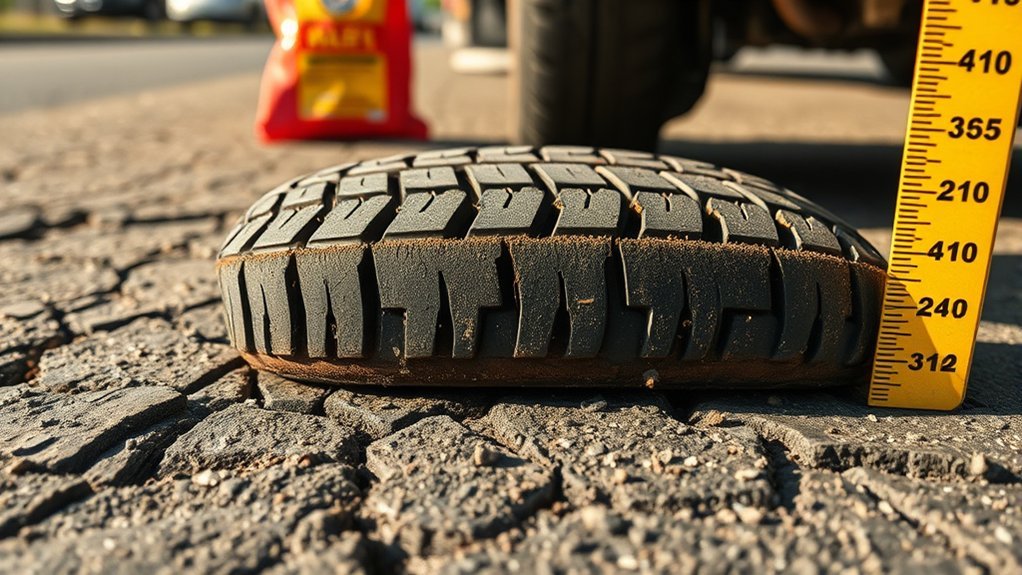
If your tires fall below the legal minimum tread depth, you need to replace them immediately to maintain safety on the road.
It’s also crucial to inspect the condition of your other tires and monitor tread depth regularly to prevent any future issues.
Taking these proactive steps guarantees compliance with regulations and enhances your vehicle’s performance.
Replace Worn Tires Immediately
Replace worn tires immediately to guarantee your safety on the road.
If your tire tread depth falls below the legal minimum of 2/32 inch, it’s essential to act promptly.
Here’s what to do:
- Check your tread depth using a gauge or the penny test; if Lincoln’s head is visible, it’s time to replace tires.
- Replace tires at 4/32 inch for better wet performance and at 5/32 inch for effective snow traction.
- Monitor your tires regularly to avoid hydroplaning risk and traction loss.
- Be aware of legal penalties during inspections for driving on insufficient tread depth.
Inspect Other Tire Conditions
When your tires fall below the legal minimum tread depth of 2/32 inch, it’s crucial to assess their overall condition to confirm safety on the road.
Start by using tread wear indicators to check if your tires are nearing that critical level. Regularly inspect tire conditions for uneven wear patterns, as they can signal alignment or inflation issues that need addressing.
Neglecting these checks can lead to increased stopping distances and heightened hydroplaning risks, compromising your safety.
Additionally, failing to replace tires below the minimum tread depth could result in legal penalties during vehicle inspections.
Prioritizing these inspections guarantees your tires perform at their best and keeps you safe on the road.
Monitor Tread Depth Regularly
Monitoring your tire tread depth regularly is vital to maintaining safety on the road, especially since the legal minimum of 2/32 inch can often be too low for peak performance.
Here’s what to do if your tires fall below the minimum tread depth:
- Replace Tires: If tread depth is below 4/32 inch for wet conditions or 5/32 inch for snowy roads, consider replacing your tires immediately.
- Use a Tread Depth Gauge: Regularly check your tread depth with a gauge or the penny test.
- Perform Fleet Inspections: If you manage a fleet, conduct regular inspections to maintain safety and DOT compliance.
- Monitor Winter Indicators: Pay attention to winter tire indicators, confirming they’re ready for wet or snowy conditions.
Prioritize safety; your tires are vital for peak performance.
Frequently Asked Questions
Is a 2/32 Tire Tread Legal?
Yes, a 2/32 tire tread is legal, but it compromises tire safety. Tread wear affects performance in various driving conditions. Following replacement guidelines, like replacing at 4/32 for wet conditions, guarantees better safety and control.
Should I Replace My Tires at 2 32 or 4 32?
You should replace your tires at 4/32 inch for better traction performance, especially in wet driving conditions. Ignoring tread wear can lead to increased replacement costs and compromised tire safety, even if you meet legal standards.
Is 1/4 Inch Tire Tread Good?
Yes, 1/4 inch tire tread’s good for safety. It enhances performance, especially in wet conditions, while exceeding legal regulations. Regular maintenance and monitoring tread wear guarantee ideal driving conditions and greatly reduce risks during adverse weather.
Is 6/32 Good for Tires?
Yes, 6/32 inch is good for tires. It enhances tire performance, reduces safety concerns, and maintains effective tread patterns. This depth supports safe driving conditions and addresses tread wear better than the legal requirements.
Conclusion
In the journey of driving, your tires are the steadfast companions that guide you safely over the winding roads. Just as a ship needs a reliable compass, your vehicle demands adequate tread depth for traction and control. Ignoring the legal minimum is like sailing into a storm without a life raft. Regular checks and timely replacements guarantee you navigate safely, steering clear of dangers. Remember, a well-treaded tire is your best ally in the pursuit of safety on the open road.






Leave a Reply