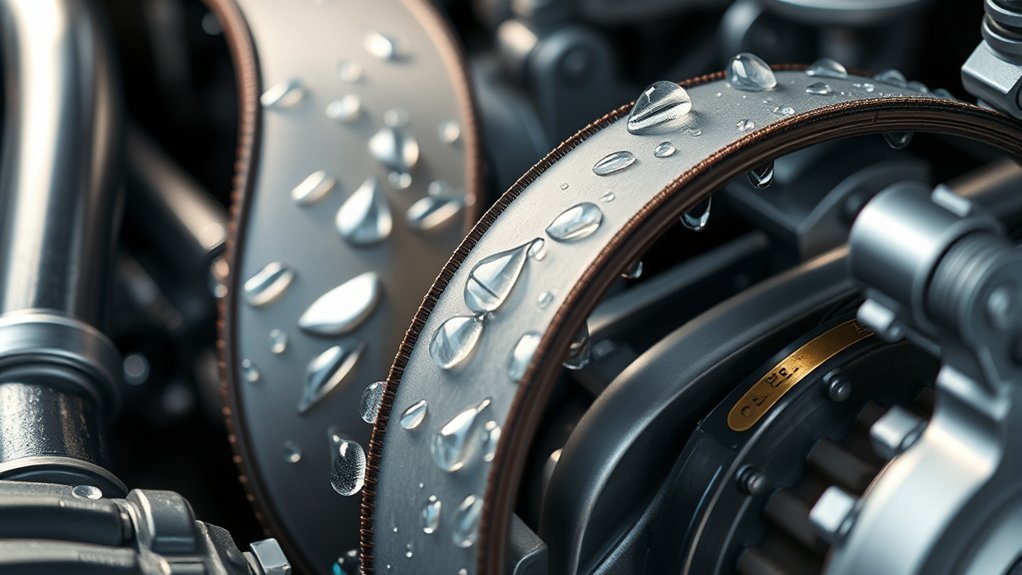
A wet timing belt is a special type of engine belt designed to operate in engine oil rather than in a dry compartment. It helps keep important engine components working together while allowing manufacturers to reduce friction and noise. However, wet belts need the correct engine oil and proper maintenance, and certain designs have experienced premature deterioration. Understanding how these belts work, what can go wrong, and when they need replacing can help you protect your engine from expensive damage.
Quick Answer
A wet timing belt is a toothed engine belt designed to run in engine oil. It synchronizes the crankshaft and camshaft while benefiting from a lubricated operating environment. Wet belts can reduce friction and noise, but their condition depends on the engine design, correct oil, and maintenance. Replacement intervals vary by vehicle.
Key Takeaways
- A wet timing belt runs inside the engine in contact with engine oil rather than in a conventional dry belt compartment.
- The design can reduce friction and operating noise while supporting compact engine layouts.
- Wet-belt systems are used in certain Ford EcoBoost, Ford EcoBlue, and previous-generation Stellantis PureTech engines.
- Incorrect oil, contamination, belt deterioration, or related component failures can lead to serious engine problems.
- There is no universal wet-belt replacement interval. Follow the schedule for your exact engine and model year.
- A low engine oil-pressure warning requires immediate action. Stop safely and switch off the engine.
What Is a Wet Timing Belt and How Does It Work?
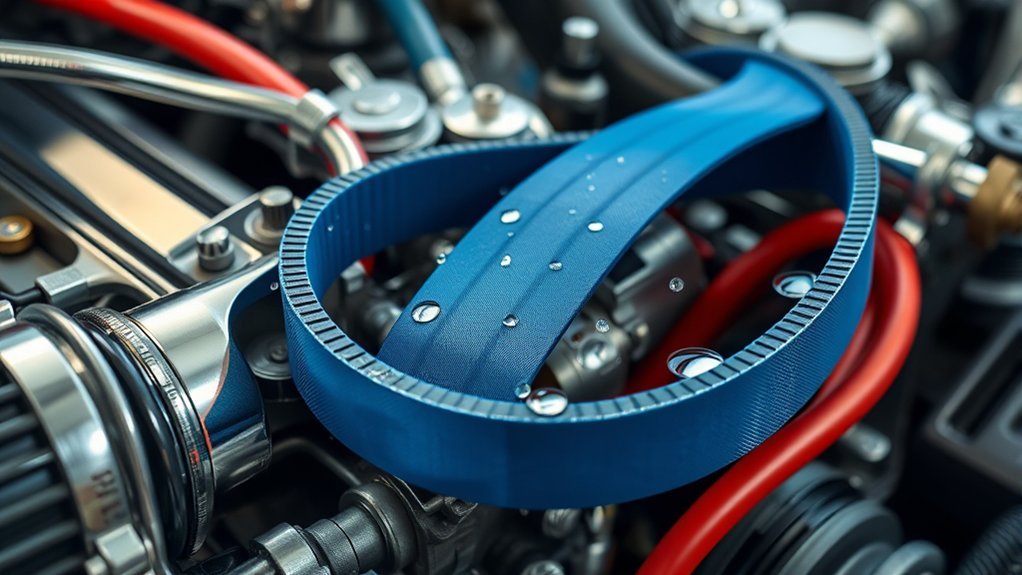
A wet timing belt, also called a belt-in-oil timing belt, is a toothed belt made from materials designed to withstand continuous contact with engine oil.
Its main job is to coordinate the movement of the crankshaft and camshaft. This keeps the engine’s valves opening and closing at the correct points in the combustion cycle.
Unlike a conventional dry timing belt, a wet belt operates inside the engine’s lubricated environment.
The oil helps reduce friction and operating noise. The belt itself uses a specialized material construction designed for this environment.
However, the oil must meet the engine manufacturer’s requirements. An unsuitable oil formulation or contaminated oil can affect the belt’s durability.
Timing Belt vs. Oil-Pump Drive Belt
These components are related, but they do different jobs:
- Timing belt: Keeps crankshaft and camshaft rotation synchronized.
- Oil-pump drive belt: Transfers power to the engine oil pump in designs that use a belt-driven pump.
Some engines have both a timing belt and a separate oil-pump drive belt operating in oil.
This distinction matters because an oil-pump drive-belt failure can cause loss of lubrication, even if the main timing belt remains intact.
For example, NHTSA recall 23V-905 identifies a potential oil-pump drive-belt or tensioner problem in certain Ford vehicles that can result in loss of engine oil pressure.
Wet Timing Belt vs. Dry Timing Belt vs. Timing Chain
All three systems can perform the same basic timing function, but their construction and operating environments differ.
- Wet timing belt: A specially designed belt operating in engine oil. It relies on compatible oil and the correct maintenance schedule.
- Dry timing belt: A belt operating outside the engine’s normal oil environment. It must be protected from oil contamination and replaced according to its specified schedule.
- Timing chain: A metal chain typically operating within the lubricated engine. It has different wear characteristics and maintenance requirements.
No system is automatically maintenance-free. The engine’s actual design and manufacturer instructions determine its service requirements.
Which Engines Use Wet Timing Belts?
Wet-belt systems have been used in several modern engine families, including certain versions of:
- Ford 1.0L EcoBoost engines.
- Ford 2.0L EcoBlue diesel engines.
- Previous-generation Stellantis 1.2L PureTech engines used in vehicles from brands such as Peugeot and Citroën.
Automotive component manufacturer Continental identifies these applications in its belt-in-oil technical training information.
Note: Not every engine sold under the same engine-family name uses the same timing-drive arrangement. Confirm the exact engine code, model year, and configuration before ordering parts or scheduling replacement.
How to Check Whether Your Car Has a Wet Belt
You do not need to dismantle the engine to establish which timing system your vehicle uses.
- Find your vehicle identification number (VIN) and engine information.
- Check the owner’s manual and scheduled-maintenance section.
- Look for terms such as timing belt, belt in oil, or oil-pump drive belt.
- Ask an authorized dealer or qualified specialist to confirm the engine configuration using the VIN.
- Check the latest manufacturer service information for applicable replacement intervals or technical updates.
Do not assume that every EcoBoost, PureTech, or diesel engine has an identical belt arrangement.
Advantages of Wet Timing Belts in Modern Engines
Wet timing belts were developed to help manufacturers improve the efficiency and refinement of modern engines.
Reduced Friction
Operating in oil can reduce friction within the belt-drive system. Lower friction can contribute to overall engine efficiency.
However, the actual benefit depends on the engine design and cannot be expressed as one universal fuel-economy improvement.
Quieter Operation
The lubricated operating environment can help reduce mechanical noise from the belt drive.
This can make the engine quieter during normal operation.
Compact Engine Design
Wet-belt technology can support compact engine layouts and packaging choices.
It gives manufacturers another option when designing smaller engines with specific efficiency and emissions targets.
Designed for an Oil Environment
Unlike ordinary dry timing belts, wet belts use materials intended to operate in engine oil.
That does not make them immune to wear. Their durability still depends on the correct operating conditions, suitable oil, and maintenance.
Key Problems Drivers Face With Wet Timing Belts
Although wet timing belts offer several advantages, some designs have experienced reliability problems.
The most important concerns involve belt deterioration, lubrication problems, and the possibility of serious engine damage.
1. Premature Belt Deterioration
The belt material may deteriorate before its expected replacement date under certain conditions.
Possible contributing factors include unsuitable engine oil, oil contamination, engine operating conditions, and design-specific problems.
A deteriorating belt may develop damaged teeth, surface defects, or changes in its dimensions.
2. Belt Debris and Oil-System Problems
When a wet belt deteriorates, material can enter the engine oil.
In affected engine designs, this debris may restrict the oil-pickup strainer or contribute to other lubrication-system problems.
Reduced oil flow can damage components that depend on a steady supply of pressurized oil.
Stellantis has acknowledged premature timing-belt deterioration and associated oil-pressure issues in certain previous-generation PureTech engines through its customer support and compensation program.
3. Oil-Pump Drive-Belt Failure
Some engines use a separate belt to operate the oil pump.
If that belt or its tensioner fails, oil pressure may fall even when the main timing belt has not broken.
Loss of oil pressure can cause rapid internal engine damage.
4. Timing-Belt Failure and Engine Damage
If a timing belt breaks or loses teeth, the crankshaft and camshaft may fall out of synchronization.
In an interference engine, this can allow pistons and valves to collide, potentially causing major internal damage.
The severity depends on the engine design and how the failure occurs.
5. Oil Leaks and Related Component Problems
Oil leaks from seals or other engine components also require attention.
However, an external oil leak does not automatically mean the wet timing belt has failed.
A mechanic should identify the actual source of the leak and assess whether it affects the timing-drive system.
How to Identify a Failing Wet Timing Belt
Wet timing-belt problems can be difficult to recognize without a professional inspection.
Some failures occur without obvious warning. Other symptoms may resemble unrelated engine problems.
Possible Warning Signs
- Low oil-pressure warning: May indicate a serious lubrication problem, including a fault involving the oil-pump drive system or restricted oil flow.
- Check-engine light: Can indicate numerous engine faults, including some timing-related problems.
- Unusual engine noise: May suggest a mechanical problem, although noise alone cannot confirm belt deterioration.
- Rough running or misfires: Can occur with timing-related problems but have many other possible causes.
- Poor engine performance: May accompany a developing mechanical fault.
- Visible belt damage: Cracking, missing material, damaged teeth, or abnormal belt dimensions may indicate deterioration when found during an appropriate inspection.
Do not rely on these symptoms to determine whether the belt is safe. A belt may need replacement according to its scheduled interval even when the engine appears to run normally.
Warning: If the low engine oil-pressure warning appears while driving, pull over as soon as it is safe, switch off the engine, and follow your vehicle’s emergency instructions. Do not continue driving or repeatedly restart an engine with suspected loss of oil pressure. Arrange professional assistance or towing. Severe mechanical noise, overheating, or sudden loss of engine power also requires immediate attention.
Why a Visual Check Is Not Enough
Wet timing belts are located inside the engine, so they are not always easy to inspect.
A limited visible section may not show damage elsewhere on the belt.
For certain Stellantis applications, specialized tools can assess belt width and compare it with the manufacturer’s permitted limit.
Continental described this type of professional inspection method in September 2025.
The appropriate inspection procedure depends on the engine. Do not assume that a visual check through an oil-filler opening is sufficient to establish belt condition.
How Long Does a Wet Timing Belt Last?
There is no single mileage figure that applies to every wet timing belt.
The replacement schedule depends on the manufacturer, exact engine, vehicle age, operating conditions, and applicable service information.
For example, one U.S. Ford EcoSport owner-manual schedule specifies replacement of the 1.0L engine’s timing belt and oil-pump drive belt at 100,000 miles or six years, whichever comes first.
You can review that example in the Ford EcoSport scheduled-maintenance documentation.
This is an example, not a universal wet-belt replacement recommendation.
Another vehicle may have a different mileage limit, age limit, or inspection requirement.
Always use the latest applicable manufacturer guidance for your particular vehicle.
Pro Tip: Check both mileage and age. A vehicle driven only a few thousand miles each year may still reach its belt replacement deadline because of the time limit.
Maintenance Tips to Extend the Life of Your Wet Timing Belt
Proactive maintenance helps protect the wet timing belt and the engine components that depend on it.
The most useful steps involve correct engine oil, timely servicing, and attention to warning signs.
At a Glance
| Time Required | A few minutes to check records and schedules; professional inspection time varies. |
| Difficulty | Easy for owner maintenance checks; advanced for internal inspection and replacement. |
| Tools Needed | Owner’s manual, maintenance records, and VIN. Professional inspections may require model-specific tools. |
| Cost | Checking service records and open recalls is free. Inspection and replacement costs depend on the vehicle and repair scope. |
1. Use the Correct Engine Oil
Engine oil compatibility is especially important in wet-belt systems because the belt operates directly in the oil.
Use oil that meets the exact manufacturer specification listed for your engine.
Do not choose oil based only on viscosity. The required manufacturer approval or specification also matters.
Avoid unapproved oil additives or treatments that could affect oil compatibility.
2. Follow the Oil-Change Schedule
Replace the engine oil and filter at the specified intervals.
Do not exceed the manufacturer’s service limits. Follow any shorter interval required by the manufacturer’s guidance for your driving conditions.
Maintain records showing the service date, mileage, and oil specification used.
3. Check the Engine Oil Level
Check the oil level using the procedure in your owner’s manual.
Address unexplained oil loss, oil leaks, or excessive oil consumption promptly.
If the oil-pressure warning appears, do not treat adding oil as proof that the problem has been resolved.
4. Follow the Correct Replacement Interval
Record the belt’s mileage and age-based replacement deadline.
Check whether the manufacturer has issued updated service information for your engine.
If the service history is unknown, have a qualified technician establish an appropriate inspection and maintenance plan.
5. Use a Mechanic Familiar With Wet-Belt Engines
Wet-belt replacement can involve substantial dismantling and specialized timing tools.
A technician familiar with the specific engine can assess the belt, associated drive components, and any signs of deterioration.
Correct oil, documented servicing, and replacement at the applicable manufacturer interval are more reliable safeguards than waiting for obvious symptoms.
What Happens During Wet Timing Belt Replacement?
A wet timing-belt replacement is more involved than changing an ordinary external accessory belt.
The exact procedure varies by engine, but professional service may include:
- Confirming the vehicle’s engine configuration and current service instructions.
- Removing the components necessary to access the timing-drive system.
- Securing the engine timing using the specified procedures and tools.
- Inspecting and replacing the applicable timing belt and associated components.
- Inspecting the oil-pump drive belt where the engine uses one.
- Checking for belt debris or lubrication-system contamination when deterioration is suspected.
- Inspecting or cleaning the oil-pickup system when required by the diagnosis and manufacturer procedure.
- Reassembling the engine, replacing required seals and fluids, and verifying correct operation.
If the belt has deteriorated and released material into the engine, simply installing a new belt may not resolve an existing lubrication problem.
The repair must address the actual cause and any related damage.
Caution: Incorrect timing-belt installation can cause severe engine damage. Internal inspection and replacement should be performed using the correct manufacturer procedure and vehicle-specific tools.
How Much Does Wet Timing Belt Replacement Cost?
Wet timing-belt replacement costs vary considerably depending on the vehicle and the work required.
The main factors include:
- The engine’s layout and the amount of dismantling required.
- Local labor rates.
- The cost of the belt and associated components.
- Whether the oil-pump drive belt also needs replacement.
- Required seals, oil, filters, and other service parts.
- Any additional work needed to address belt debris, oil-pressure problems, or internal damage.
A scheduled replacement before failure will generally involve a different repair scope from an engine that has already suffered lubrication or timing damage.
Request an itemized estimate that identifies the belt components, labor, fluids, and any additional repair work.
Also check for applicable warranty coverage, manufacturer service programs, or outstanding safety recalls before authorizing work.
Wet Timing Belt Recalls and Manufacturer Support
Some wet-belt-related problems have resulted in manufacturer action.
Ford Oil-Pump Drive-Belt Recall
In January 2024, NHTSA acknowledged Ford safety recall 23V-905, also identified by Ford as 23S64.
The recall covers certain 2016–2018 Ford Focus and 2018–2022 Ford EcoSport vehicles.
It concerns potential failure of the oil-pump drive belt or its tensioner, which can cause loss of oil pressure.
This is an oil-pump drive-system recall. It should not be interpreted as proof that every Ford timing belt or every EcoBoost engine has the same defect.
Stellantis PureTech Support
Stellantis has also announced support measures for eligible European customers with certain previous-generation PureTech engines affected by premature timing-belt deterioration or excessive oil consumption.
Its May 2025 announcement described an extended warranty program and additional compensation arrangements, subject to eligibility and maintenance conditions.
Coverage is not automatic for every vehicle, and the European program should not be assumed to apply to vehicles in other markets.
How to Check for Open Recalls
- Find your vehicle’s 17-character VIN.
- Visit the official NHTSA recall lookup.
- Enter the VIN and review any open safety recalls.
- Contact the manufacturer’s authorized dealer if a recall applies.
- Ask the dealer whether any additional manufacturer service information or support program applies to your engine.
In the United States, applicable safety recall repairs are performed free of charge through the manufacturer’s authorized repair network.
Frequently Asked Questions
What Is a Wet Belt and Why Is It Bad?
A wet belt is a specially designed engine belt that operates in engine oil. The design itself is not automatically bad, but certain systems have experienced premature belt deterioration and related oil-pressure problems. Using the correct oil, following the manufacturer’s service schedule, and addressing warning signs are important.
How Much Does It Cost to Replace a Wet Belt?
The cost depends on the engine, labor rates, required parts, and whether additional repairs are necessary. A scheduled belt replacement is different from repairing an engine after belt deterioration or oil-pressure loss. Obtain an itemized quote and check for applicable warranty or recall coverage.
What Is the Life Expectancy of a Wet Timing Belt?
Wet timing-belt life depends on the exact engine and manufacturer schedule. There is no universal mileage limit. For example, one Ford EcoSport 1.0L schedule specifies 100,000 miles or six years for the timing belt and oil-pump drive belt, whichever comes first. Other vehicles may have different requirements.
How Do You Know if a Wet Belt Needs Replacing?
Check the manufacturer’s mileage and age limits first. A professional inspection may also identify deterioration, damaged teeth, abnormal belt dimensions, or related lubrication problems. Engine noise and poor performance are not reliable ways to confirm belt condition on their own.
Can You Keep Driving With a Bad Wet Timing Belt?
Driving with a suspected failing belt can risk serious engine damage. If the low oil-pressure warning appears, stop safely and switch off the engine. Arrange professional assistance rather than continuing to drive. Do not wait for obvious symptoms if the belt is already due for replacement.
Does Regular Oil Changing Prevent Wet-Belt Failure?
Correct oil and timely servicing help protect the system, but they cannot guarantee that a belt will never fail. Design-specific problems, age, wear, and related component failures can still occur. Follow the manufacturer’s maintenance schedule and applicable technical updates.
Conclusion
A wet timing belt can help modern engines operate quietly and efficiently, but it requires the right maintenance and careful attention to engine-specific service requirements.
Use the manufacturer-approved oil, follow the correct oil-change and belt-replacement schedules, and keep accurate maintenance records.
If you notice a low oil-pressure warning or other serious engine symptoms, stop driving and seek professional assistance.
Finally, check your VIN for applicable recalls and manufacturer support programs. These simple steps can help reduce the risk of wet-belt-related engine damage and unexpected repair costs.
Sources
- Continental — The Quick Test for Belt-in-Oil Timing Belts (September 2, 2025). Technical information about wet-belt operation, premature wear, and inspection methods.
- Ford — EcoSport Scheduled Maintenance. Manufacturer documentation covering oil servicing and timing-belt and oil-pump drive-belt replacement intervals.
- Ford — Vehicle Warning Messages. Manufacturer instructions for responding to low engine oil pressure.
- Stellantis — PureTech Customer Compensation and Warranty Measures (May 7, 2025). Information about premature belt deterioration and applicable European support arrangements.
- NHTSA — Ford Safety Recall 23V-905 (January 8, 2024). Official documentation concerning certain Ford Focus and EcoSport oil-pump drive-belt and tensioner failures.
- National Highway Traffic Safety Administration — Recall Lookup. Official U.S. resource for checking vehicle recalls by VIN.







Leave a Reply