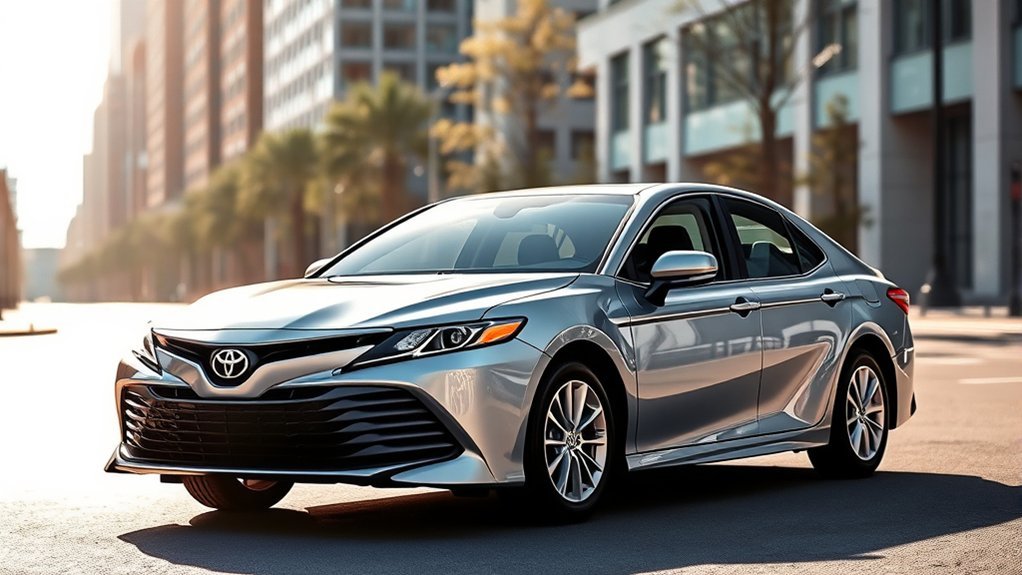
The Toyota Camry is a midsize sedan built for everyday driving, commuting, and family travel. It combines a roomy five-seat cabin, a separate trunk, modern technology, and a comfortable ride. For 2026, the U.S.-market Camry comes exclusively with a gasoline-electric hybrid powertrain, offering a choice of front-wheel drive or available electronic all-wheel drive.
Quick Answer
The Toyota Camry is a midsize four-door sedan, not an SUV. The 2026 U.S. model uses a 2.5-liter gasoline-electric hybrid system that produces 225 combined horsepower with front-wheel drive or 232 horsepower with available all-wheel drive. It seats five passengers and provides 15.1 cubic feet of trunk space.
Key Takeaways
- The Camry belongs to the midsize sedan category and has four doors, two seating rows, and a separate trunk.
- Every U.S.-market 2026 Camry uses a hybrid powertrain; a gasoline-only version is not offered.
- The hybrid system produces 225 combined horsepower with FWD or 232 horsepower with AWD.
- The most efficient configuration, the LE FWD, achieves an EPA-estimated 51 mpg combined.
- Five grades are available: LE, SE, Nightshade, XLE, and XSE.
- Toyota Safety Sense 3.0 and Blind Spot Monitor are standard, while some additional driver-assistance features require optional equipment.
An Overview of the Toyota Camry: Features and Benefits
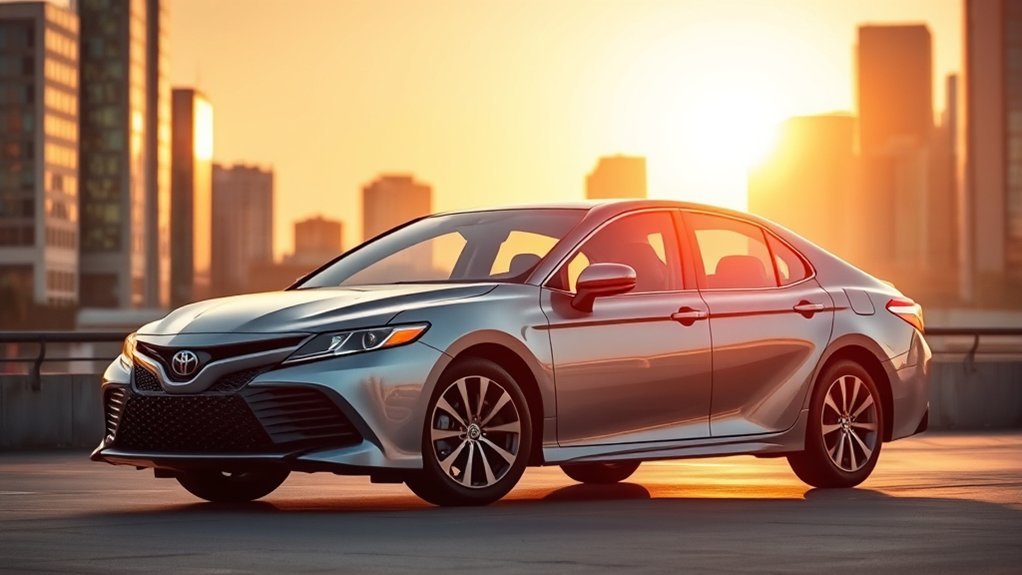
The 2026 Toyota Camry is a midsize passenger car that combines a gasoline engine with electric motors to balance performance and fuel efficiency.
Unlike a crossover or SUV, the Camry has a traditional sedan body with a lower seating position and a separate enclosed trunk. It is designed primarily for paved-road driving and everyday transportation.
The current Camry offers seating for five, a spacious cabin, and a 15.1-cubic-foot trunk. Its hybrid powertrain delivers up to an EPA-estimated 51 mpg combined in the LE front-wheel-drive configuration.
Standard equipment includes Toyota Safety Sense 3.0, an 8-inch multimedia touchscreen, wireless Apple CarPlay and Android Auto compatibility, and dual-zone automatic climate control.
Higher grades offer additional comfort and technology features, including a larger touchscreen, heated and ventilated front seats, upgraded upholstery, and available premium audio.
For official model information, see the 2026 Toyota Camry overview.
Understanding the Size and Dimensions of the Camry
The Camry’s dimensions help explain why it is classified as a midsize sedan. It offers more passenger and cargo space than many compact cars while retaining a traditional four-door passenger-car design.
Its 111.2-inch wheelbase provides room for a comfortable cabin, while its overall length of 193.5 inches gives it the proportions of a midsize vehicle.
| Feature | 2026 Camry Measurement | Why It Matters |
|---|---|---|
| Overall length | 193.5 inches | Determines parking-space and garage fit. |
| Overall width | 72.4 inches | Affects cabin width and clearance in tight spaces. |
| Overall height | 56.9 inches | Contributes to its lower sedan profile. |
| Wheelbase | 111.2 inches | Influences passenger space and ride characteristics. |
| Trunk capacity | 15.1 cubic feet | Provides room for groceries, luggage, and everyday cargo. |
| Front legroom | 42.1 inches | Provides space for front-seat occupants. |
| Rear legroom | 38.0 inches | Helps accommodate adult passengers in the second row. |
| Curb weight | Approximately 3,450 pounds for LE FWD | Varies with trim, drivetrain, and equipment. |
These measurements come from Toyota’s published 2026 vehicle comparison.
The trunk is useful for regular shopping and travel bags. However, if you frequently carry bulky furniture, tall boxes, or large recreational equipment, an SUV or hatchback may offer greater loading flexibility.
Pro Tip: Before buying a Camry for family travel, test the trunk with your actual stroller, luggage, or other large items. Cargo volume alone does not tell you whether an unusually shaped object will fit through the trunk opening.
Distinctive Midsize Sedan Features of the Toyota Camry
The Camry combines the practical layout of a midsize sedan with modern styling, hybrid performance, and driver-assistance technology.
Elegant Exterior Design
The Toyota Camry features a low, wide stance, sculpted body panels, and distinctive front styling.
LED headlights and taillights contribute to its modern appearance, while different grades offer their own wheel designs and exterior details.
Supersonic Red is among the available exterior colors. The 2026 lineup also introduces Dark Cosmos on selected grades.
Drivers seeking a sportier appearance can consider the Nightshade Edition. It features 19-inch satin-black alloy wheels, dark exterior accents, black badging, and a black rear spoiler.
The XSE adds sport-inspired exterior details, including a color-matched mesh grille and aerodynamic styling elements.
These differences allow buyers to choose between a more understated appearance and a sport-oriented design without changing the vehicle’s basic midsize sedan classification.
Advanced Safety Features
The 2026 Camry includes Toyota Safety Sense 3.0 as standard equipment.
Important features include:
- Pre-Collision System with Pedestrian Detection: Can warn of certain potential collisions and provide automatic braking assistance under appropriate conditions.
- Full-Speed Range Dynamic Radar Cruise Control: Helps maintain a selected distance from vehicles ahead.
- Lane Departure Alert with Steering Assist: Can provide warnings and steering assistance when an unintended lane departure is detected.
- Lane Tracing Assist: Provides steering support while compatible cruise-control functions are operating.
- Road Sign Assist: Recognizes certain road signs and displays relevant information.
- Automatic High Beams: Switches between high and low beams when operating conditions are met.
- Proactive Driving Assist: Can provide gentle braking or steering support in selected driving situations.
Blind Spot Monitor, Rear Cross-Traffic Alert, and Safe Exit Alert are also standard on the 2026 Camry.
Additional equipment, such as the Panoramic View Monitor and Traffic Jam Assist, is available on selected grades and packages.
Warning: Driver-assistance features do not make the Camry a self-driving vehicle. Cameras and sensors have limitations, and the driver must remain attentive and responsible for controlling the vehicle.
Performance Specifications: What to Expect From the Camry
The 2026 Camry focuses on a balance of everyday acceleration, smooth operation, and fuel efficiency.
Every U.S. model uses a hybrid system built around a 2.5-liter four-cylinder gasoline engine and electric motors.
Engine and Hybrid System Overview
Although older Camry models offered conventional gasoline engines, the 2026 model uses Toyota’s fifth-generation hybrid system across the lineup.
The key specifications are:
- Front-wheel drive: 225 net combined horsepower.
- Electronic On-Demand AWD: 232 net combined horsepower.
- Gasoline engine: 2.5-liter four-cylinder.
- Transmission: Electronically controlled continuously variable transmission, commonly called an eCVT.
- Drive modes: Normal, Eco, and Sport.
The eCVT manages power from the gasoline engine and electric motor system to provide smooth acceleration.
Unlike a conventional transmission with a fixed number of forward gears, the hybrid system manages engine and electric-motor operation electronically.
The electric motors can assist during acceleration and recover energy through regenerative braking.
The Camry is a conventional hybrid, not a plug-in hybrid. Its traction battery is charged through the vehicle’s own hybrid system rather than by connecting it to an external charger.
Fuel Economy Ratings
Fuel economy is one of the Camry’s main practical benefits.
According to Toyota, the 2026 Camry LE FWD achieves an EPA-estimated 51 mpg combined, with estimated ratings of 52 mpg city and 49 mpg highway.
Other grades and drivetrain configurations have different estimates because equipment, wheel sizes, weight, and driving systems vary.
| Configuration | Published Fuel Economy | Main Consideration |
|---|---|---|
| LE FWD | 52 city / 49 highway / 51 combined mpg | Maximum published combined efficiency. |
| SE FWD | 47 city / 45 highway mpg | Sport-oriented styling and equipment. |
| LE AWD | 50 city / 49 highway mpg | Additional driven axle for available traction. |
These figures are EPA estimates. Actual fuel economy depends on temperature, traffic, road conditions, tire pressure, vehicle load, and driving habits.
Frequent high-speed driving, aggressive acceleration, and cold weather can reduce efficiency.
For the latest model-specific estimates, consult Toyota’s 2026 Camry specifications.
Front-Wheel Drive vs. All-Wheel Drive
The 2026 Camry offers two drivetrain configurations.
Front-wheel drive powers the front wheels and is suitable for most everyday driving situations. The LE FWD also provides the lineup’s highest published combined fuel-economy rating.
Electronic On-Demand AWD adds an electric motor at the rear axle to provide power to the rear wheels when the system determines it is needed.
This can support traction when accelerating on slippery surfaces.
However, AWD does not shorten braking distances on ice or replace appropriate tires.
Note: AWD improves available traction in certain conditions, but tires play a major role in braking and cornering. Drivers in snowy regions should consider appropriate winter tires where conditions require them.
Unique Advantages of the Toyota Camry Over Competitors
The Camry offers several features that shoppers may find useful when comparing midsize sedans.
- Standard hybrid powertrain: Every 2026 model includes gasoline-electric hybrid technology.
- Available AWD: Buyers can select electronic all-wheel drive across the five-grade lineup.
- Standard safety technology: Toyota Safety Sense 3.0 and Blind Spot Monitor are included.
- Practical passenger space: The cabin seats five, with 38 inches of rear legroom.
- Modern connectivity: Wireless smartphone integration is standard.
These features make the Camry worth considering for drivers who want a traditional sedan rather than an SUV.
However, competitors may offer advantages in other areas.
For example, Toyota’s published comparison lists 15.1 cubic feet of cargo space for the 2026 Camry and 16.7 cubic feet for the 2026 Honda Accord.
When comparing vehicles, consider passenger comfort, cargo requirements, price, available equipment, and your preferred driving characteristics rather than relying on a single specification.
Why the Camry Is Ideal for Daily Commuting and Family Travel
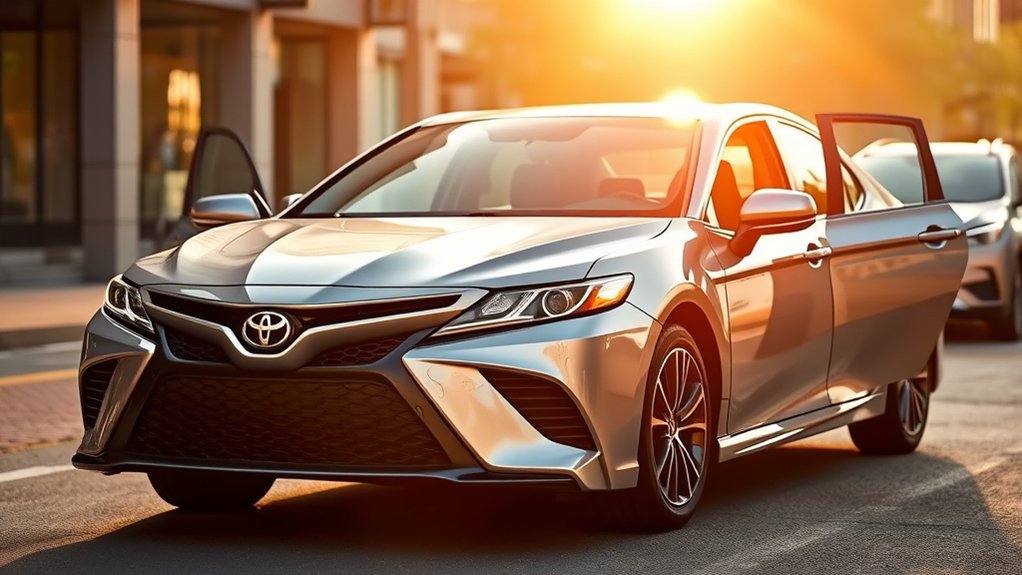
The Camry’s blend of passenger space, fuel efficiency, and comfort makes it suitable for many commuting and family-driving needs.
Its hybrid system can help reduce fuel use during regular driving, while the spacious cabin provides room for passengers and everyday belongings.
| Feature | Everyday Benefit |
|---|---|
| Five-passenger cabin | Accommodates a driver and up to four passengers. |
| 15.1-cubic-foot trunk | Provides space for groceries, work bags, and travel luggage. |
| Hybrid efficiency | Can reduce fuel consumption compared with less efficient alternatives. |
| Toyota Safety Sense 3.0 | Provides standard driver-assistance technology. |
| Dual-zone climate control | Allows front occupants to select different temperature settings. |
| Available heated and ventilated front seats | Adds comfort during hot and cold weather. |
The standard rear air vents also help passengers in the second row stay comfortable.
For families with young children, the rear seating area accommodates child restraints using the vehicle’s designated installation points and seat belts.
Always follow the child-restraint manufacturer’s instructions and the Toyota owner’s manual when installing a child seat.
Before choosing a vehicle for three children, test the exact child-seat combination. A five-seat capacity rating does not guarantee that three particular child restraints will fit side by side.
Hybrid vs. Gasoline: Understanding Your Camry Powertrain Options
The Camry’s powertrain choices depend on the model year you are considering.
For the 2026 U.S. Camry, every grade is a hybrid. You choose between front-wheel drive and available electronic all-wheel drive rather than between separate gasoline-only and hybrid models.
The hybrid system combines a 2.5-liter gasoline engine, electric motors, and an electronically controlled continuously variable transmission.
Older Camrys are different. If you are shopping for a used vehicle, certain earlier model years offered both conventional gasoline and hybrid configurations.
| Camry Type | Powertrain | Availability |
|---|---|---|
| 2026 Camry FWD | 2.5-liter gasoline-electric hybrid, 225 combined hp | Current lineup |
| 2026 Camry AWD | 2.5-liter gasoline-electric hybrid, 232 combined hp | Current lineup |
| Older gasoline-only Camry | Conventional gasoline engine | Selected previous model years |
| Older Camry Hybrid | Gasoline engine and electric motor system | Selected previous model years |
The current hybrid system is designed to manage gasoline and electric power automatically, so you do not need to manually switch between the two.
If you prefer a conventional gasoline-only Camry, you will need to look at an earlier model year.
2026 Toyota Camry Trim Levels and Technology
The five available Camry grades allow you to choose different combinations of styling, comfort, and equipment.
| Trim | Notable Features | Main Appeal |
|---|---|---|
| LE | 16-inch alloy wheels, 8-inch touchscreen, dual-zone climate control | Everyday practicality and fuel efficiency. |
| SE | 18-inch wheels, sport exterior styling, SofTex and fabric-trimmed seats | Sportier appearance and driving feel. |
| Nightshade | 19-inch satin-black wheels and dark exterior accents | Distinctive blacked-out styling. |
| XLE | 12.3-inch touchscreen, upgraded interior materials, heated front seats | Comfort and premium technology. |
| XSE | 19-inch wheels, sport-tuned suspension, upgraded interior, 12.3-inch touchscreen | Sport-oriented styling with premium equipment. |
All five grades are offered with FWD or AWD in the United States.
Wireless Apple CarPlay and Android Auto compatibility are standard. Available upgrades include a JBL premium audio system, larger digital displays, and additional driver-assistance technology.
Some features depend on optional packages, so compare the actual equipment list rather than assuming every vehicle in a trim has identical features.
Safety Features That Make the Camry Your Dependable Safety Partner
The Toyota Camry combines passive safety equipment, standard active safety technology, and available driver-assistance features.
Toyota Safety Sense 3.0 includes systems designed to help drivers recognize certain hazards, maintain following distance, and receive lane-related assistance.
The Camry also includes airbags, electronic stability control, anti-lock brakes, and a backup camera.
The 2026 Toyota Camry earned the IIHS TOP SAFETY PICK+ award under the organization’s 2026 evaluation criteria.
The Insurance Institute for Highway Safety recognizes the 2026 Camry with its TOP SAFETY PICK+ award.
This provides independent evidence of the vehicle’s performance in the organization’s applicable safety evaluations.
Blind Spot Monitor can warn about vehicles detected in adjacent lanes, while Rear Cross-Traffic Alert can provide warnings when reversing.
The available Panoramic View Monitor can help with low-speed maneuvering and parking.
Traffic Jam Assist is available on selected XLE and XSE configurations through the Premium Plus Package. It is designed for specific low-speed driving conditions on controlled-access freeways and requires an active Drive Connect trial or subscription.
It is not an autonomous driving system.
Even when using these features, drivers must check mirrors, look over their shoulders when changing lanes, maintain safe distances, and remain ready to brake or steer.
Ownership, Reliability, and Maintenance Considerations
The Camry has an established history in the midsize sedan market, but individual vehicle reliability depends on the model year, maintenance history, driving conditions, and manufacturing details.
For a new 2026 Camry, Toyota provides the following U.S. warranty coverage:
- Basic limited warranty: 3 years or 36,000 miles.
- Powertrain warranty: 5 years or 60,000 miles.
- Hybrid-related component coverage: 8 years or 100,000 miles.
- Hybrid battery warranty: 10 years or 150,000 miles.
Warranty limits apply according to Toyota’s terms and the vehicle’s original in-service date.
ToyotaCare also covers normal factory-scheduled maintenance for 2 years or 25,000 miles, whichever comes first, along with 2 years of roadside assistance without a mileage limit.
For complete coverage terms, consult the official 2026 Camry announcement.
What to Check Before Buying a Used Camry
If you are considering a used Toyota Camry, inspect the specific vehicle instead of relying only on the model’s general reputation.
Important checks include:
- Service records and scheduled maintenance.
- Warning lights and diagnostic trouble codes.
- Engine, transmission, or hybrid-system operation.
- Brake condition, tire wear, and suspension noise.
- Battery condition and cooling-system maintenance.
- Evidence of previous accidents, flooding, or major repairs.
- Outstanding safety recalls.
A qualified independent inspection can help identify problems before purchase.
Check Toyota Camry Recalls by VIN
Recall information is especially important because not every vehicle from an affected model year is necessarily included in a particular campaign.
On August 6, 2026, Toyota announced a recall involving certain 2025–2026 Camry vehicles equipped with a 7-inch combination meter that could become blank at startup.
Toyota also announced a separate December 2025 recall involving certain 2025–2026 Camry Hybrid vehicles with a potentially loose bolt inside the hybrid inverter.
These recalls do not establish that every Camry has the affected components or defects.
To check an individual vehicle:
- Locate its 17-character Vehicle Identification Number.
- Visit the official NHTSA recall lookup.
- Enter the VIN and review the results.
- Contact a Toyota dealer if an unrepaired safety recall is listed.
Safety Note: If your Camry is included in a safety recall, follow Toyota’s current owner notification and repair instructions. Safety-recall repairs are provided without charge under the applicable campaign.
Why Does the Toyota Camry Remain Popular in Its Class?
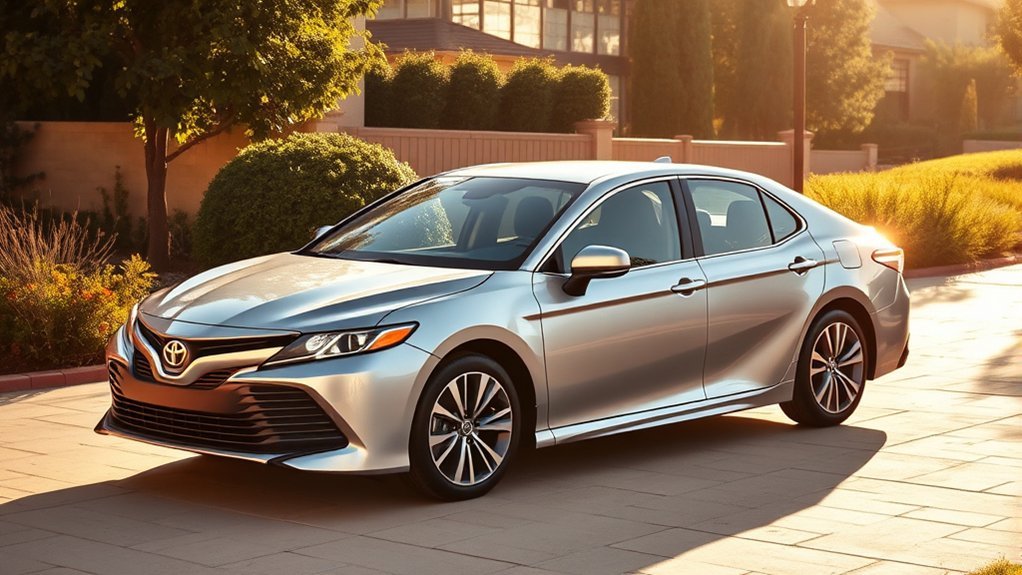
The Camry continues to attract buyers because it combines several practical features in one vehicle.
Its midsize dimensions provide useful passenger space without requiring an SUV body style. The hybrid system delivers strong published fuel-economy figures, and the availability of AWD gives buyers another drivetrain option.
Other important considerations include:
- Fuel efficiency: Up to an EPA-estimated 51 mpg combined in the LE FWD.
- Passenger space: Seating for five and 15.1 cubic feet of trunk capacity.
- Safety technology: Standard Toyota Safety Sense 3.0 and Blind Spot Monitor.
- Equipment choices: Five grades with different styling and comfort features.
- Warranty coverage: A 10-year/150,000-mile hybrid battery warranty.
The 2026 Camry’s U.S. starting MSRP is $29,600, according to Toyota’s published model information. Actual transaction prices depend on configuration, options, taxes, dealer charges, and local availability.
Although the Camry provides a practical combination of features, it is not necessarily the ideal vehicle for every driver.
Buyers needing greater cargo height, a third seating row, or more ground clearance may prefer a different body style.
For those who primarily drive on paved roads and want a fuel-efficient, comfortable passenger car, the Camry offers a useful set of features.
Frequently Asked Questions
What Category of Car Is a Toyota Camry?
The Toyota Camry is classified as a midsize passenger car. It uses a traditional four-door sedan body with two rows of seating and a separate enclosed trunk.
What’s the Most Common Problem With a Toyota Camry?
There is no single problem that applies to every Camry model year. Maintenance history, mileage, and production details matter. Certain 2025–2026 Camrys have been included in safety recalls involving the instrument display or hybrid inverter. Check the specific vehicle’s VIN through NHTSA and arrange a qualified inspection if buying used.
Which Type of Car Is the Toyota Camry?
The Camry is a conventional passenger sedan designed mainly for paved-road use. The 2026 U.S. version is a gasoline-electric hybrid offered with front-wheel drive or electronic all-wheel drive. It is not a plug-in hybrid or fully electric vehicle.
Is the Toyota Camry a Sedan or SUV?
The Toyota Camry is a sedan, not an SUV. It has a lower passenger-car body, four side doors, seating for five, and a separate trunk instead of an SUV-style rear cargo area.
Does the 2026 Toyota Camry Have a Gasoline-Only Engine?
No. Every U.S.-market 2026 Camry has a gasoline-electric hybrid system. Earlier model years offered conventional gasoline-only versions, which may be available on the used-car market.
Is the Toyota Camry Available With All-Wheel Drive?
Yes. The 2026 Camry offers Electronic On-Demand All-Wheel Drive across its five grades. AWD versions use an electric motor at the rear axle and produce 232 net combined horsepower.
Is the Toyota Camry Good for Family Use?
The Camry can work well for families that need five seats, a comfortable second row, and a separate trunk. Its 15.1-cubic-foot cargo area accommodates regular luggage and groceries. Families using multiple child restraints should check the fit of their exact seats before purchasing.
Conclusion
The Toyota Camry is a midsize sedan that combines passenger comfort, practical cargo space, modern safety technology, and hybrid fuel efficiency.
For 2026, its hybrid-only lineup offers 225 combined horsepower with front-wheel drive or 232 horsepower with available all-wheel drive. Buyers can also choose from five trim levels with different styling, convenience, and technology features.
The Camry is worth considering if you want a comfortable car for commuting, family transportation, or regular highway travel without moving to an SUV.
Before purchasing, compare the equipment on the specific vehicle, consider your passenger and cargo needs, review its warranty coverage, and check for outstanding safety recalls by VIN.
Sources
- Toyota — 2026 Camry Overview — official current specifications, drivetrain options, fuel economy, features, and trim information.
- Toyota — 2026 Camry Vehicle Comparison — exterior dimensions, passenger measurements, cargo capacity, and vehicle specifications.
- Toyota USA Newsroom — 2026 Camry Announcement, May 1, 2025 — hybrid system, horsepower, available features, safety equipment, and warranty coverage.
- Insurance Institute for Highway Safety — 2026 Toyota Safety Awards — independent TOP SAFETY PICK+ recognition.
- Toyota USA Newsroom — August 6, 2026 Camry Safety Recall — information about the instrument-display recall affecting certain vehicles.
- National Highway Traffic Safety Administration — Recall Lookup — official VIN-specific recall information and vehicle safety guidance.







Leave a Reply