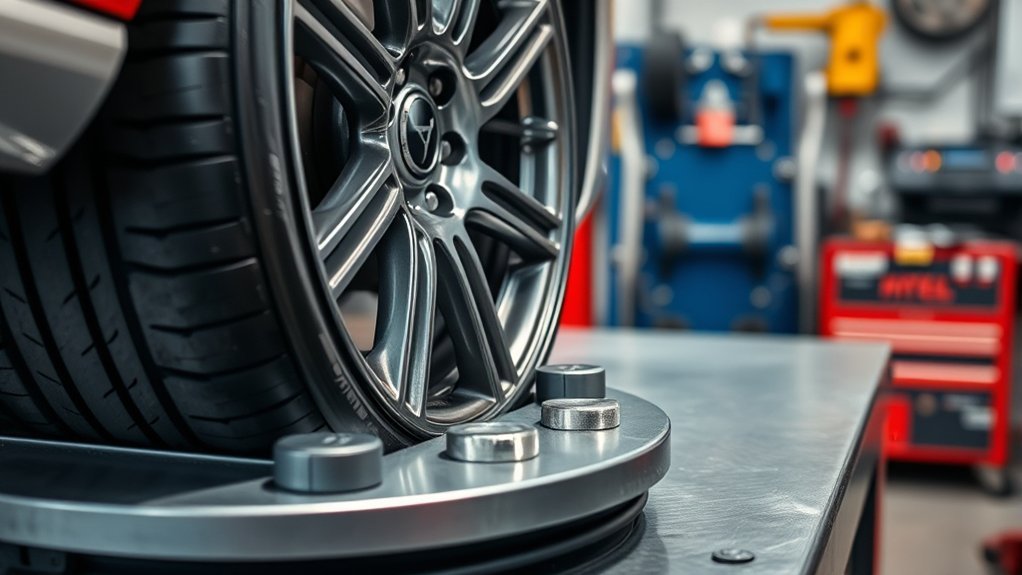
If your car wheels are unbalanced, you’ll notice vibrations in the steering wheel and body, especially over 40 mph. This imbalance can lead to uneven tire wear, decreasing their lifespan by up to 30%. It also puts extra stress on the suspension and steering components, risking costly repairs. Additionally, fuel efficiency can drop by over 10%. Addressing wheel balance is essential to prevent these issues and maintain vehicle performance. Discover more about the signs and solutions for wheel imbalance.
Key Takeaways
- Unbalanced wheels cause vibrations in the steering wheel and vehicle, particularly noticeable at speeds over 40 mph.
- Driving with unbalanced wheels leads to uneven tire wear, potentially reducing tire lifespan by up to 30%.
- Increased stress on suspension and steering components from unbalanced wheels can result in costly repairs.
- Fuel efficiency may decrease significantly, increasing consumption by 10% or more due to constant vibrations.
- Regular maintenance, including balancing every 4,000 to 6,000 miles, can prevent the complications associated with unbalanced wheels.
Understanding Wheel Imbalance: Effects on Vehicle Performance

When you drive, wheel imbalance can greatly affect your vehicle’s performance. This imbalance often leads to vibrations in the steering wheel and throughout the vehicle, especially noticeable at speeds above 40 mph. Such vibrations can compromise your comfort and control, making for a less enjoyable driving experience.
Additionally, uneven weight distribution causes irregular tire wear, shortening their lifespan and increasing the likelihood of premature replacement.
Moreover, unbalanced wheels exert extra stress on your suspension and steering components, potentially leading to costly repairs down the line. This imbalance also demands higher energy from your vehicle, resulting in decreased fuel efficiency and increased fuel costs.
To maintain ideal handling and prevent these adverse effects, it’s essential to have your wheels balanced regularly, ideally every 4,000 to 6,000 miles. Staying proactive about wheel balance helps you enjoy a smoother ride while extending the life of your tires.
Identifying Signs of Wheel Imbalance
If you notice vibrations in the steering wheel or throughout the vehicle, it’s likely a sign of wheel imbalance. Recognizing these symptoms early can save you from further issues.
Pay attention to the following indicators:
- Vibrations in the steering: Noticeable primarily at speeds over 40 mph.
- Unusual noises: Humming, clicking, or thumping sounds that change with speed.
- Uneven tread wear: Inspect your tires for abnormal patterns that suggest premature wear.
- Pulling to one side: If your vehicle drifts, it may indicate an imbalance or alignment problem.
Addressing these signs promptly can help maintain peak vehicle performance. Ignoring them can lead to further complications, including increased fuel consumption and more costly repairs down the line.
Promptly addressing warning signs can prevent costly repairs and improve fuel efficiency for your vehicle.
Stay alert to these symptoms, and verify your wheels are balanced for a smooth and safe ride.
The Consequences of Driving With Unbalanced Wheels
Driving with unbalanced wheels can lead to several detrimental consequences that compromise both safety and vehicle performance. You’ll likely experience noticeable vibrations in the steering wheel and car body, especially at speeds over 40 mph.
These vibrations not only disrupt your driving experience but also contribute to uneven tire wear, potentially reducing your tire lifespan by up to 30%. As unbalanced wheels exert increased stress on suspension components, you risk premature failure of parts, resulting in costly repairs.
Furthermore, your fuel efficiency may drop considerably, as unbalanced wheels require more energy to maintain speed, increasing fuel consumption by 10% or more. Over time, the constant vibrations can damage various vehicle components, leading to loose bolts, rattles, and stress cracks in the car’s body.
Prioritizing wheel balance is essential for maintaining vehicle stability and ensuring a smooth, safe driving experience.
Fixing Unbalanced Wheels: The Balancing Process
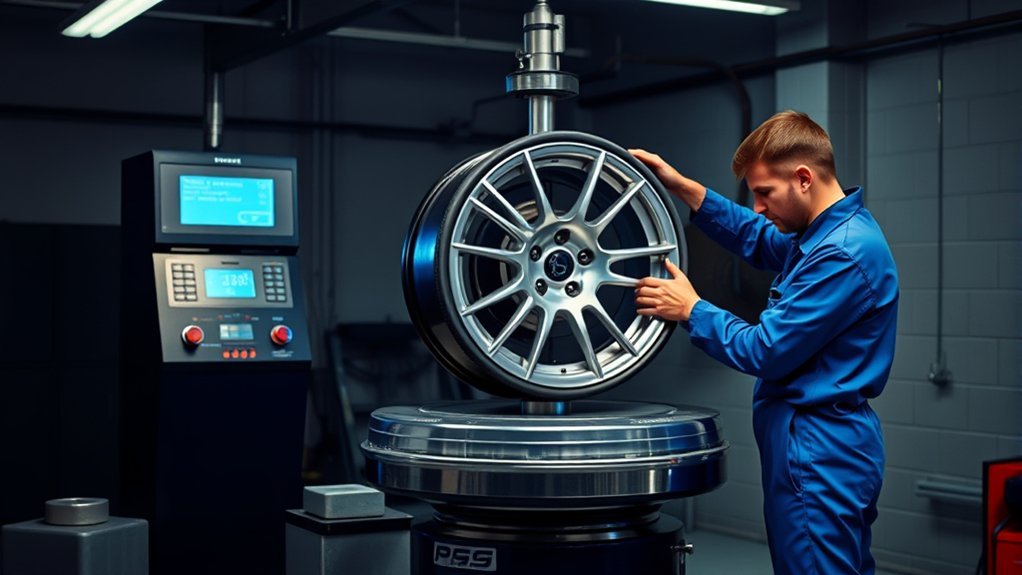
To effectively address unbalanced wheels, the balancing process employs specialized equipment that accurately identifies weight distribution issues through vibration measurements. This method guarantees that your unbalanced wheel and tire assembly is corrected efficiently.
- Quick service: Balancing usually takes just 15 to 30 minutes per wheel.
- Precision: Dynamic balancing machines detect even minor weight discrepancies.
- Uniformity: Tiny counterweights are added for ideal weight distribution.
- Maintenance: Rebalance after repairs and every 4,000 to 6,000 miles for longevity.
During the tire balancing process, technicians use a dynamic balancing machine to pinpoint where weight needs adjustment. They then strategically place counterweights on the wheel to achieve even weight distribution, eliminating vibrations.
Regular tire balancing not only enhances vehicle handling but also prevents premature tire wear, guaranteeing your driving experience remains smooth and liberating.
Preventing Wheel Imbalance: Maintenance Tips
Maintaining balanced wheels is key to guaranteeing your vehicle operates smoothly and efficiently. Start by regularly checking and maintaining your tire pressure; improper inflation can lead to wheel imbalance and uneven tire wear.
Regularly checking tire pressure is essential for maintaining balanced wheels and ensuring smooth vehicle operation.
Schedule tire balancing every 4,000 to 6,000 miles or during routine tire rotations to keep weight distribution ideal, enhancing tire life.
Inspect your tires for damage or irregular wear patterns, as these can indicate imbalance or alignment issues needing attention. Avoid driving over potholes, curbs, or debris, since impacts can disrupt your tire balance, causing immediate or gradual issues.
Lastly, verify that wheel weights are correctly installed and not lost during repairs or tire changes. Their absence can lead to significant imbalance problems, compromising both performance and safety.
Frequently Asked Questions
What Happens if Wheels Are Unbalanced?
If your wheels are unbalanced, you’ll experience vibrations that affect driving safety, uneven tire wear, and potential misalignment. This can lead to costly repairs and decreased performance, making regular maintenance essential for your vehicle’s health.
How Much Does It Cost to Fix Unbalanced Wheels?
Fixing unbalanced wheels typically costs between $15 to $50 per wheel. Regular balancing techniques, along with tire rotation and wheel alignment, help maintain peak performance and prevent costly repairs down the road.
What Are Signs of Unbalanced Wheels?
If your wheels feel like a dance gone wrong—vibrating, uneven tire wear, or pulling to one side—these signs signal imbalance. Prioritize wheel alignment for driving safety and to liberate your tires from premature wear.
Can I Still Drive if the Wheels Are Not Balanced?
You can drive with unbalanced wheels for a short distance, but it’s risky. Poor wheel alignment increases tire wear, compromises driving safety, and may lead to costly repairs. Prioritize balance for ideal vehicle performance.
Conclusion
In summary, addressing wheel imbalance is vital for your vehicle’s performance and safety. Did you know that unbalanced wheels can reduce tire life by up to 30%? Regular maintenance and timely balancing can not only enhance your driving experience but also save you money in the long run. By staying vigilant for signs of imbalance and ensuring your wheels are properly balanced, you can maintain ideal vehicle handling and prolong the lifespan of your tires.







Leave a Reply