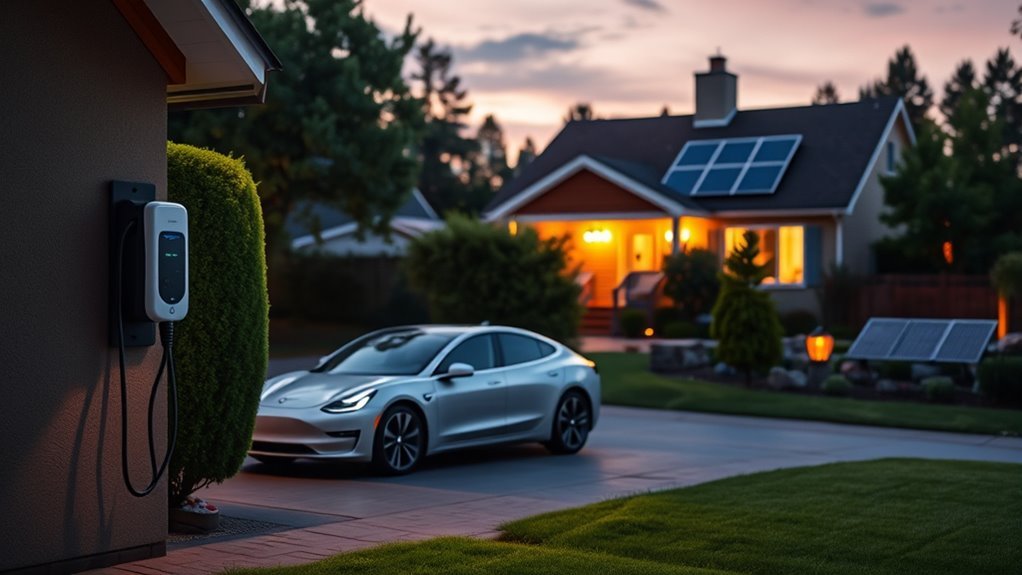
Most EV charging happens at home because it’s convenient, cost-effective, and increasingly efficient with Level 2 chargers. About 80% of charging occurs overnight, allowing you to wake up with a full battery. It’s cheaper too; charging at home can save you money compared to public stations. Plus, government incentives make installation more affordable. Understanding these advantages highlights the practicality of home charging, and there’s more to explore about optimizing your setup for even greater benefits.
The Rise of Home EV Charging: Why It’s the Preferred Choice
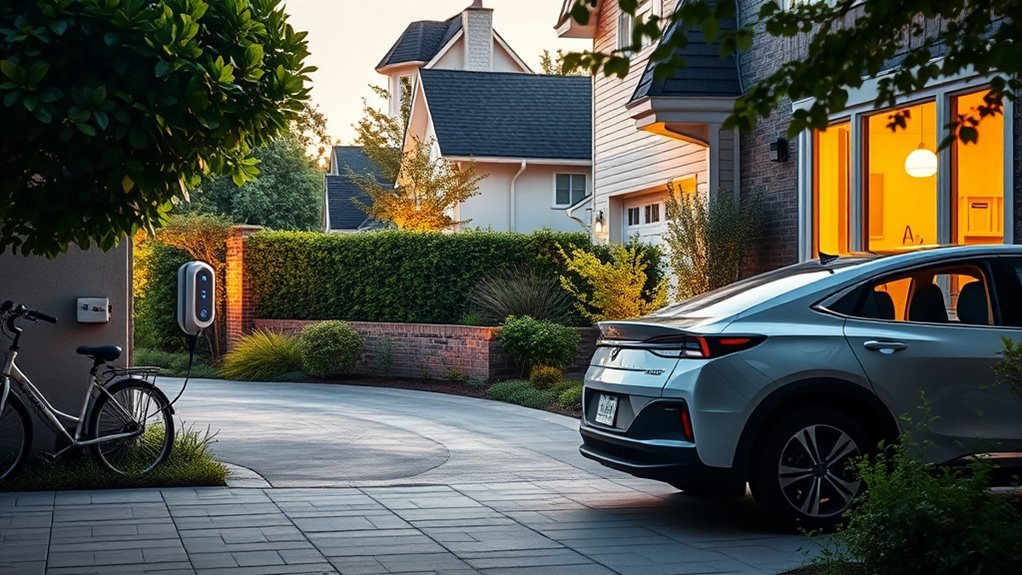
As more people embrace electric vehicles (EVs), home charging has emerged as the preferred choice for many drivers, primarily due to its unmatched convenience and cost-effectiveness. Approximately 80% of EV charging occurs at home, reflecting consumer preferences that prioritize the ease of overnight charging over public stations.
With a Level 2 charger installed, you can fully recharge your vehicle while you sleep, ensuring it’s ready to go each morning without any hassle. This method not only saves you time but also money, as residential electricity rates are generally lower than public charging fees.
Plus, home charging eliminates the stress of long wait times and limited station availability, making it a standard choice for most EV owners. The routine of charging your EV at home mirrors how you charge your smartphone, further enhancing the appeal and practicality of home charging as a liberating solution for modern drivers.
The Importance of Level 2 Chargers for Residential Use
While many homeowners may consider basic charging options for their electric vehicles (EVs), opting for a Level 2 charger is essential for maximizing efficiency and convenience. Level 2 chargers operate at 240 volts, allowing you to charge your EV faster, making them ideal for longer commutes or larger batteries. With Level 2 benefits, you can enjoy overnight home charging, ensuring a full battery by morning—no more public charging station visits.
Here’s a quick comparison of charging options:
| Charger Type | Voltage (Volts) | Charging Time (Hours) |
|---|---|---|
| Level 1 | 120 | 8-20 |
| Level 2 | 240 | 4-8 |
| DC Fast | 400+ | 0.5-1 |
Understanding the Cost Savings of Home EV Charging
Investing in a Level 2 charger not only enhances your home charging experience but also leads to substantial cost savings.
A cost analysis reveals that charging your electric vehicle (EV) at home is markedly cheaper than using public stations. For instance, a full charge for a 200-mile range vehicle typically costs around $6, while public charging can be up to three times that amount.
By developing efficient charging habits, like charging overnight, you can leverage lower time-of-use electricity rates, further minimizing costs. Plus, local utility rebates may cover up to 30% of your installation expenses, making home charging even more financially appealing.
Over time, the long-term savings from reduced fuel and maintenance costs make owning an EV economically advantageous, especially for those who primarily charge at home.
Embracing this lifestyle not only liberates you from fluctuating gas prices but also contributes to a more sustainable future.
Government Incentives for Affordable Home Charging
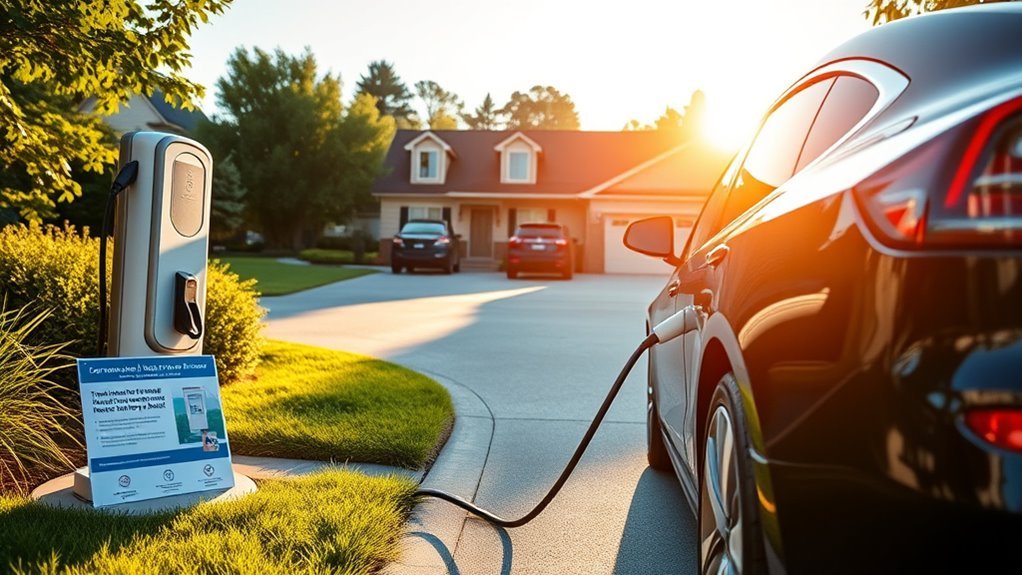
When you’re considering home EV charging, government incentives can greatly lighten the financial load.
Federal funding opportunities, state-level programs, and local utility rebates all work together to make installation more affordable.
Federal Funding Opportunities Available
Federal funding opportunities are frequently available to help make home EV charging more accessible and affordable. These incentives can greatly reduce your overall costs, empowering you to embrace electric vehicle technology.
Consider the following options:
- Federal grants for low-income households to support charger installations.
- The 30C Tax Credit, covering up to 30% of installation costs.
- Billions allocated through the Infrastructure Investment and Jobs Act for charging infrastructure.
- Utility program rebates and discounts for homeowners installing EV chargers.
- Stacking of state-level incentives with federal funding for additional savings.
State-Level Incentive Programs
State-level incentive programs play a crucial role in making home EV charging more affordable and accessible for homeowners. These programs can cover up to 30% of costs associated with purchasing and installing EV charging stations. By participating, you can take advantage of various state incentives, including installation grants, which encourage the installation of Level 2 chargers.
| Incentive Type | Description |
|---|---|
| Installation Grants | Funds to assist with charger installation |
| Tax Credits | Reductions on state income tax |
| Low-Interest Loans | Financing options for charging systems |
| Electrical Upgrades | Funding for necessary electrical improvements |
| Rebates | Cash back on charger purchases |
These incentives not only reduce financial burdens but also help you contribute to sustainability efforts in your community.
Local Utility Rebates
Local utility rebates are a powerful tool for homeowners looking to install EV charging stations at home.
These incentives can considerably lower your costs, making home charging more accessible. Here’s what to reflect on:
- Some programs offer rebates up to $125 for qualified Level 2 chargers.
- Many states cover up to 30% of installation costs for home chargers.
- Participating in demand response programs can yield annual savings.
- Federal tax credits, like the 30C Tax Credit, provide additional financial support.
- Understanding rebate eligibility and installation requirements is vital to maximize benefits.
Best Practices for Efficient Home Charging
While charging your electric vehicle (EV) at home can be a straightforward process, adopting best practices can enhance efficiency and save you money.
Start by establishing a charging schedule that aligns with your routine. Charging overnight takes advantage of lower time-of-use electricity rates, considerably cutting costs.
Using Level 2 (240 V) charging equipment is also key; it provides faster charging, ensuring you’re ready to go with a full battery each morning.
Incorporate energy management strategies by monitoring your usage and adjusting your charging times based on peak and off-peak hours. This not only optimizes your energy consumption but also promotes sustainability by minimizing strain on the grid.
Additionally, invest in modern chargers equipped with safety features to prevent overloading and overheating, offering peace of mind while you charge.
Following these practices will liberate your EV experience, making home charging efficient and economical.
Addressing Safety and Compliance in Home EV Charger Installation
When setting up your home EV charging station, prioritizing safety and compliance is just as important as optimizing efficiency. Adhering to installation regulations and safety standards not only protects you but also guarantees the legality of your setup.
Here are key considerations:
- Obtain necessary permits from local and state authorities.
- Consult the National Electrical Code (NEC), specifically Article 625, for guidance on safe practices.
- Assess your home’s electrical capacity with a professional electrician to support Level 2 chargers.
- Use safety-certified equipment, like ENERGY STAR products, to minimize risks.
- Hire qualified professionals for installation to reduce electrical hazards.
The Environmental Benefits of Charging at Home
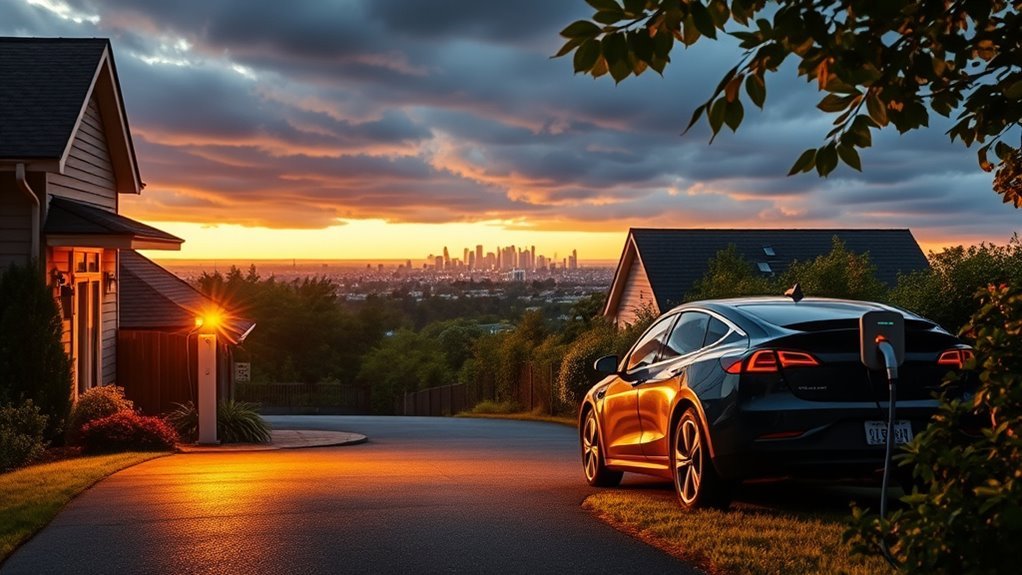
Charging at home offers important environmental advantages, especially when you harness renewable energy sources. By utilizing solar panels or wind energy, you greatly reduce greenhouse gas emissions, contributing to cleaner air and a lower carbon footprint. This approach aligns with sustainability initiatives, promoting a healthier planet for all.
Moreover, home charging allows you to take advantage of time-of-use rates, encouraging you to charge during off-peak hours when renewable energy is more abundant. This not only decreases emissions but also supports electric vehicle adoption, particularly in lower-income communities where accessibility is vital.
The convenience of home charging fosters a shift towards electric vehicles, which are generally more environmentally friendly over their lifecycle compared to gasoline vehicles.
Overcoming Barriers: Debunking Misconceptions About Home Charging
Home charging for electric vehicles (EVs) often faces skepticism due to common misconceptions that circulate among potential users.
Home charging for electric vehicles is often misunderstood, leading to skepticism among potential users.
It’s time to debunk these myths and highlight the home charging benefits you can enjoy.
- Convenience: 80% of EV charging occurs at home, letting you plug in overnight for a full battery every day.
- Cost-effective: Charging at home is typically cheaper than using public stations, saving you money in the long run.
- Feasibility: Home electrical systems can be upgraded by qualified electricians to support Level 2 charging stations.
- Safety: Modern chargers have advanced safety features that prevent overloading and overheating, ensuring secure operation.
- Accessibility: Installing chargers in affordable housing boosts property value and promotes EV adoption for low-income residents.
What Are the Future Trends for Home Charging?
As the demand for home EV charging solutions grows, you’ll notice an increase in smart charging technologies that optimize energy use and cut costs.
More homeowners are integrating renewable energy sources, making charging not only convenient but also eco-friendly.
Additionally, expect significant investments in EV infrastructure, which will enhance accessibility and create a more robust network for all residents.
Smart Charging Solutions Emerge
With the rise of electric vehicles (EVs), new smart charging solutions are emerging to enhance the efficiency and convenience of home charging.
These innovations prioritize user engagement and smart grid integration, allowing you to improve your energy usage.
- Charge during off-peak hours for lower rates.
- Monitor your charging via intuitive mobile apps.
- Integrate solar panels to reduce costs and promote sustainability.
- Participate in community charging hubs for shared resources.
- Rely on intelligent energy management systems for peak performance.
As these features develop, you’ll find charging your EV not only more efficient but also more aligned with your lifestyle, ensuring that you remain empowered and liberated in your charging choices.
Renewable Energy Integration Grows
Although many homeowners are already embracing electric vehicles (EVs), the integration of renewable energy sources is set to transform the home charging landscape even further. As you tap into renewable incentives, solar panels can power your EV with clean energy, cutting costs and carbon footprints. Community charging hubs are emerging, providing sustainable options while enhancing energy efficiency for all residents. With battery prices projected to drop, more homeowners will likely adopt these solutions. Smart grid technology will enable you to charge during off-peak hours, optimizing your energy use. The future of home charging is bright, ushering in an era of eco-conscious living and innovative technology.
| Trend | Impact on Homeowners | Key Benefits |
|---|---|---|
| Renewable Energy Sources | Reduced costs and emissions | Cleaner energy for EVs |
| Community Charging | Access to shared resources | Enhanced energy efficiency |
| Smart Grid Integration | Optimized charging schedules | Lower electricity rates |
Increased EV Infrastructure Investment
Investing in EV infrastructure is becoming essential for homeowners aiming to enhance their sustainability efforts and charging convenience.
As the demand for EV-ready homes rises, you’ll want to reflect on the following trends:
- Smart charging technologies for efficient energy management
- Expanded EV charging networks in urban areas
- Increased feasibility studies for ideal Level 2 charger placement
- A growing emphasis on home charging as a personal value statement
- Innovative investment strategies targeting at-home EV infrastructure
These developments highlight how infrastructure development is evolving.
How to Get Started With Installing an EV Charger at Home
As you consider installing an EV charger at home, the first step is to assess your electrical capacity, confirming your system can handle the additional load. Consult a qualified electrician to comply with local codes and NEC Article 625 for safe installation.
Next, map out ideal charger placement, factoring in your daily driving needs. Level 2 chargers are suitable for faster charging, while Level 1 may suffice for shorter commutes.
Explore funding options to offset installation costs, such as the 30C Tax Credit program. A thorough plan should include necessary permits and a timeline for any electrical upgrades. Finally, inform residents about the new infrastructure, including fees and usage policies to facilitate smooth adoption.
| Installation Considerations | Charger Placement |
|---|---|
| Assess electrical capacity | Map ideal locations |
| Consult a qualified electrician | Factor in daily needs |
| Check local codes | Consider convenience |
| Explore funding options | Confirm accessibility |
| Develop a timeline | Communicate policies |
Frequently Asked Questions
What Percentage of EV Charging Happens at Home?
About 80% of EV charging happens at home, reflecting the charging convenience it offers. By charging overnight, you’ll save money and time, ensuring a fully powered vehicle without the hassle of planning public charging trips.
What Is the 80 20 Rule for EV Charging?
The 80/20 rule for EV charging shows that 80% of charging occurs at home, emphasizing your charging habits’ cost efficiency. This trend highlights the convenience and financial benefits of home charging over public stations.
Is Charging an EV at Home Really Cheaper Than Gas?
Yes, charging an EV at home is cheaper than gas. The cost comparison shows significant fuel savings, with home electricity rates averaging $0.10 per kWh, making it a budget-friendly choice for your driving needs.
Does Charging Your EV at Home Raise Your Electric Bill?
Charging your EV at home can increase your electric bill, but often not dramatically. Depending on local electric rates, it’s usually cheaper than gasoline, especially if you take advantage of off-peak rates for home charging.
Conclusion
In the end, charging your EV at home is like planting a tree: it requires a bit of effort upfront but yields long-term benefits. With the rise of Level 2 chargers and government incentives, you’re not just saving money—you’re nurturing a sustainable future. As the roots of home charging grow deeper, you’ll find it not only eases your routine but also contributes to a greener planet. Embrace the shift; it’s your chance to drive change from your driveway.





Leave a Reply