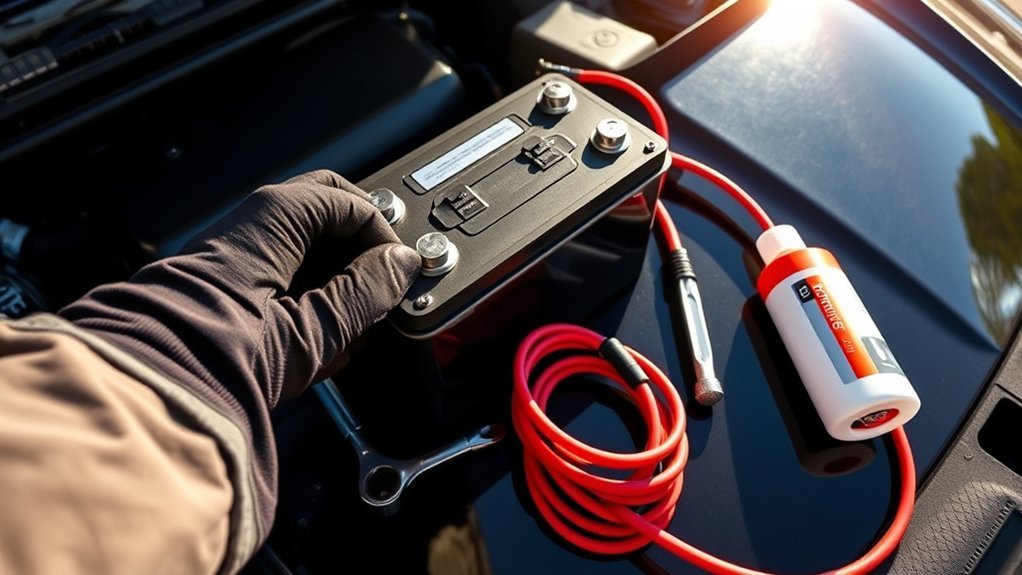
How to Install a Car Battery: Simple Installation Steps

car battery installation guide

To install a car battery, start by ensuring safety—park on a flat surface and wear gloves and goggles. Disconnect the old battery by first removing the negative terminal, then the positive. Clean the terminals with a wire brush before installing the new battery, connecting the positive terminal first followed by the negative. Check connections and test the vehicle to ensure it’s running properly. Explore further for specific tools and troubleshooting tips.

Key Takeaways

  • Ensure safety by wearing goggles and gloves, and disconnecting the negative terminal first during battery removal.
  • Use a ratchet set to remove terminal connections and lift the old battery out carefully.
  • Clean battery terminals with a wire brush and apply dielectric grease to prevent corrosion.
  • Connect the new battery by attaching the positive terminal first, followed by the negative terminal, ensuring snug connections.
  • Test the vehicle’s electrical systems and dispose of the old battery responsibly at a recycling center.

Safety Precautions Before Starting Your Battery Installation
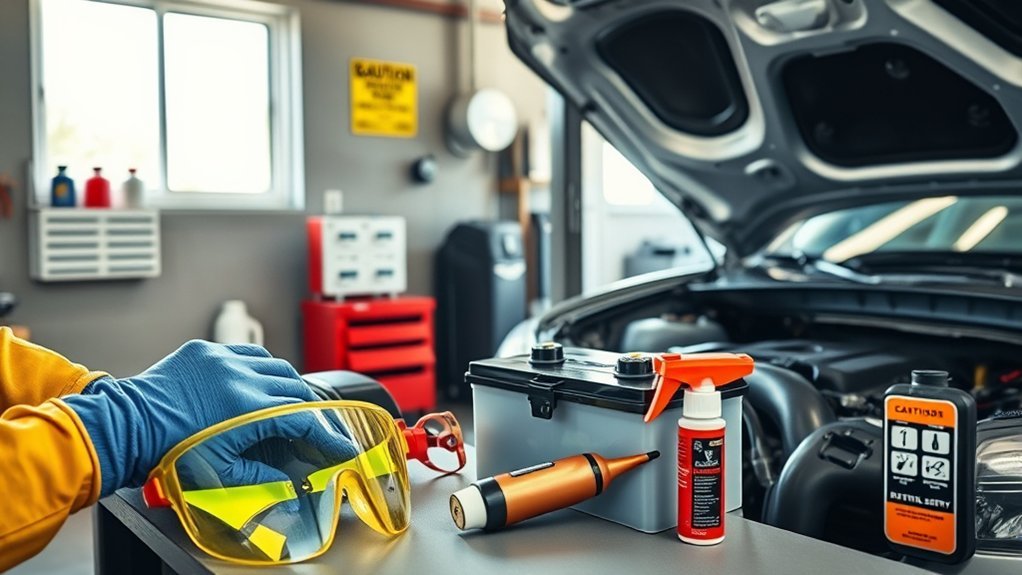
battery installation safety precautions

Before you begin the installation process, it’s crucial to take certain safety precautions to protect yourself and your vehicle.

Start by parking your vehicle on a dry, flat surface, and engage the parking brake to prevent any movement during installation. Ensure the ignition is off and allow the engine to cool to avoid burns or electrical hazards.

Wear safety goggles and gloves to shield your eyes and hands from battery acid or debris. Secure long hair and avoid loose clothing or jewelry to prevent entanglement and installation mistakes.

Lastly, prohibit smoking or any open flames under the hood, especially near the battery, to minimize fire or explosion risks.

These battery maintenance steps are vital for a safe and effective installation.

What Tools Do You Need to Change Your Car Battery?
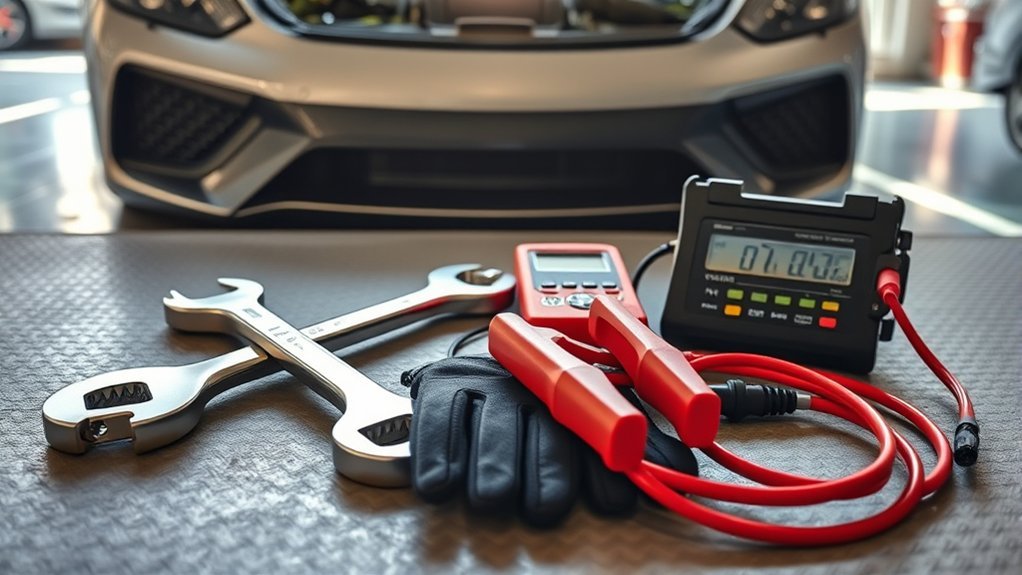
essential tools for battery replacement

To change your car battery effectively, you’ll need essential safety gear like goggles and gloves to protect yourself.

Common tools such as a ratchet set and wrenches are crucial for removing terminal connections and securing the battery.

Additionally, cleaning supplies like a wire brush and battery cleaning solution will ensure optimal contact for your new battery.

Essential Safety Gear Needed

When changing your car battery, having the right safety gear is crucial for protecting yourself and ensuring the task goes smoothly.

Here are the essential items you’ll need:

  • Safety goggles: Protect your eyes from acid splashes and debris.
  • Gloves: Prevent skin irritation and contamination from battery acid.
  • Wire brush: Clean battery terminals for a solid connection.
  • Ratchet and socket: Loosen and tighten battery cable clamps effectively.
  • Battery cleaning solution: Remove corrosion and prolong your new battery’s life.

Utilizing this safety gear not only safeguards you during the installation process but also enhances the efficiency of your work.

Always prioritize your safety to ensure a successful battery change.

Common Tools for Installation

After gathering your safety gear, it’s time to focus on the tools you’ll need for changing your car battery.

First, a ratchet set with the correct socket size is essential for loosening and removing battery terminal clamps. You’ll also need a wire brush to clean the terminals and eliminate any terminal corrosion, which is crucial for effective battery maintenance.

Having a battery cleaning solution on hand can further ensure that the terminals remain free from contaminants. Additionally, a torque wrench is beneficial for securing battery clamps according to the manufacturer’s specifications, ensuring a tight fit.

With these tools, you’ll be well-equipped to handle the installation process efficiently and safely.

Cleaning and Maintenance Supplies

While preparing to change your car battery, it’s crucial to gather the right cleaning and maintenance supplies to ensure optimal performance.

Here’s a list of essential items you’ll need:

  • Safety goggles and gloves
  • Wire brush
  • Ratchet set
  • Battery cleaning solution
  • Dielectric grease

These tools are vital for effective battery maintenance.

Use the wire brush to clean terminals of any corrosion, a key step in your corrosion prevention methods. The ratchet set will help you loosen and secure terminal clamps.

Applying battery cleaning solution can remove stubborn contaminants, enhancing conditions for your new battery.

Finally, don’t forget to apply dielectric grease after installation; it’s one of the best battery maintenance tips to prevent future corrosion and maintain a reliable electrical connection.

Identifying Your Car Battery Type and Location
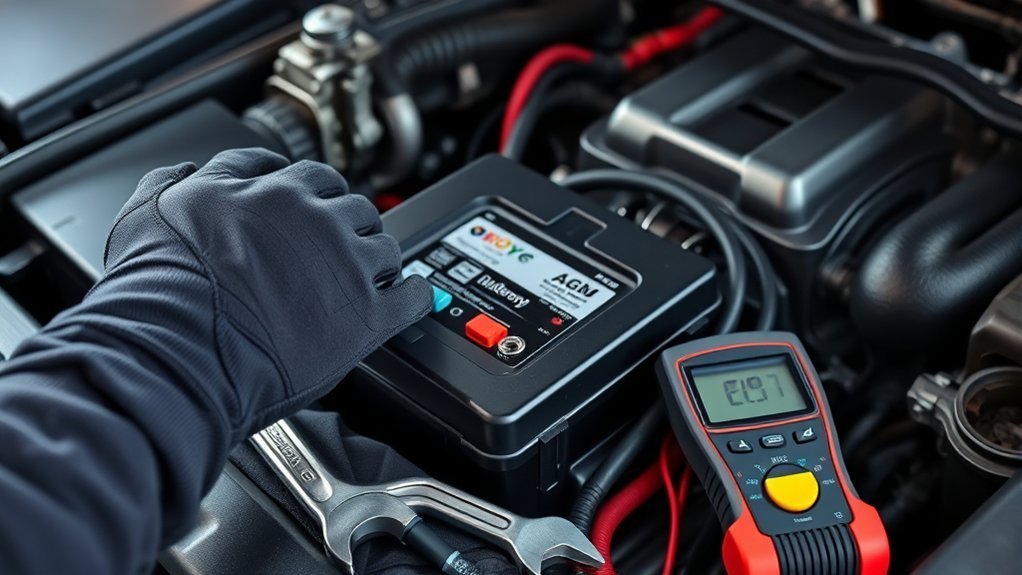
battery selection and location

How can you ensure you’re selecting the right battery for your vehicle? Start by consulting your owner’s manual to identify the specific battery type and dimensions required for your car model.

Most batteries are located under the hood, often near the front, but some can be found in the trunk or under the rear seat. Familiarize yourself with the two main types: lead-acid and AGM (absorbed glass mat), with AGM offering better performance in extreme conditions.

Check the cold cranking amps (CCA) rating, as it indicates the battery’s ability to start your engine in cold temperatures.

Lastly, ensure you note the group size number for compatibility with your vehicle’s battery tray and connections—these installation tips are essential for a successful battery replacement.

Step-By-Step: Disconnecting Your Old Battery

To safely disconnect your old battery, start by ensuring your vehicle is parked on a flat surface with the ignition off and the parking brake engaged. This promotes battery safety and reduces the risk of accidents.

  • Disconnect the negative terminal first; loosen the bolt on the black cable marked with a minus (-) symbol.
  • Secure the negative clamp away from the battery to prevent electrical shorting.
  • Next, disconnect the positive terminal by loosening the bolt on the red cable marked with a plus (+) symbol.
  • If necessary, remove any clamps or brackets holding the battery in place, using appropriate tools.
  • Finally, lift the battery out of its compartment carefully, avoiding sudden movements to ensure proper battery maintenance.

Cleaning Your Battery Terminals Before Installation

After you’ve safely removed your old battery, it’s important to inspect and clean the battery terminals before installing the new one.

Check for corrosion, as this can impede electrical connections and hinder your vehicle’s performance. To clean the terminals, use a wire brush along with a battery cleaning solution, ensuring all debris is removed for optimal connectivity.

Always wear gloves, safety goggles, and a mask during this process to protect yourself from harmful materials and dust.

After cleaning, apply a thin layer of dielectric grease to the terminals. This step is crucial for battery corrosion prevention, as it helps secure a reliable electrical connection while reducing the likelihood of future corrosion.

Essential Steps for Safely Installing Your New Battery

Before diving into the installation process, ensure your vehicle is parked on a flat surface with the parking brake engaged and the ignition off to prevent any accidental starts.

Follow these essential steps for a safe battery installation:

  • Disconnect the old battery, starting with the negative terminal.
  • Remove any securing clamps or brackets before lifting the old battery out.
  • Clean the terminals and battery tray thoroughly to promote optimal connectivity.
  • Install the new battery securely, ensuring it fits snugly.
  • Reconnect the terminals, beginning with the positive cable.

Following these steps not only ensures safety but also enhances your battery lifespan.

Remember these maintenance tips for your new battery to keep it functioning effectively over time.

Connecting the Battery Cables: Order and Technique

When connecting the battery cables, always start with the positive terminal by attaching the red cable to the positive (+) terminal.

Next, connect the negative terminal using the black cable on the negative (-) terminal.

Make sure all connections are secure, but be cautious not to overtighten, as this can damage the terminals.

Positive Terminal Connection First

Connecting the positive terminal first is crucial for safely installing a car battery and preventing potential electrical issues.

Start by identifying the positive terminal, which is marked by a red cable and a plus (+) symbol. Here’s how to ensure a secure connection:

  • Attach the positive cable to the positive terminal snugly.
  • Use a ratchet or wrench to tighten the connection, but don’t over-tighten.
  • Ensure there’s no corrosion or dirt on the terminals.
  • Double-check that the cable is securely fitted.
  • Proceed to connect the negative terminal afterward.

Negative Terminal Connection Next

After securing the positive terminal, it’s time to connect the negative terminal, which is indicated by the black cable and minus (-) symbol.

Begin by positioning the negative cable away from any metal components in the vehicle to ensure connection safety and reduce the risk of accidental short circuits. Firmly attach the negative terminal to the battery post and make sure it’s snugly secured.

This prevents any loose connections that could lead to electrical issues or battery failure. Once connected, visually inspect both terminals to confirm they’re tightly attached and free from corrosion or debris.

Properly connecting the negative terminal completes the circuit, ensuring your battery operates efficiently and safely.

Tightening Cable Connections Securely

To ensure a reliable connection, always tighten the battery cable connections securely after attaching the terminals.

Start by connecting the positive (red) cable first, followed by the negative (black) cable. Use proper tightening techniques to snugly fasten the terminal bolts with a ratchet or wrench, being cautious not to over-tighten, as this can damage the battery posts.

After securing the connections, give each cable a gentle tug to verify connection stability. To further enhance longevity, consider applying dielectric grease on the terminals to prevent corrosion.

  • Connect positive cable first
  • Follow with negative cable
  • Use a ratchet or wrench
  • Avoid over-tightening
  • Apply dielectric grease for protection

How to Test Your Vehicle After Installing the New Battery?

How can you ensure your vehicle is functioning properly after installing a new battery?

Start by turning the ignition key to the “on” position without starting the engine. This allows you to check if the dashboard lights and electrical system power up correctly.

Next, start the engine and listen for any unusual sounds; a smooth start indicates good battery performance, while clicking noises suggest a poor connection.

Afterward, use a multimeter to measure the voltage; a reading between 12.6 to 12.8 volts signifies a fully charged battery.

Finally, activate various electrical components like headlights and air conditioning to confirm the battery can handle the load without dimming or stalling.

If the engine fails to start, double-check the battery connections for tightness and corrosion.

Troubleshooting Common Issues After Battery Installation

When you encounter issues after installing a new car battery, it’s crucial to troubleshoot effectively to ensure your vehicle operates smoothly.

Start with these steps to enhance battery performance and conduct thorough electrical diagnostics:

  • Check that battery terminals are tightened and free from corrosion.
  • Verify that the battery is oriented correctly with proper connections.
  • Inspect for blown fuses or frayed cables that may have developed during installation.
  • Listen for clicking sounds when starting; this could indicate a weak battery charge or a faulty battery; test the voltage if necessary.
  • Recheck grounding connections to ensure a solid link between the battery and the vehicle chassis.

Following these steps can help you identify and resolve common post-installation issues.

Responsible Disposal of Your Old Car Battery

Proper disposal of your old car battery is essential for both safety and environmental protection. Lead-acid batteries contain hazardous materials like lead and sulfuric acid, which can significantly harm the environment if improperly disposed of.

To mitigate this risk, always take your old battery to a certified recycling center or an automotive retailer that accepts used batteries. Many of these locations offer battery recycling options and may even provide a small refund or credit, encouraging responsible disposal practices.

It’s crucial to check local regulations, as disposing of car batteries in regular trash is illegal in some areas. Additionally, local automotive shops often have disposal programs to ensure your battery is recycled correctly, minimizing its environmental impact.

Frequently Asked Questions

How Long Does a Car Battery Typically Last?

A car battery typically lasts three to five years. Factors affecting battery lifespan include climate, driving habits, and maintenance. Regular checks and proper care can help maximize your battery’s performance and longevity.

Can I Install a Car Battery in the Rain?

You can install a car battery in the rain, but ensure you take battery safety seriously. Use rain precautions like wearing waterproof gear and keeping connections dry to prevent corrosion and ensure a safe installation.

What Happens if I Connect the Terminals Incorrectly?

If you connect the terminals incorrectly, you’re playing with fire. You risk battery safety, causing terminal damage or even a short circuit. Always double-check connections to ensure smooth sailing on your automotive journey.

Do I Need to Wear Gloves While Handling the Battery?

Yes, you should wear gloves while handling the battery. This safety precaution protects your hands from acid and corrosion, ensuring better battery maintenance. Always prioritize safety to prevent injuries and prolong your battery’s lifespan.

Can I Reuse the Old Battery Cables?

Absolutely, you can reuse old battery cables if they’re in excellent condition and compatible with the new battery. Just inspect them closely for corrosion or damage to ensure a reliable connection. Don’t take any chances!

Conclusion

Installing a new car battery can seem daunting, but with the right tools and steps, it’s a straightforward process. You’ve moved from uncertainty to confidence, transforming a potential hassle into a simple task. Once you’ve replaced the old battery, testing your vehicle ensures everything’s running smoothly, while responsible disposal of the old battery helps protect the environment. Embrace this DIY opportunity, and enjoy the satisfaction of keeping your vehicle powered and ready for the road ahead.

Liam Sterling Avatar

Leave a Comment

Leave a Reply

Your email address will not be published. Required fields are marked *