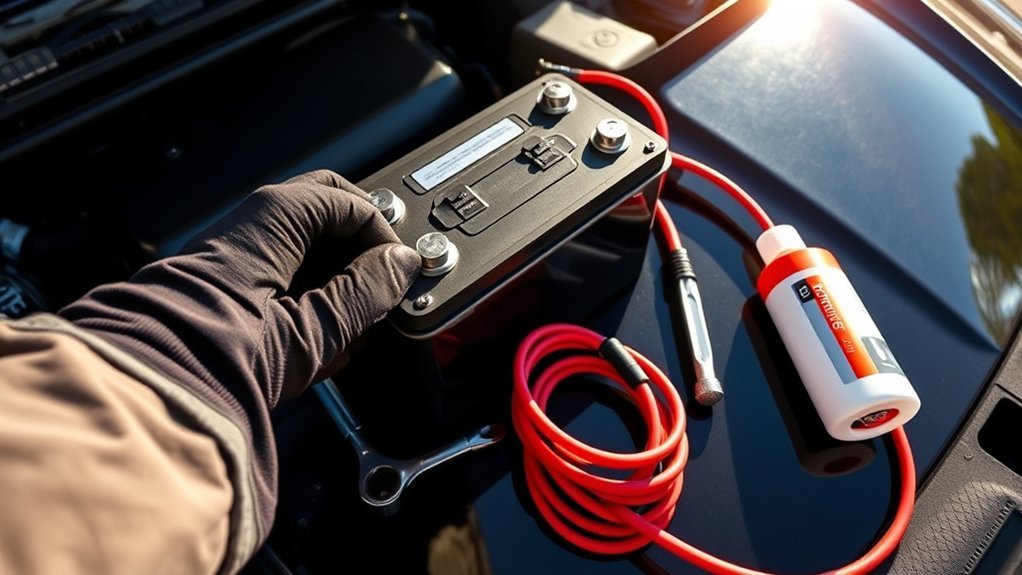
Installing a new car battery is a manageable task that can save you time and money. You need a few basic tools and a focus on safety to complete the job successfully. This guide covers the correct removal, installation, and testing procedures for your vehicle.
Quick Answer
To replace your car battery, disconnect the negative terminal first, then the positive. Clean the terminals, install the new battery, and connect the positive terminal first followed by the negative. Always wear safety gear and recycle your old battery at an automotive retailer.
Key Takeaways
- Wear goggles and gloves to protect against acid splashes during the installation.
- Disconnect the negative terminal first to avoid accidental short circuits.
- Clean terminal corrosion with a wire brush for a reliable electrical connection.
- Attach the positive terminal first when installing the new battery.
- Take your old battery to a recycling center or local automotive shop for proper disposal.
Safety Precautions Before Starting Your Battery Installation

Safety begins before you touch the first tool. Park your vehicle on a flat, dry surface and engage the parking brake to prevent movement.
Turn the ignition off and let the engine cool. This prevents burns and electrical hazards. Always wear safety goggles and gloves to protect your skin and eyes from sulfuric acid and debris.
Remove jewelry and secure loose clothing to prevent snagging. Prohibit smoking or open flames near the engine bay to avoid the risk of fire or battery explosions.
What Tools Do You Need to Change Your Car Battery?
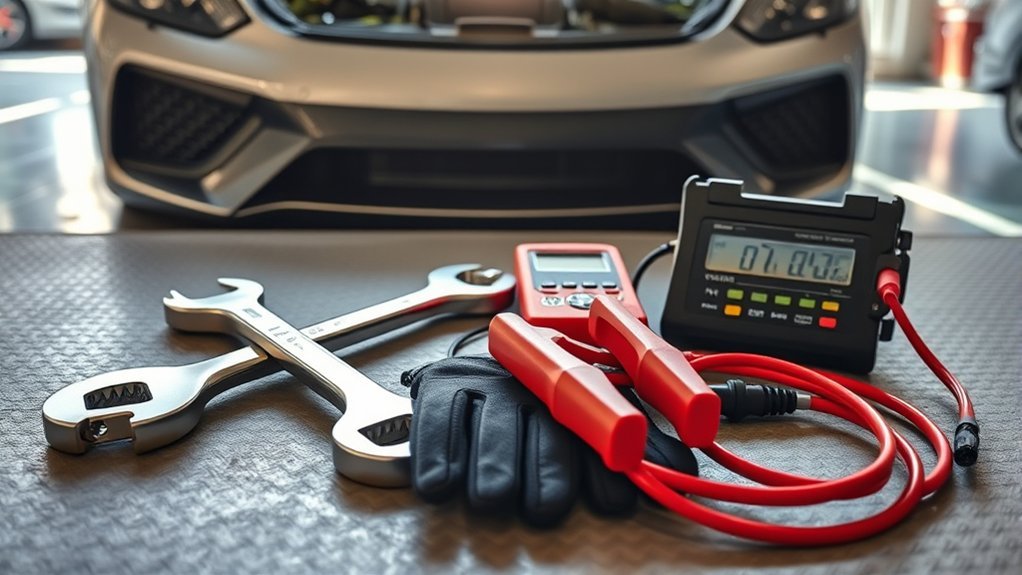
Having the right tools makes the task faster and safer. Gather your equipment before you start.
Essential Safety Gear Needed
Safety equipment is mandatory for this job. You should keep these items ready:
- Safety goggles to shield your eyes from debris.
- Work gloves to protect your hands from chemicals.
- A wire brush to clean battery terminals.
- A ratchet and socket set to loosen cable clamps.
- Battery cleaning solution to remove corrosion.
Common Tools for Installation
A ratchet set with the correct socket size helps you remove and tighten battery clamps. Use a wire brush to scrub any corrosion off the terminals.
A battery cleaning solution removes stubborn contaminants. If you have one, use a torque wrench to ensure the clamps meet the manufacturer’s tightness specifications.
Cleaning and Maintenance Supplies
Proper cleaning prevents future issues. Beyond your basic tools, you should have dielectric grease on hand.
Use the wire brush to remove oxidation from the cable ends. Once the new battery sits in place, apply a thin layer of dielectric grease to the terminals. This prevents moisture from causing corrosion.
Identifying Your Car Battery Type and Location
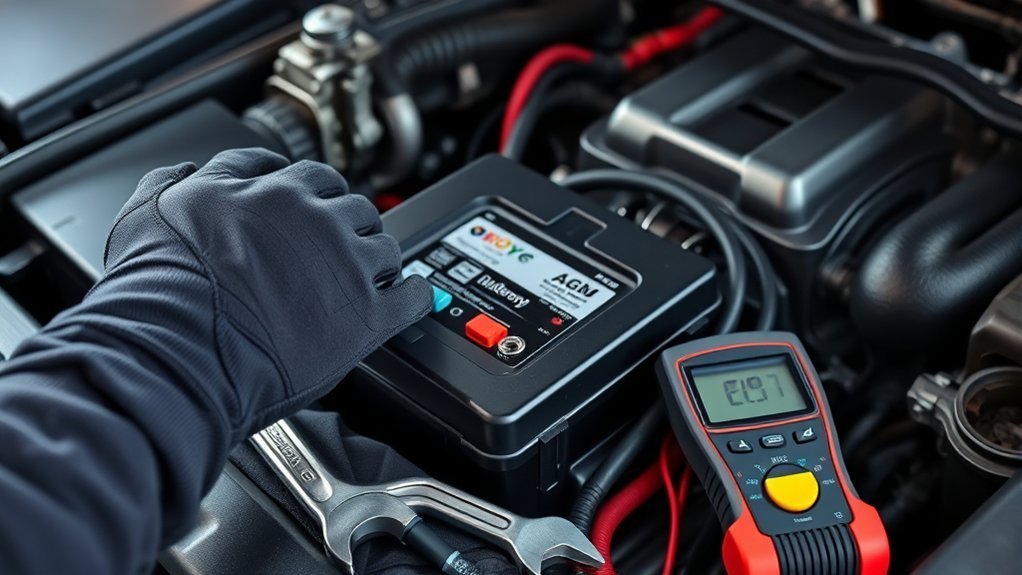
Check your owner’s manual to identify the exact battery type and group size your car requires. Most batteries sit under the hood, but some reside in the trunk or under the rear seat.
Look for the Cold Cranking Amps (CCA) rating. This number shows the battery’s power when starting the engine in cold weather. Always match the group size to your battery tray to ensure a proper fit.
Step-By-Step: Disconnecting Your Old Battery
Safety dictates the order of removal. Always work with the ignition off.
- Loosen the nut on the negative (-) terminal first using your ratchet.
- Pull the negative cable off and tuck it away so it cannot touch the terminal.
- Loosen the nut on the positive (+) terminal next.
- Remove any hold-down brackets or clamps securing the battery.
- Lift the old battery carefully out of the engine compartment.
Cleaning Your Battery Terminals Before Installation
Corrosion blocks electrical flow. Inspect the cable clamps for white or green crusty deposits.
Scrub the clamps and the tray area with a wire brush and your cleaning solution. Ensure all loose debris falls away from the battery compartment.
Apply a small amount of dielectric grease to the cleaned terminals. This protects them from future corrosion and ensures a solid connection.
Essential Steps for Safely Installing Your New Battery
Once the area is clean, place the new battery into the tray. Ensure it sits flat and does not wobble.
- Position the battery so the positive and negative posts align with the cables.
- Reinstall any hold-down brackets to keep the battery from moving.
- Connect the positive cable to the positive terminal first.
- Connect the negative cable to the negative terminal last.
- Tighten all nuts until the connections are snug.
Connecting the Battery Cables: Order and Technique
The order of operations prevents electrical arcs. Always follow the positive-first, negative-last rule.
Positive Terminal Connection First
Identify the positive terminal by the red cable or the plus (+) sign. Slide the cable clamp onto the post and tighten the bolt. Ensure the connection does not rotate when you pull it gently.
Negative Terminal Connection Next
Connect the black cable with the minus (-) sign last. You might see a small spark when the cable touches the terminal; this is normal. Tighten the clamp until secure.
Tightening Cable Connections Securely
A loose cable causes starting issues. Do not overtighten, as you might crack the battery post or strip the bolt threads. If the cable feels tight and firm, you have finished correctly.
How to Test Your Vehicle After Installing the New Battery?
Turn the key to the “on” position without cranking the engine. Check the dash for illuminated lights and functional electronics.
Start the engine and listen for a quick, strong crank. If you hear rapid clicking, check your cable connections again. Use a multimeter to confirm the battery voltage measures 12.6 to 12.8 volts.
Troubleshooting Common Issues After Battery Installation
If the car does not start, inspect your connections. Ensure the terminals are clean and the clamps are tight. Check for blown fuses if the electronics remain dark. Always consult a qualified professional if these steps do not solve the problem.
Responsible Disposal of Your Old Car Battery
Do not throw your old battery in the trash. It contains lead and acid that damage the environment. Take the battery to an auto parts store or a local recycling center. Many retailers offer a core charge refund when you bring in the old unit.
Frequently Asked Questions
How long does a car battery typically last?
Most car batteries last between three and five years. Driving conditions and climate often dictate the actual lifespan.
Can I install a car battery in the rain?
It is best to avoid working in the rain to keep electrical components dry. If you must, cover the area to prevent water from entering the battery tray or terminals.
What happens if I connect the terminals incorrectly?
Connecting terminals in reverse can damage your vehicle’s sensitive electrical components and potentially cause a battery explosion. Always double-check the signs before tightening the bolts.
Do I need to wear gloves while handling the battery?
Yes, gloves protect you from sulfuric acid residue found on old batteries. They also provide better grip while working in tight spaces.
Can I reuse the old battery cables?
You can reuse cables if they are clean and free of cracks. If the wires show heavy corrosion or fraying, replace them for better performance.
Conclusion
Changing your car battery is a practical skill that keeps your vehicle reliable. By following these steps, you ensure a safe installation and a healthy charging system. Once you test the engine, you are ready to drive with confidence.







Leave a Reply