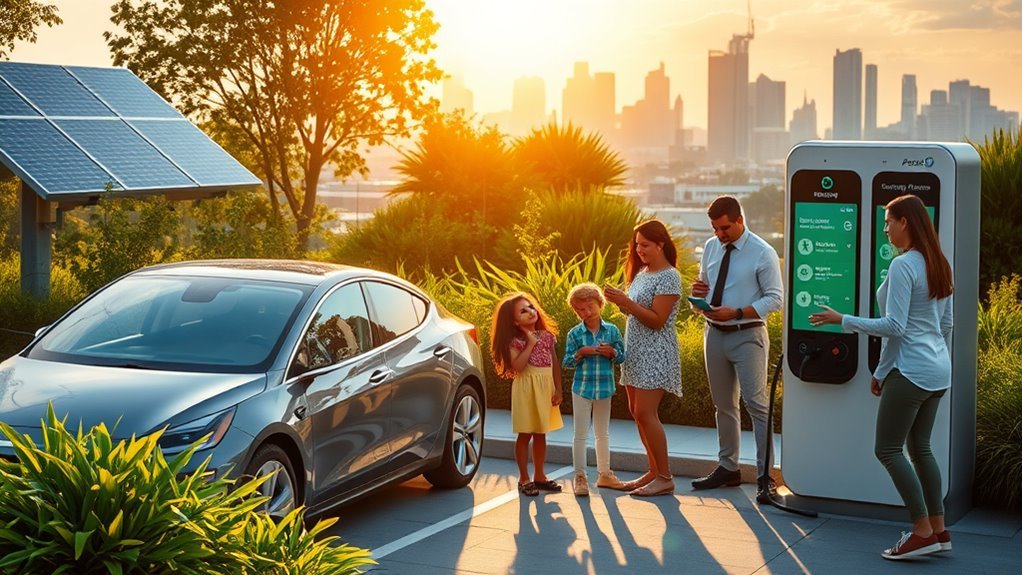
To reduce EV charging costs in the UK, charge at home during off-peak hours to benefit from rates as low as 4p per kWh. Invest in a smart charger to schedule charging times and integrate time-of-use tariffs for maximum savings. Take advantage of available grants like the EV Chargepoint Grant for installation costs. Regular maintenance of your charger guarantees safety and efficiency, helping you keep costs down. Keep exploring to uncover more valuable strategies!
Understanding EV Charging Costs and Key Components
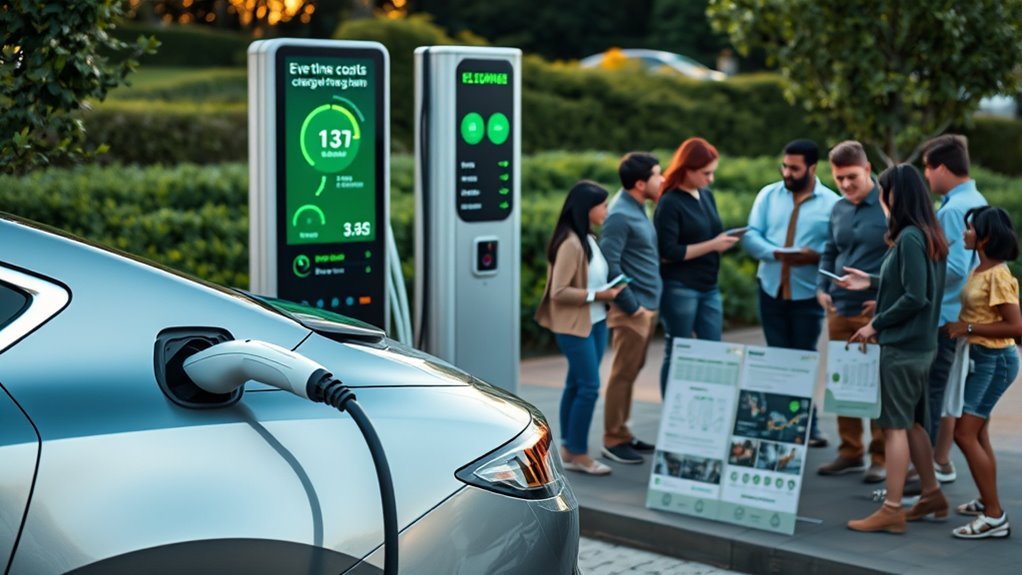
When you charge your electric vehicle (EV) in the UK, understanding the various factors that influence costs is vital. Your location plays a significant role; charging at home is usually cheaper, with tariffs around 25–30p per kWh, compared to higher public charging rates.
The charging speed also affects your expenses; faster charging can incur more costs, especially at public stations. For example, using dedicated EV tariffs during off-peak hours can dramatically reduce your bills to as low as 4p per kWh.
It’s important to calculate your charging costs accurately by multiplying the energy needed (kWh) by the tariff rate, factoring in efficiency losses. This strategic approach to both charging speed and location impact can help you take control of your EV charging expenses, empowering you to maximize savings and minimize your carbon footprint.
Maximize Savings With Off-Peak Tariffs
By taking advantage of off-peak tariffs, you can greatly cut your EV charging costs.
With options like Octopus Energy offering rates around 7.5p/kWh, you can save considerably compared to standard rates of 25–30p per kWh. Charging during off-peak hours, typically from midnight to early morning, lets you capitalize on these off-peak benefits, potentially saving between £300–£600 annually for an average of 8,000 miles driven.
Charging your EV during off-peak hours can save you £300–£600 annually with rates as low as 7.5p/kWh.
To access these savings, a smart meter is essential; it tracks your energy usage and enables automated charging during the cheapest periods.
Many EV owners can charge their vehicles for under £5 during off-peak hours, a stark contrast to the £18 cost at standard tariffs for a full charge on a 60 kWh battery.
With 62% of UK home chargers on smart tariffs, a quick tariff comparison can reveal the best options for maximizing your savings.
Optimize Your Home Charging Setup for Efficiency
To optimize your home charging setup, consider installing a smart charger that lets you take advantage of time-of-use tariffs, ensuring you charge your EV during cheaper off-peak hours.
Additionally, place your charger as close to your consumer unit as possible to reduce cabling costs and improve efficiency.
Smart Charger Utilization
As you look to optimize your home charging setup for efficiency, leveraging smart chargers can be a game changer in reducing your electric vehicle (EV) charging costs. These devices offer various smart charging benefits, including scheduling charging during off-peak hours for rates as low as 4p per kWh. With remote monitoring through mobile apps, you can control and track your charging habits, maximizing cost savings. Features like dynamic load balancing help distribute electricity demand, enhancing efficiency while preventing circuit overload. Additionally, integration with home energy systems, like solar panels, allows you to utilize excess solar energy for charging.
| Feature | Benefit | Impact on Cost |
|---|---|---|
| Off-Peak Scheduling | Lowers rates to 4p per kWh | Significant savings |
| Remote Monitoring | Control via mobile apps | Enhanced efficiency |
| Dynamic Load Balancing | Prevents overload | Optimizes charging |
Optimal Charger Placement
Choosing the right location for your EV charger can greatly impact both your charging experience and costs.
Ideally, place your charger on a driveway wall or garage wall for easy access and protection from the elements, which can enhance its lifespan.
Keep it close to your electrical supply to minimize installation complexity; remember, longer cable runs over 10m can add £10–£20 per metre.
Effective cable management is key, ensuring a clutter-free setup for convenience and safety.
If you have multiple vehicles, consider a dedicated EV charging pillar for flexibility and future needs.
Finally, prioritize accessibility to encourage daily plug-in habits, making home charging seamless and efficient.
Follow these installation tips for an excellent charger location.
Utilize Grants for Charger Installation
You can considerably cut down on the cost of installing an EV charger by taking advantage of available grants, like the EV Chargepoint Grant, which offers up to £350 off.
Combining this with salary sacrifice schemes can lead to an effective reduction of 20-50% on installation costs.
Additionally, checking for local council incentives can further enhance your savings, making the shift to electric even more affordable.
Available Installation Grants
Installing an electric vehicle (EV) charger can be a significant investment, but available installation grants in the UK can substantially offset these costs. The EV Chargepoint Grant, for example, can reduce the installation cost of a standard 7kW charger by £350, making it more affordable for you.
| Grant Type | Benefits |
|---|---|
| EV Chargepoint Grant | Reduces costs by £350 |
| Local Authority Funding | Additional financial support |
| OZEV-approved Installers | Guarantees compliance and safety |
| Business Incentives | Encourages corporate adoption |
To qualify for the EV Chargepoint Grant, verify your installation meets grant eligibility and follow the application process with an OZEV-approved installer.
Salary Sacrifice Savings
A salary sacrifice scheme can considerably reduce the costs associated with installing an electric vehicle (EV) charger, offering savings of 20-50%.
By opting for this approach, you not only enjoy salary sacrifice benefits but also enhance the overall affordability of your EV charger installation.
The UK government’s £350 EV Chargepoint Grant complements this strategy, lowering the average installation cost of a standard 7kW charger to around £760.
Combining salary sacrifice with available grants allows you to greatly decrease upfront expenses, making it an attractive option.
Additionally, employers can leverage these schemes as employee incentives, promoting electric vehicle adoption while contributing to a greener corporate environment.
It’s a win-win for both your wallet and the planet.
Installation Cost Breakdown
Understanding the costs associated with EV charger installation is essential for homeowners looking to make the switch to electric vehicles. The average cost for a standard 7kW charger installation is about £1,110, but with the £350 EV Chargepoint Grant, you can reduce this to approximately £760.
Installation types play a vital role; simple setups range from £800 to £900, while complex installations can exceed £2,000 due to cost factors like mounting surfaces and distance from the consumer unit.
Additional expenses might arise from necessary groundworks or consumer unit upgrades, which can range from £200 to £2,000.
To minimize costs, gather multiple itemized quotes from OZEV-approved installers and consider bundling installation with other electrical work.
Choose Smart Chargers for Enhanced Management
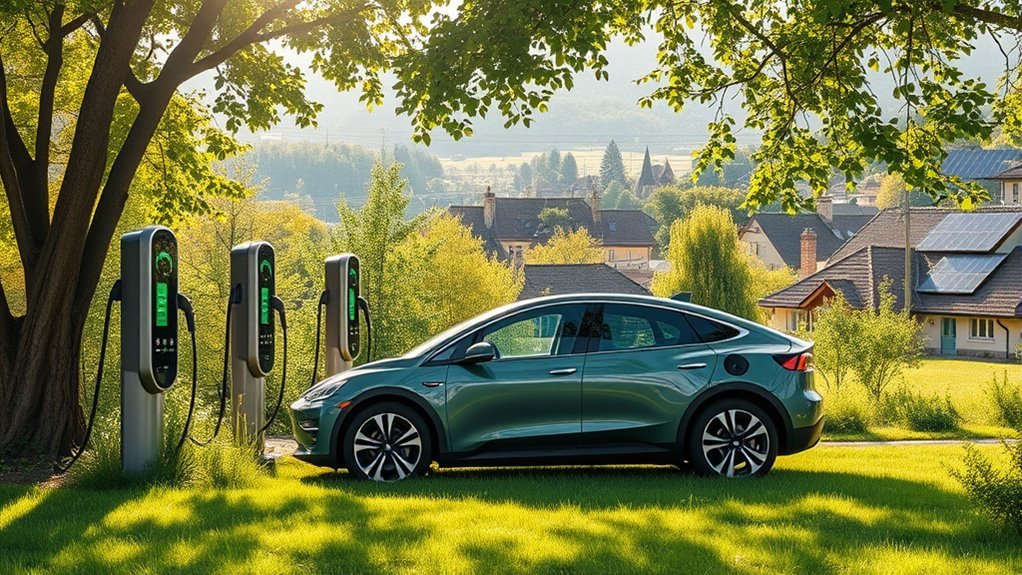
When you choose smart chargers for your electric vehicle, you release the potential for enhanced management of your charging costs and efficiency.
By leveraging smart charger features, you can optimize your charging schedule and greatly reduce your expenses.
Consider these benefits:
- Schedule Charging: Charge during off-peak hours to take advantage of lower electricity rates, potentially saving you £300–£600 annually.
- Real-Time Control: Utilize mobile apps to monitor usage patterns and adjust your habits accordingly, maximizing savings.
- Renewable Energy Integration: Smart chargers can prioritize renewable energy sources, reducing reliance on costly grid electricity.
Essential Maintenance Tips for Your EV Charger
To keep your EV charger operating efficiently and safely, regular maintenance is crucial. Start with basic charger maintenance, which involves conducting visual inspections of the charging cable and connectors. Look for any fraying or corrosion that could compromise safety.
It’s equally important to check the charger itself for visible damage or wear. Keeping your charger clean and free from debris prevents overheating and guarantees peak performance.
While most chargers require minimal upkeep, consider scheduling annual service checks with a qualified technician to verify everything is functioning correctly and adheres to safety regulations.
Finally, don’t forget to inform your home insurer about your EV charger installation. This keeps your coverage intact and addresses any potential impacts on your premiums.
Is Home Charging Better Than Public Charging?
How do you weigh the benefits of home charging against public charging for your electric vehicle? The choice is clear when you consider the significant advantages of home charging.
- Cost savings: Home charging can cost as little as 4p per kWh during off-peak hours, compared to 25-30p for public charging.
- Convenience: Charging overnight means you start each day with a full battery, eliminating the need for frequent public stops.
- Lower VAT: Home electricity is taxed at 5%, while public charging incurs a 20% VAT, enhancing your savings.
Frequently Asked Questions
What Is the Cheapest Way to Charge EV in the UK?
The cheapest way to charge your EV in the UK is through home charging, especially during off-peak hours. Public charging stations usually charge more, so optimizing your home setup can save you considerably.
How to Optimize EV Charging for Lower Costs?
To optimize EV charging for lower costs, use smart charging systems to schedule home charging during off-peak hours. This strategy minimizes expenses and maximizes efficiency, ensuring you charge your vehicle affordably and conveniently.
Will EV Prices Go Down in 2025 in the UK?
Yes, EV prices are expected to go down in 2025 in the UK. Market trends indicate competition and advancements in technology will likely drive future pricing lower, making electric vehicles more accessible for consumers.
What Is the Congestion Charge for 2026?
In 2026, the congestion charge skyrockets to £15 daily from 7:00 AM to 10:00 PM, Monday to Friday. Review the latest congestion pricing regulations for potential exemptions, especially if you’re an electric vehicle owner.
Conclusion
In summary, cutting costs on EV charging in the UK is achievable with smart strategies. By tapping into off-peak tariffs, optimizing your home setup, and using grants, you can greatly save. Pairing these practices with smart chargers enhances efficiency, while essential maintenance guarantees longevity. Ultimately, balancing home and public charging can lead to the best benefits. So, stay savvy, save greatly, and drive down those charging costs effectively.





Leave a Reply