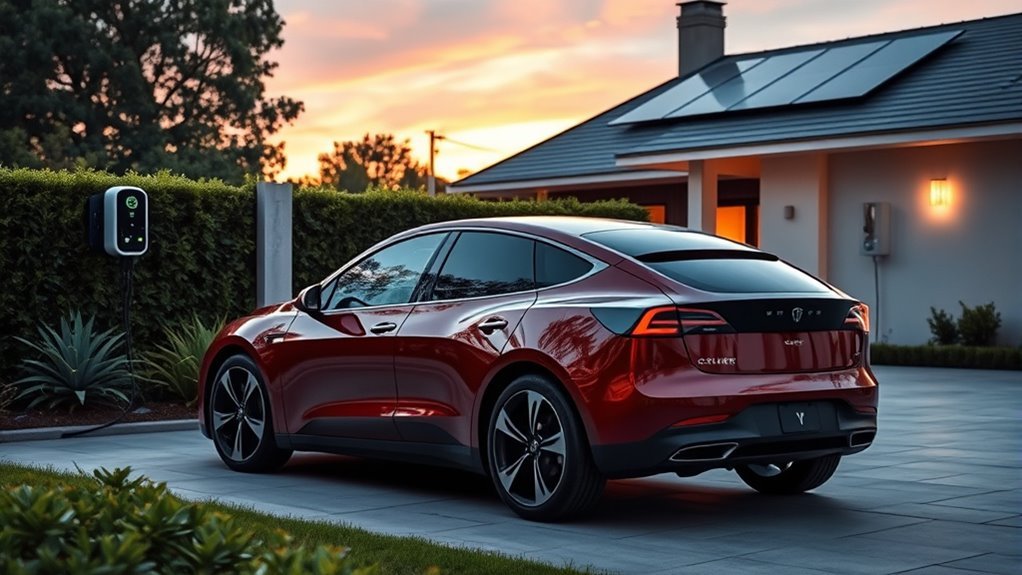
Yes, you can charge your electric car at home, and it’s often more convenient and cost-effective than using public stations. You’ll need either a Level 1 charger using a standard outlet or a quicker Level 2 charger for faster charging. Installation typically requires professional help and costs between $500 to $2,000. Keep an eye on your electricity rates to save even more. Want to know more about the ups and downs of home charging?
Charging Your Electric Car at Home: A Step-by-Step Guide
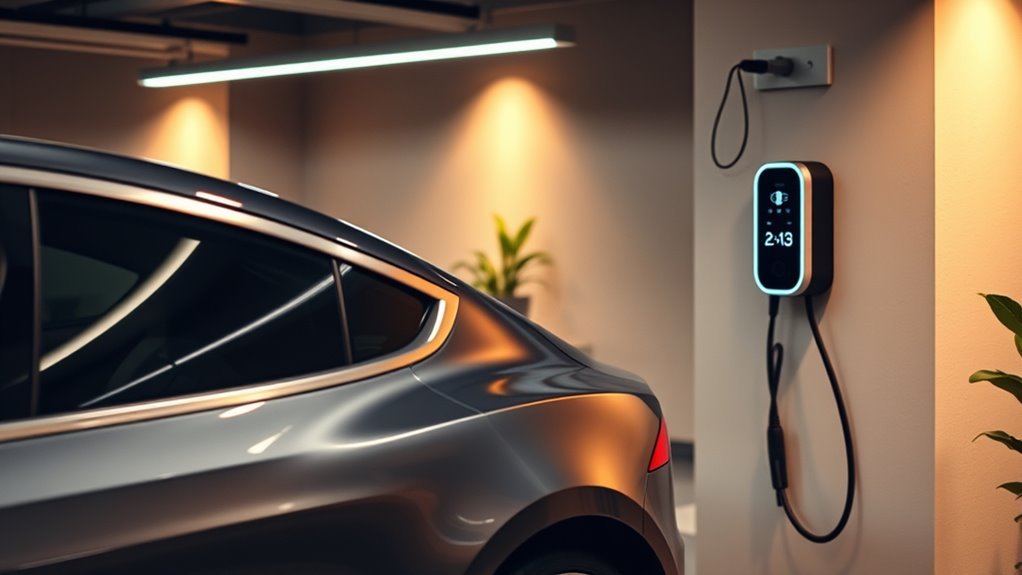
When you decide to charge your electric car at home, you gain the convenience of refueling overnight while saving on electricity costs.
Home charging solutions like Level 1 and Level 2 charging offer flexibility based on your needs. Level 1 uses a standard outlet, but for quicker charging, consider a Level 2 setup, which requires professional installation to guarantee safety and compliance with local regulations. Installation costs range from $500 to $2,000, but these can be offset by state incentives.
To maximize efficiency, consider pairing your charging schedule with time-of-use electricity plans that charge lower rates during off-peak hours.
If you’re charging outdoors, confirm your setup includes weatherproof solutions and follow charging safety tips, like proper cable management, to avoid hazards.
Embracing home charging not only liberates you from public stations but also empowers you to control your electric vehicle’s energy consumption.
Essential Equipment for Home EV Charging
To effectively charge your electric vehicle at home, having the right equipment is key. First, consider investing in a Level 2 charging station, which provides faster charging speeds—up to 40 miles of range per hour. Make sure your home charging equipment is compatible with your EV and safety-certified, such as ENERGY STAR products. You may also want to explore smart home chargers to manage your energy consumption efficiently.
Here’s a quick breakdown of essential home charging equipment:
| Equipment Type | Key Features |
|---|---|
| Level 2 Charger | 240-volt outlet, faster charging |
| EVSE (Electric Vehicle Supply Equipment) | Safety-certified, energy-efficient |
| Smart Charger | Schedule management, cost savings |
Installing this equipment might range from $500 to $2,000, but you could benefit from state and utility incentives. With the right setup, you’ll enjoy a seamless and liberating EV charging experience at home.
Charging Levels for Electric Cars at Home
When it comes to charging your electric car at home, understanding the differences between Level 1 and Level 2 charging is key.
Level 1 charging is convenient for light daily commutes but may leave you wanting more range, while Level 2 charging greatly boosts your driving capacity for longer trips.
Choosing the right option depends on your driving habits and how much you’re willing to invest in home charging equipment.
Level 1 Charging Overview
Though not the fastest option available, Level 1 charging offers a convenient way to power your electric vehicle (EV) at home using a standard 120-volt outlet. Here’s a quick comparison of its advantages and limitations:
| Level 1 Advantages | Level 1 Limitations |
|---|---|
| Easy to use with standard outlets | Slowest charging option available |
| No special installation needed | Takes up to 24 hours for a full charge |
| Ideal for short daily commutes | Not suitable for longer driving ranges |
| Equipment typically included | Limited range added per hour (3-5 miles) |
| Cost-effective for overnight use | May require upgrade for daily drivers |
While Level 1 charging can suit casual drivers, consider your needs—especially if you have a larger battery or longer daily commutes.
Level 2 Charging Benefits
Level 2 charging stands out as the ideal solution for electric vehicle (EV) owners seeking faster, more efficient power at home. Operating at 240 volts, these chargers provide impressive charging speeds, delivering 15-30 miles of range per hour.
This means you can fully charge your vehicle overnight, effortlessly accommodating longer commutes or larger battery EVs.
Moreover, many states and utility companies offer installation incentives to help offset the setup costs, typically ranging from $500 to $2,000.
Opting for professional installation guarantees safety and compliance with local regulations, reducing risks associated with electrical failures.
With Level 2 charging, you gain the freedom to charge your EV conveniently, transforming your home into a powerful energy hub.
How to Install an EV Charger at Home
Before installing an EV charger at home, you need to assess your electrical capacity to guarantee it can handle the new load.
A professional electrician can help you determine this and advise on any necessary upgrades.
Plus, don’t forget to check local regulations and obtain the required permits to keep everything compliant and safe.
Assess Electrical Capacity
When considering installing an EV charger at home, evaluating your electrical capacity is vital to confirm your system can support the additional load.
Start with an electrical assessment by hiring a qualified electrician to inspect your home’s electrical panel and wiring. This assessment helps determine your load capacity and whether you need upgrades, like adding circuits or increasing amperage, especially for a Level 2 charger.
Remember, EV charging is classified as a continuous load by the National Electrical Code (NEC), so it’s important to verify your setup meets safety standards.
Professional installation not only guarantees compliance with NEC guidelines but also provides peace of mind, knowing you’re charging your vehicle safely and efficiently.
Obtain Necessary Permits
After evaluating your home’s electrical capacity, the next step is to check if you need any permits for your EV charger installation. Local regulations may require a permit application to verify compliance with state and local codes.
Here’s a quick installation checklist:
- Research local regulations: Determine if permits are required for your specific installation.
- Prepare a site installation plan: This may need to include the proposed location and equipment specifications.
- Consult a qualified electrician: They can help navigate the permitting process and guarantee adherence to the National Electrical Code.
Securing the necessary permits not only keeps you compliant but also assures a safe and efficient installation for your EV charger, empowering your shift to electric driving.
Understanding Your Home EV Charging Costs
Understanding your home EV charging costs can greatly impact your overall electric vehicle ownership experience.
Home charging typically proves more cost-effective than public stations, with residential rates averaging around $0.10 to $0.15 per kWh, compared to $0.20 to $0.60 for public options.
For instance, fully charging a 54 kWh battery for a 200-mile range at home could cost you around $6.
To maximize savings, consider time-of-use electricity plans, where overnight rates can drop to as low as 11 cents per kWh.
Keep in mind that efficiency factors also play a role; for example, if your EV uses 27 kWh per 100 miles, your charging cost could be about $0.03 per mile.
Ultimately, the frequency of your driving affects total charging expenses, as less driving means you can take advantage of those cheaper overnight rates.
How to Save on Charging Costs
Maximizing your savings on charging costs is a smart move for any electric vehicle owner. By employing a few strategic approaches, you can greatly reduce your energy expenses while enhancing your energy efficiency.
Here are three essential tips to keep in mind:
- Take Advantage of Time-of-Use Plans: Charge overnight when electricity rates are lower, often around $0.11 per kWh.
- Utilize Smart Home Chargers: These devices can optimize your charging schedule, ensuring you benefit from the cheapest rates.
- Monitor Your Charging Habits: Regularly check your electricity prices and adjust your charging times accordingly, particularly during off-peak hours.
Additionally, if you install a Level 2 charger, look for charging incentives like state or utility rebates to offset installation costs.
Key Regulations for Home EV Charging
When you decide to install a home EV charging station, it’s important to navigate the key regulations that govern the process. Understanding installation guidelines is vital, as local and state codes dictate safety measures and regulatory compliance.
Before you begin, check if you need permits from your local building authorities, as these can vary by region.
The National Electrical Code (NEC) defines EV charging as a continuous load, with specific provisions in Article 625 ensuring safe installation practices. You might also need a site installation plan approved by local authorities before proceeding.
To enhance safety and efficiency, opt for safety-certified equipment, such as those with the ENERGY STAR label. This not only meets regulatory requirements but also promotes peak performance.
Can You Charge an Electric Car With a Normal Plug?
Can you really charge an electric car with a normal plug? Yes, but it comes with caveats. Charging an electric vehicle (EV) through a standard outlet is feasible using Mode 1 or Mode 2 methods. However, Mode 2 is the safer choice, using an emergency charging cable with an In-Cable Control Box (ICCB).
Charging an electric car with a normal plug is possible, but opting for the safer Mode 2 method is highly recommended.
Here are some key points to take into account:
- Safety Concerns: Mode 1 poses significant fire hazards, while Mode 2 minimizes risks.
- Charging Speed: Using a normal plug can take over 24 hours, delivering a maximum of 8 miles of range per hour.
- Practical Use: It’s best for infrequent use, like emergencies, not regular daily charging.
For efficient daily charging, think about investing in a dedicated Level 2 charger, which can provide 15-30 miles of range per hour. This way, you can enjoy the freedom of electric driving without the long waits.
Advantages and Disadvantages of Home Charging Options
Charging an electric car at home presents both advantages and disadvantages that can considerably impact your experience as an EV owner.
One major advantage is cost-effectiveness; home charging typically offers lower electricity rates compared to public charging, which can range from $0.20 to $0.60 per kWh. Plus, Level 2 home chargers deliver faster speeds, adding up to 40 miles of range per hour—ideal for those with long commutes. The convenience of charging overnight also eliminates trips to public stations and the uncertainty of availability.
However, home charging isn’t without its downsides. Installing a home charger may require a professional assessment and can incur upfront costs between $500 and $2,000.
Additionally, while you can use a standard socket, it’s impractical for daily use due to lengthy charging times and safety risks. Balancing these factors will help you make the best choice for your EV lifestyle.
Frequently Asked Questions
Can You Charge an Electric Car at Home With a Normal Plug?
You can charge an electric car at home with a normal plug, but you’ll experience slow charging speeds. To guarantee safety, use Mode 2 charging and follow safety precautions to avoid potential hazards.
How Much Does It Cost to Charge an Electric Car With a 3 Pin Plug?
Charging an electric car with a 3 pin plug can cost around £6 for a full charge. However, for home efficiency, consider faster options to liberate yourself from long waits and safety concerns.
When You Buy an Electric Car, How Do You Charge It at Home?
To charge your electric car at home, consider installation options like a Level 1 or Level 2 charger. Level 2’s faster, but both can meet your needs; just guarantee proper installation for safety and efficiency.
Can I Use a Regular Outlet to Charge an EV?
Yes, you can use a regular outlet to charge your EV, but the charging speed is slow. Outlet types like Level 1 can take hours to fully charge, making it less practical for daily needs.
Conclusion
To sum up, charging your electric car at home offers convenience and cost savings, creating a seamless solution for sustainable driving. With the right equipment and knowledge, you’ll transform your garage into a green energy haven. Whether you opt for a powerful plug-in or a simple standard socket, the choice is yours. Embrace the electric evolution and enjoy the journey towards a cleaner, more efficient future, one charge at a time!






Leave a Reply