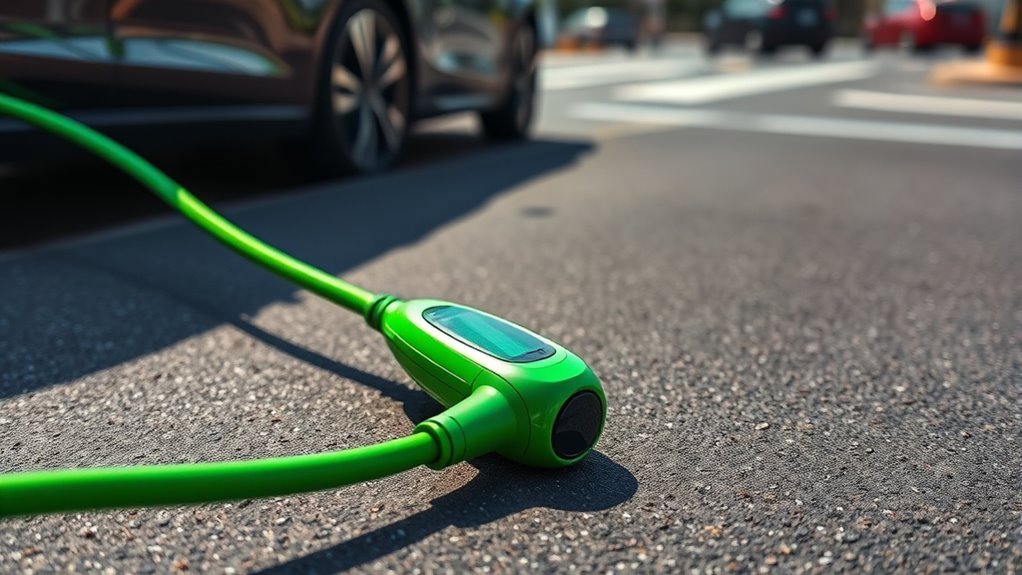
Driving over an EV charging cable isn’t a good idea. Your vehicle’s weight can deform the cable, damaging the insulation and increasing resistance. This can slow down charging and even create fire risks due to overheating. Instead, consider implementing strategies like suspending cables from the ceiling or using protective covers. Regular inspections help guarantee their safety too. If you want to learn more about keeping your cables safe and effective, there are plenty of smart solutions available.
Risks of Driving Over EV Charging Cables
When you drive over EV charging cables, you risk more than just a simple inconvenience; you may unknowingly cause significant damage that compromises both safety and efficiency.
The weight of your vehicle exerts pressure on the cables, deforming them and potentially damaging the cable insulation. This leads to kinks in the inner wires, increasing electrical resistance and reducing charging efficiency.
The pressure from your vehicle can deform charging cables, damaging insulation and increasing resistance, ultimately reducing efficiency.
Over time, this wear and tear can create serious safety hazards, including overheating and fire risks. If the cable integrity is compromised, you’ll find that charging your vehicle becomes slower and less effective, disrupting your experience.
Regularly inspecting your charging cables for signs of damage is crucial to maintain both functionality and safety.
Don’t let a moment of carelessness turn into a longer-term problem; being proactive can help you safeguard your investment and guarantee a smooth, reliable charging experience.
Smart Strategies to Keep Your Charging Cables Safe
To protect your EV charging cables from damage, implementing smart strategies is essential for ensuring their longevity and efficiency.
By adopting these safety measures, you can keep your cables organized and functional:
- Create a Raceway: Build a raceway or suspend the cable from the ceiling to avoid vehicle traffic and reduce stress on the cable.
- Inspect Regularly: Check your cables frequently for any signs of wear or damage; compromised cables can be a fire hazard and hinder charging performance.
- Use Cord Protectors: Elevate and organize your cables with cord protectors or bungee cords to minimize trip hazards and maintain their integrity.
- Install a Cable Holder: Consider adding an extendable charging cable holder to keep cables off the ground and allow for easy access in your garage.
Tips for Maintaining Your Charging Cable’s Integrity
Maintaining your EV charging cable’s integrity is vital for both safety and efficiency, especially since even minor wear can greatly impact performance.
Ensuring your EV charging cable’s integrity is crucial for safety and optimal performance, as even slight wear can make a significant difference.
Regularly inspect your cable for signs of damage, like kinks or fraying, which can lead to increased resistance. Proper cable storage is important; avoid leaving it in high-traffic areas where it can be driven over or tripped on.
Use protective covers or conduits to shield against environmental factors and physical damage. Elevating the cable with hooks or bungee cords can keep it off the ground, reducing tripping hazards and prolonging its lifespan.
Implementing these damage prevention strategies not only maintains your cable’s integrity but also empowers your charging experience. By taking these simple steps, you guarantee that your EV charging cable remains functional and safe, allowing you to drive freely without the worry of compromised performance.
How Does Cable Damage Affect Charging Efficiency?
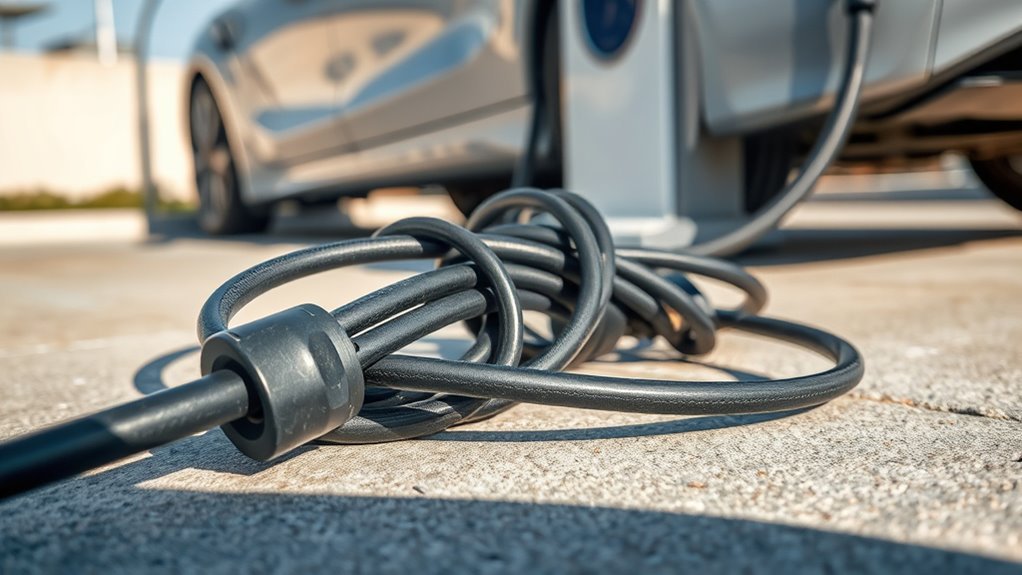
Cable damage can greatly impact your EV’s charging efficiency, making it vital to understand the consequences. When you drive over a charging cable, kinks can form in the wires, leading to increased cable resistance. This can result in several issues:
- Slower Charging Times: Impaired current flow means your EV charges more slowly.
- Overheating Risks: Damaged cables generate excess heat, which can compromise safety.
- Reduced Lifespan: Long-term use of a damaged cable can lead to inefficiencies and safety hazards.
- Potential Fire Hazard: Excess heat poses a significant risk of fire if left unchecked.
Regularly inspecting your charging cable for signs of wear is important. If you notice significant damage, replacing it’s necessary for maintaining peak charging performance.
Prioritizing cable integrity not only enhances efficiency but also guarantees your safety on the road.
Community Solutions: Innovative Cable Management Experiences
While steering through the challenges of EV ownership, effective cable management can make a significant difference in both safety and convenience.
Community engagement plays an essential role in fostering innovative cable organization solutions. For instance, many users have suggested suspending cables from garage ceilings or using bungee cords to elevate them, keeping them clear of vehicles.
Others recommend creating raceways or tracks, allowing smooth movement between parked cars while protecting cables from damage. Regularly unplugging and repositioning cables when another vehicle needs to move is another straightforward yet effective strategy.
Additionally, retractable or extendable cable management systems help reduce clutter and keep everything organized.
By sharing experiences and insights, community members can explore creative approaches to cable management, ensuring a safer and more efficient charging experience for everyone.
Embrace these collective strategies, and you’ll elevate your EV ownership journey.
Frequently Asked Questions
Can You Drive Over a Charging Cable?
You shouldn’t drive over a charging cable. Prioritizing charging cable safety helps maintain your EV’s efficiency. Instead, consider methods for EV cable maintenance, like using protective raceways, to avoid damaging your equipment and guarantee safe charging.
Can Car Charging Cables Be Driven Over?
You shouldn’t drive over car charging cables. Did you know continued pressure can increase resistance by 30%? Prioritize cable safety to avoid charging risks, extending your cable’s lifespan and ensuring efficient operation for your vehicle.
Can I Run an EV Charging Cable Across the Pavement?
You shouldn’t run an EV charging cable across the pavement. Instead, prioritize safety measures with effective cable management solutions. This keeps your charging setup secure, prevents damage, and guarantees efficient charging without compromising safety.
Can I Run an Electric Cable Across a Road?
While you might envision freedom in running cables across roads, it’s essential to heed road regulations and prioritize cable safety. Protecting your cables guarantees smooth journeys for both pedestrians and vehicles, fostering harmony in shared spaces.
Conclusion
Driving over EV charging cables can lead to costly complications and cable casualties. To guarantee safe, seamless charging, speak with your community about smart solutions and strategies for safeguarding your cables. By prioritizing proper placement and protective practices, you can prevent problems and preserve performance. Remember, keeping your charging setup secure not only boosts efficiency but also promotes peace of mind. So, let’s champion cable care and create a culture of conscientious charging!






Leave a Reply