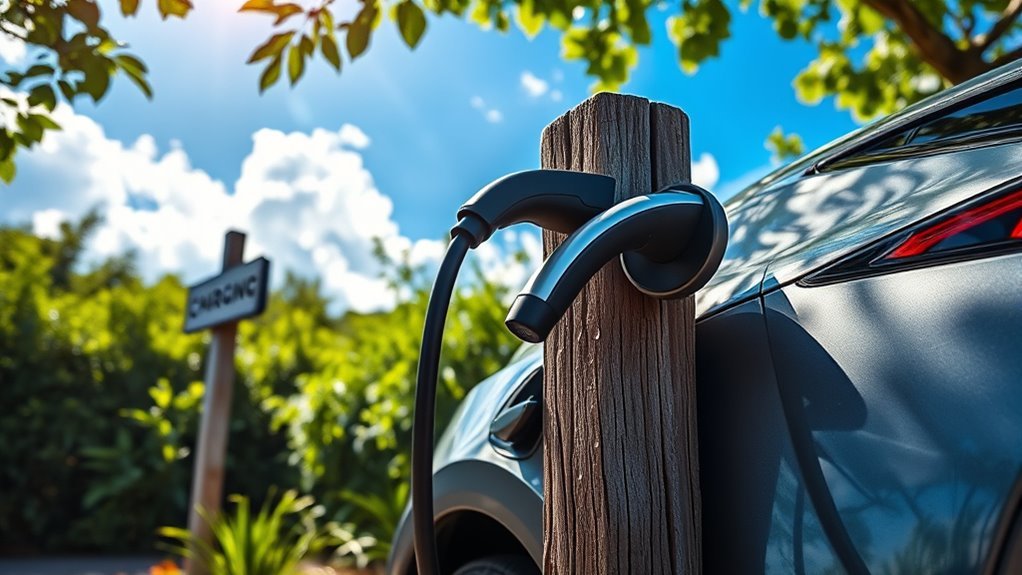
Yes, you can leave an EV charging cable outside, but it’s important to take into account weather conditions. Quality cables are designed to withstand rain and moisture, thanks to water-resistant materials. However, keeping the plug ends dry is essential. For added protection, use waterproof covers or store cables in a sheltered area to prevent damage from harsh weather. Regular inspections for wear and tear are essential to maintain safety and functionality. Explore more tips for ensuring your charging cable lasts!
Is It Safe to Leave an EV Charging Cable Outside?
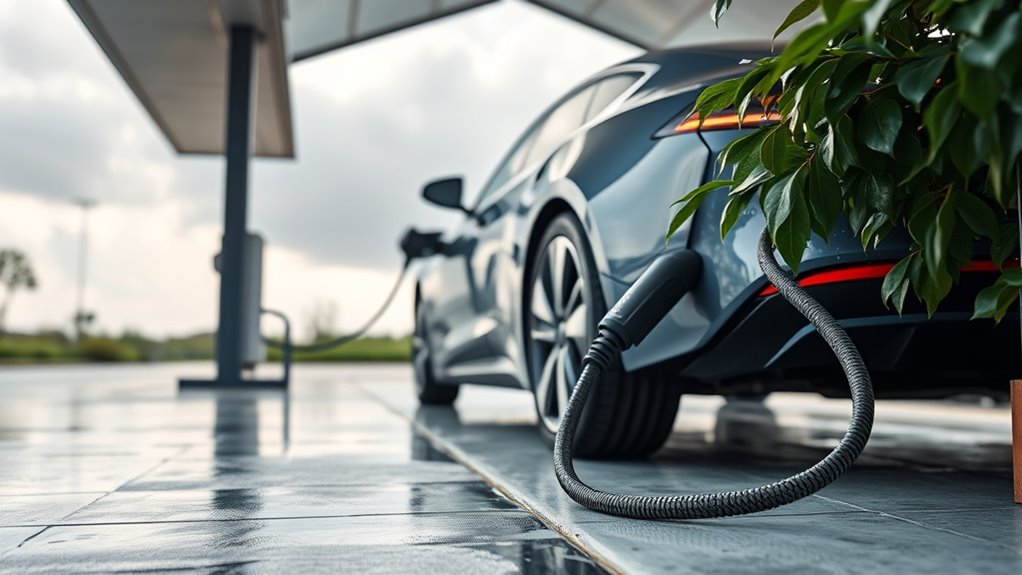
Is it really safe to leave an EV charging cable outside? Yes, but there are precautions you should take to guarantee its longevity and functionality.
EV charging cables are designed for outdoor charging, able to withstand normal rain without risking short circuits. However, it’s essential to keep the plug ends dry and shield them from moisture to avoid electrical issues.
EV charging cables can handle outdoor conditions, but keeping the plug ends dry is crucial to prevent electrical issues.
When not in use, consider investing in waterproof covers or boxes for extra protection. Regular cable maintenance is important; inspect the cable and connectors for any signs of wear or damage.
While these cables are durable, extreme weather conditions like heavy storms can pose safety risks, so it’s best to avoid outdoor charging during such events.
Essential Features of Weather-Resistant EV Charging Cables
When choosing weather-resistant EV charging cables, you need to take into account the materials and design that guarantee durability.
Look for cables made with water-resistant materials and a strong outer sheath that can handle UV exposure and harsh conditions.
These features not only protect your cable from damage but also enhance its longevity and safety in outdoor use.
Water-Resistant Materials Used
To guarantee your EV charging cables withstand the elements, manufacturers utilize high-quality, weather-resistant materials like rubber and thermoplastic elastomers. These materials play an essential role in guaranteeing durability and reducing environmental impact.
Here are some key features of these materials:
- Moisture Resistance: Prevents moisture ingress, reducing the risk of short circuits.
- Water-Resistant Connectors: Designed to keep out rain and humidity when not in use.
- UV Protection: The outer layer resists sun damage, preventing cracking and fading.
- Testing Standards: High-quality cables undergo rigorous testing to assure functionality in various weather conditions.
Durable Outer Sheath Design
While high-quality, weather-resistant materials provide a solid foundation for EV charging cables, the design of the outer sheath plays an essential role in their overall performance and longevity.
A durable outer sheath made from thermoplastic elastomer (TPE) guarantees flexibility and resilience against extreme temperatures. This design is key for environmental durability, enabling the cable to withstand harsh conditions like UV exposure and heavy rain without cracking or fading.
Many cables feature a waterproof rating, like IP67, allowing immersion in water without damage. Reinforced connectors and strain relief prevent wear at high-stress points, enhancing outer sheath longevity.
Regularly inspecting for abrasions or cuts is critical to maintaining safety and functionality, empowering you to charge confidently in any weather.
UV Protection Features Included
Many weather-resistant EV charging cables include essential UV protection features designed to combat the damaging effects of prolonged sunlight exposure.
These features enhance cable longevity and guarantee reliable performance. Here’s what to look for:
- UV Inhibitors: Incorporated into the insulation, they prevent cracking and fading.
- Rigorous Testing: Outdoor cables undergo strict evaluations for UV resistance, guaranteeing durability.
- Thicker Outer Layer: Higher-quality cables boast thicker sheaths, enhancing protection against UV rays and physical wear.
- Regular Inspections: Watch for signs of UV damage, like discoloration or brittleness, to determine if replacement is necessary.
How Weather Conditions Affect Your EV Charging Cable
Weather conditions can greatly impact the performance and longevity of your EV charging cable. Prolonged exposure to sunlight can lead to cracking and fading, while rain and moisture pose risks of short circuits. Regular charging cable maintenance is essential to guarantee longevity and functionality.
Here’s a quick weather impact analysis:
| Weather Condition | Effect on Charging Cable | Maintenance Tips |
|---|---|---|
| Direct Sunlight | Cracking, fading | Store in cool, shaded areas |
| Rain/Moisture | Short circuits | Keep plugs and sockets dry |
| Heavy Storms | Potential damage | Avoid using during extreme weather |
Using rubber protectors can help, but it’s vital to inspect these seals regularly. Storing your cable in a cool, dry place and utilizing waterproof covers can considerably enhance its lifespan, making sure you stay charged and ready to go.
How to Protect Your EV Charging Cable From Rain and Snow
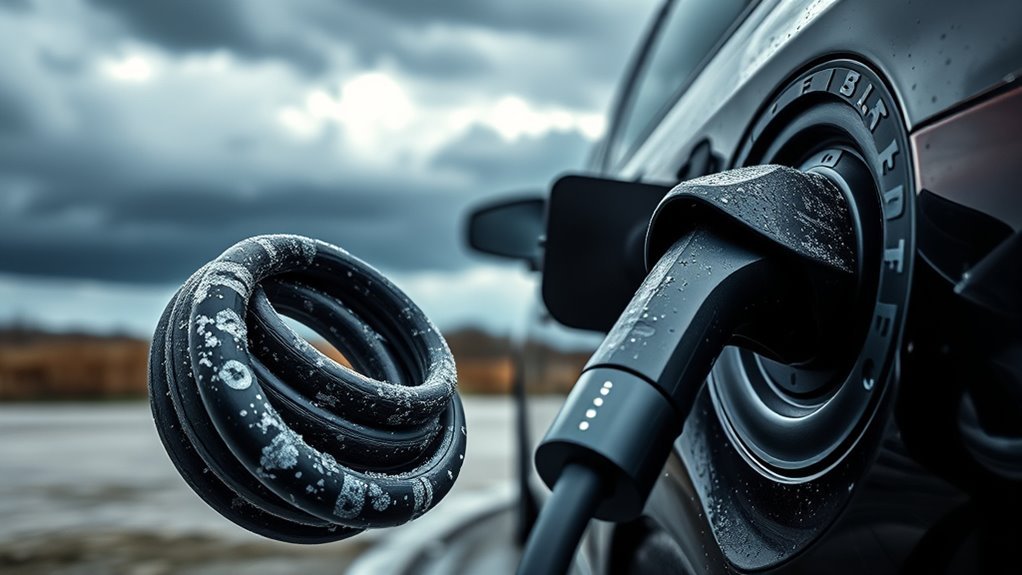
To keep your EV charging cable safe from rain and snow, it’s crucial to use proper cable storage solutions and weatherproofing techniques.
Storing your cable in a dry place and utilizing waterproof covers can greatly reduce moisture exposure.
Regularly inspecting for wear and positioning your setup to minimize precipitation will enhance your cable’s longevity and performance.
Cable Storage Solutions
Proper storage of your EV charging cable is essential for guaranteeing its longevity and performance.
To keep your cable safe from rain and snow, consider the following cable storage solutions:
- Store cables in a cool, dry place when not in use to prevent moisture damage.
- Use waterproof covers or boxes for outdoor storage, providing an added layer of protection.
- Implement cable organization tools like hooks or reels to keep cables off the ground and tidy.
- Regularly inspect your cable for wear and verify the plug and socket are dry before each use.
Weatherproofing Techniques
While you might be tempted to leave your EV charging cable exposed during inclement weather, taking proactive steps to weatherproof it’s essential for its longevity and performance.
Start by using waterproof covers or boxes designed for outdoor charging considerations, ensuring your cable stays dry. Neatly wrap your charging cable and elevate it off the ground with wall hooks or cable holders to prevent moisture contact.
Regularly inspect the cable and connectors for wear, cleaning them with a soft cloth. Consider using a rubber protector to block moisture ingress, but always check that caps are dry before securing them.
Storing the cable in a cool, dry place during harsh weather protects it, ensuring ideal charging cable maintenance.
How to Inspect Your EV Charging Cable for Damage and Wear
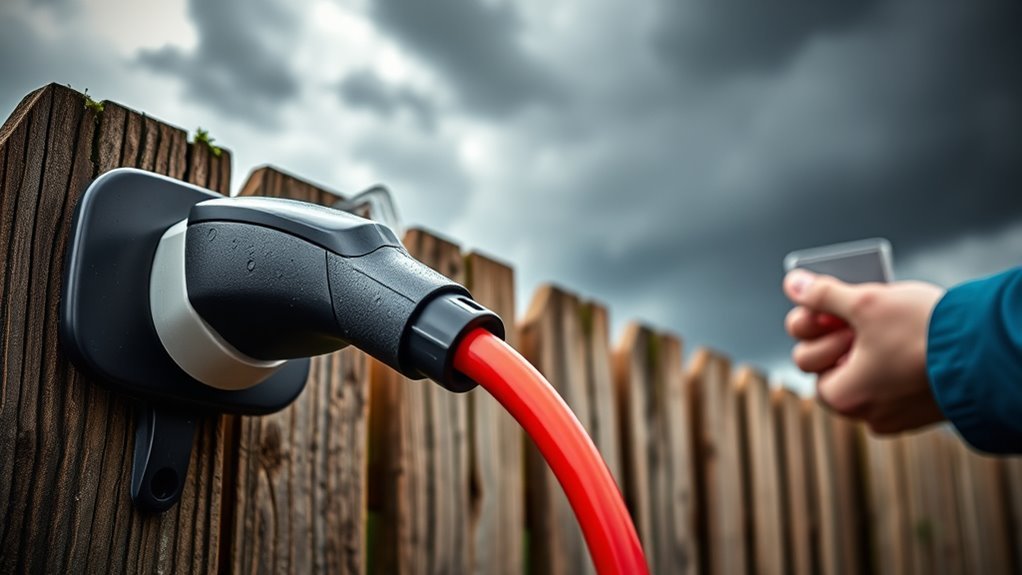
Regular inspections of your EV charging cable are essential for maintaining both safety and functionality, especially since wear and tear can occur over time.
By implementing effective cable inspection techniques, you can guarantee your charging cable remains in top condition. Here are four key steps to follow:
- Check the Plug Ends: Look for dirt, rust, or physical damage to ensure a secure connection and safe operation.
- Inspect the Rubber Casing: Examine for any cracks, abrasions, or signs of wear that could expose internal wires to moisture.
- Look for Fraying: Identify any fraying or exposed wires along the cable, indicating deterioration from environmental exposure or improper handling.
- Verify Protector Caps are Intact: Verify that the rubber protector caps fit securely on both ends to prevent moisture ingress, especially when left outdoors.
Incorporating these charging cable maintenance practices will help protect your investment and enhance your EV experience.
Best Practices for Storing Your EV Charging Cable Outdoors
After verifying your EV charging cable is in good condition through thorough inspections, the next step is to focus on how to store it properly when it’s not in use, especially outdoors. Here are some best practices for effective charging cable maintenance:
| Storage Solutions | Benefits |
|---|---|
| Store in a cool, dry place | Prevents cracking and fading |
| Use waterproof covers/boxes | Protects against rain and moisture |
| Hang using hooks or holders | Minimizes trip hazards and damage |
Always avoid dragging the cable across rough surfaces and store it in large loops to maintain its integrity. Regularly check for any signs of wear or moisture ingress. By implementing these outdoor storage solutions, you can guarantee your EV charging cable remains safe and functional for your electric vehicle needs.
Steps to Take If Your Charging Cable Gets Wet
If your charging cable gets wet, it’s crucial to act quickly to guarantee safety and functionality. Follow these steps to verify electrical safety precautions and maintain your charging cable effectively:
- Disconnect it from the power source immediately to prevent any risk of electrical shock or short circuit.
- Dry the cable thoroughly before using it again, making sure both the plug and socket are moisture-free.
- Inspect the cable for damage, such as frayed wires or corrosion, to confirm safe operation before reconnecting.
- Protect the cable from future moisture exposure by using a waterproof cover or housing, especially in heavy rain conditions.
Regular charging cable maintenance is key to prolonging its life.
What Are IP Ratings and Why Do They Matter for Charging Cables?
When it comes to selecting the right charging cable for your electric vehicle, understanding IP ratings is crucial.
These ratings, or Ingress Protection ratings, indicate how well a cable withstands dust and moisture. The first digit refers to solid particle protection, while the second digit covers liquid ingress. For example, an IP67 rating means the cable is dust-tight and can endure immersion in water up to 1 meter for 30 minutes, ideal for outdoor charging solutions.
When you’re considering charging cable specifications, look for higher IP ratings like IP65 or IP66.
These ratings guarantee protection against water jets and dust, greatly enhancing safety and functionality in various weather conditions.
By understanding these ratings, you can make informed choices about EV charging equipment that can handle environmental challenges, reducing the risk of electrical failures or damage due to moisture exposure.
Your electric vehicle deserves reliable, durable charging solutions!
Real-Life Tips for Outdoor Charging: Community Experiences
When it comes to outdoor charging, many EV owners have found practical solutions that work well in their communities.
From weatherproofing your charging setup to rolling up cables when not in use, these tips can enhance safety and longevity.
Personal experiences highlight the importance of keeping connections dry and secure, ensuring your charging remains hassle-free.
Practical Charging Solutions Shared
As you explore practical charging solutions for outdoor use, community experiences reveal invaluable tips that can enhance your charging routine.
Here are four effective strategies for outdoor charging and cable maintenance:
- Use weatherproof covers or boxes to shield your charging cables from rain and moisture.
- Hang chargers in sheltered areas to minimize exposure while keeping them accessible.
- Roll up the charging cable when not in use to prevent water accumulation and damage.
- Ascertain that the electrical receptacle is protected from precipitation to maintain safety during charging.
Weatherproofing Techniques Discussed
Outdoor charging requires careful attention to weatherproofing to guarantee the safety and longevity of your EV charging cables. To protect your investment, consider using waterproof covers or boxes, as community members suggest, to prevent moisture from causing electrical shorts.
Installing weatherproof enclosures for your 240V receptacle is vital, ensuring it stays dry during rain. While some users find it acceptable to leave cables exposed if well-maintained, regular inspections for damage are essential, especially after harsh weather.
Additionally, rolling up your charger when not in use minimizes exposure and reduces wear. These outdoor charging practices not only enhance charging cable maintenance but also empower you to confidently embrace your EV lifestyle without compromising safety.
Personal Charging Experiences Shared
How do real-life charging experiences shape our understanding of outdoor EV charging? Community advice sheds light on effective practices, ensuring safety and efficiency while charging outdoors. Here are some key takeaways:
- Protect Connections: Always cover your 240V receptacle to prevent moisture ingress, as emphasized by users like Dan Steele.
- Cable Management: Roll up your charger cable when not in use to minimize exposure to the elements and extend its lifespan.
- Adaptability: Chris Rose notes that a 240V 15 amp charger works well in various Australian conditions, proving versatility in outdoor charging setups.
- Ongoing Discussions: Engage in community forums for tips on optimizing charging habits and maintaining safety, reinforcing a shared commitment to responsible outdoor charging practices.
How to Safely Use a 3-Pin Charger in Wet Conditions?
Using a 3-pin charger in wet conditions requires careful attention to safety to prevent electrical hazards. Here’s how to guarantee charging safety and comply with outdoor precautions:
| Tips | Details |
|---|---|
| Keep Connections Dry | Guarantee the charging socket and plug are dry before use. |
| Use Water-Resistant Cables | Opt for cables designed to resist moisture for added safety. |
| Inspect for Damage | Check cables and connectors for wear to avoid short circuits. |
Avoid charging in heavy rain or extreme weather, as exposure can compromise the charger’s safety. If you must charge outdoors, consider protective covers to shield components from moisture. By following these guidelines, you can enjoy the freedom of electric vehicle charging while prioritizing your safety.
Frequently Asked Questions
Can an EV Charger Be Left Outside?
Yes, you can leave an EV charger outside, but for cable longevity, consider outdoor storage during extreme weather. Protecting your charger from harsh conditions guarantees it remains functional and reliable for your electric vehicle’s needs.
Are EV Charging Cables Waterproof?
EV charging cables aren’t fully waterproof; they’re more like a raincoat than a submarine. While crafted with durable materials, you should still protect them from heavy rain to guarantee long-lasting performance and safety.
How Do I Protect My EV Charger From the Rain?
To protect your EV charger from rain, use charger covers designed for outdoor conditions. Make certain you regularly check them for wear and maintain a waterproof setup to guard against moisture and potential damage.
Can I Run an EV Charging Cable Across the Pavement?
Yes, you can run an EV charging cable across the pavement, but prioritize EV cable safety. Use protective mats to minimize pavement hazards and regularly check for wear to guarantee safe charging.
Conclusion
In summary, you can leave your EV charging cable outside, but it’s essential to prioritize safety. Choose weather-resistant cables, inspect them regularly, and protect them from rain and snow. By understanding IP ratings and knowing how to handle wet conditions, you guarantee your cable’s longevity and performance. Embrace outdoor charging with confidence, knowing you’ve taken the right steps to safeguard your investment, maintain efficiency, and enjoy the convenience of electric vehicle ownership.






Leave a Reply