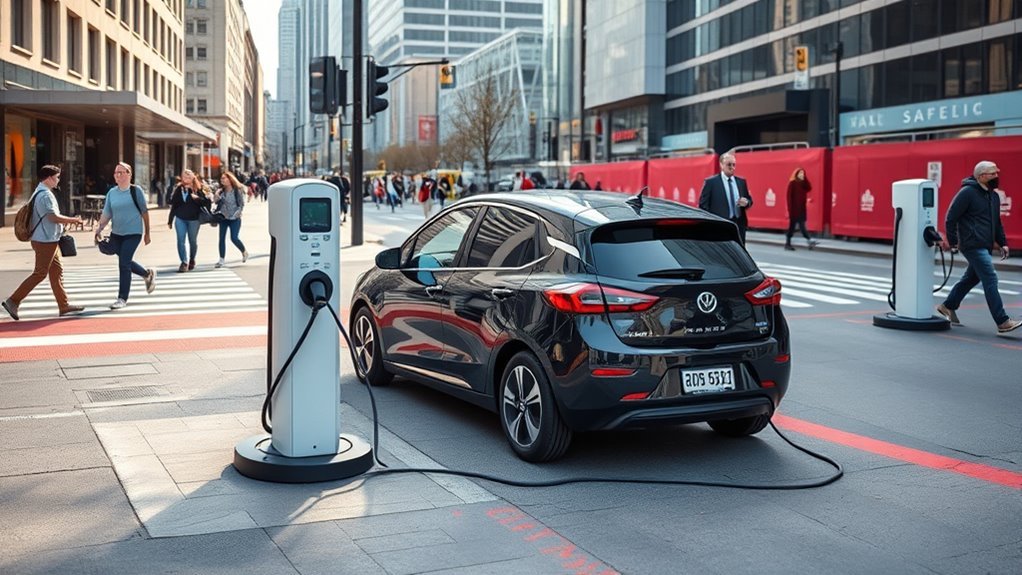
Cross-pavement EV charging in the UK is a safe option for those without off-street parking. You can choose from cable channels, in-pavement solutions, or cable protectors. Make sure you acquire the necessary permissions and comply with safety standards, as local authorities must approve installations. It’s essential to report any safety issues promptly. Be aware of potential regulatory challenges and the importance of community involvement. Explore the benefits, challenges, and innovations in cross-pavement charging solutions to stay informed.
Understanding Cross-Pavement EV Charging Solutions

As urban areas increasingly adopt electric vehicles (EVs), cross-pavement EV charging solutions emerge as a vital alternative for residents without off-street parking. These solutions utilize cross pavement technology, incorporating cable channels or gullies that allow electrical cables to traverse pavements safely, eliminating trip hazards.
Local authorities in the UK must approve these installations, ensuring compliance with the New Roads and Street Works Act 1991 for proper implementation. Installation costs typically range from £600 to £1,400, with some councils imposing annual maintenance fees.
However, the Office for Zero Emission Vehicles (OZEV) incentivizes this change by offering grants covering 75% of installation costs for eligible residents, up to £350. This initiative greatly enhances access to EV charging for around 8 million households in England lacking off-street parking, ultimately transforming urban infrastructure and empowering residents to embrace electric mobility without the constraints of traditional charging methods.
Types of Cross-Pavement Charging Systems Available
When exploring cross-pavement charging systems, you’ll find a range of options tailored to meet the needs of urban residents without off-street parking.
Here are four key types to evaluate:
- Cable Channels (Gullies): These temporary housings for charging cables are installed into the pavement, allowing easy access while maintaining a neat surface.
- In-Pavement Solutions: Involves digging into the pavement to install permanent cable channels, with costs typically ranging from £1,000 to £1,500.
- Cable Protectors: Low-profile options that cover charging cables, providing a cost-effective solution for safe on-street charging access.
- Charging Cable Arms: Elevated solutions that minimize obstruction but often require planning permission, costing 1.5 to 2 times more than cable gully options.
Local councils endorse various products, like Kerbo Charge and Charge Gully, ensuring safe charging for residents without driveways.
What Permissions Do You Need to Install Charging Solutions?
Installing cross-pavement charging solutions requires careful attention to local regulations and permissions. The installation process can present various regulatory challenges that you’ll need to navigate. First, you’ll typically need to obtain a Section 50 license under the New Roads and Street Works Act 1991 for any pavement modifications. If your installation is within two meters of the highway or lacks off-street parking, planning permission may also be necessary.
Here’s a quick overview of the permissions you might need:
| Permission Type | Description |
|---|---|
| Section 50 License | Required for pavement modifications for cable channels |
| Planning Permission | Needed if within two meters of the highway |
| Additional Documentation | Evidence of trials or usage agreements may be required |
If you’re renting, don’t forget to secure permissions from both your landlord and the local council. By staying informed, you can streamline the installation process and avoid potential complications.
Responsibilities of Residents and Local Authorities
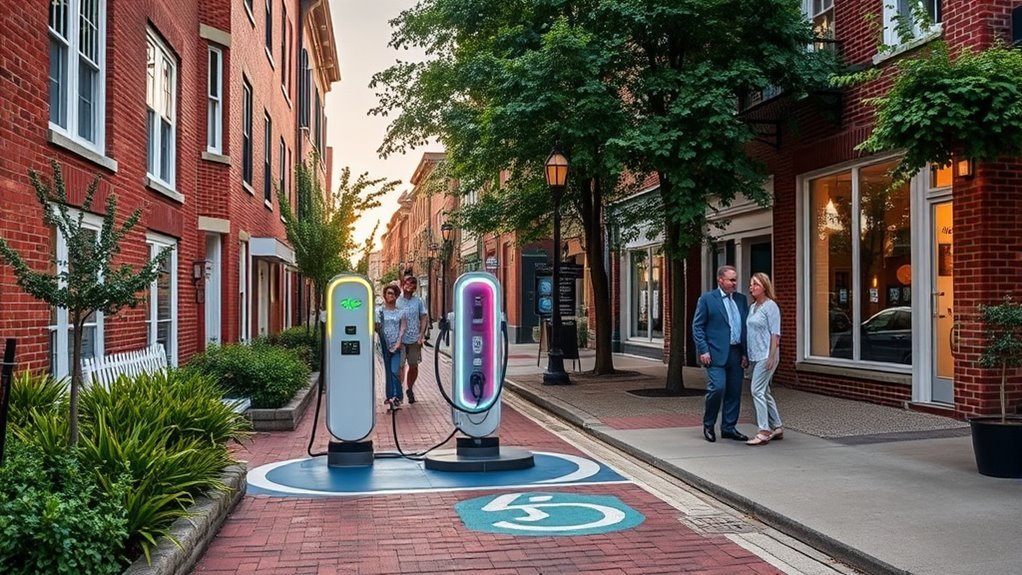
As a resident, you’re responsible for securing council approval and guaranteeing your cross-pavement charging solution meets safety standards.
Local authorities, on the other hand, must handle liabilities for any injuries or damages if the cable channel is properly used.
Together, both parties need to guarantee compliance with installation requirements and maintain a safe environment for all users.
Resident Safety Obligations
Guaranteeing the safety of cross-pavement EV charging installations is a shared responsibility between residents and local authorities.
As a resident, you have specific responsibilities to uphold safety compliance:
- Report any safety issues related to charging channels immediately.
- Guarantee your chargepoint complies with current legislation, including obtaining an electrical safety certificate.
- Cover the installation costs of your chosen cross-pavement solution and adhere to local council regulations.
- Use the charging solution properly to prevent trip hazards, especially for vulnerable pedestrians.
Local Authority Liabilities
Local authorities hold significant responsibilities regarding cross-pavement EV charging solutions, especially concerning liability and safety management. They retain liability for any injury or damage if residents use the charging installations correctly.
To clarify these responsibilities, local authorities must establish liability agreements with residents. It’s vital for you, as a resident, to report any safety issues and guarantee your chargepoint complies with current legislation.
If you neglect to adhere to safety protocols, you may face liability for damages or risks stemming from improper usage. Continuous monitoring and evaluation by local authorities is essential to uphold compliance and maintain safety standards for all cross-pavement charging installations, fostering a secure environment for everyone involved.
Installation Compliance Requirements
Before installing cross-pavement charging solutions, you need to obtain permission from your local council, since regulations can differ markedly between areas.
Compliance with installation guidelines and safety standards is essential for both residents and local authorities. Here’s what you must consider:
- Council Approval: Secure permission from your local council for installation.
- Safety Certificate: Provide an electrical safety certificate to guarantee compliance with current legislation.
- Liability Agreement: Establish a liability agreement with local authorities to cover potential injuries or damages.
- Documentation: Keep proof of installation and adherence to council regulations for successful usage.
Key Benefits of Cross-Pavement Charging for Electric Vehicle Users
Cross-pavement charging solutions offer you a cost-effective way to charge your electric vehicle without the hassle of off-street parking.
These installations not only enhance pedestrian safety by eliminating trailing cables but also improve accessibility for residents in urban areas.
With government grants available, it’s easier than ever to adopt this innovative charging method.
Cost-Effective Charging Solutions
As the demand for electric vehicles (EVs) continues to rise, finding cost-effective charging solutions becomes essential, especially for those without driveways.
Cross-pavement charging offers several advantages:
- Affordable Installations: Installation costs range from £600 to £1,400, making it a budget-friendly choice compared to public networks.
- Reduced Charging Costs: Charging at home is cheaper than public stations, with many users only needing to charge once or twice weekly.
- Government Grants: Eligible residents can access grants up to £350, further easing initial expenses.
- Lower Infrastructure Costs: Cross-pavement solutions minimize the need for extra street furniture, saving local authorities money while enhancing convenience for around 8 million households.
These factors contribute to a viable and liberating EV solution for all.
Enhanced Pedestrian Safety
While urban environments evolve to accommodate the growing number of electric vehicles (EVs), ensuring pedestrian safety remains a paramount concern.
Cross-pavement charging solutions enhance pedestrian safety by eliminating trip hazards from trailing cables, promoting pedestrian awareness in urban design. With about 61% of Londoners lacking access to off-street parking, these solutions enable safe EV charging without obstructing pathways.
Installing cable channels takes just 1.5 to 3 hours and is cost-effective, typically between £1,000 and £1,500. By allowing residents to charge their EVs directly from the pavement, cross-pavement systems protect vulnerable pedestrians, such as older adults and those with mobility impairments, from potential risks.
This innovative approach not only prioritizes safety but also supports a cleaner urban environment.
Increased Accessibility for Residents
Urban design that prioritizes pedestrian safety naturally complements increased accessibility for residents.
Cross-pavement charging solutions transform urban mobility for the 8 million households in England without off-street parking by offering numerous benefits:
- Cost-Effective Charging: You can charge your EV at home, reducing reliance on expensive public charging networks.
- Safety Enhancement: These installations eliminate trip hazards from trailing cables, benefiting vulnerable groups like the elderly and disabled.
- Community Engagement: Local authorities can incorporate user feedback to tailor installations, ensuring they meet residents’ needs.
- Urban Green Space Protection: They prevent the conversion of gardens into driveways, preserving essential green areas.
What Are the Challenges and Solutions in Implementation?
Implementing cross-pavement EV charging in the UK presents significant challenges that require careful navigation to guarantee successful outcomes. Local authorities grapple with regulatory hurdles, needing to secure compliance with safety regulations while managing necessary permissions. This includes assessments on traffic safety and environmental impacts, particularly in conservation areas or near listed buildings, where additional approvals complicate the process.
Community involvement is vital; residents play a pivotal role in proper installation and ongoing maintenance. However, inconsistency in adherence to guidelines can lead to potential safety hazards.
Councils must also balance cost-effectiveness with the risk of increased trip hazards and accessibility issues for pedestrians, especially those with mobility impairments. Continuous evaluation and engagement with the community are imperative to address these challenges, making sure that charging solutions meet residents’ needs without compromising public safety.
Future Trends in Cross-Pavement EV Charging Solutions
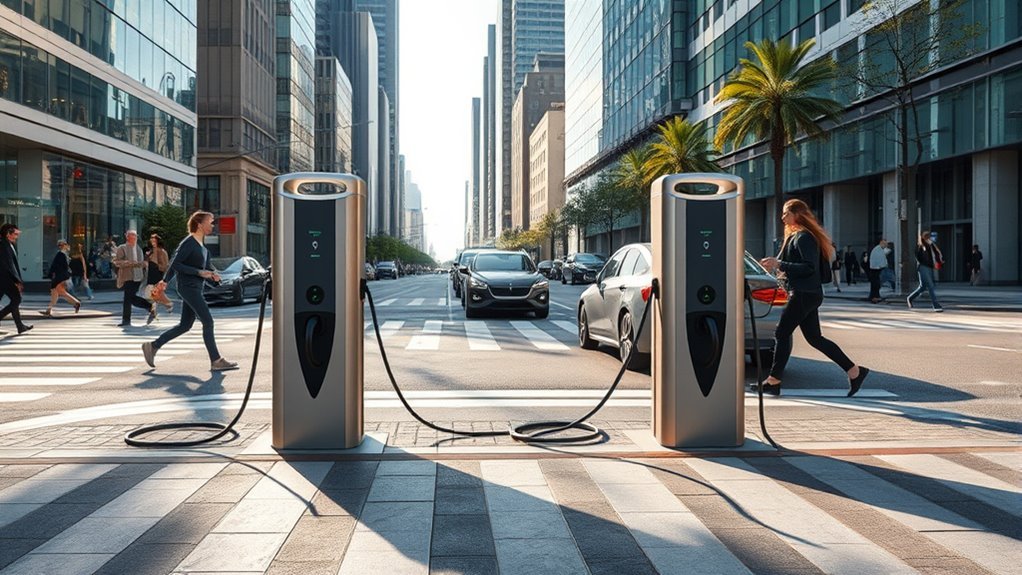
As the number of electric vehicles (EVs) continues to rise, future trends in cross-pavement EV charging solutions are evolving to meet the growing demand, particularly in urban areas like London. Here are some key developments shaping the landscape:
- Expansion of Cable Channels: Local authorities are enhancing infrastructure to accommodate an estimated 1.4 million EVs by 2030.
- Innovative Charging Solutions: Charging bridges and in-pavement systems are being adopted to improve accessibility for the 61% of Londoners without off-street parking.
- Government Incentives: Grants covering up to 75% of installation costs are encouraging residents to install home charging solutions.
- Community Trials: Initiatives by Enfield and Bromley Councils are promoting technology integration and ensuring affordability.
Continuous evaluation of these installations is essential for enhancing pedestrian safety and minimizing trip hazards, aligning with effective urban planning goals.
Frequently Asked Questions
Can I Run an EV Charging Cable Across the Pavement?
You can’t run an EV charging cable across the pavement due to trip hazards. Instead, consider using cable management solutions that comply with local regulations to guarantee safety for pedestrians and avoid potential liability issues.
What Are the Safety Precautions for EV Charging?
To guarantee safety during EV charging, you should adhere to safety standards, conduct a thorough risk assessment, use protective mats for cables, and maintain regular inspections of your setup to prevent hazards for pedestrians and users.
What Are Cross Pavement Solutions for Charging Electric Vehicles?
Cross-pavement solutions involve installing charging infrastructure that includes cable channels or under-pavement connections. These methods provide convenient access to electric vehicle charging for residents without off-street parking, enhancing urban mobility and sustainability.
What Is the 80 20 Rule EV Charging?
Imagine a garden thriving with minimal effort. The 80/20 rule in EV charging means you’re optimizing charging efficiency; just 20% of pavement materials can fulfill 80% of your needs, liberating you from dependence on public stations.
Conclusion
So, as you ponder the marvels of cross-pavement EV charging, remember: it’s not just a way to power your car; it’s the latest way to trip over a power cord while dodging local bureaucracy! With the right permissions and a sprinkle of cooperation from authorities, you can transform your pavement into a charging haven. Just watch out for the “no parking” signs—unless you fancy a new hobby in municipal negotiations! The future’s bright, but it might just require some careful stepping.







Leave a Reply