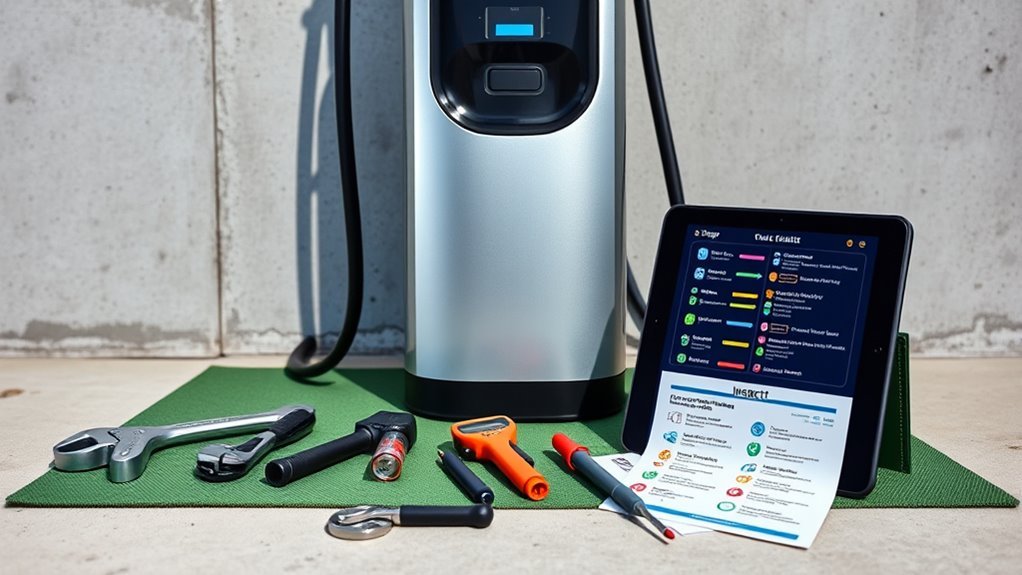
Maintaining your EV charger is essential for safety and efficiency. Start with monthly visual inspections for damage and loose connections. Check charging cables for frays and clean connectors with a damp cloth. Update your charger’s software regularly to avoid connectivity issues. Annual professional inspections for electrical diagnostics are also recommended. Look out for signs of overheating or damage, as these require expert help. Discover more about key maintenance tasks and when to seek professional assistance.
Why Regular Maintenance Is Essential for EV Chargers
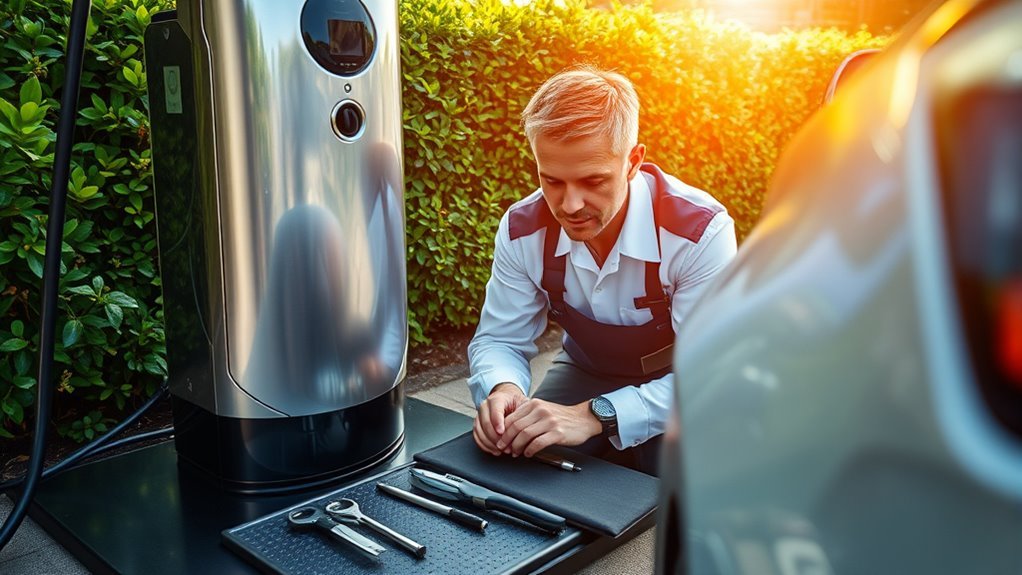
Routine maintenance is crucial for EV chargers because it helps you avoid serious issues that can compromise safety and efficiency. By conducting regular inspections, you can greatly reduce the risk of hazards like electric shock and fire, which enhances user safety and guarantees compliance with safety standards.
Preventive maintenance not only promotes safety but also leads to cost savings by extending the service life of your equipment. Timely component replacements can prevent the need for expensive emergency repairs or replacements down the line.
Preventive maintenance enhances safety and saves costs by prolonging equipment life and avoiding costly repairs.
Additionally, regular checks for software updates and functionality assure peak performance and prevent connectivity issues stemming from infrequent use. Visual inspections for physical damage, loose connections, and corrosion further maintain the reliability of charging stations, minimizing downtime.
Ultimately, prioritizing regular maintenance empowers you to enjoy a safer and more efficient EV charging experience while maximizing your investment.
Essential Maintenance Tasks for Your EV Charger
To guarantee your EV charger operates efficiently and safely, you need to perform essential maintenance tasks consistently. Start with monthly visual inspections to check for physical damage, loose connections, and signs of wear. This guarantees your charger remains functional and reduces potential safety hazards.
Regularly inspect charging cables for fraying or cracks, as damaged cables can greatly impact charging efficiency. Cleaning connectors and surfaces with a damp microfiber cloth is also vital; this prevents dirt buildup that could hinder performance.
Don’t forget to update your charger’s software periodically, especially for connected charging stations receiving automatic updates, as this enhances both functionality and security.
Finally, schedule annual professional inspections that include electrical testing and diagnostics to catch potential issues before they escalate into costly repairs. By staying proactive, you’ll maintain the reliability of your EV charger and enjoy a safer, more efficient charging experience.
Spotting Issues: Your Guide to Visual Inspections
Performing visual inspections of your EV charging station is essential for identifying potential problems before they escalate. Start by checking for any visual damage to the charging unit, including the housing’s integrity.
Look for signs of corrosion, moisture ingress, and debris that can affect performance. Inspect cables and connectors closely for wear or fraying; compromised connectors can lead to charging inefficiencies and safety hazards.
Guarantee seals and gaskets are intact to prevent water ingress, especially in outdoor installations. Be aware of environmental conditions that might promote issues like mould, rust, or ice build-up, as these can hinder functionality.
Regular visual checks help maintain not just the efficiency of your EV charger but also its safety. By being proactive, you can address minor concerns before they develop into significant problems, guaranteeing a reliable charging experience for you and other users.
Why Software Updates Matter for Optimal Performance
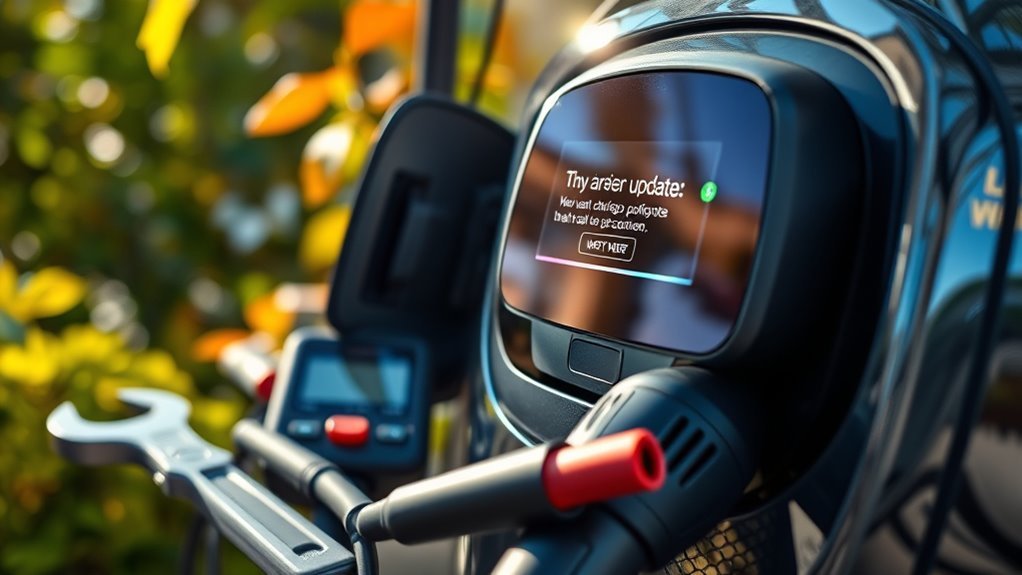
While you might focus on the physical aspects of your EV charger, neglecting software updates can greatly impact its overall performance. Regular software improvements are vital as they fix bugs, enhance security, and introduce new features that optimize your charging experience.
Without these updates, you may encounter connectivity issues that disrupt communication between your charger and vehicle, especially if your charger hasn’t been used frequently.
For many chargers with connected capabilities, updates occur automatically. However, if your charger isn’t connected, you’ll need to manually check for necessary upgrades. Staying informed about the latest advancements in EV charging technology through these updates can greatly improve user satisfaction and reliability.
Ultimately, neglecting software updates can lead to outdated performance and potential malfunctions. Prioritizing software maintenance is essential for maintaining the efficiency and effectiveness of your EV charging system.
When to Seek Professional Help for EV Charger Maintenance
When should you consider getting professional help for your EV charger maintenance? If you notice persistent overheating issues, repeated circuit breaker trips, or visible damage, such as cracked casing or faulty wiring, it’s essential to seek expert intervention.
These signs indicate serious electrical faults that could compromise safety. If your charger frequently disconnects due to software glitches that basic troubleshooting can’t resolve, a professional can provide necessary diagnostics and repairs.
Additionally, if you detect burning smells, hot plugs, or discoloration around the charger, don’t hesitate to call an expert. These critical safety concerns require immediate attention.
For electrical upgrades or relocating your charger, professional assistance guarantees compliance with safety standards and proper installation practices.
Regular maintenance checks by qualified technicians can also preemptively identify complex issues, safeguarding your EV charger’s long-term functionality and safety.
Frequently Asked Questions
What Maintenance Does an EV Charger Need?
Your EV charger needs regular visual inspections for damage, checks on the charging equipment and power supply connections, cable integrity, software updates, and seasonal weatherproofing to guarantee peak performance and safety throughout its lifespan.
What Is the 80 20 Rule for EV Charging?
The 80/20 rule for EV charging suggests you can meet 80% of your charging needs with just 20% of charging stations, maximizing charging efficiency and ideal usage by investing in reliable home charging solutions.
Do EV Chargers Require Maintenance?
Yes, EV chargers require maintenance. Regular checks enhance EV charger longevity and safety. Inspect for damage, clean connectors, and update software to prevent issues, ensuring efficient function and reducing costly repairs down the line.
How Often Do EV Chargers Need to Be Inspected?
You should inspect your EV charger monthly for visible damage, perform operational checks quarterly, and schedule professional inspections annually. This inspection frequency enhances the charger lifespan, ensuring safety and reliability throughout its usage.
Conclusion
In conclusion, maintaining your EV charger isn’t just about keeping it clean; it’s about ensuring safety, enhancing performance, and prolonging its lifespan. By regularly inspecting for wear, updating software, and knowing when to call a professional, you’re not only safeguarding your investment but also contributing to a more reliable charging experience. So, stay proactive, stay informed, and keep your EV charger in top shape for maximum efficiency and longevity.





Leave a Reply