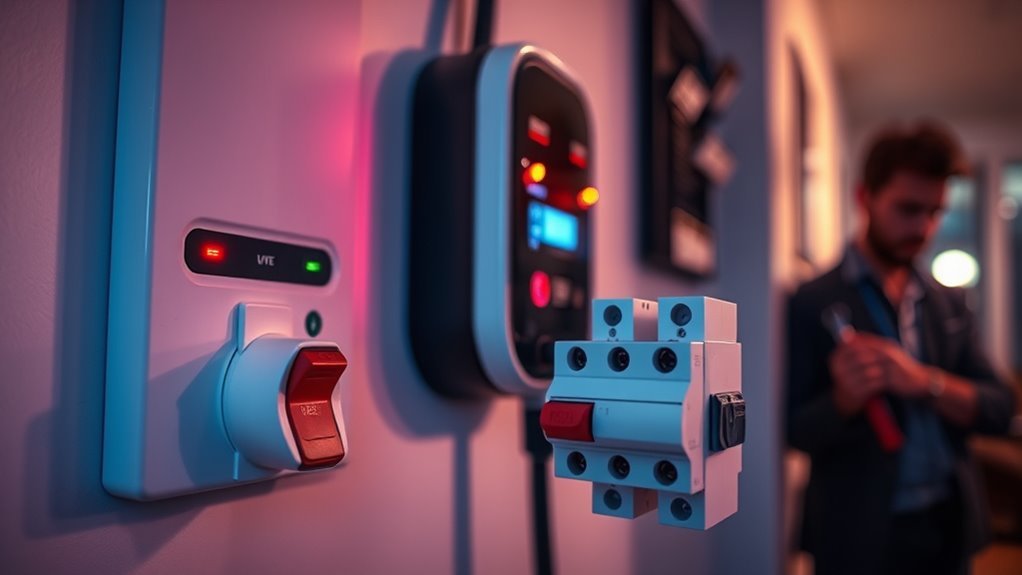
If your EV charger keeps tripping the RCD, check for common issues like water ingress, poor installation, or thermal overload from high charging capacity. Inspect connections for damage or looseness, and guarantee proper grounding. Upgrading to a higher-rated RCD can help manage thermal load. Keeping a log of tripping incidents may reveal patterns, and consulting a qualified electrician guarantees a thorough evaluation. There’s more to take into account for safe charging practices that can enhance your EV ownership experience.
Common Causes of RCD Trips With EV Chargers
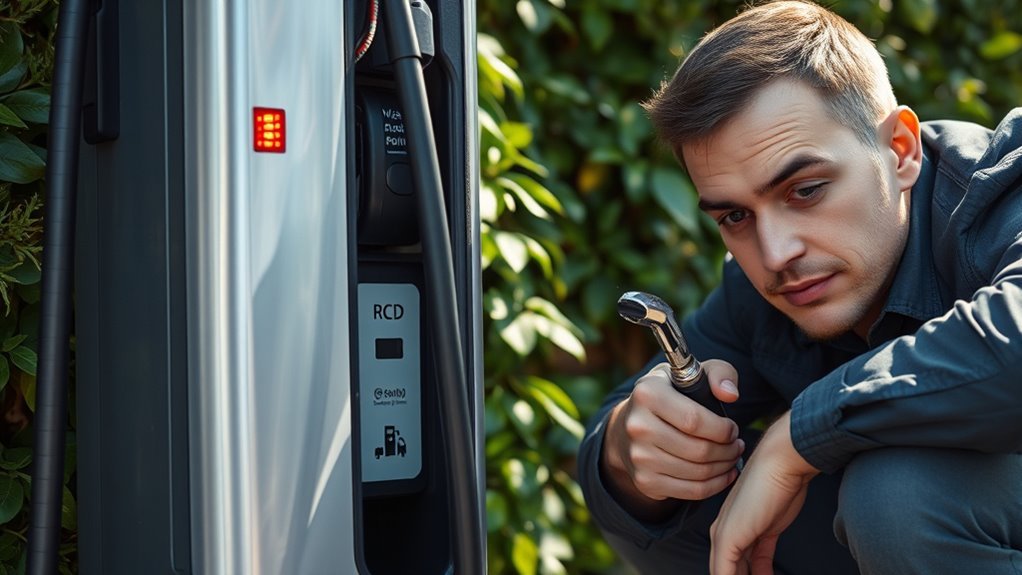
When charging your electric vehicle, you might encounter RCD trips, which can stem from several common causes. One significant factor is water ingress or faulty seals, especially during rainy weather, leading to electrical shorts.
Poor installation can also trigger nuisance tripping; improper earth or neutral connections highlight the necessity of professional setup. Charging at full capacity (7kW) may cause thermal issues, as RCDs can derate their trip current when they warm up, resulting in unexpected trips.
Nuisance tripping can arise from poor installation or thermal issues when charging at full capacity, highlighting the need for professional setup.
Additionally, certain charger brands, like Rolec, have been linked to more frequent RCD malfunctions, prompting consideration of alternative models for improved reliability.
Finally, wiring two RCDs in series can exacerbate tripping issues, making it essential to evaluate RCD types and configurations during installation.
Understanding these factors helps you prevent disruptions and maximize your electric vehicle’s charging efficiency, liberating you from unnecessary inconveniences.
How Can You Diagnose Electrical Issues?
To diagnose electrical issues with your EV charger, you need to inspect the installation quality and guarantee all circuit connections are secure and corrosion-free.
Monitoring tripping patterns and maintaining a log of incidents can help identify recurring issues linked to specific conditions.
This systematic approach will guide you toward effective solutions for RCD trips.
Inspect Charger Installation Quality
Inspecting the charger installation quality is essential for diagnosing electrical issues that could lead to RCD tripping. Start with a visual check for loose or damaged connections; these can cause significant electrical faults.
Use a multimeter to guarantee continuity in earth and neutral connections, as poor connections often trigger unwanted RCD trips. Inspect for signs of water ingress, like rust or corrosion, since moisture can short-circuit components, compromising electrical safety.
Regularly monitor the charger’s performance alongside external factors, such as temperature and humidity, to identify potential patterns in tripping.
Finally, consult a qualified electrician for a thorough inspection, ensuring all wiring components are compatible and correctly installed to prevent future issues.
Check Circuit Connections Thoroughly
Ensuring the integrity of circuit connections is essential for diagnosing electrical issues that may lead to RCD tripping during EV charging.
Start with a thorough circuit inspection; look for wear, corrosion, or loose fittings that can disrupt connection integrity. Test the earth and neutral connections to confirm they’re properly grounded, as poor grounding can create electrical imbalances triggering the RCD.
Utilize a multimeter to identify voltage drops or inconsistencies within the circuit, which often indicate underlying problems. Additionally, observe the performance of other appliances sharing the circuit; simultaneous high loads can overwhelm the RCD, causing nuisance tripping.
Documenting any tripping patterns, including environmental factors, will aid electricians in diagnosing and resolving the issue effectively.
Monitor Tripping Patterns Log
After checking circuit connections thoroughly, the next step is to monitor tripping patterns. Keeping a detailed log of tripping frequency, noting times, weather impact, and charger status, is essential.
Correlating these factors can reveal specific triggers, such as water ingress during rainstorms or increased appliance usage at peak times. Document any performance variances in different chargers, including changes in load or current limits, to identify the most compatible equipment.
Also, record modifications to your electrical system, as these can influence tripping behavior. Utilizing tools like an OBD dongle will enhance your understanding of charging speeds and performance, further illuminating how various variables impact RCD trips during charging sessions.
This systematic approach will empower you to diagnose and resolve electrical issues effectively.
Fixing RCD Trips: Practical Steps
To effectively address RCD trips with your EV charger, start by examining the unit for any signs of water damage, rust, or missing seals, as these issues can greatly contribute to nuisance tripping, particularly in wet conditions.
Next, verify all electrical connections, including earth and neutral, are properly installed and secured. This prevents potential faults that could affect the RCD.
Consider upgrading to a higher-rated RCD that can handle the thermal load during charging, as RCDs may derate trip current when heated.
Keeping a log of RCD trip incidents can reveal patterns or correlations with specific charging times or weather conditions, enhancing your troubleshooting techniques.
Finally, consult a qualified electrician to assess your entire electrical system and charger installation. This professional evaluation offers essential RCD maintenance tips and helps prevent future issues, guaranteeing both safety and reliability for your charging setup.
The Role of Charger Quality in Preventing RCD Trips
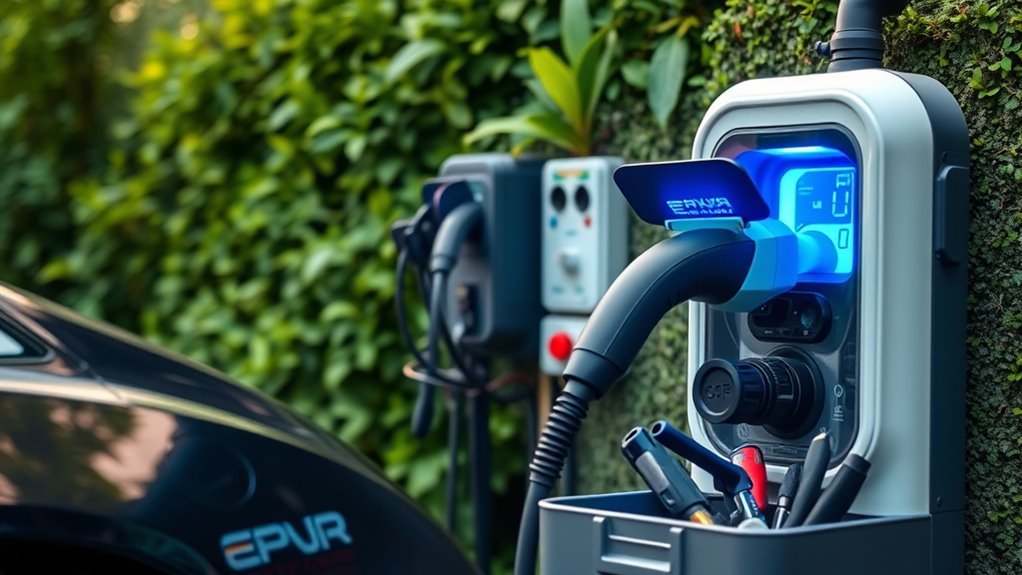
While you mightn’t immediately associate charger quality with RCD trips, the design and construction of your EV charger can greatly influence its reliability and safety.
Poorly designed chargers often harbor inferior component quality, leading to electrical faults that trigger safety mechanisms. For example, older models like certain Rolec variants are notorious for nuisance tripping.
Investing in higher-quality chargers, such as the Zappi, enhances your experience with improved grounding and protection features.
Consider these factors:
- Safety: A reliable charger reduces the risk of electrical issues.
- Efficiency: Better designs promote effective charging without interruptions.
- Peace of mind: Knowing your charger is built to last allows you to embrace the freedom of EV ownership.
User Experiences: Lessons Learned From RCD Issues
User experiences reveal valuable insights into the complexities of RCD tripping issues associated with EV chargers. Many users have successfully resolved these problems by switching charger brands, particularly noting improvements after moving away from Garo models.
One user emphasized that certain brands, like Rolec, may have internal component flaws that lead to frequent tripping. Additionally, some found that incidents often coincided with rainy weather, suggesting water ingress could be an essential factor affecting performance.
User feedback highlights the importance of consistently monitoring charging conditions and maintaining a log of tripping incidents, which aids in identifying patterns.
Experiences shared in forums indicate that addressing installation quality and ensuring compatibility with existing electrical systems can greatly mitigate RCD trips during charging sessions.
Upgrading Electrical Systems for Safe EV Charging
Upgrading your electrical system is vital to guarantee safe and efficient EV charging, especially as the demand for electric vehicles rises. To make certain your setup can handle the load, consider implementing upgraded breakers and dedicated circuits. These enhancements minimize nuisance tripping and maintain a reliable charging experience.
- Feel the peace of mind knowing your system is designed for safety.
- Experience the liberation of charging without interruptions.
- Embrace the future with confidence in your home’s electrical integrity.
Proper grounding and earth connections are essential to prevent RCD trips caused by electrical faults. Additionally, incorporating dedicated circuits for EV chargers prevents interference from other appliances, reducing the risk of overload.
Regular maintenance and consulting a qualified electrician will tailor your system to meet specific charging needs while adhering to safety standards. By prioritizing these upgrades, you make certain a safe and efficient charging environment for your electric vehicle.
Frequently Asked Questions
Why Does My EV Charger Keep Tripping the RCD?
Your EV charger’s tripping the RCD due to charger compatibility issues or electrical wiring concerns. Inspect your connections, verify proper grounding, and consult a qualified electrician to resolve persistent faults effectively and safely.
How to Fix an RCD That Keeps Tripping?
To fix an RCD that keeps tripping, follow RCD troubleshooting tips: inspect connections, check for moisture, and maintain your EV charger. Log incidents to identify patterns and consult a qualified electrician for underlying issues.
What Is the Most Common Cause of RCD Tripping?
RCD tripping often results from electrical faults, like ground leaks. Imagine a leaky boat; even small holes can sink it. Regular maintenance helps you avoid RCD malfunctions, ensuring your electrical system stays afloat and functional.
Why Do EV Chargers Trip GFCI?
EV chargers trip GFCIs primarily due to moisture ingress, faulty connections, or excessive charging load. Understanding GFCI functionality helps you identify potential EV charging issues, ensuring safer and more reliable charging experiences. Regular maintenance is essential.
Conclusion
As you navigate the currents of EV charging, think of your home’s electrical system as a river. When obstacles like faulty chargers or outdated wiring block the flow, the water overflows, tripping the RCD. By diagnosing issues and upgrading components, you clear the path, allowing energy to flow smoothly and safely. Just as a well-maintained river supports life, a properly functioning charging system guarantees your electric vehicle thrives, fueling your journey without interruption.





Leave a Reply