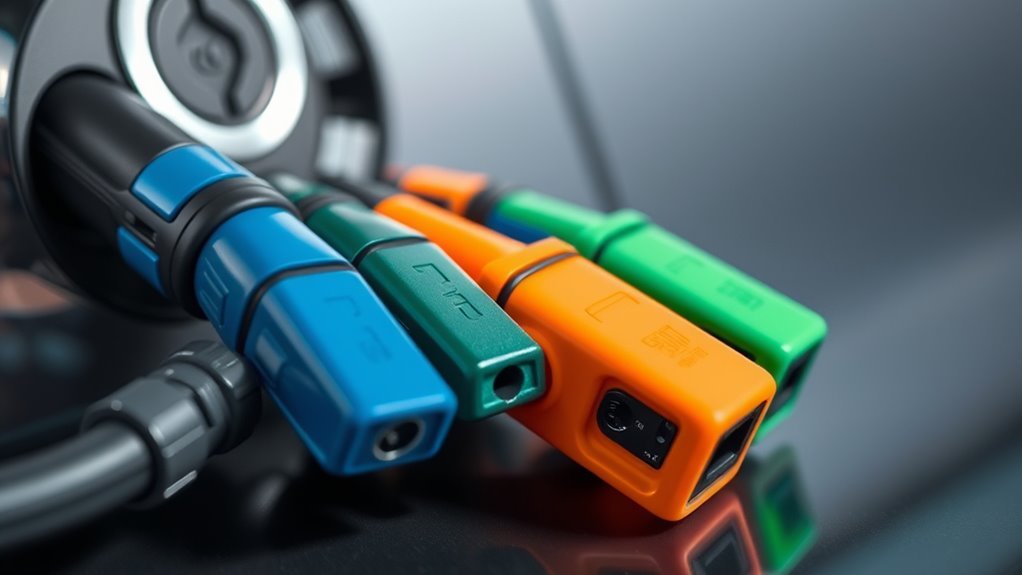
EV charging cables come in various types like Type 1 and Type 2, designed for compatibility with different vehicles. Make certain your cable matches your EV’s connector and supports its maximum charging capacity, typically 16A or 32A. Safety features, such as overcurrent and ground fault protection, are vital for safe charging. Maintenance also plays an important role in cable longevity and performance. Stick around, and you will uncover more valuable insights about choosing and using your EV charging cables effectively.
Discover the Different Types of EV Charging Cables
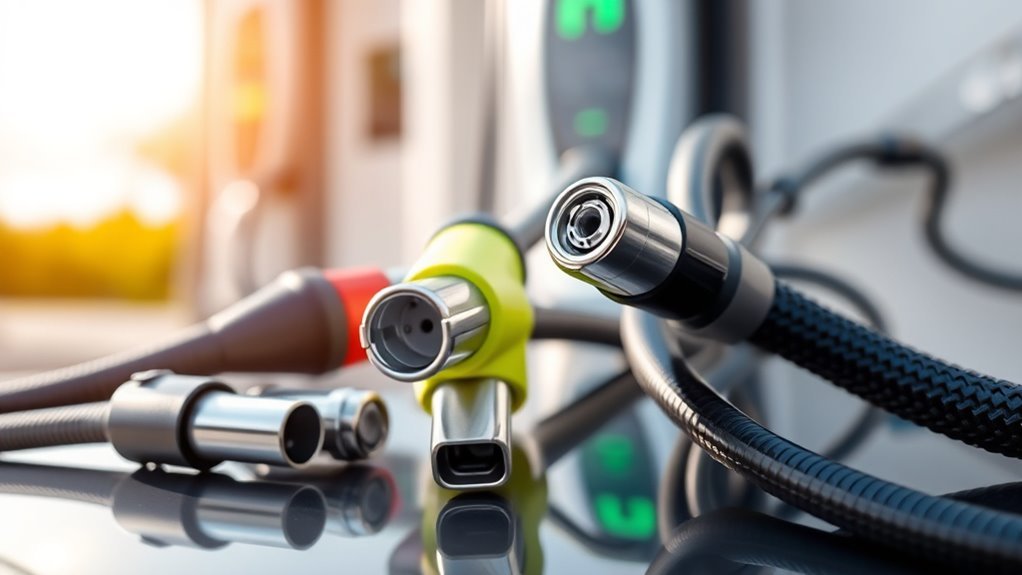
When it comes to charging your electric vehicle (EV), understanding the different types of EV charging cables is essential.
You’ll encounter Type 1 cables, widely used in North America and Japan, and Type 2 cables, popular in Europe.
Mode 2 cables are perfect for home charging, featuring built-in safety features, while Mode 3 cables are designed for dedicated charging stations, enabling faster charging speeds.
CCS cables combine AC and DC charging capabilities, making them a versatile choice for quick charging in both North America and Europe.
On the other hand, CHAdeMO cables, primarily utilized in Japan, offer high charging speeds but are slowly being replaced by CCS in many regions.
Cable lengths typically range from 5 to 10 meters, with current ratings of 16A or 32A, impacting charging efficiency and compatibility with various EV models.
Understanding these options empowers you to make informed choices for your electric liberation.
How to Ensure Compatibility With Your Electric Vehicle
Verifying compatibility with your electric vehicle (EV) is essential for a seamless charging experience, so start by identifying whether your vehicle utilizes a Type 1 (J1772) or Type 2 (Mennekes) connector. These standards dominate North America and Europe, respectively.
Next, check your EV’s maximum charging capacity—usually 16A or 32A—to select a charging cable with a current rating that meets or exceeds this. Additionally, confirm the connector type at public charging stations or home chargers, as some might only support CCS or CHAdeMO for DC fast charging.
Check your EV’s charging capacity and connector type to ensure compatibility with public and home charging stations.
Don’t forget to evaluate the cable length; 5 meters is a versatile choice that fits most charging scenarios.
Finally, refer to your vehicle’s user manual or manufacturer’s guidelines to verify you choose an approved charging cable, avoiding potential safety issues or damage to your EV’s charging system. Taking these steps will empower you to charge confidently and efficiently.
Essential Considerations for Selecting Your First EV Charging Cable
Selecting your first EV charging cable involves several key considerations that can profoundly enhance your charging experience.
First, ascertain compatibility with your vehicle’s connector type—Type 1 (J1772) for many North American and Japanese models or Type 2 (Mennekes) for most European vehicles.
Next, opt for a cable length of at least 5 meters to allow flexibility when charging at different locations.
Pay attention to the current rating; a 32A cable supports faster charging speeds, making it future-proof. When comparing charging speeds, a higher-rated cable can save you time and increase convenience.
Don’t forget to verify that the cable meets relevant safety standards, like IEC 62196.
Finally, consider cable maintenance tips, such as proper storage and regular inspections, to prolong its lifespan and performance.
Choosing a reliable cable sets you on the path to an empowered and efficient EV charging experience.
Key Safety Features to Look for in EV Charging Connectors
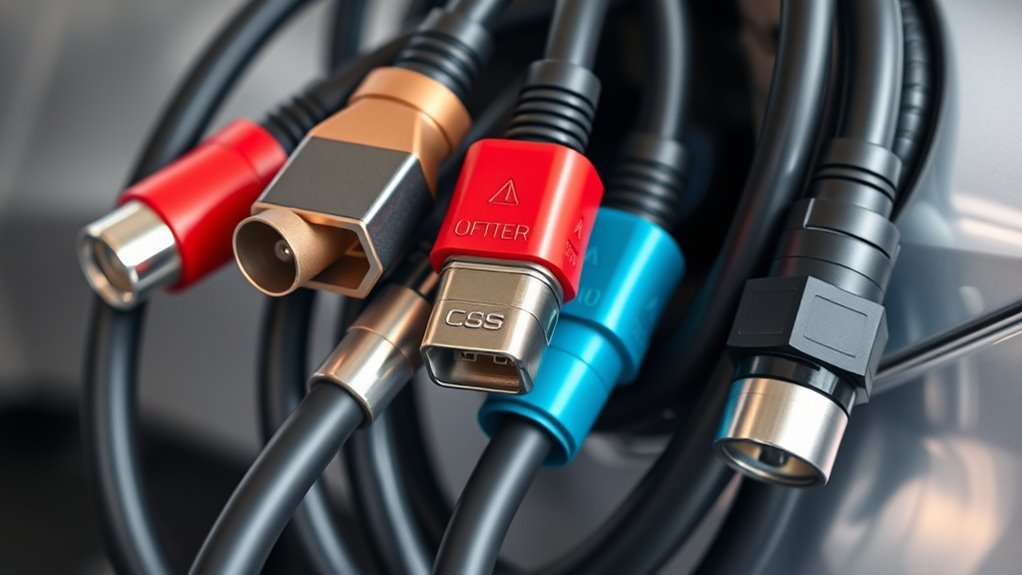
As you engage in the world of EV charging, it’s vital to prioritize safety features in charging connectors to protect both your vehicle and yourself.
Look for safety certifications, like IEC 61851, which guarantee compliance with rigorous safety protocols. Overcurrent protection is a must; it prevents excessive current flow that could damage your EV or the charging system. Ground fault protection is equally important, as it detects leakage currents and minimizes the risk of electric shock.
Overvoltage safety measures safeguard against voltage spikes or fluctuations, while high-temperature protection guarantees connectors operate within safe limits, reducing the risk of overheating and fires.
Additionally, consider connector durability; robust materials can withstand wear and tear, enhancing longevity. By focusing on these key safety features, you’ll provide a seamless and secure charging experience, empowering your journey into the electrifying future of transportation.
Why Standardization Matters in EV Charging
Standardization in EV charging is essential for enhancing compatibility across different regions, making it easier for you to charge your vehicle wherever you go.
By adopting uniform standards like IEC 62196 and IEC 61851, the industry streamlines the development of charging infrastructure, ensuring you encounter fewer obstacles on your electric journey.
This consistency not only simplifies your experience but also promotes the widespread adoption of electric vehicles.
Enhanced Compatibility Across Regions
While the electric vehicle (EV) market continues to expand, ensuring compatibility across regions has become essential for both manufacturers and consumers.
Standardization of charging connectors, like IEC 62196, addresses the challenges posed by regional standards such as Type 1 and Type 2.
Enhanced compatibility means:
- Seamless cross-border EV usage, freeing you from range anxiety.
- Simplified charging infrastructure, making it easier to find a compatible station.
- Accelerated adoption of EVs, contributing to a greener planet.
Streamlined Charging Infrastructure Development
The rapid growth of the electric vehicle (EV) market demands a charging infrastructure that keeps pace with increasing consumer needs.
Standardization is key to achieving seamless charging station integration, allowing various vehicle models to connect effortlessly. With standards like IEC 61851 and IEC 62196 defining connectors and communication protocols, charging becomes safe and efficient.
Countries currently employ different systems, like Type 1 in North America and Type 2 in Europe, but an internationally recognized standard could simplify the process.
Standardized connectors, such as CCS and CHAdeMO, enhance infrastructure scalability by supporting both AC and DC charging in one port.
This ongoing push for standardization not only accelerates global charging station deployment but also eases range anxiety for all EV users.
Smart Tips for Using Your EV Charging Cables Safely and Efficiently
To maximize the lifespan and efficiency of your EV charging cables, proper storage and handling are essential.
Always keep your cables in a clean, dry bag or box to prevent damage, and avoid twisting or bending them excessively during use.
Regularly inspecting for wear and ensuring clean connectors will help maintain peak performance and safety.
Proper Cable Storage Techniques
Keeping your EV charging cables in top shape requires smart storage techniques that protect them from damage and guarantee efficient use. Proper cable organization is key, so always store your cables in a clean, dry bag or box to guarantee moisture protection.
Avoid twisting or over-bending them during use to maintain their integrity. Here are some essential tips:
- Keep connectors clean and debris-free for peak electrical connections.
- Store cables away from high-traffic areas to prevent tripping hazards and physical damage.
- Regularly inspect cables for wear or heat damage, addressing any issues immediately.
Preventing Cable Damage
Maintaining your EV charging cables in excellent condition is vital for safe and efficient charging.
Start with cable maintenance by storing your cables in a clean, dry bag or box to shield them from moisture and debris.
During use, avoid twisting or over-bending your cables, as this can damage the internal wiring.
Keep the connectors clean; regularly inspect and wipe them down to remove dirt and moisture, which can hinder charging efficiency.
It’s important to avoid placing cables in high-traffic areas to prevent accidental tripping or damage.
Finally, periodically check your cables for wear or heat damage, replacing any damaged cables immediately to guarantee safe handling and peak performance.
Your EV deserves the best!
Frequently Asked Questions
Can I Use a Type 1 Cable With a Type 2 Vehicle?
You can’t directly use a Type 1 cable with a Type 2 vehicle, but a cable adapter will bridge the compatibility gap. This allows you to charge your vehicle effectively, ensuring your driving freedom remains intact.
What Is the Maximum Charging Speed for Each Cable Type?
Think of charging speed as a highway—Type 1 cables can deliver up to 7.4 kW, while Type 2 can reach 22 kW. Ensuring cable compatibility maximizes your vehicle’s potential on this fast lane.
Are There Weather-Resistant EV Charging Cables Available?
Yes, you’ll find weather-resistant EV charging cables designed with durable materials for enhanced weather protection. These cables withstand harsh conditions, ensuring reliable performance and longevity, empowering you to charge your vehicle confidently, no matter the forecast.
How Long Do EV Charging Cables Typically Last?
EV charging cables typically last five to ten years, depending on cable lifespan factors like usage frequency and environmental conditions. Regular maintenance tips, like keeping them clean and avoiding kinks, can extend their longevity.
Can I Charge My EV at Home Using a Regular Outlet?
Yes, you can charge your EV at home using a regular outlet, but outlet compatibility matters. It’ll take longer than a dedicated charger, so plan for overnight charging to guarantee your vehicle’s ready for use.
Conclusion
In the world of EV charging, your cable is the lifeline that connects your vehicle to a sustainable future. By understanding the different types, ensuring compatibility, and prioritizing safety, you can charge with confidence. Think of your charging cable as a bridge—strong, reliable, and essential for your journey. As you plug in, remember these tips to keep your EV running smoothly and efficiently, paving the way for a greener tomorrow. Happy charging!






Leave a Reply