
In the UK, you’ll mostly encounter Type 2 connectors for daily charging, offering up to 22 kW for efficient home use. For rapid charging, CCS connectors are becoming the standard, providing fast power delivery up to 360 kW. CHAdeMO is gradually being phased out but still serves older EVs. Additionally, Tesla now uses CCS connectors in Europe. Whether you’re looking for tethered convenience or flexibility with untethered cables, understanding these options can enhance your EV experience. Want to know more?
Understanding the Different Types of EV Connectors in the UK
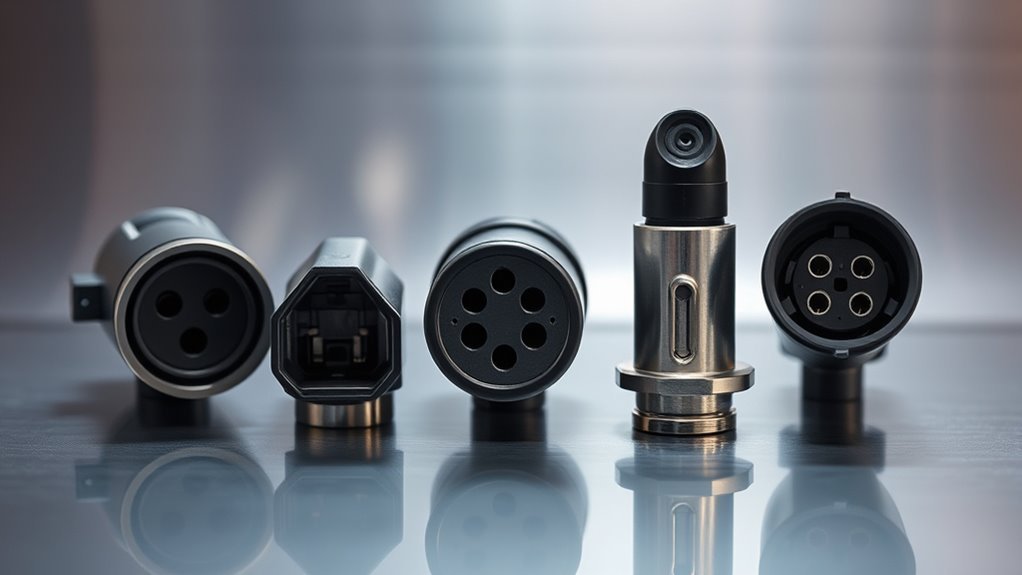
When it comes to charging your electric vehicle (EV) in the UK, understanding the various connectors is vital for a seamless experience.
The Type 2 connector, or Mennekes, is the standard for new EVs, capable of single-phase and three-phase AC charging at up to 22 kW.
The Type 2 connector, known as Mennekes, is the go-to standard for new EVs, supporting AC charging up to 22 kW.
For rapid charging, the CCS connector, combining Type 2 with DC pins, allows speeds up to 350 kW, making it the primary choice for fast charging stations.
Older models, like the Nissan Leaf, use the CHAdeMO connector, which is being phased out in favor of CCS.
Type 1 connectors, mainly found in older North American EVs, are also on their way out.
As you navigate these options, remember that proper connector maintenance is vital to guarantee longevity.
Practicing good charging etiquette, like unplugging promptly and respecting charging station time limits, fosters a supportive EV community.
Enjoy the freedom of electric driving!
How the Type 2 Connector Works for Daily Charging
The Type 2 connector is designed for efficient daily charging, offering power outputs of up to 22 kW, which means you can recharge your EV faster than with many other options.
Its compatibility with the vast majority of charging stations across the UK guarantees that you’ll find a suitable plug wherever you go.
Plus, the automatic locking mechanism adds a layer of safety, allowing you to charge with peace of mind.
Charging Speed Specifications
Understanding how the Type 2 connector operates can greatly enhance your daily EV charging experience. This connector supports charging speeds up to 22 kW, but most home chargers typically deliver about 7 kW. This means you can enjoy significant charging speed variations based on your setup. Depending on your vehicle’s battery size, a full charge usually takes between 6 to 10 hours.
Here’s a quick overview of charging speeds:
| Charging Type | Charging Speed |
|---|---|
| Home Charger (Type 2) | Up to 7 kW |
| Public Charger | Up to 22 kW |
| Charging Speed Limits | 3-phase vs. Single-phase |
With its automatic locking mechanism, the Type 2 connector guarantees safety while you power up your vehicle.
Compatibility With Charging Stations
Charging your electric vehicle (EV) becomes much more convenient with the Type 2 connector, which is widely compatible with charging stations across the UK.
This standard connector not only enhances your daily charging experience but also aligns with the growing infrastructure of EV charging.
- Widespread Use: Found in most new EVs, ensuring you can connect to over 84,000 charging points.
- Versatility: Supports both single-phase and three-phase AC charging, catering to varied charging needs.
- Adapter Friendly: Can accommodate Type 1 vehicles with the right adapter, increasing overall charging compatibility.
With the Type 2 connector, you’re liberated to charge your vehicle seamlessly, enjoying the benefits of modern connector standards while traversing the vast network of charging options available.
The Role of EV Connectors in Tesla Superchargers
When you plug into a Tesla Supercharger, the connector you use can make a significant difference in your charging experience.
With the Tesla connector in North America and CCS Type 2 in Europe, you’re tapping into a global network that offers impressive charging speeds—up to 250 kW—allowing you to recharge quickly.
Plus, Tesla’s expanding accessibility for non-Tesla EVs means more options for drivers, enhancing your journey wherever you go.
Supercharger Connector Compatibility
As Tesla continues to expand its Supercharger network, connector compatibility plays an essential role in ensuring a seamless experience for all electric vehicle owners.
Understanding the different connector types is crucial for maximizing your charging options. Here’s what you need to know:
- In North America, Tesla uses the proprietary NACS connector for fast charging up to 250 kW.
- In Europe, Model 3 and Model Y vehicles utilize the CCS Type 2 connector, integrating Type 2 AC and DC pins.
- As of late 2023, Tesla’s Supercharger network now welcomes non-Tesla EVs with CCS connectors at select locations.
This enhanced Supercharger compatibility empowers you to explore charging stations confidently, liberating your journey towards a sustainable future.
Charging Speed Advantages
Understanding the different connectors not only enhances compatibility but also impacts charging speed—an important factor for electric vehicle owners on the go. Tesla Superchargers, with their proprietary connectors, deliver up to 250 kW, enabling you to recharge to 80% in about 25 minutes. This efficiency improvement translates into significant charging time benefits, especially for long trips.
| Connector Type | Charging Speed |
|---|---|
| Tesla Supercharger | Up to 250 kW |
| CCS (Combined) | Up to 350 kW |
| CHAdeMO | Up to 62.5 kW |
| Type 2 (AC) | Up to 43 kW |
| Type 1 (AC) | Up to 7.4 kW |
Global Network Expansion
With the rapid growth of electric vehicles (EVs), the expansion of Tesla’s Supercharger network plays an essential role in shaping global charging infrastructure.
This network not only enhances accessibility but also sets a standard for charging compatibility.
Here’s how Tesla is driving this global expansion:
- Over 6,500 Supercharger stations worldwide, with more than 60,000 charge points.
- Shift to CCS Type 2 connectors in the UK and Europe for broader compatibility.
- Growing inclusion of non-Tesla EVs at over 40 UK locations, promoting network accessibility.
Comparing CCS and CHADEMO: Which Rapid Charging Option Is Right for You?
Which rapid charging option should you choose: CCS or CHAdeMO?
If you’re looking for speed and modern compatibility, CCS advantages make it the clear winner. With power outputs up to 360 kW, CCS can deliver over 250 miles of range in under 20 minutes, making your charging stops quick and efficient.
Plus, CCS connectors are now the standard in new rapid charging hubs across the UK, enhancing your flexibility to access various networks.
On the other hand, CHAdeMO has its limitations. Primarily supporting older models like the Nissan Leaf, its infrastructure is dwindling as the industry pivots towards CCS compatibility.
Charging speeds cap around 100 kW, which mightn’t meet your fast-paced lifestyle.
So, if you’re investing in a new electric vehicle, opting for CCS guarantees you’re future-proofed and ready for the evolving charging landscape.
Choose wisely and embrace the liberation that comes with efficient charging!
Tethered vs Untethered Charging Cables: What You Should Know
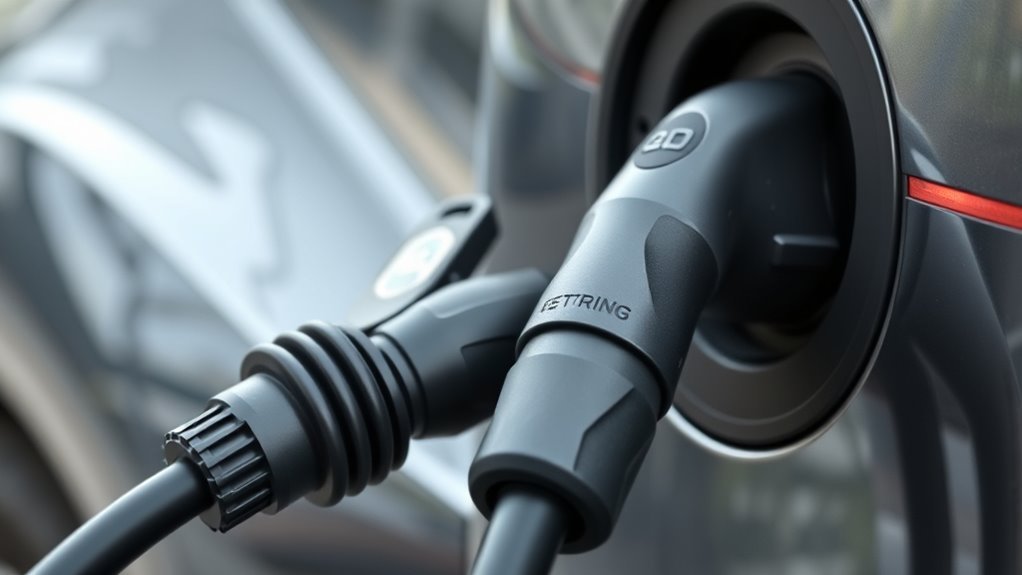
When choosing between tethered and untethered charging cables, convenience and compatibility play essential roles in your decision.
Tethered cables, permanently attached to charging stations, offer you seamless access without the hassle of carrying an extra cable. This tethered convenience reduces the risk of forgetting or losing your charging cable.
However, untethered cables provide unmatched flexibility, allowing you to adapt to various vehicle connector types.
Untethered cables offer unparalleled adaptability, making them suitable for different vehicle connector types.
Here’s what to take into account:
- Tethered Convenience: Always ready to use, ideal for home charging.
- Untethered Flexibility: Perfect for multiple EV models; bring your own cable.
- Public Charging Stations: Most are equipped with tethered cables, ensuring compatibility with popular EVs.
Ultimately, your choice depends on your charging habits and vehicle compatibility.
Whether you value the ease of tethered setups or the versatility of untethered options, each has unique benefits to enhance your EV experience.
Navigating EV Charging Speeds and Costs: A Comprehensive Guide
How can you make the most of your EV charging experience? Understanding charging speeds and costs is essential for maximizing your efficiency and savings. Here’s a quick overview:
| Charger Type | Speed Efficiency (kW) | Charging Cost |
|---|---|---|
| Slow Charger | Up to 6 kW | Lowest cost |
| Fast Charger | 7 – 22 kW | Moderate cost |
| Rapid Charger | Up to 50 kW | Higher cost |
| Ultra-Rapid Charger | Over 100 kW | Highest cost |
Home charging is usually your best bet for daily use, as it’s more economical and efficient. Public rapid and ultra-rapid chargers are great for quick top-ups but can be pricier. By choosing the right charger type for your needs, you’ll not only save on charging costs but also enjoy greater speed efficiency—empowering your EV journey!
Frequently Asked Questions
Can I Use a Type 2 Charger for My Tesla?
You can use a Type 2 charger for your Tesla, as it’s compatible with Tesla charging. Just verify the charger meets your vehicle’s power requirements for best charging efficiency and convenience. Enjoy the freedom of charging!
Are All EV Charging Plugs Waterproof?
Not all EV charging plugs are waterproof. In fact, many adhere to specific waterproof standards, using durable charging plug materials. This guarantees safety and reliability, allowing you to charge confidently in various weather conditions.
How Can I Find Charging Stations Near Me?
To find charging stations near you, use charging apps that leverage location services. These tools show available stations, their availability, and often user ratings, empowering you to charge your EV efficiently and conveniently.
Do EV Plugs Work in Extreme Weather Conditions?
Yes, EV plugs generally handle extreme weather well. Their temperature resilience guarantees charging efficiency remains stable, allowing you to power up your vehicle, whether it’s scorching heat or freezing cold. Embrace the freedom of electric driving!
Is It Safe to Charge My EV Overnight?
Yes, it’s safe to charge your EV overnight. Modern battery management systems guarantee ideal charging, preventing overcharging and overheating, so you can confidently enjoy the convenience without worry, liberating you from daytime charging constraints.
Conclusion
In the evolving landscape of electric vehicle charging, knowing your connectors can be as essential as choosing the right path in a labyrinth. Whether you’re plugging into a Type 2 for your daily commute or maneuvering through the speedy domains of CCS and CHAdeMO, understanding these options empowers your journey. As the world shifts toward sustainable mobility, being informed about EV charging not only saves you time and money but also positions you at the forefront of an electrifying revolution.






Leave a Reply