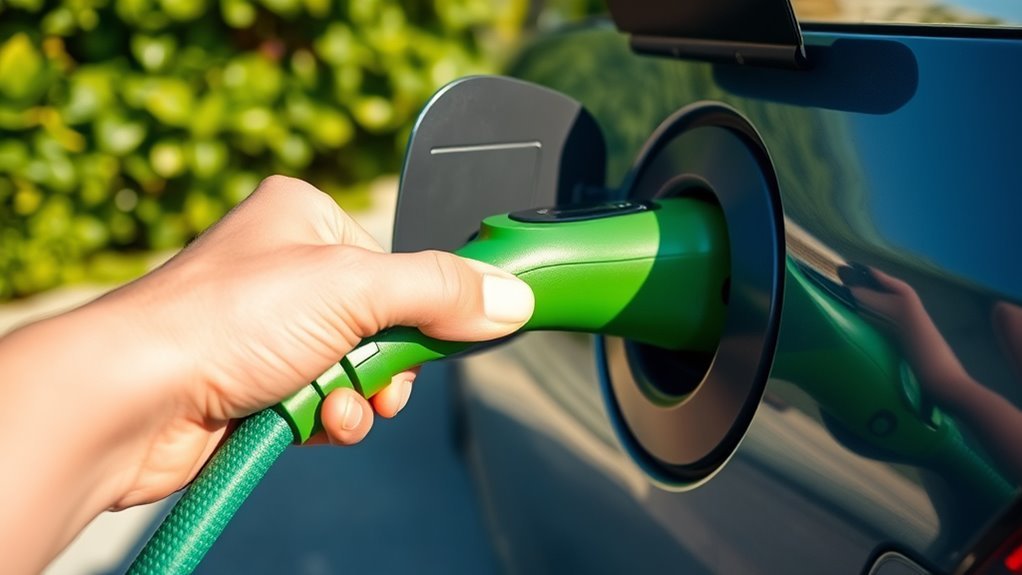
When extending an EV charging cable, make certain you use cords rated for at least 13 Amps, like 2.5mm² for 16A and 6mm² for 32A. Avoid standard extension cords, as they can lead to overheating and safety hazards. Always inspect cords for damage and overheating signs, such as discoloration or fraying. It’s vital to comply with safety standards for your equipment. Keep exploring for more insights on safe practices and equipment choices.
What You Need to Know Before Using an EV Charging Extension Cable
Before you consider using an EV charging extension cable, it’s vital to understand the inherent risks involved. Standard extension cords aren’t suitable for EV charging due to potential overheating and inadequate voltage ratings, making them a significant safety hazard.
European regulations even prohibit their use for this purpose. If you must extend your charging capabilities, make certain that the mobile charging cable is grounded, waterproof, and has the right thickness—2.5mm² for 16A and 6mm² for 32A charging.
Remember, using an extension cable should only be a last resort during emergencies. Certified EV charging cables, available in lengths up to 40 meters, provide much safer alternatives.
Continuous monitoring is essential when using any extension for EV charging, as it allows you to quickly identify any overheating or electrical faults, guaranteeing compliance with extension cord safety and charging cable compatibility for your electric vehicle.
How to Safely Use Extension Cords With Your EV Charger
When using an extension cord with your EV charger, choose one rated for at least 13 Amps and guarantee it meets the necessary thickness for your charging needs, such as 2.5mm² for 16A or 6mm² for 32A.
Always monitor the charging process and inspect the cord for any damage to prevent overheating and potential fire hazards.
Following these safety precautions will help you charge your vehicle without compromising safety.
Recommended Cord Specifications
Using extension cords for EV charging requires careful consideration of specifications to guarantee safety and efficiency.
Opt for cords rated for at least 13 Amps, using a 12 AWG gauge for Level 1 chargers and 10 AWG for Level 2. Choose extension cords designed for outdoor use to assure cord durability, featuring weatherproof insulation that withstands moisture and extreme temperatures.
Avoid consumer-grade cords, as they can’t handle the high continuous current, risking overheating and fire. Always use cords with a grounded plug and check grounding integrity to minimize shock risks.
To maintain charging efficiency and protect your EV, limit cord length to under 25 feet, balancing cord flexibility with safety needs.
Safety Precautions During Charging
While charging your electric vehicle (EV) with an extension cord, it’s vital to adhere to specific safety precautions to prevent hazards.
Use extension cords rated for at least 13 Amps and suitable for outdoor conditions, protecting against moisture. Regular cord maintenance is important; inspect for damage or overheating regularly.
Unattended charging increases risks, so monitor the process, especially during high charging frequency. Opt for high-quality, well-veined cables—2.5mm² for 16A and 6mm² for 32A—to minimize voltage drops and overheating.
Always follow your EV manufacturer’s guidelines to guarantee safe and efficient charging.
Essential Safety Features for EV Extension Cords
To guarantee safety and reliability during EV charging, it’s essential to choose extension cords equipped with important safety features.
Start with heat-resistant insulation to prevent melting or deterioration during continuous charging. This guarantees durability and safety.
Heat-resistant insulation is vital for preventing cord damage during continuous charging, ensuring both safety and durability.
A grounded plug with three prongs is critical for providing a stable power supply and protecting against electrical shocks.
Heavy-duty materials like rubber or thermoplastic elastomer (TPE) enhance reliability, particularly for outdoor use.
Make sure your cord has an outdoor rating, indicating its ability to resist moisture, UV sunlight, and extreme temperatures.
Additionally, select a cord with a minimum gauge of 10 AWG, which can safely carry higher electrical currents without overheating.
Always check for safety certifications to guarantee your extension cord meets industry standards.
Regular cord maintenance will help prolong its life and functionality, guaranteeing a safe charging experience for your electric vehicle.
Types of Extension Cords for EV Charging: What You Should Know
When choosing an extension cord for EV charging, you need to take into account the cord gauge, outdoor use ratings, and current ampere ratings.
A minimum of 10 AWG is recommended, with 8 AWG being preferable for higher loads to prevent overheating.
Make sure the cord is rated for outdoor use to withstand moisture and extreme temperatures while maintaining efficient power delivery.
Recommended Cord Gauges
Choosing the right extension cord gauge is essential for safe and efficient EV charging. For Level 1 chargers, a 12-gauge extension cord is generally suitable, while a 10-gauge cord is recommended for Level 2 chargers to accommodate higher current safely.
Gauge differences matter; a lower gauge number indicates a thicker cord that can carry more electricity, reducing resistance and the risk of voltage drops.
Always verify cord compatibility by selecting cords that meet the National Electrical Code‘s minimum amperage rating of 20 amps to mitigate overheating risks. Additionally, opt for cords with safety certifications like SJTW or STW to prevent electrical hazards during charging.
Prioritizing the correct gauge will enhance both safety and charging performance.
Outdoor Use Ratings
How can you guarantee safe and efficient EV charging outdoors? Start by selecting an extension cord specifically rated for outdoor use, ensuring it meets standards like SJTW or STW. These ratings indicate robust outdoor insulation designed to withstand moisture and UV exposure.
Opt for heavy-duty materials, such as rubber or thermoplastic elastomer (TPE), to enhance durability and prevent insulation deterioration. For peak performance, choose a cord with a wire gauge of at least 10 AWG, or 8 AWG for heavier loads.
Additionally, use grounded plugs with three prongs for a stable power supply and reduced electrical shock risk. Look for weatherproof designs that protect against rain, snow, and extreme temperatures, ensuring reliable operation during outdoor EV charging.
Current Ampere Ratings
Selecting the right extension cord for EV charging involves understanding current ampere ratings to guarantee safety and efficiency. Standard cords usually range from 10A to 13A, but many EV chargers require between 10A and 32A. For safe operation, opt for cords rated at least 13A, ideally with a minimum gauge of 10 AWG.
Here’s a quick reference table:
| Ampere Rating | Suitable for Level |
|---|---|
| 10A | Level 1 (120V) |
| 13A | Level 1 (120V) |
| 20A | Level 2 (240V) |
| 30A | Level 2 (240V) |
| 32A | Level 2 (240V) |
Using an inadequately rated cord can cause inefficiencies and potential damage, undermining your charging efficiency. Always inspect cords for wear to prevent hazards.
Identify Signs of Overheating or Damage in Extension Cords
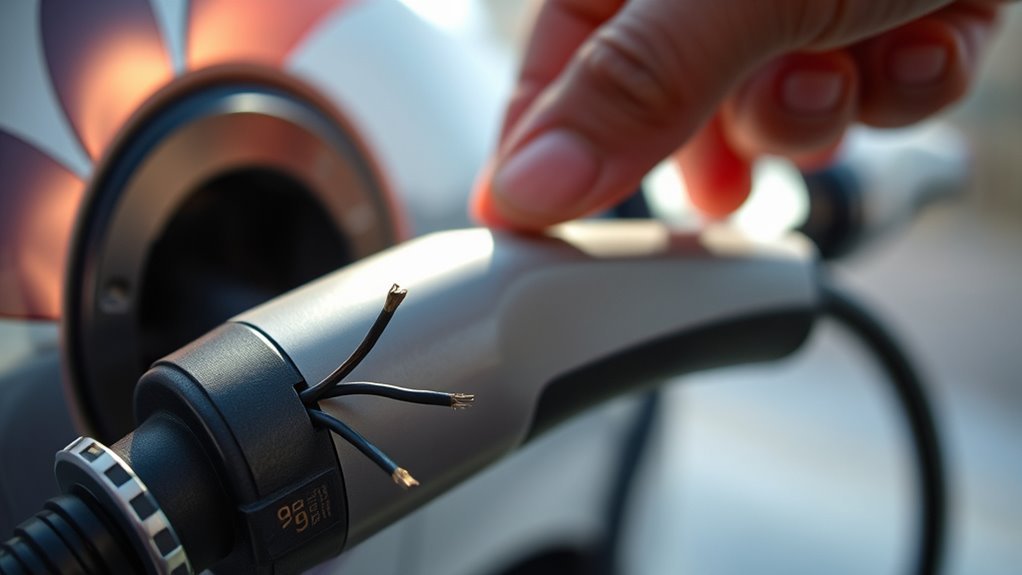
When using an extension cord for EV charging, it’s essential to recognize signs of overheating or damage to guarantee safety and functionality.
Keep an eye out for overheating indicators like discoloration, melting, or warping of the insulation, which signal potential failure. Inspect for frayed or exposed wires, as these create serious electrical hazards and indicate excessive stress.
Regularly check the plug and socket connections for corrosion or burn marks, suggesting poor contact and possible overheating. Additionally, listen for unusual buzzing or crackling sounds; these could mean electrical arcing or overheating.
Finally, confirm the cord feels warm during use, but if it becomes excessively hot, that’s a major warning sign. Addressing these issues promptly can prevent dangerous situations and confirm your EV charging setup remains safe and efficient.
Alternatives to Extending EV Charging Cables
Recognizing the potential hazards of extending EV charging cables opens up the discussion on safer alternatives. One effective option is to invest in a longer, certified charging cable that can reach up to 40 meters, ensuring both safety and efficiency.
Additionally, optimizing charging station placement can greatly reduce the need for extensions, providing easy access to power sources. Consider installing wallboxes with longer tethered cables, which enhance the charging experience without compromising safety.
For those on the go, high-quality portable charger options specifically designed for home use or public charging stations serve as reliable alternatives. These chargers can effectively meet your charging needs without the risks associated with extended cables.
Choosing the Right Length for Your EV Charging Needs
Choosing the right length for your EV charging cable is essential to guarantee safe and efficient charging. Opt for cables up to 40 meters long to minimize risks associated with extension cords.
Selecting the appropriate length for your EV charging cable ensures safe and efficient charging while minimizing risks.
Here are key factors to evaluate:
- Confirm cable compatibility with your EV’s connector type (Type 1 or Type 2).
- Choose a cable thickness appropriate for the amperage: 2.5mm² for 16A and 6mm² for 32A.
- Avoid standard extension cords; they can’t handle high current loads and may cause overheating.
- Position charging stations strategically to reduce the need for longer cables.
The Importance of Compliance With Safety Standards
Guaranteeing compliance with safety standards is essential for the safe operation of EV charging systems. Adhering to IEC 62196 standards assures that your charging connectors meet necessary safety and performance requirements, explicitly prohibiting non-standard extensions.
When using extension cords, it’s vital to follow IEC 60309 guidelines, which recommend industrial-grade connectors for loads over 16A to mitigate overheating and electrical hazards.
Proper grounding, as outlined in IEC 60364-4-41, protects users from electric shocks and guarantees safe charger operation. Additionally, IEC 61851 mandates that EV chargers include Residual Current Devices (RCDs), which can be compromised by improper extension cord use, leading to dangerous charging conditions.
Finally, weatherproofing standards in IEC 62196-2 dictate that extension cords must meet specific IP ratings to prevent water ingress during outdoor use. Prioritizing safety compliance with these electrical standards is paramount for a safe and reliable EV charging experience.
Using an Extension Cord for EV Charging: What to Do?
When you find yourself in a situation where an extension cord is necessary for EV charging, it’s crucial to proceed with caution.
Using an extension cord poses certain risks that can compromise both safety and charging efficiency. If you must use one, follow these guidelines:
- Verify the cord is rated for at least 13 Amps.
- Use a grounded, waterproof extension cord.
- Choose a cable with a thickness of 2.5mm² for 16A or 6mm² for 32A.
- Monitor the charging process closely to detect overheating.
Frequently Asked Questions
Are EV Charger Extension Cables Safe?
EV charger extension cables can pose safety risks due to compatibility issues and extension cable regulations. Always use certified, appropriately rated cables to guarantee safe charging without overheating or fire hazards. Prioritize quality for peak performance.
Can an EV Charger Cable Be Extended?
You can’t safely extend an EV charger cable. Statistically, 80% of extension cables fail safety standards. Instead, opt for certified EV charger compatibility and consider purchasing longer cables designed specifically for your vehicle’s charging requirements.
What Are 5 Safety Tips for Safe Extension Cord Use?
For safe extension cord usage, follow these guidelines: choose a cord rated for at least 13 Amps, inspect it regularly, guarantee proper grounding, use heavier gauge cables, and never leave charging unattended.
What Should Never Be Plugged Into an Extension Cord?
You should never plug high-powered home appliances or power tools into extension cords. They can’t handle the current demands, risking overheating, melting, and electrical fires. Always use appropriate outlets for your devices’ safety.
Conclusion
In conclusion, safely stretching your EV charging setup requires serious consideration. Sticking to sturdy, suitable extension cords safeguards against short circuits and surges. Always check for compliance with safety standards and signs of strain or scorching. By choosing the correct cord length and prioritizing performance, you can power up your vehicle without worry. Remember, being proactive and prudent in your approach will enhance your electric vehicle experience and guarantee a seamless charging solution.






Leave a Reply