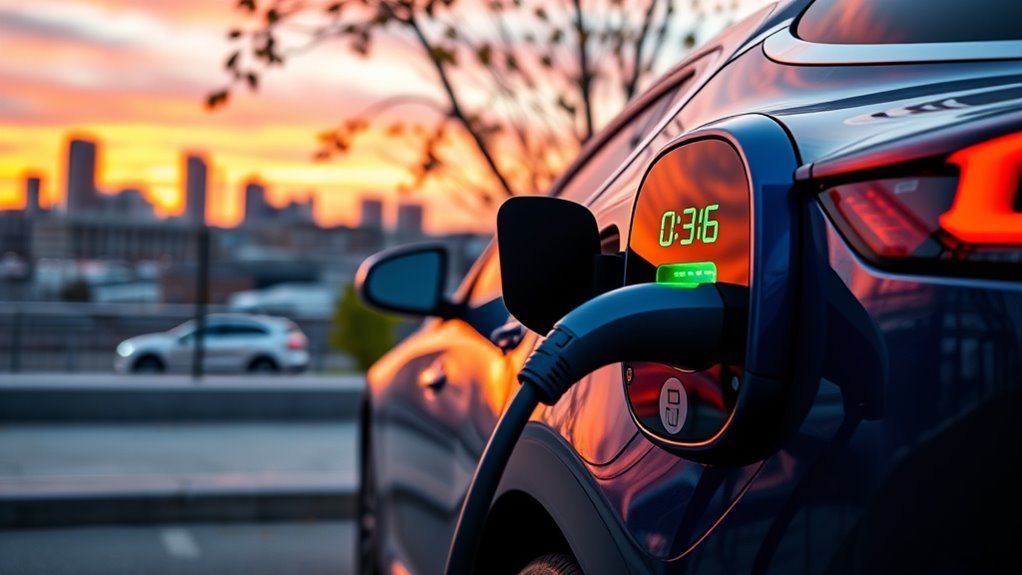
To achieve faster public charging, choose DC Fast Chargers whenever possible, as they deliver power quickly. Pay attention to your State of Charge (SoC); charging works best between 10-20% SoC. Make sure you use compatible chargers for your vehicle to maximize speed. Turn off energy-consuming features while charging and utilize charging apps to find available stations efficiently. Overcome common charging challenges by optimizing conditions and being aware of external temperatures. You’ll discover even more tips next!
Why Choose DC Fast Chargers for Quick Public Charging
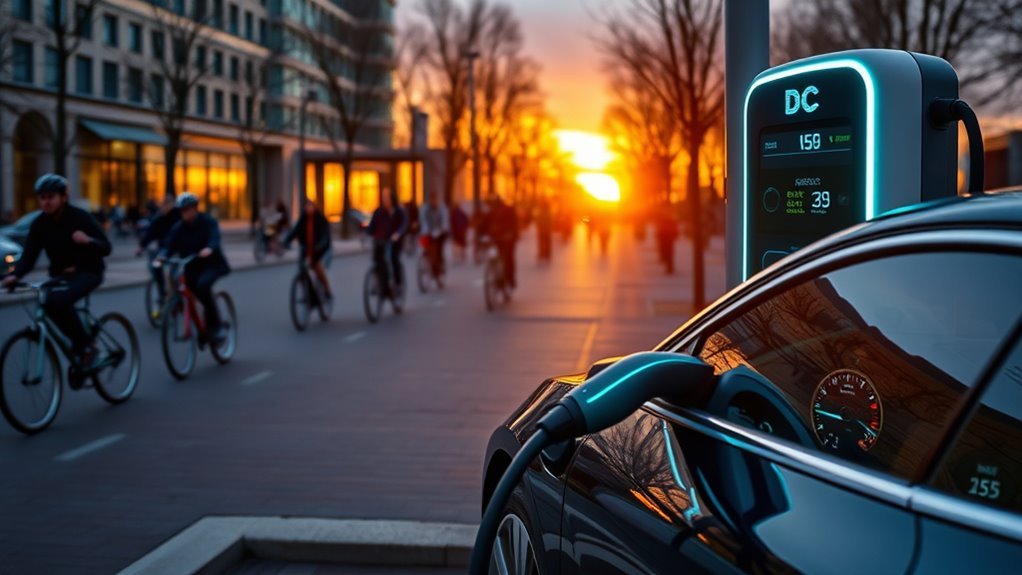
When you’re on the go, opting for DC Fast Chargers can considerably enhance your electric vehicle (EV) charging experience. These Level 3 chargers deliver power ranging from 50 kW to 350 kW, allowing you to add approximately 150–200 miles of range in just 20–30 minutes.
The DC Fast Charger benefits are particularly evident during long-distance travel, as they markedly reduce downtime compared to Level 2 chargers, which can take several hours for a full charge.
DC Fast Chargers significantly cut downtime on long trips, making them a superior choice over slower Level 2 chargers.
Many modern electric vehicles, especially those with 800V architectures like the Hyundai IONIQ 5 and Kia EV6, can fully utilize the charging speed advantages of DC Fast Chargers.
It’s generally recommended to charge to 80% for ideal efficiency, as speeds taper off after that point.
With public DC Fast Charging stations charging between $0.20 to $0.60 per kWh, you’ll find them a cost-effective option for quick top-ups on your journeys.
Why Your State of Charge Matters for Fast Charging?
Understanding your State of Charge (SoC) is essential for maximizing the efficiency of fast charging your electric vehicle (EV). Charging is fastest when your SoC is between 10-20%, as this range allows ideal power acceptance rates from DC fast chargers.
If you arrive at a charging station with a low SoC, you’ll benefit from quicker initial charging rates, greatly reducing your overall charging time during road trips.
However, be mindful that charging slows considerably once your SoC exceeds 80%. This slowdown is designed to protect battery health, making it less efficient to charge to full capacity at public stations.
Most EVs charge most effectively within the 20-80% SoC range, where maximum charging rates are achievable. Your Battery Management System (BMS) regulates charging speeds based on SoC, tapering off as you approach full capacity to prevent damage.
Prioritizing your SoC can enhance your charging efficiency and save you time.
Choosing Compatible Chargers to Maximize Speed
To maximize your charging speed, start by checking charger compatibility with your EV’s connector type and power capacity.
Opt for DC Fast Chargers that provide high power outputs, as they’ll greatly cut your charging time.
Being aware of these factors guarantees you get the most efficient charge possible.
Charger Compatibility Check
Before plugging in your electric vehicle (EV) at a public charging station, it’s essential to verify the charger’s compatibility with your vehicle’s charging capacity.
Start by checking your EV’s maximum charging power acceptance rate, as charging speed is limited by the lower capability between the charger and your vehicle.
Familiarize yourself with the connector types used by both your EV and the public chargers, since different networks may offer various plug types.
Use apps like PlugShare or ChargeHub to locate compatible charging stations based on your vehicle’s charging architecture, whether AC or DC.
Prioritize Level 3 DC Fast Chargers for rapid top-ups, as they greatly enhance your charging efficiency during long journeys.
Power Output Awareness
Choosing the right charger for your electric vehicle (EV) can greatly impact your charging speed, especially when you consider your vehicle’s maximum power acceptance rate. Understanding power distribution at charging stations is essential for maximizing charging efficiency. Here’s a quick reference table for charger types:
| Charger Type | Power Output (kW) |
|---|---|
| Level 2 | 6 – 22 |
| DC Fast Charger | 50 – 350 |
| Compatible EVs | Varies by model |
| Ideal SoC | 10-20% for fast charging |
| Shared Stations | May reduce total output |
Choose a charger that matches your EV’s capabilities to guarantee you’re utilizing the available power effectively. Remember, charging slows as your battery nears 80% capacity, so plan accordingly!
Turn Off These Features to Speed Up Charging
When you’re charging your electric vehicle, turning off features that consume energy can greatly speed up the process. Disabling air conditioning, heating, and infotainment systems minimizes feature impact on your battery. Each of these systems draws power, slowing down your charging rate. By keeping your vehicle in a minimal power consumption mode, you enhance efficiency gains, allowing more energy to flow directly into the battery.
Additionally, turn off lights and any non-essential electronics while charging. This reduces parasitic loads, enabling the Battery Management System (BMS) to optimize charging conditions. The more you limit energy use during charging, the quicker your battery replenishes.
Using Apps to Find Available Chargers
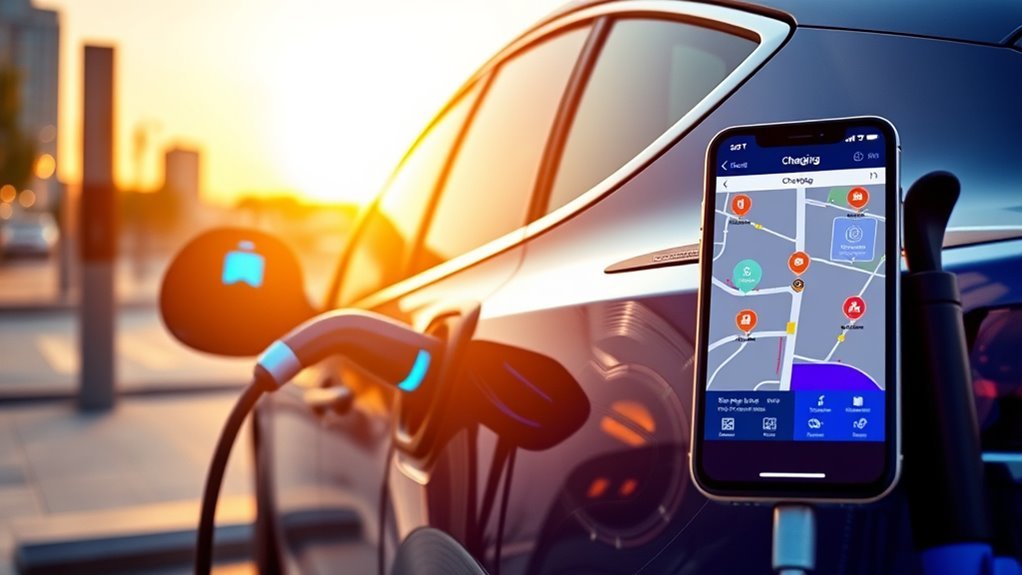
When you’re on the road, using apps like PlugShare or ChargeHub can help you find available chargers in real-time.
These tools let you filter by charger type, ensuring compatibility with your EV, while also providing user ratings to guide you toward reliable stations.
Real-Time Charger Availability
How can you guarantee a smooth charging experience on your journeys? By utilizing apps like PlugShare and ChargeHub, you can access real-time updates on charger availability.
These apps send charging notifications, letting you know which stations are occupied or out of service, so you won’t waste precious time. Many charging networks also offer dedicated apps that provide real-time data on station status, pricing, and vehicle compatibility.
User ratings and comments help you gauge the reliability of specific chargers, while maps indicate if power output is shared among multiple ports. Staying informed on the current status of charging stations enhances your overall experience and streamlines travel planning, ensuring you maximize your EV’s potential on the road.
Filter By Charger Type
Finding the right charger for your electric vehicle (EV) can greatly enhance your charging experience, especially during long trips.
Utilizing apps like PlugShare and ChargeHub allows you to filter by charger type, focusing on Level 3 (DC fast) chargers that deliver impressive speeds from 50 to 350 kW.
The filtering benefits include quickly locating available chargers and ensuring compatibility with your vehicle’s connector type. Many charging networks offer dedicated apps for insights into specific charger categories, including availability and pricing.
Look for stations that don’t share power output between multiple ports, as this can affect charging speed.
User Ratings Insights
Ever wondered how user ratings can enhance your charging experience? Apps like PlugShare and ChargeHub deliver real-time insights into public charging stations, empowering you to make informed decisions.
By tapping into user experiences, you can gauge rating accuracy regarding charging speed, station condition, and potential issues before arrival. This data helps you sidestep stations plagued by outages or slow speeds, ensuring a smoother experience.
Additionally, many charging networks offer their own apps, featuring pricing models and live updates that further enrich your planning. You can filter stations by connector type, charging speed, and availability, optimizing your search for the best charging options.
Harness these insights to liberate your EV journey and maximize your time on the road.
Overcoming Common Charging Challenges: Tips and Solutions
While charging your electric vehicle at public stations can sometimes present challenges, employing a few effective strategies can greatly enhance your experience.
First, arrive with a low State of Charge (SoC), ideally between 10-20%, to maximize charging speed. Preconditioning your battery before charging optimizes its temperature, which is vital in extreme weather.
Be mindful of external temperatures that can hinder charging speeds due to thermal throttling. Additionally, limit power usage from features like air conditioning to reduce parasitic loads and guarantee more energy goes toward your battery health.
Lastly, practice good charging etiquette by checking real-time apps like PlugShare to find available stations, avoiding wasted time at occupied or malfunctioning chargers.
Frequently Asked Questions
How to Make a Fast Charger Charge Faster?
To make a fast charger charge faster, choose the right charging cable types compatible with your vehicle and utilize fast charger technologies. Optimize your vehicle’s settings and monitor conditions for the best results.
What Is the 80 20 Charging Rule?
The 80/20 charging rule suggests you maximize charging efficiency by charging your EV from a low state of charge to 80%. This approach optimizes battery health and prolongs the overall lifespan of your battery.
How to Enhance Charging Speed?
To enhance charging speed, optimize your battery’s performance by starting with a low State of Charge, preconditioning your battery, minimizing power drain, and choosing dedicated charging ports. Embrace cutting-edge charging technology for efficient energy replenishment.
What Is the 80 20 Rule for EV Charging?
The 80/20 rule for EV charging suggests you should charge your vehicle to 80% for ideal charge and charging efficiency. This approach minimizes downtime and enhances your overall driving experience, maximizing the benefits of public charging stations.
Conclusion
By choosing the right DC fast chargers and managing your vehicle’s state of charge, you can greatly enhance your public charging experience. Remember to turn off non-essential features and leverage apps to locate available chargers quickly. As you navigate the charging landscape, think of it like finding Wi-Fi in a crowded café—every second counts. With these tips, you’ll maximize your charging speed and get back on the road faster than ever.






Leave a Reply