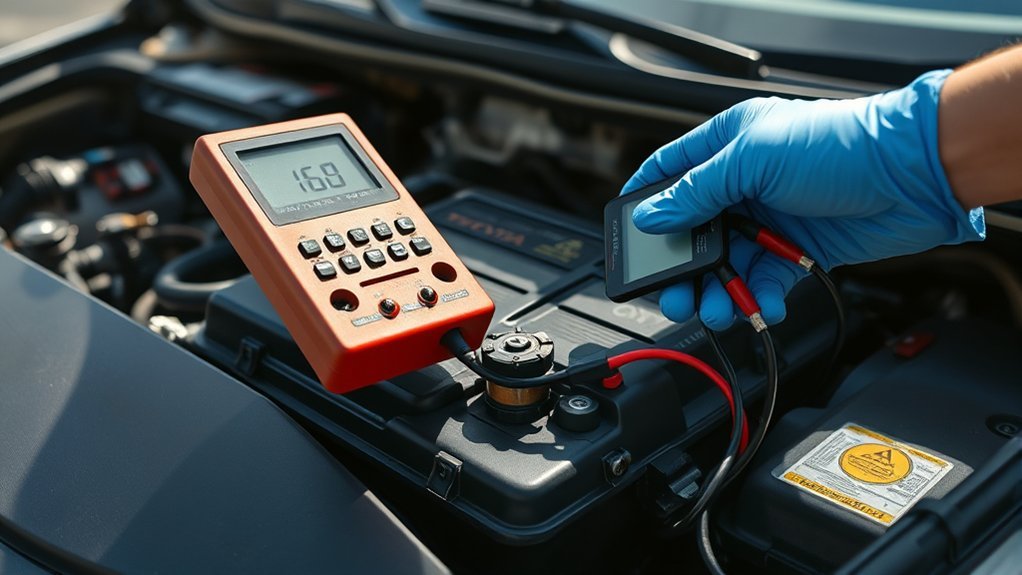
Hard starting in your Toyota Corolla can arise from fuel delivery issues or ignition system failures. Pay attention to signs like prolonged cranking or occasional stalling. Check fuel pump pressure, inspect fuel filters for clogs, and assess spark plugs for wear. Verify battery health and starter motor function are ideal as well. Routine maintenance helps prevent these problems. Want to explore step-by-step fixes and preventative measures? Keep going for more insights!
Signs of Hard Starting in Your Toyota Corolla
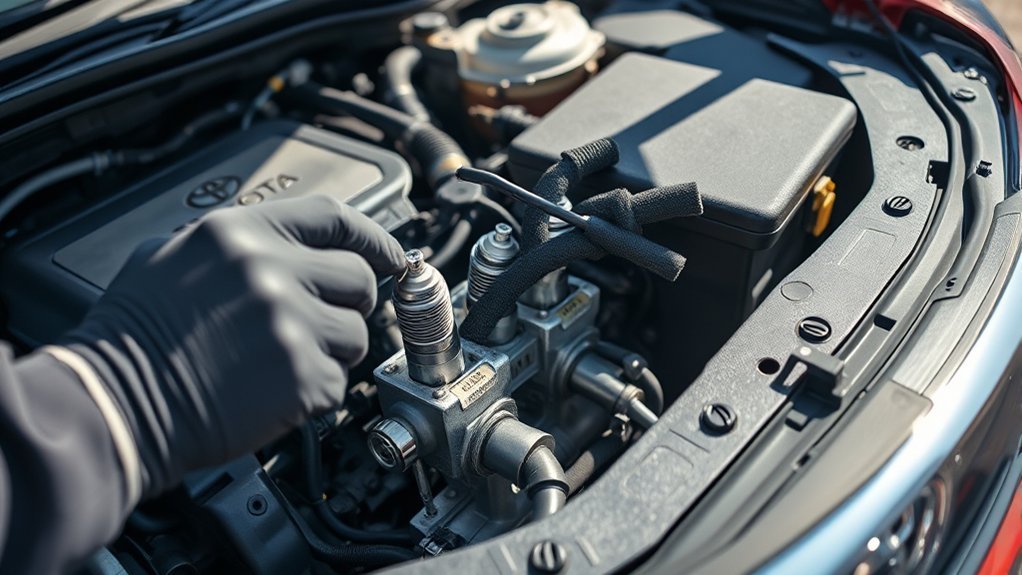
When you notice your Toyota Corolla struggling to start, especially after sitting idle for a while, it can be frustrating. This hard starting often manifests as prolonged cranking, where you may find yourself turning the key 10 to 12 times before the engine engages.
You might also experience difficulty when the engine is hot or after short trips, alongside occasional stalling or hesitation during acceleration. If the check engine light illuminates, it could signal issues within the fuel system, especially if accompanied by diagnostic codes like P0171 or P0300.
Additionally, if you feel the need to pump the gas pedal or hold it to the floor while starting to avoid flooding, this indicates potential fuel delivery problems.
Importantly, symptoms often improve as the engine warms up, suggesting that temperature-related factors could be influencing the hard starting issue.
Common Causes of Hard Starting in Your Corolla
When your Toyota Corolla struggles to start, fuel delivery issues often top the list of culprits. A failing fuel pump check valve or clogged fuel filters can disrupt the necessary fuel flow.
Additionally, ignition system failures, including worn spark plugs or malfunctioning coils, can exacerbate hard starting, especially when temperature changes affect engine performance.
Fuel Delivery Issues
Fuel delivery issues can greatly affect the starting performance of your Toyota Corolla, as insufficient fuel supply directly impacts engine ignition.
To diagnose potential fuel delivery problems, consider the following:
- Failing fuel pump: A defective fuel pump may not maintain the necessary fuel pressure.
- Clogged fuel filter: This can restrict fuel flow, especially after the vehicle sits for a while.
- Malfunctioning fuel pressure regulator: Disrupts the flow of fuel to the engine.
- Leaking or clogged fuel injectors: Prevents the engine from receiving the correct fuel mixture.
Regularly monitoring fuel pressure and inspecting components like the fuel pump check valve and filter are essential for preventing hard starting issues.
Stay proactive to guarantee a smooth start every time.
Ignition System Failures
Ignition system failures are among the top reasons for hard starting in your Toyota Corolla, and addressing these issues promptly can save you time and frustration.
Worn spark plugs can lead to poor ignition, causing incomplete combustion and difficulty starting. Additionally, faulty ignition coils might prevent proper voltage from reaching the spark plugs, leading to engine misfires, especially when the engine is hot.
A malfunctioning ignition control module disrupts the timing of the ignition spark, resulting in prolonged cranking and hesitation during acceleration. Corroded or loose electrical connections within the ignition system can cause intermittent starting problems.
Regular maintenance, including timely replacement of spark plugs and inspection of the ignition switch, can help guarantee peak engine performance and prevent these hard starting issues.
Temperature-Related Problems
Temperature-related problems can considerably impact the starting performance of your Toyota Corolla, especially during warmer conditions.
Several factors can contribute to this issue:
- Heat can affect ignition components like spark plugs and ignition coils, leading to failure when the engine’s hot.
- A faulty coolant temperature sensor may give incorrect readings, resulting in improper fuel mixtures from the ECU.
- Fuel system components, like the fuel pump’s check valve, may fail under higher temperatures, causing inadequate fuel pressure.
- Issues with the intake manifold gasket can exacerbate air leaks, disrupting the air-fuel mixture.
Overheating can intensify these problems, making it difficult for your engine to start after being shut off.
Addressing these concerns can restore your Corolla’s starting performance.
How to Diagnose Fuel System Issues
To diagnose fuel system issues in your Toyota Corolla, start by inspecting the fuel pressure gauge; it should read between 30-40 psi to meet specifications.
Next, check the operation of the fuel pump by turning the ignition on and listening for its activation, as a silent pump could indicate a problem.
Finally, evaluate the fuel filter‘s condition, replacing it if it’s clogged or hasn’t been changed recently to guarantee ideal fuel flow.
Inspect Fuel Pressure Gauge
When diagnosing fuel system issues in your Toyota Corolla, connecting a fuel pressure gauge to the fuel rail is vital for evaluating the health of the fuel system.
Start by turning the ignition key to the “ON” position without cranking the engine and check the initial fuel pressure reading. A healthy range is typically between 35 and 50 psi.
Keep an eye on these key points:
- Confirm pressure maintains during idle and acceleration.
- Look for drops that could indicate a faulty fuel pressure regulator.
- Check for rapid pressure drops after shutting off the engine.
- Note if the check engine light activates, signaling potential fuel system problems.
Always consult your service manual for specific fuel pressure specifications.
Check Fuel Pump Operation
Checking the fuel pump operation is essential for diagnosing fuel system issues in your Toyota Corolla. Start by turning on the ignition and listening for a humming sound from the fuel tank; this indicates the fuel pump is engaging.
Next, use a fuel pressure gauge to check the pressure at the fuel rail. It should fall within the manufacturer’s specified range, typically around 35-50 psi. If the pressure is low or drops quickly after shutting off the pump, it may indicate a failing fuel pump or leaking fuel injector.
Don’t forget to inspect the fuel pump relay and fuse for continuity, as a faulty relay can disrupt power to the fuel pump.
Evaluate Fuel Filter Condition
Evaluating the fuel filter condition is essential for ensuring proper fuel flow in your Toyota Corolla and preventing hard starting issues. A clogged fuel filter can restrict fuel flow, leading to performance problems.
Here’s how to diagnose its condition:
- Inspect the fuel filter for any signs of clogging or dirt.
- Use a fuel pressure gauge to check if the pressure is below manufacturer specifications.
- Replace the fuel filter if it appears dirty or hasn’t been changed in 30,000 to 50,000 miles.
- Check the fuel lines for leaks or damage that could affect delivery.
Regular monitoring and timely replacement can help maintain peak engine performance and reduce the likelihood of hard starting, keeping your Corolla running smoothly.
Importance of Spark Plugs and Ignition Components
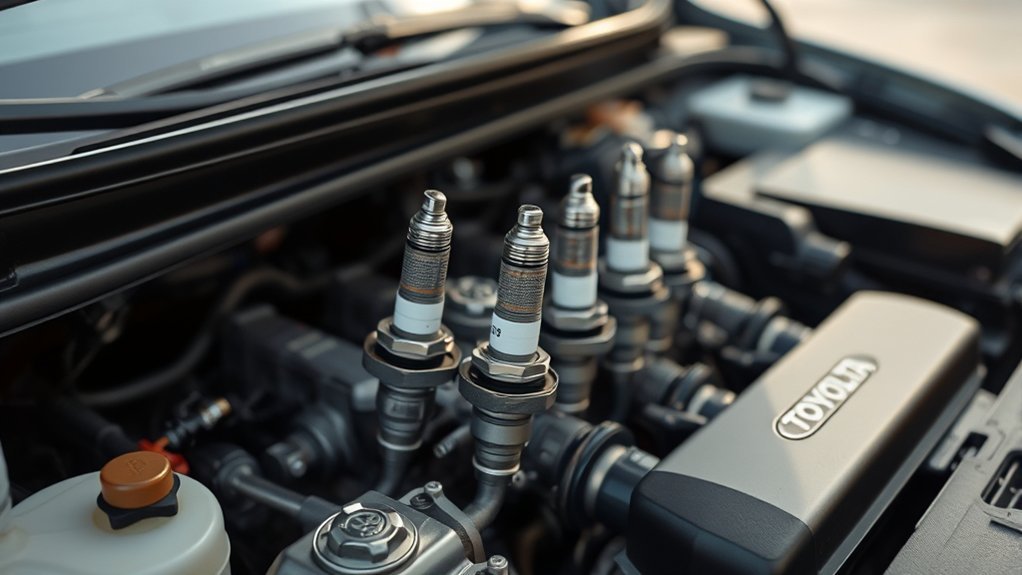
Although many factors can contribute to hard starting in a Toyota Corolla, the significance of spark plugs and ignition components can’t be overstated.
Spark plugs play a crucial role in igniting the air-fuel mixture within your engine. Worn or damaged plugs can lead to misfires and difficulty starting. Similarly, ignition coils convert battery voltage into the high voltage necessary for creating a spark at the plugs; their failure can severely hinder engine performance.
Regular inspection and replacement of spark plugs, typically every 30,000 to 100,000 miles, enhances starting reliability and overall engine efficiency. Additionally, make sure your ignition wires aren’t corroded or loose, as this disrupts the electrical connection to the spark plugs.
Using high-quality, manufacturer-specified spark plugs can further boost ignition performance. By paying attention to these components, you can prevent hard starting issues and maintain a smoothly running Corolla.
Understanding Your Fuel Pump and Filter
Understanding the fuel pump and filter is essential for ensuring your Toyota Corolla starts reliably and runs efficiently. The fuel pump delivers gasoline from the tank to the engine, maintaining a pressure between 30 to 50 PSI. If it fails, you might experience hard starting due to insufficient pressure.
Similarly, the fuel filter protects the fuel system by removing impurities. A clogged filter can restrict flow, exacerbating starting issues.
Here are key points to reflect upon:
- A whining noise from the fuel tank can indicate a failing fuel pump.
- Difficulty starting your car may signal inadequate fuel delivery.
- A decrease in engine performance during acceleration often points to fuel system problems.
- Regularly replace the fuel filter every 30,000 miles to avoid issues.
Inspecting and Replacing the Intake Manifold Gasket
When your Toyota Corolla struggles to start, a failing intake manifold gasket might be the culprit.
You’ll notice symptoms like rough idling and decreased fuel efficiency, especially when the engine is cold.
To address this, you need to inspect for cracks and leaks, and if necessary, follow precise steps to replace the gasket for peak performance.
Symptoms of Gasket Failure
The intake manifold gasket plays an essential role in maintaining engine performance, and its failure can lead to a range of serious symptoms.
You should be aware of the following indicators of gasket failure:
- Rough idling and engine misfires
- Loss of power during acceleration
- Increased fuel consumption due to air leaks affecting the air-fuel mixture
- Coolant leaks that may cause overheating
These symptoms suggest that the gasket isn’t sealing properly, which can lead to vacuum leaks and trigger check engine lights with codes like P0171.
If you notice any of these signs, it’s vital to address them promptly to avoid further engine damage and guarantee peak performance.
Inspection Process Overview
Addressing symptoms of gasket failure is critical, especially when dealing with hard starting issues in your Toyota Corolla. The intake manifold gasket guarantees a proper seal, preventing air leaks that can exacerbate starting problems. To inspect the gasket, start with a visual check for wear, cracking, or discoloration. Additionally, perform a smoke test to identify leaks. Below is a concise overview of the inspection process:
| Step | Action | Purpose |
|---|---|---|
| Visual Inspection | Check for wear or cracks | Identify visible damage |
| Smoke Test | Introduce smoke to detect leaks | Confirm integrity of the seal |
| Remove Intake Manifold | Access gasket for detailed inspection | Evaluate condition closely |
| Clean Mating Surfaces | Prepare for new gasket installation | Guarantee proper sealing |
| Apply New Gasket | Replace with manufacturer specifications | Restore seal integrity |
Replacement Steps Explained
Replacing the intake manifold gasket is crucial for resolving hard starting issues in your Toyota Corolla, as a compromised gasket can lead to air leaks that affect engine performance.
Follow these steps for a successful replacement:
- Disconnect the battery to guarantee safety.
- Remove components like the air intake and throttle body for access.
- Inspect the intake manifold gasket for wear, cracks, or leaks.
- Clean the mating surfaces thoroughly and apply gasket sealant as recommended by the manufacturer.
After replacing the intake manifold gasket, reassemble all components in reverse order, reconnect the battery, and start the engine.
This will allow you to check for proper operation and any potential leaks around the new gasket, assuring your Corolla runs smoothly.
How to Check Your Battery and Starter Motor
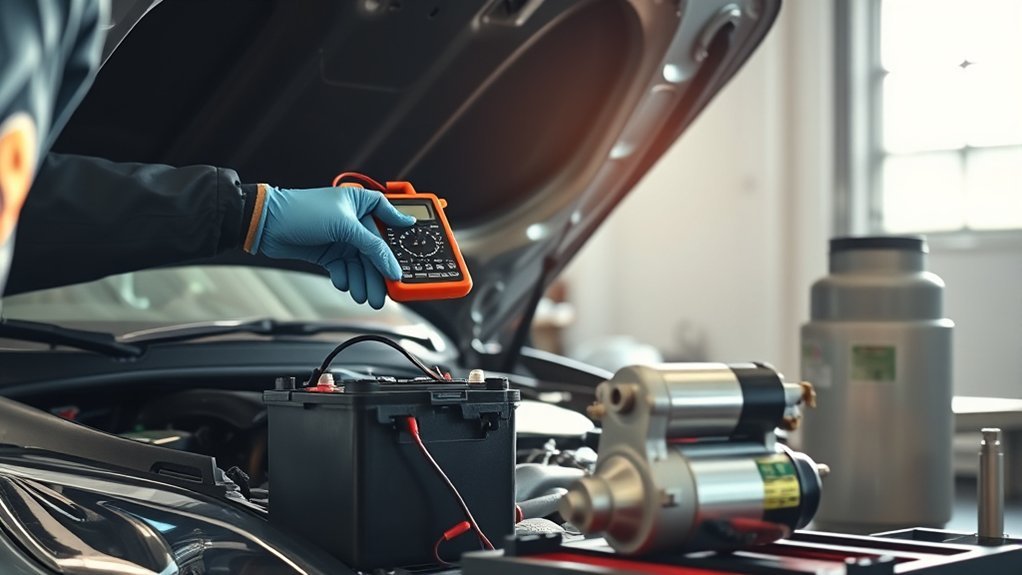
When your Toyota Corolla struggles to start, it’s essential to check both the battery and starter motor.
Begin by using a multimeter to measure the battery voltage; a healthy battery should read around 12.6 volts when fully charged. Next, inspect the battery terminals for any corrosion that could impede electrical connections.
Use a multimeter to check battery voltage; a healthy battery reads about 12.6 volts. Also, inspect for terminal corrosion.
If you hear a clicking sound when attempting to start the engine, this may indicate a weak battery or a failing starter motor.
To test the starter motor, verify it’s receiving power with your multimeter. If there’s power but the starter doesn’t engage, it likely needs replacement.
Regularly testing both the battery and starter can help you identify issues early, preventing unexpected starting problems.
What to Do If Your Vehicle Overheats?
If your vehicle starts to overheat, it’s essential to act quickly to avoid severe engine damage. First, pull over to a safe location and turn off the engine. Allow the engine to cool for at least 30 minutes before proceeding.
Here’s what you should do next:
- Check the coolant level in the radiator and reservoir; if low, add the appropriate coolant mixture.
- Inspect the radiator and coolant reservoir for leaks or visible damage.
- Verify the operation of the radiator fans and thermostat; malfunctioning components can contribute to overheating.
If overheating persists, seek professional assistance to diagnose issues like a blown head gasket or a faulty water pump.
Taking these steps can help prevent further damage to your engine and guarantee your vehicle gets back on the road safely. Remember, timely action is critical when your vehicle overheats!
Troubleshooting Hard Starting Step-by-Step
Hard starting in a Toyota Corolla can be frustrating and may signal underlying issues that need attention.
Begin troubleshooting by checking the battery condition; verify terminals are clean and secure. A weak battery can impede your vehicle from starting.
Next, inspect the fuel system. Use a fuel pressure gauge to verify that the fuel pump, filter, and injectors are functioning correctly.
Then, examine the ignition system—check for worn or damaged spark plugs and ignition coils, as these can lead to misfires.
Don’t overlook the idle air control valve; if it malfunctions, throttle response can suffer, complicating starts, especially when the engine is warm.
Finally, consider potential vacuum leaks around the intake manifold, which can disrupt the air-fuel mixture.
After addressing these areas, try to start your Corolla again to assess if the hard starting issue has been resolved.
Preventative Measures to Avoid Hard Starting Issues
To prevent hard starting issues in your Toyota Corolla, regular maintenance is vital. By staying proactive, you can guarantee your vehicle runs smoothly.
Here are some key preventative measures:
- Replace the fuel filter every 30,000 miles to maintain proper fuel flow and prevent clogs.
- Inspect ignition components, like spark plugs and ignition coils, every 60,000 miles to avoid misfires.
- Monitor battery health by checking voltage regularly; a healthy battery should read around 12.6 volts. Replace it every 3-5 years.
- Use high-quality fuel and periodically add fuel system cleaners to minimize injector clogging.
Additionally, keep an eye on your fuel gauge and perform routine checks of the cooling system to maintain ideal engine temperature.
Frequently Asked Questions
What Causes Hard Starting in a Toyota Corolla?
Hard starting in your Toyota Corolla can stem from battery issues or inadequate fuel delivery. Check the battery’s charge, fuel pump functionality, and ascertain the fuel filter isn’t clogged to improve starting performance.
Why Is My Toyota Having a Hard Time Starting?
If your Toyota’s struggling to start, it might be like a bird trying to take off with a broken wing. Check the fuel system for clogs and inspect the battery for any issues affecting performance.
Why Is My Car Struggling to Start but Runs Fine?
Your car’s struggling to start could stem from fuel system issues or battery problems. Check the fuel pump and filter for clogs, and verify the battery’s charged and connections are secure for peak performance.
What Is the Main Cause of Engine Hard Starting?
The main cause of engine hard starting usually involves fuel delivery issues or a malfunctioning ignition system. If fuel pressure’s inadequate or spark plugs fail, your engine struggles to start correctly, affecting overall performance.
Conclusion
To summarize, hard starting in your Toyota Corolla can feel like trying to awaken a sleeping giant. By diagnosing fuel system issues, checking spark plugs, and ensuring your battery and starter motor are in good shape, you can restore reliable performance. Remember, preventative measures are key to avoiding these issues in the future. Stay proactive, and your Corolla will continue to run smoothly, ready to take you wherever you need to go.







Leave a Reply